

Key Takeaways
-
No peptide has been proven to safely improve muscle tone in otherwise healthy people, and 'muscle tone' is a marketing phrase rather than a medical diagnosis.
-
Muscle tone depends on muscle size, strength, and body fat level, so resistance training, adequate protein, and sleep remain the most proven approach.
-
Growth hormone secretagogues like CJC-1295 and ipamorelin can raise GH or IGF-1, but higher hormone levels do not prove better strength or a firmer look.
-
Tesamorelin is FDA-approved only for reducing abdominal fat in adults with HIV-associated lipodystrophy, not for muscle toning or bodybuilding.
-
BPC-157 and TB-500 evidence comes mostly from animal and lab studies, and human efficacy and long-term safety data are lacking.
-
Compounded and 'research grade' peptides are not reviewed by the FDA for safety, purity, or effectiveness, so ask where a product comes from and how it is tested.
If you have scrolled through fitness feeds lately, you have probably seen the buzz. Peptides for muscle tone are everywhere. Some posts promise firmer arms, leaner legs, and faster recovery from a simple at-home injection. It is easy to feel curious, and honestly, that curiosity is a good thing.
But here is the friendly truth: “muscle tone” is a marketing phrase, not a medical diagnosis. Muscle tone usually comes from muscle size and strength, plus how much body fat sits on top. No peptide has been proven to safely improve muscle tone in otherwise healthy people. Many popular ones have exciting lab data but thin human evidence.
So in this guide, we will walk through 13 peptides and related topics you will hear about, what the research really says, and what actually works. Whether you are a busy professional, a data-loving biohacker, or someone simply hoping to age strong in 2026, you deserve clear answers. Let us sort the facts from the hype together.
What Does “Muscle Tone” Really Mean?
Before we talk peptides, let us define the goal. In everyday language, muscle tone means a firm, defined look. Scientifically, that look comes from three things working together.
- Muscle size and strength: Built mostly through resistance training and protein.
- Body fat level: Less fat on top makes muscle definition easier to see.
- Recovery and hormones: Sleep, stress, and hormone health all play a part.
Because “tone” blends muscle and fat, no single peptide can claim to deliver it. That is why a thoughtful, lab-guided approach matters more than any one compound. If you want a deeper look at how peptides interact with your body composition, see our guide on how peptides affect your fat-to-muscle ratio.
The Quick Evidence Snapshot
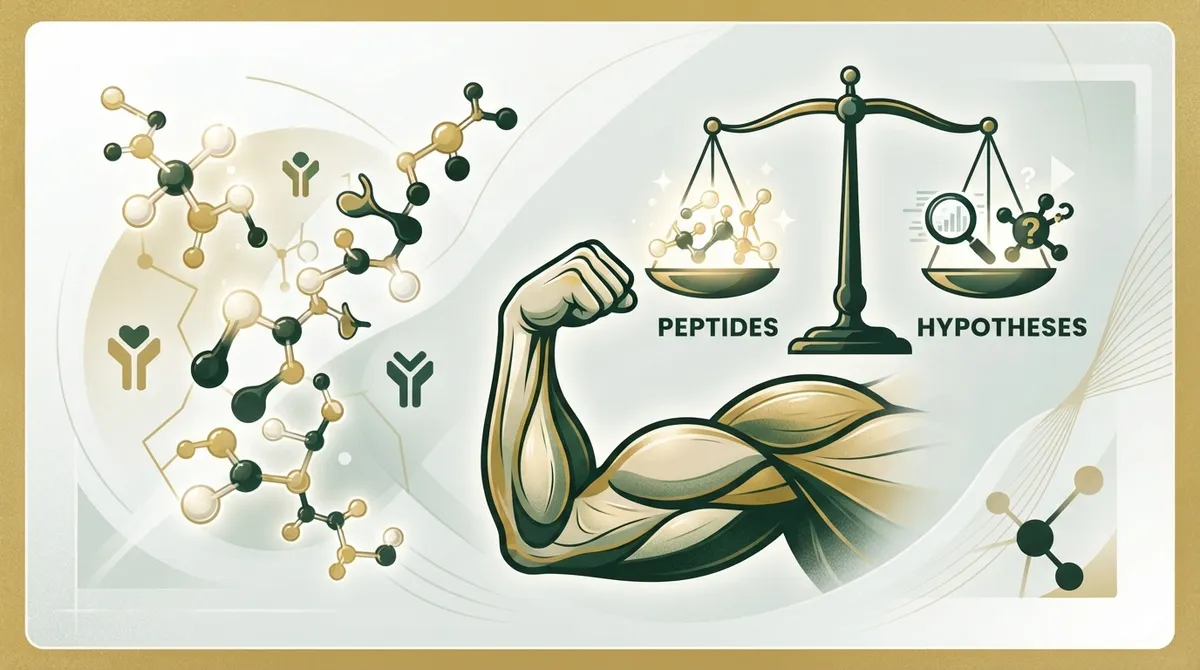
Here is a simple table to set expectations before we dive in.
| Category | Common Marketing Claim | Evidence Level for Muscle Tone |
|---|---|---|
| Growth hormone secretagogues (CJC-1295, ipamorelin) | Builds lean muscle | Raises GH or IGF-1; strength and appearance benefits not established |
| BPC-157 and TB-500 | Speeds muscle and injury recovery | Mostly preclinical; human data limited |
| Tesamorelin | Reduces belly fat | FDA-approved only for HIV-associated lipodystrophy |
| Collagen peptides (oral) | Supports tone and skin | Dietary supplement; limited muscle evidence |
13 Peptides and Topics to Know
1. CJC-1295
CJC-1295 is a growth-hormone-releasing compound often promoted for muscle gain. It can raise growth hormone (GH) and IGF-1 levels. But a higher hormone number does not prove better strength or a more toned look. In one dose-escalation trial summarized by Drugs.com, adverse events were reported in 94% of participants versus 29% on placebo. That is a single trial figure, not a general risk estimate, but it shows why supervision matters. Learn more in our guide on using CJC-1295 safely.
2. Ipamorelin
Ipamorelin is another growth hormone secretagogue. It is popular because it is considered more selective than some older options. Still, robust clinical trials showing improved muscle tone are lacking. For a balanced overview, check Ipamorelin peptide therapy benefits, dosing, and safety.
3. Sermorelin
Sermorelin is a growth-hormone-releasing peptide that nudges your body to make more of its own GH. It is often discussed for aging adults. As with the others, the leap from “raises GH” to “improves muscle tone” has not been firmly proven in healthy people.
4. Tesamorelin
Tesamorelin has a narrow FDA-approved use: reducing excess abdominal fat in adults with HIV-associated lipodystrophy. It is not approved for muscle toning or bodybuilding. Its prescribing information also notes that long-term cardiovascular safety has not been established. This is a good example of why “approved” always depends on the specific product and purpose.
5. BPC-157
BPC-157 is marketed for muscle and tendon recovery. The catch is that most evidence comes from animal and lab studies. It is not FDA-approved for building muscle or healing injuries, and reliable human efficacy and long-term safety data are lacking. If you are curious, read BPC-157 muscle recovery facts for context.
6. TB-500
TB-500 is a version of a thymosin beta-4 fragment, promoted for recovery. Like BPC-157, human evidence is thin, and long-term safety is unknown. It is a classic example of a peptide with big marketing and limited proof.
7. GHRP-6 and GHRP-2
These growth hormone releasing peptides can stimulate GH release and often increase appetite. Their popularity in bodybuilding circles far outpaces the clinical evidence for improving muscle tone.
8. Semaglutide and Tirzepatide
These are GLP-1 based medications approved for specific uses like weight management or type 2 diabetes. They can reduce body fat, which may make existing muscle look more defined. But rapid weight loss can also reduce lean mass if you do not eat enough protein and lift weights. Our post on fat loss peptides that protect muscle explains how to guard your hard-earned muscle.
9. Collagen Peptides (Oral)
Collagen peptides are a supplement, not the same thing as injectable peptide therapy. They are popular for skin and joints. Evidence for building muscle tone is limited. See collagen peptides vs. peptide therapy for the key differences.
10. Testosterone Support (Not a Peptide, But Related)
Testosterone is a hormone, not a peptide. Still, it often comes up in muscle conversations. For people with clinically low levels, supervised treatment may help muscle mass and energy. It is a different category with its own rules, so see how to use TRT for muscle growth the right way.
11. Compounded Peptides
Compounded preparations are not reviewed by the FDA for safety, effectiveness, or quality before marketing. A clinic offering a peptide, or a prescription, does not by itself prove it is effective for muscle tone. It is smart to ask where a product comes from and how it is tested.
12. “Research Grade” Peptides
You will see these sold online. Be careful. Concerns include uncertain identity, strength, purity, and sterility. “Natural” or “research grade” labels do not prove safety. Medical supervision and quality sourcing matter a lot here.
13. Resistance Training Plus Nutrition (The Real Winner)
This is the least flashy item, but it is the most proven. Progressive resistance training, enough protein, quality sleep, and recovery remain the foundation for muscle tone. Peptide therapy, when appropriate, is best viewed as a possible add-on to a solid plan, never a substitute.
Approved vs. Marketed: Why the Difference Matters
One of the biggest sources of confusion is how “approved” gets used. Here is a simple comparison to keep things straight.
| Question | FDA-Approved Product | Compounded or Unapproved Product |
|---|---|---|
| Reviewed for safety and effectiveness? | Yes, for a specific use | Not reviewed by the FDA before marketing |
| Quality standards | Manufacturing standards apply | Varies by source |
| Proven for muscle tone? | No peptide is approved for this | Not established |
| Best practice | Use only as indicated | Only with qualified clinician oversight |
For more on this topic, our article approved peptides vs. wellness peptides breaks it down further.
Possible Risks to Keep in Mind
We want you to feel informed, not scared. Still, it is fair to know the potential downsides, especially with injectable products.
- Quality concerns: Unapproved products may vary in purity, strength, and sterility.
- Hormone-related effects: Growth-hormone-related drugs can cause fluid retention and changes in blood sugar control. Risks depend on the drug and the person.
- Immune reactions: Some injectable peptides may trigger unexpected responses.
- Unknown long-term effects: For many popular peptides, long-term human data simply does not exist yet.
You can explore these points in more depth in how to weigh the risks of peptide therapy safely and 7 peptide therapy side effects you should know.
What Actually Helps Muscle Tone: A Simple 5-Step Plan
Here is a friendly, practical roadmap. It works whether you are 28 or 68.
- Lift progressively. Aim for 2 to 4 resistance sessions a week, gradually increasing weight or reps over time.
- Eat enough protein. Spread it across meals, and talk to your clinician about the right target for you.
- Protect your sleep. Muscle repairs while you rest. Poor sleep can undercut every other effort.
- Get your labs checked. Low testosterone, thyroid issues, or other conditions can affect muscle. A clinician can help you find out.
- Add targeted support only if appropriate. If peptide therapy makes sense after a full review, it should come with medical oversight.
Where a Personalized Approach Fits In
Every body is different. A 45-year-old marathoner and a 62-year-old desk worker will have very different needs. That is why a lab-based plan beats a one-size-fits-all stack. Learn how this works in lab work for peptide therapy, and why lab-based care beats guesswork.
At Allura Longevity, personalized peptide therapy is delivered through telehealth with licensed medical providers. Care starts with a $50 virtual consultation and blood work through LabCorp, followed by a customized six-month plan delivered to your home, with ongoing monitoring and adjustments. Telehealth is available nationwide, and Allura is licensed in Florida, Georgia, Texas, Connecticut, Indiana, Maryland, New York, and California. Providers can talk honestly with you about what peptides may and may not do for your goals, including whether a given option fits your health picture.
Questions to Ask Before You Start Any Peptide
Feeling nervous about starting? Totally normal. Bring these questions to your consultation.
- Is this product FDA-approved, or is it compounded?
- What is the evidence in humans for my specific goal?
- What labs will be checked before and during treatment?
- What are the possible side effects for someone with my health history?
- How will we know if it is working, and when would we stop?
Our list of 15 peptide consultation questions to ask can help you prepare, and you can avoid common pitfalls with these consultation mistakes.
Looking for More Context?
If you want to dig into related topics, our guides on peptides for muscle building and whether peptide therapy can really boost muscle growth are great next reads. For general background, what are peptides offers a helpful overview, and the National Library of Medicine hosts research you can browse yourself.
Final Thoughts: Strong, Informed, and Supported
Here is the bottom line on peptides for muscle tone: the science is still catching up to the marketing. Some compounds raise hormone levels, and others look promising in lab studies. But none has been established as a safe, proven fix for muscle tone in healthy people. The best results still come from smart training, good food, great sleep, and care tailored to you.
If you are ready to explore whether peptide therapy could fit into a bigger, evidence-aware wellness plan, a medically supervised path is the way to go. Spots for new clients are limited each month, so don’t wait too long. Request a consultation with Allura Longevity today, or call (813) 510-6277 to talk with our team. You deserve a plan that is personal, honest, and built around your goals.
FAQs
Q: Do peptides help improve muscle tone?
A: Not in a way that has been firmly proven. “Muscle tone” is a marketing phrase, and no peptide has been established as a safe, effective treatment for improving it in otherwise healthy people. Resistance training, protein, sleep, and recovery remain the most reliable approach.
Q: Are CJC-1295 or ipamorelin FDA-approved for building muscle?
A: No. They are promoted because they can affect growth hormone or IGF-1, but higher hormone levels do not prove better strength or a more toned look. Robust clinical trials supporting muscle claims are lacking, so it is wise to talk with a qualified clinician first.
Q: Is tesamorelin approved for muscle tone or fat loss?
A: Tesamorelin is FDA-approved only for reducing excess abdominal fat in adults with HIV-associated lipodystrophy. It is not approved for muscle toning or bodybuilding, and its label notes that long-term cardiovascular safety has not been established.
Q: Is BPC-157 proven to help muscle injuries heal in people?
A: Not yet. Most of the evidence for BPC-157 comes from animal and lab studies, and it is not FDA-approved for muscle building or injury recovery. Reliable human efficacy and long-term safety data are still lacking.
Q: What are the risks of using injectable peptides for bodybuilding?
A: Risks vary by product, but they can include uncertain purity, strength, and sterility, plus immune reactions and unknown long-term effects. Growth-hormone-related drugs may also cause fluid retention and blood sugar changes, which is why medical supervision matters.





