

Key Takeaways
-
Telehealth peptide programs typically cost $200-$400/month versus local clinics at $350-$800+/month; always request itemized quotes that include labs, follow-ups, and supplies to avoid surprise fees that can add $500+ to your total cost.
-
Hidden costs like initial consultations, baseline lab testing, follow-up visits, injection supplies, and shipping fees often double the sticker price; factor these into a realistic six-month budget before comparing providers.
-
Medical oversight quality and proper lab monitoring matter more than lowest price alone; skipping testing to save money is a common mistake that wastes time and reduces results, making cheaper plans actually more expensive long-term.
-
Most compounded peptides are self-pay with no insurance coverage, though HSA/FSA funds may apply depending on your plan; confirm pharmacy licensing and provider credentials before enrolling to protect your health and investment.
Trying to figure out what hormone therapy and peptide treatments actually cost? You are not alone. So many of our readers tell us the pricing feels confusing, hidden, or all over the map. Some clinics quote you one number, then add fees for labs, visits, and shipping later. That is frustrating, and honestly, it is not fair to you.
The good news is that once you understand how hormone therapy pricing options really work in the peptide space, everything gets clearer. You will know what to ask, what to expect, and how to spot a fair deal versus a sneaky upsell. Whether you are a busy professional squeezing in a virtual visit between meetings, or a biohacker who tracks every lab marker, this guide breaks it all down in plain language. We will walk through the main pricing models, real cost ranges for popular peptides, and the hidden extras that can sneak into your total bill. By the end, you will feel confident comparing options and picking a plan that actually fits your goals and your budget.
1. Medication-Only Pharmacy Pricing
This is the most basic hormone therapy pricing option. You pay only for the peptide or hormone itself, usually through a compounding pharmacy. There is no consultation, no lab work, and no ongoing monitoring included.
This model can look cheap upfront. But it often leaves you without medical guidance. You may not know your correct dose, or whether the peptide even fits your health needs. Learning what are peptides and how they behave in your body matters more than just grabbing the lowest price tag.
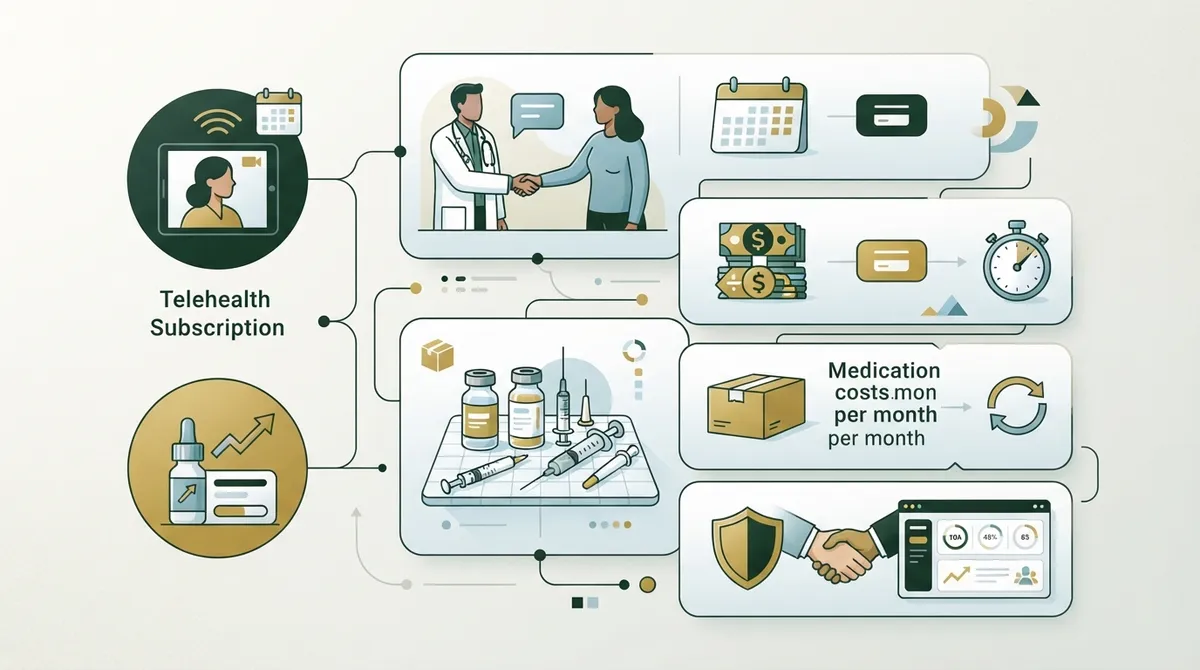
2. Monthly Telehealth Subscriptions
Telehealth subscriptions bundle your consultation, medication, and provider check-ins into one predictable monthly fee. This is a favorite among busy professionals and wellness seekers who want convenience without sacrificing medical oversight.
Reported telehealth peptide pricing usually falls between $200 and $400 per month. That is often lower than local clinic pricing because there is less overhead. Allura Longevity uses this model, starting clients with a $50 virtual consultation and LabCorp blood work before building a custom plan.
3. Local Clinic Package Pricing
Local anti-aging or wellness clinics often bundle consultations, in-office labs, and injections into one package price. These packages tend to run higher, typically $350 to $800 or more per month.
You are paying for the building, the staff, and often same-day administration. If convenience of driving somewhere in person matters most to you, this could be worth it. But many people find that local clinic vs. telehealth comparisons favor virtual care for both cost and flexibility.
4. Pay-Per-Visit Medical Care
Some providers charge separately for every single visit. You pay for your first consultation, then pay again for every follow-up, dose adjustment, or lab review.
This can add up fast if you need frequent monitoring. It also makes budgeting harder since you never know exactly what next month will cost.
5. Bundled Concierge Programs
Concierge programs combine everything: consultations, labs, medication, supplies, and ongoing monitoring into one comprehensive fee. These are usually the most expensive option, but they also remove guesswork.
A six-month program like this, including medication, baseline testing, and follow-up care, is often estimated at $1,500 to $3,500 total. Costs run higher for pricier peptides or more intensive monitoring schedules.
6. Sermorelin Pricing Ranges
Sermorelin is one of the most requested growth-hormone-related peptides. Telehealth programs often price it around $150 to $250 per month, while local clinics may charge $250 to $450 per month.
Most protocols run three to six months. If you are curious about this peptide specifically, our guide on sermorelin peptide therapy facts covers dosing, timelines, and what results to expect.
7. BPC-157 Pricing Ranges
BPC-157 is popular for recovery and gut health support. Telehealth pricing generally runs $150 to $300 per month, while local clinics may charge $250 to $500 per month.
Before starting, it helps to review BPC-157 peptide facts so you know what to realistically expect from this therapy.
8. Tesamorelin Pricing Ranges
Tesamorelin tends to sit at the higher end of the pricing spectrum. Telehealth services often charge $400 to $800 per month, while local clinics may charge $500 to $1,000 or more.
This peptide requires more careful dosing and monitoring, which partly explains the higher price point across most hormone therapy pricing options.
Quick Peptide Pricing Comparison
| Peptide | Telehealth Monthly Range | Local Clinic Monthly Range |
|---|---|---|
| Sermorelin | $150–$250 | $250–$450 |
| BPC-157 | $150–$300 | $250–$500 |
| Tesamorelin | $400–$800 | $500–$1,000+ |
| General Peptide Programs | $200–$400 | $350–$800+ |
9. GLP-1 Weight Loss Program Pricing
GLP-1 medications for weight loss have their own pricing structure, separate from traditional peptide protocols. Costs depend heavily on dose, brand, and whether you go through insurance or pay cash.
If you want a deeper breakdown, check out our resource on GLP-1 weight loss cost without insurance. Understanding GLP-1 peptide therapy basics helps you compare quotes accurately.
10. Testosterone Replacement Pricing
Testosterone therapy is often confused with peptide therapy, but they are not the same thing. Testosterone directly replaces a hormone, while peptides influence signaling pathways in your body.
Cash-pay testosterone therapy commonly costs $100 to $500 per month. Generic injectable testosterone alone may run $30 to $110 monthly, with provider fees and labs added separately. For a full cost breakdown, see our guide on real testosterone therapy cost facts.
11. Hidden Costs That Change Your Total Bill
The sticker price is rarely the whole story. Here are extra costs that often get added on:
- Initial consultation fees, separate from medication
- Baseline lab testing through providers like LabCorp
- Follow-up visits for dose adjustments
- Injection supplies like syringes and alcohol wipes
- Shipping fees for at-home delivery
- Periodic monitoring labs during your protocol
A realistic six-month budget should factor in all of these pieces, not just the peptide price alone. Skipping proper testing to save money is one of the most common hormone therapy cost mistakes people make.
12. Insurance, HSA, and FSA Coverage Realities
Most peptide therapy is self-pay. Insurance rarely covers compounded peptides or wellness protocols, since they often fall outside standard medical necessity guidelines.
That said, some HSA or FSA funds may apply, depending on your plan and diagnosis. It is worth learning how to navigate hormone therapy insurance coverage before you commit to any provider.
Steps to Compare Hormone Therapy Pricing Options Wisely
- List every peptide or hormone you are considering and its typical price range
- Ask each provider exactly what is included in their quoted price
- Confirm whether labs, follow-ups, and supplies are bundled or separate
- Check that the pharmacy is licensed and the provider is credentialed
- Compare telehealth versus local clinic totals over a full six-month period
- Avoid choosing based on the lowest price alone; consider medical oversight quality
Price should never be your only deciding factor. According to National Library of Medicine research, proper clinical oversight and monitoring matter significantly for safety and effectiveness in peptide-based treatments. A cheap plan without proper labs or follow-up can end up costing you more in wasted time and poor results.
Why Medical Oversight Matters More Than Price Alone
It is tempting to chase the lowest number you see online. But hormone therapy pricing options should always reflect quality of care, not just cost. A properly licensed pharmacy, a credentialed provider, and real lab monitoring protect your health and your wallet.
You also want to confirm whether a product is FDA-approved or compounded. Marketing claims alone are not proof of safety. Learning what are peptides and how they are regulated helps you ask smarter questions before you sign up for any program.
At Allura Longevity, every client starts with a $50 virtual consultation and complete blood work through LabCorp. From there, a customized six-month treatment plan is built around your actual health data, not guesswork. Ashley, our board-certified Family Nurse Practitioner, and our licensed provider team monitor your progress and adjust your plan as needed. We are proud to offer telehealth peptide therapy nationwide, with licensing in Florida, Georgia, Texas, Connecticut, Indiana, Maryland, New York, and California.
Your Next Step Toward Clear, Fair Pricing
Understanding hormone therapy pricing options does not have to feel overwhelming. Once you know the models, the typical ranges, and the hidden extras, you can make a confident choice. Whether you are chasing more energy, faster recovery, better sleep, or long-term vitality, the right plan should fit your goals and your budget without surprises.
Ready to see what a personalized plan could look like for you? Request a consultation with our licensed team today, or give us a call at (813) 510-6277. Spots are limited each month, so do not wait too long to get started.
FAQs
Q: How much does peptide therapy cost per month?
A: Most people pay somewhere between $150 and $800 or more each month, depending on the peptide and provider. Telehealth programs tend to land on the lower end, often around $200 to $400 monthly, which makes them a friendly option if you are watching your budget.
Q: Is telehealth peptide therapy cheaper than a local clinic?
A: Yes, in most cases it is. Telehealth programs typically run $200 to $400 per month, while local clinics often charge $350 to $800 or more once you add in office visits and administration fees.
Q: Are peptide therapy costs covered by insurance or HSA and FSA funds?
A: Most compounded peptides are self-pay since insurance rarely covers them. That said, HSA or FSA funds may sometimes apply depending on your specific plan, so it is worth double checking with your provider before you enroll.
Q: What extra costs should I expect beyond the medication price?
A: Beyond the peptide itself, budget for consultation fees, baseline lab testing, follow-up visits, injection supplies, and shipping. These add-ons can meaningfully increase your total cost, so always ask for a full breakdown upfront.
Q: How can I compare hormone therapy pricing options without focusing only on price?
A: Look at what is included, not just the number on the price tag. A trustworthy provider offers licensed pharmacy sourcing, proper lab monitoring, and real medical oversight, which matters far more than chasing the cheapest quote you can find.





