

Key Takeaways
-
No established evidence-based protocol proves that combining peptides with BHRT improves menopause symptoms, body composition, sleep, or aging—the synergy is marketed but not scientifically validated.
-
Major medical groups including ACOG recommend against routine compounded bioidentical hormones when FDA-approved options exist; one study found 57.6% adverse events with compounded pellets vs. 14.8% with FDA-approved therapy.
-
Growth-hormone peptides like ipamorelin and CJC-1295 are not FDA-approved for wellness use and carry potential risks including fluid retention, glucose changes, and unknown long-term effects from excessive growth signaling.
-
Start with baseline labs and evidence-based hormone therapy alone, adding peptides only with clear medical justification and step-by-step monitoring to distinguish which intervention actually delivers results.
If you have been reading about hormone therapy and peptides lately, you have probably seen the two paired together. Some clinics call it a “stack.” Others call it a “full optimization plan.” And honestly? It sounds exciting. Better sleep, steadier energy, a body that feels like it used to.
But here is the friendly truth: BHRT with adjunct peptide therapy is a topic with a lot of hype and not a lot of settled science. The goal of this guide is to give you a clear, honest picture so you can ask smart questions and make choices you feel good about.
We will walk through 12 facts, from what BHRT really means to how peptides fit in, what is proven, what is not, and how to stay safe. Whether you are a busy professional, a data-loving biohacker, or someone in midlife wanting to feel vital again, you will leave with a plain-English roadmap. If you are new to peptides, our guide 8 Facts That Explain What Are Peptides in 2026 is a helpful warm-up.
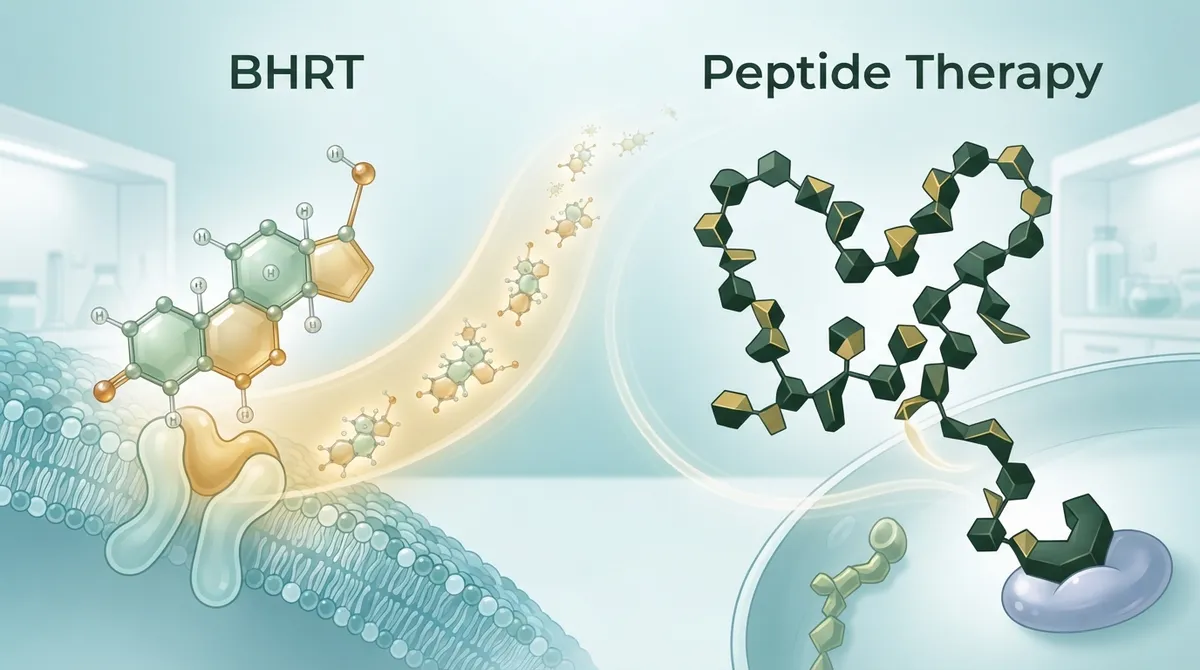
The Basics: What BHRT and Peptides Actually Are
1. BHRT is a label, not a single treatment
“BHRT” stands for bioidentical hormone replacement therapy. The word “bioidentical” means the hormone is chemically identical to one your body makes, like estradiol or micronized progesterone.
Here is where it gets tricky. Some bioidentical hormones are FDA-approved products. Others are custom-compounded by a pharmacy. Both can be called BHRT, but they are not the same thing. If you want a deeper comparison, see Bioidentical Hormone Replacement: A Clear 2026 Guide.
2. “Bioidentical” does not automatically mean safer
It is easy to hear “bioidentical” and think “natural and gentle.” But the term does not tell you whether a product is safer, stronger, or better tested. FDA-approved hormone products have been reviewed for safety and effectiveness. Many compounded products have not gone through that same review.
3. Peptides are a big family, not one thing
Peptides are short chains of amino acids that act as signals in the body. Some are well-known FDA-approved medicines. Others are popular in wellness circles but are not approved for the uses people advertise. You can read a general overview of what are peptides from WebMD.
In short, saying “I take peptides” is a bit like saying “I take pills.” It does not tell you much until you know which one.

How the Two Therapies Get Paired
4. “Adjunct” simply means an add-on
In this context, the hormone therapy is the main treatment. A peptide is added on top, often to target goals like body composition, recovery, sleep, or energy. The idea is that hormones handle the foundation while the peptide supports a specific goal.
It is a tidy idea. The catch is in the next fact.
5. There is no proven “synergy” protocol yet
This is the most important fact in the article. Right now, there is no established, evidence-based protocol showing that adding peptides to BHRT improves menopause symptoms, sexual function, body composition, cognition, sleep, or healthy aging.
That does not mean it cannot help someone. It means the combination should not be sold as proven or magically synergistic. A trustworthy provider will tell you this up front.
6. Why people try it anyway
Plenty of people want more than hormone therapy alone can offer. Common reasons include:
- Lingering fatigue even after hormones are balanced
- A wish to support muscle and recovery while aging
- Interest in sleep quality and mental clarity
- A data-driven mindset that likes to test and track
Those are all fair goals. The key is pursuing them with realistic expectations and good medical oversight.
Evidence and Regulation: What You Should Know
7. Approved hormones and wellness peptides sit in different places
Not every ingredient in a combined plan has the same regulatory status. Here is a simple snapshot:
| Treatment | Typical Status | What to Know |
|---|---|---|
| FDA-approved estradiol and micronized progesterone | Approved for specific indications | Tested for safety and effectiveness |
| Custom-compounded bioidentical hormones | Not individually FDA-approved | Professional groups advise limiting to specific needs |
| Ipamorelin and CJC-1295 | Not FDA-approved for wellness or anti-aging uses | Limited human efficacy and long-term safety data |
| BPC-157 | Not FDA-approved for the advertised uses | Human evidence is limited |
Understanding this table is half the battle. For a closer look at the difference, read FDA-Approved vs. Compounded Peptides: What Wins?
8. Major medical groups urge caution on compounded hormones
The American College of Obstetricians and Gynecologists (ACOG) stated in its 2023 clinical consensus that compounded bioidentical menopausal hormone therapy should not be prescribed routinely when FDA-approved options exist, citing a lack of high-quality safety and efficacy data. A 2020 National Academies report similarly recommended limiting compounded bioidentical hormone therapy to cases like an ingredient allergy or a dosage form that is not commercially available.
One retrospective cohort reported adverse events or bothersome side effects in 57.6% of compounded estradiol pellet users versus 14.8% of people using FDA-approved hormone therapy. That was an observational comparison, so it does not prove cause and effect. Still, it is a good reminder to ask why a compounded product is being chosen over an approved one.
9. Growth-hormone peptides have real questions attached
Growth-hormone secretagogues, a group that includes ipamorelin and CJC-1295, can raise growth hormone and IGF-1. Possible concerns include fluid retention, swelling, impaired glucose tolerance, and unknowns around long-term or excessive growth signaling.
Claims that these peptides slow aging or extend life are not established. If you are curious about the mechanism, Growth Hormone Peptides: What They Are & How They Work breaks it down. You can also review Ipamorelin Peptide Therapy: Benefits, Dosing & Safety for more detail.
Safety, Monitoring, and Smart Questions
10. Combining therapies makes results harder to read
When you start two or three things at once, it becomes tough to tell which one is helping, or which one is causing a side effect. Did your sleep improve because of the hormone, the peptide, or the new bedtime routine you started the same week?
This is why many careful clinicians prefer a step-by-step approach: start the foundation, measure, then consider adding something else. Think of it like tuning a guitar one string at a time.
11. A good provider reviews your full picture first
Before any hormone or peptide plan begins, a qualified clinician should look at several things:
- Your health history, including any hormone-sensitive cancers or clotting concerns
- Your current medications and supplements
- Baseline lab work, so changes can be measured later
- Your specific goals and which tool actually fits them
- A monitoring schedule with follow-up labs and check-ins
Skipping any of these steps is a red flag. Our post on 5 Blood Work Analysis Steps Before Peptides in 2026 shows what good prep looks like, and How to Start Peptide Therapy Safely and See Real Results covers the safe-start basics.
Some people should pause or talk with a specialist before considering growth-hormone peptides. That includes anyone with a history of cancer, diabetes or prediabetes, or unexplained swelling. Here is a quick comparison of what to monitor:
| Area | Why It Matters | Typical Check |
|---|---|---|
| Hormone levels | Confirms dosing is on target | Follow-up blood work |
| Blood sugar | Growth signaling may affect glucose | Fasting glucose, A1C |
| Fluid and swelling | Edema can occur with some peptides | Symptom review |
| Symptoms and mood | Tracks real-world benefit | Regular check-ins |
12. Your transparency checklist
Before agreeing to any combined plan, ask these questions. A provider worth trusting will answer them clearly and without pressure:
- Which parts of this plan are FDA-approved, and which are compounded or experimental?
- What evidence supports adding the peptide to my hormone therapy?
- What side effects should I watch for?
- How will we measure whether it is working?
- What would make us stop or adjust the plan?
More ideas for your appointment are in 15 Peptide Consultation Questions to Ask in 2026. And if you are weighing the two options, How to Choose Between Bioidentical Hormones and Peptides can help you sort out where to begin.
So, Is BHRT With Adjunct Peptide Therapy Right for You?
The honest answer is: maybe, but it depends. Hormone therapy has a well-studied place in menopause care when it is individualized and appropriately indicated. Peptides may have a place in a personalized wellness plan too, but the proof for combining them with hormones is still thin.
The smartest path is usually the patient one. Get baseline labs. Start with what has the strongest evidence for your situation. Add other tools only when there is a clear reason, and measure the results along the way. For women exploring this, 7 BHRT for Women Facts Peptide Users Need in 2026 is a good next read.
At Allura Longevity, we believe care should be personalized, transparent, and led by licensed providers. Our telehealth process starts with a $50 virtual consultation and lab work through LabCorp, followed by a customized plan with ongoing monitoring. We are licensed in Florida, Georgia, Texas, Connecticut, Indiana, Maryland, New York, and California. You can also read more from the National Library of Medicine to explore the research yourself.
Ready to talk through your goals with someone who will give you honest answers? Request a consultation today, or call (813) 510-6277. Spots for new clients are limited each month, so reach out while there is room.
FAQs
Q: What does BHRT mean, and is it different from FDA-approved hormone therapy?
A: BHRT stands for bioidentical hormone replacement therapy, meaning hormones chemically identical to ones your body makes. Some bioidentical hormones, like estradiol and micronized progesterone, come as FDA-approved products, while others are custom-compounded. So BHRT is a broad label, and the safest choice depends on which specific product you are using.
Q: Can peptide therapy be combined with BHRT?
A: Yes, some clinicians combine them, and it can be done under careful medical supervision. But there is no established, evidence-based protocol proving the combination works better than hormones alone. A good provider will explain which parts are approved and which are experimental before you begin.
Q: Are CJC-1295, ipamorelin, or BPC-157 FDA-approved?
A: No, these peptides are not FDA-approved for the wellness, anti-aging, or recovery uses they are often marketed for. Human research on their effectiveness and long-term safety is limited. That is why working with a licensed provider who is upfront about the evidence really matters.
Q: What are the risks of combining hormone therapy with growth-hormone peptides?
A: Growth-hormone peptides can raise growth hormone and IGF-1, which may lead to fluid retention, swelling, or changes in blood sugar. Using two therapies at once can also make it harder to tell what is helping and what is causing side effects. Baseline labs and regular follow-ups help keep things safe.
Q: Are compounded bioidentical hormones safer than FDA-approved products?
A: Not necessarily. ACOG’s 2023 consensus advises against routine use of compounded bioidentical menopausal hormone therapy when approved options can meet your needs, noting a lack of high-quality safety and efficacy data. Compounding may make sense for specific needs, like an ingredient allergy, so talk it through with your clinician.





