

Key Takeaways
-
Start with a consultation with a licensed clinician, not a product: no peptide is FDA-approved to reverse normal aging, so your goals, history, and medications should drive any decision.
-
Get baseline blood work before starting, since labs guide the plan and can reveal conditions that should rule peptides out.
-
Be skeptical of 'reverses aging' claims; growth hormone in healthy older adults showed body composition changes but no established strength or long-term health benefits.
-
Understand compounded vs. FDA-approved products: the FDA does not review compounded drugs for safety or quality, and it has flagged concerns about peptides like BPC-157 and ipamorelin.
-
Avoid 'research use only' products and self-injecting without clinical oversight, and ask providers about evidence, legal availability, monitoring, risks, and alternatives.
-
Build a foundation of sleep, resistance training, protein, and stress management, and expect gradual rather than overnight results with ongoing monitoring.
Let’s be honest: the idea of a little vial that turns back the clock is tempting. Maybe you’re feeling more tired than you used to. Maybe recovery takes longer, sleep feels lighter, or you just want to age well. You’ve seen the posts, you’ve heard the buzz, and now you’re wondering about the best way to start anti aging peptide therapy.
Here’s the friendly, honest truth. The best way to start is not with a product. It starts with a real conversation with a licensed clinician. No peptide is approved to reverse normal aging, and the research is still catching up to the hype. But there is a smart, safe path forward, and it begins by avoiding some very common missteps.
In this guide, we’ll walk through 10 mistakes people make at the starting line and how to dodge each one. Think of it as a chat with a knowledgeable friend who wants you to feel great and stay safe. Let’s dive in.

First, What Does ‘Anti Aging Peptide Therapy’ Actually Mean?
Peptides are short chains of amino acids. Your body makes thousands of them, and they act like tiny messengers. If you want a simple primer, this explainer on what are peptides covers the basics well.
In wellness clinics, ‘anti aging peptide therapy’ usually means using certain peptides to support things like energy, sleep, recovery, skin, and metabolism. Here is the key point, though. The Endocrine Society states that growth hormone, growth hormone releasing hormone, and growth hormone secretagogues are not approved as anti-aging treatments. Studies have not shown that benefits outweigh risks in otherwise healthy older adults.
That does not mean you should give up. It means you should start smart. If you want a deeper look at the science, our guide on whether peptide therapy can really help slow aging is a great companion read.
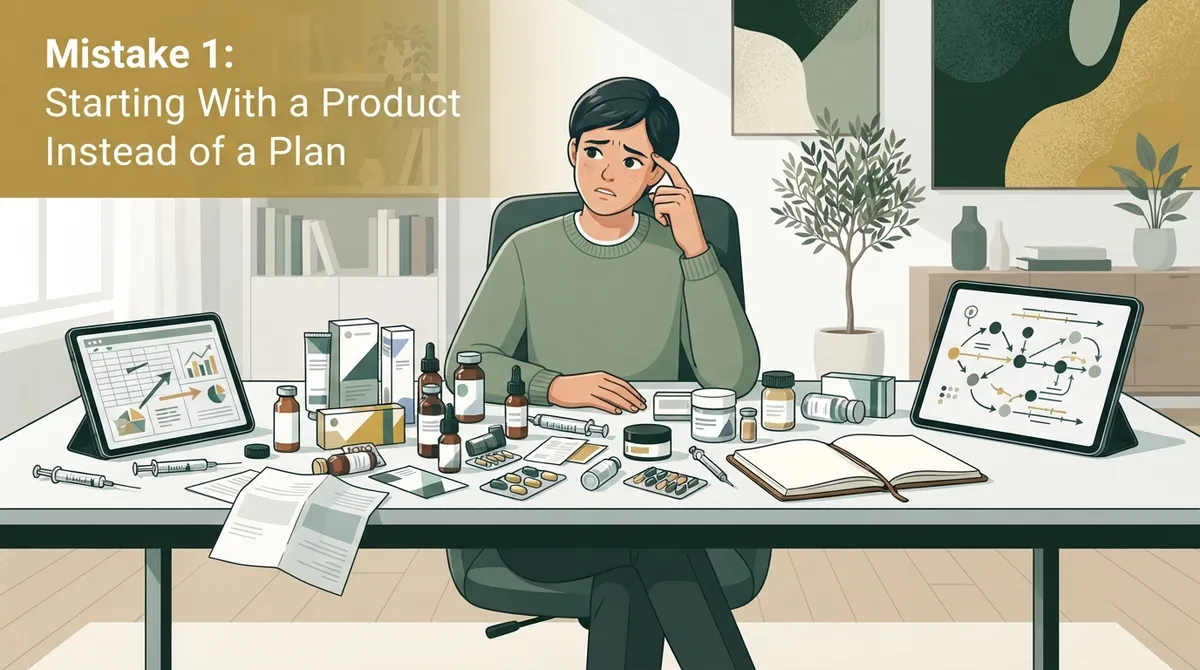
Mistake 1: Starting With a Product Instead of a Plan
Many people begin by picking a peptide they saw online. That’s backwards. The better move is to start with your goals, your history, and your health data.
A good first step is a consultation where a licensed clinician reviews:
- Your health goals (energy, sleep, skin, recovery, weight)
- Your medical history and current medications
- Your risk factors and family history
- Whether you have a diagnosed condition or simply age-related changes
That last point matters a lot. Treating a diagnosed medical condition, like confirmed adult growth hormone deficiency, is very different from using peptides for general anti-aging goals. A clinician helps you tell the difference.
Mistake 2: Skipping Blood Work
Guessing is not a strategy. Labs give you a real baseline, and they help your provider spot anything that should change the plan or rule peptides out entirely.
Biohackers and health optimizers tend to love this step, and for good reason. Data beats guesswork every time. Not sure what to test? Our post on lab work for peptide therapy breaks it down, and this one explains why lab work matters before you start.
Mistake 3: Believing Any Peptide Is Proven to Reverse Aging
This one is big. Be careful with any program that promises to ‘reverse’ aging. Studies of growth hormone in healthy older adults found some changes in body composition. But they did not show meaningful improvements in strength or other long-term health outcomes.
Here is a quick look at how claims and evidence often compare:
| Common Claim | What the Evidence Says |
|---|---|
| ‘Reverses aging’ | No peptide is approved or proven to reverse normal aging |
| ‘Builds muscle and strength in older adults’ | Body composition may change, but strength gains were not established |
| ‘Totally safe and natural’ | Side effects and quality concerns are real and vary by product |
| ‘Everyone can benefit’ | Candidacy depends on health history, labs, and goals |
A trustworthy provider will happily tell you where the evidence is strong and where it is thin. If you’d like more on that, see what research supports peptide therapy.
Mistake 4: Ignoring the Side Effects and Risks
Every treatment has trade-offs. Growth hormone treatment in older adults has been linked to fluid retention and soft-tissue swelling, joint pain, carpal tunnel syndrome, impaired fasting glucose, and diabetes. Long-term effects on cancer, heart disease, fractures, and mortality are still uncertain. Growth hormone is also contraindicated in active malignancy.
The goal is not to scare you. It’s to help you go in with open eyes and ask for monitoring. For a balanced view, check out how to weigh the risks of peptide therapy safely and our list of peptide therapy side effects you should know.
Mistake 5: Not Understanding Compounded vs. FDA-Approved
This is where many beginners get tripped up. The FDA says compounded drugs are not FDA-approved. The agency does not review them for safety, effectiveness, or quality before they’re marketed.
The FDA has also flagged concerns about certain compounded peptides, including immunogenicity (your immune system reacting to the product), aggregation, impurities, and limited safety information. For example:
- BPC-157: The FDA says available safety information is insufficient to determine whether it may cause harm in humans.
- Ipamorelin acetate: The FDA lists concerns about immunogenicity and cites a study using intravenous administration that reported serious adverse events.
That is why sourcing, pharmacy standards, and clinical oversight matter so much. Read more in our guides on approved vs. wellness peptides and how to verify FDA recognized peptide therapy.
Mistake 6: Buying ‘Research Use Only’ Products or Self-Injecting Without Guidance
Please skip anything labeled ‘research use only.’ Those products are not made or tested for human use, and there is no clinician watching out for you.
Online testimonials can feel convincing, but they are not proof of safety or effectiveness. A real protocol comes from a licensed provider who prescribes, monitors, and adjusts. If you’re curious about how safe administration works, our post on getting peptides administered safely at home is a helpful read.
Mistake 7: Skipping the Right Questions at Your Consultation
A consultation is your time to be curious. Don’t be shy. Smart questions help you spot a quality provider fast.
Here is a simple checklist to bring with you:
- What specific diagnosis or goal does this peptide address?
- What human evidence supports this use?
- Is the product and route of administration legally available?
- What monitoring and follow-up labs will I need?
- What are the risks, and who should avoid this?
- What non-peptide alternatives could help me?
Want even more? See our list of 15 peptide consultation questions to ask, and learn about consultation mistakes that waste your first visit.
Mistake 8: Forgetting About Lifestyle Basics
Here’s the part nobody gets excited about, but it works. Sleep, strength training, protein, stress management, and regular checkups still beat any shortcut. If your sleep is rough and your diet is all over the place, a peptide will not magically fix that.
For busy professionals, small steps add up. Try this simple foundation before or alongside any therapy:
- Aim for consistent sleep and wake times
- Lift weights or do resistance work a few times a week
- Eat enough protein and plenty of whole foods
- Manage stress with walks, breathing, or downtime
- Keep up with preventive screenings
Need more ideas? Check out how to increase energy after 40 the smart way and our look at peptides vs. lifestyle fixes.
Mistake 9: Expecting Overnight Results
Patience is part of the process. Real changes take time, and some people notice little at all. A realistic plan includes check-ins, lab follow-ups, and adjustments along the way.
Here is a rough guide to what a thoughtful starting path can look like:
| Stage | What Happens |
|---|---|
| Consultation | Review goals, history, medications, and risks |
| Lab work | Baseline blood work to guide decisions |
| Personalized plan | Provider designs a plan if appropriate for you |
| Monitoring | Follow-ups and adjustments over time |
To set your expectations, see what a realistic peptide therapy timeline looks like.
Mistake 10: Choosing a Provider Based on Price or Hype Alone
The cheapest option or the loudest ad is rarely the best choice. Look for licensed providers, clear communication, lab-based planning, and ongoing monitoring. Telehealth can be a wonderful fit for wellness seekers and busy professionals, as long as real clinicians are guiding the process.
Not sure what to look for? Our guides on how to choose a peptide therapy clinic you trust and signs longevity medicine telehealth is legit can help you vet your options.
This is where Allura Longevity comes in. Allura offers personalized, medically supervised peptide therapy through telehealth, with licensed providers led by Ashley, a board-certified Family Nurse Practitioner. Clients begin with a $50 virtual consultation, complete blood work through LabCorp, and receive a customized six-month plan delivered to their home, with ongoing monitoring and adjustments. Care is available in Florida, Georgia, Texas, Connecticut, Indiana, Maryland, New York, and California.
A Simple Starter Roadmap You Can Follow
Feeling a little overwhelmed? Totally normal. Here’s a clean, step-by-step way to begin:
- Define your goals. Is it energy, sleep, recovery, skin, or something else?
- Gather your history. List medications, supplements, conditions, and family history.
- Book a consultation with a licensed clinician.
- Get baseline labs before making any decisions.
- Ask the tough questions about evidence, legality, and monitoring.
- Start with a personalized plan only if it’s right for you.
- Track and follow up so your plan can be adjusted over time.
To see how plans get tailored, explore 15 ways a peptide therapy plan gets personalized and the 10 peptide therapy basics every beginner should know.
Who Is a Good Fit, and Who Should Pause?
Peptide therapy is not one-size-fits-all. Some people are better served by waiting, trying other approaches first, or pursuing treatment for a specific diagnosis instead.
You may want to pause or talk with your doctor first if you:
- Have an active cancer or a history of certain cancers
- Have diabetes or blood sugar concerns
- Are pregnant or planning pregnancy
- Take medications that could interact
A clinician can sort this out with you. Our post on how to spot peptide therapy contraindications safely goes deeper, and who is a candidate for peptide therapy can help you gut-check your fit.
Ready to Start the Smart Way?
Starting anti aging peptide therapy does not have to feel confusing or risky. Skip the shortcuts, lean on real labs, ask honest questions, and work with licensed providers who put your safety first. That is truly the best way to start anti aging peptide therapy: slowly, safely, and with a plan built around you.
Allura Longevity makes that first step easy and convenient from home. New client spots are limited each month, so if you’re curious, now is a great time to take the first step. Request a consultation or call (813) 510-6277 to talk with a licensed provider about whether personalized peptide therapy fits your goals. You can also learn more about our peptides for women and peptides for men. For more on the research behind peptides, the National Library of Medicine is a good place to read further.
FAQs
Q: Are anti aging peptide therapies FDA-approved?
A: No peptide therapy is approved by the FDA to reverse normal aging. Some peptides are approved for specific medical conditions, but compounded peptides are not reviewed by the FDA for safety, effectiveness, or quality before they’re marketed. That’s why working with a licensed clinician really matters.
Q: What should I ask a clinician before starting peptide therapy?
A: Great question! Ask what specific diagnosis or goal the peptide addresses, what human evidence supports it, whether the product and route are legally available, and what monitoring you’ll need. It’s also smart to ask about risks and alternatives.
Q: Is growth hormone or a growth hormone releasing peptide safe for healthy adults who want to slow aging?
A: Current endocrine guidance does not support these treatments for slowing normal aging in healthy adults. They have been linked to side effects like swelling, joint pain, and higher blood sugar. Please talk with a licensed provider before considering them.
Q: How can I tell whether a peptide product is FDA-approved or compounded?
A: Ask your provider directly and request details about the pharmacy and product source. Be cautious of anything labeled ‘research use only’ or marketed for self-injection without clinical oversight. A trustworthy provider will happily explain exactly what you’re getting.
Q: What tests do I need before starting peptide therapy?
A: It depends on your goals and health history, but baseline blood work is a smart first step. Your provider will decide which labs make sense for you and will usually repeat testing over time to monitor how you’re doing.





