

Key Takeaways
-
No established clinical evidence shows that popular wellness peptides boost daytime energy in otherwise healthy people, so promises of better stamina should be questioned.
-
A rise in growth hormone or IGF-1 on a lab report does not prove you will feel sharper or more energetic during the day.
-
Start with basics that move the needle: steady sleep and wake times, a daily 20-30 minute walk, protein paired with fiber at meals, and cutting caffeine by early afternoon.
-
Persistent afternoon fatigue can stem from sleep apnea, thyroid problems, low iron, low testosterone, blood sugar issues, or medication side effects, so a medical workup should come first.
-
Compounded and research-use peptides are not FDA-reviewed for safety, effectiveness, or quality, and the FDA has flagged ipamorelin and CJC-1295 for safety concerns including impurities and serious adverse events.
-
Before starting any peptide, ask whether it is FDA-approved, compounded, or research-use only, what evidence supports it for your goal, which labs you need, and how you will be monitored.
You wake up, brew the coffee, and still feel like you are running on 40% battery by 2 p.m. Sound familiar? You are far from alone. Many busy professionals, midlife adults, and wellness fans are asking one big question: how can peptides improve daytime stamina, and do they beat the simple stuff like sleep and food?
Here is the honest answer, and we promise to keep it friendly and real. Peptides are a huge family of medicines. Some are FDA-approved for specific diagnoses. Others are sold as “wellness” products with big promises and thin proof. Right now, there is no established clinical evidence that popular wellness peptides boost daytime energy in otherwise healthy people.
That does not mean peptide therapy has no place. It means the smartest path starts with finding out why you are tired. In this guide, we compare peptides with lifestyle fixes, look at what the FDA says, and show how a careful, lab-guided approach works. Let’s dig in together.
What Peptides Are and Why People Link Them to Energy
Peptides are short chains of amino acids, the building blocks of protein. Your body makes thousands of them. They act like tiny messengers, telling cells what to do. If you want a quick primer, what are peptides is a good starting read.
Because peptides carry signals, it is easy to see why people connect them with energy. Some peptides touch the growth hormone pathway. Growth hormone and IGF-1 play roles in body composition, recovery, and metabolism. So the thinking goes: nudge the pathway, feel more energized.
But here is the catch. A shift in a hormone level on a lab report is not the same as feeling sharper at 3 p.m. Hormone numbers and real-world stamina do not always move together. That is why careful wording matters in this topic.
Not All Peptides Are the Same
“Peptide therapy” is not one single treatment. The term covers very different products, and the evidence depends on the exact drug and the exact reason it is used. If you are curious about the basics, our guide on 10 Peptide Therapy Basics Every Beginner Should Know (2026) breaks it down simply.
| Peptide Type | Regulatory Status | Typical Use | Evidence for Daytime Stamina |
|---|---|---|---|
| FDA-approved peptide medicines | Approved for specific diagnoses | Defined medical conditions | Not approved as a general energy treatment |
| Compounded peptides | Not FDA-approved or reviewed for safety, effectiveness, or quality | Prescribed after clinical evaluation | Limited or none for stamina |
| Research-use or online peptides | Not intended for human use | Marketed for “energy” or “recovery” | No reliable evidence; higher risk |

What the Evidence Says About Peptides and Stamina
Let’s keep this section plain and honest, because trust matters more than hype.
The FDA has reported limited clinical data for CJC-1295. It also notes serious adverse events tied to it, including increased heart rate and a systemic vasodilatory reaction. For ipamorelin, the FDA says it has not identified data supporting its effectiveness for growth hormone deficiency in adults or children. The agency has also flagged potential safety concerns for compounded ipamorelin and CJC-1295, such as immunogenicity and peptide impurities.
An FDA briefing document also describes a study in which intravenous ipamorelin was linked to serious adverse events, including deaths. That does not mean every route or formulation carries the same risk. It does show how much we still do not know.
Meanwhile, no reliable population-level study we found shows that these peptides raise daytime stamina in healthy people. So you will not see us promise a number or a percentage here. Anyone who does should be asked for the trial behind it.
Why Hormone Changes Do Not Equal Better Energy
Think of it like a car dashboard. A needle moving up looks exciting. But it does not tell you if the engine runs smoother. In the same way, a rise in growth hormone or IGF-1 does not prove better function, focus, or stamina. If you want to explore how these pathways work, read How Do Peptide Therapy Mechanisms Work in Your Body?
Peptides vs. Lifestyle Fixes: A Side-by-Side Look
Now for the fun part, the actual comparison. Which gets you further on daytime stamina: peptides or the basics? Here is how they stack up.
| Factor | Peptides | Lifestyle Fixes |
|---|---|---|
| Evidence for stamina | Limited for wellness peptides; none established in healthy people | Strong support for sleep, movement, and nutrition |
| Safety unknowns | Higher for compounded or research-use products | Low when done sensibly |
| Finds the root cause? | No, unless paired with a medical workup | Often reveals habits behind fatigue |
| Cost | Ongoing medication and monitoring costs | Mostly low or free |
| Best for | People with a clinical reason, under supervision | Nearly everyone as a starting point |
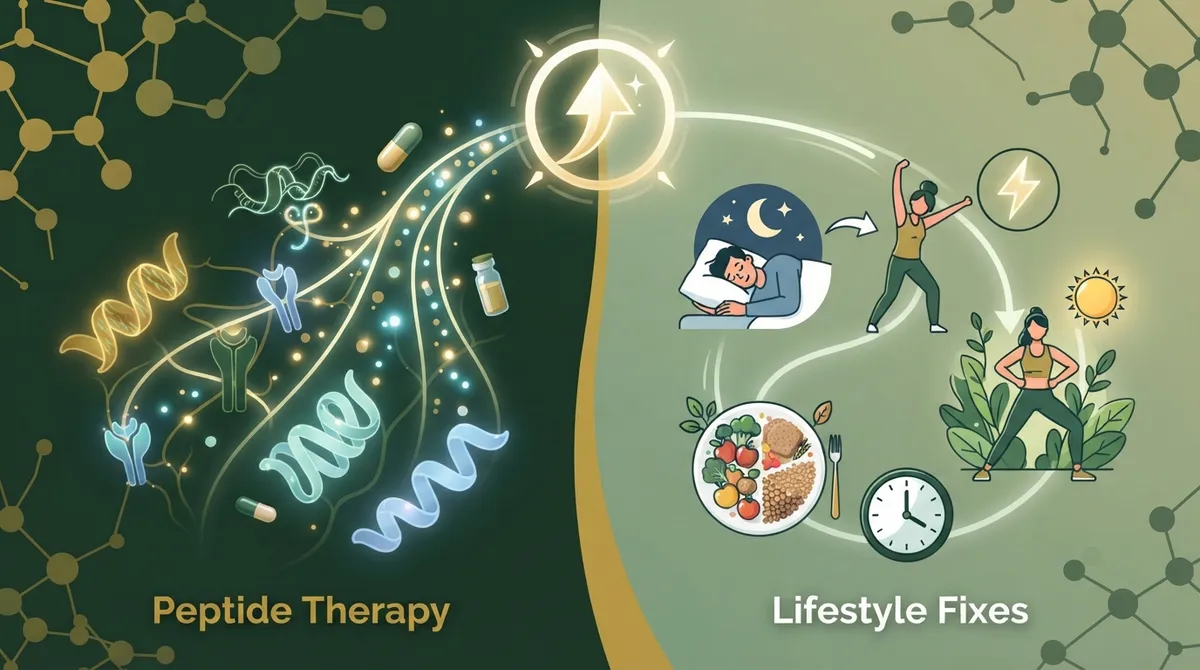
The takeaway? Lifestyle fixes win on evidence and safety. Peptides may play a supporting role for some people, but only after a proper evaluation. For a deeper look at this matchup, see Peptides vs. Lifestyle Fixes for Energy: Which Wins?
The Lifestyle Basics That Actually Move the Needle
Before you spend a dime on any therapy, give these a fair shot:
- Protect your sleep. Aim for a steady bedtime and wake time, even on weekends.
- Move daily. A brisk 20 to 30 minute walk can lift afternoon energy.
- Eat steady meals. Pair protein with fiber to avoid big energy crashes.
- Watch caffeine timing. Cut off coffee by early afternoon if sleep suffers.
- Stay hydrated. Even mild dehydration can make you feel foggy and sluggish.
None of this is flashy. But it works, and it sets the stage for any medical plan that follows.
The Real Reason You Might Be Tired: A Medical Workup Comes First
Persistent daytime fatigue has many possible causes. Guessing and self-treating with an online peptide is the risky route. A clinical workup is the evidence-based route.
Common contributors include:
- Poor or disrupted sleep, including sleep apnea
- Thyroid problems
- Low iron or other nutrient gaps
- Low testosterone in men, or hormone shifts in perimenopause and menopause
- Blood sugar issues
- Mood changes such as depression or anxiety
- Side effects from medications
If this sounds like you, our posts on 6 Real Reasons You’re Tired All the Time (Women, 2026) and 5 Real Fixes for Low Energy in Men Over 40 (2026) are great next steps.
Why Lab Work Is the Smart First Move
Blood work turns a vague feeling into useful data. It can show hormone levels, thyroid function, and nutrient status. That is exactly why a responsible provider orders labs before suggesting any peptide. You can read more about this in Lab Work for Peptide Therapy: What to Test and Why.
For biohackers and data lovers, this is the good stuff. Instead of copying a stack from a forum, you get a plan built around your own numbers.
Where Peptide Therapy Can Fit Into a Stamina Plan
So is there any role for peptides at all? Possibly, yes, but with realistic expectations and medical oversight.
Here is how a thoughtful approach looks:
- Evaluate first. A licensed provider reviews your history, symptoms, and goals.
- Run labs. Blood work helps find underlying drivers of fatigue.
- Treat what is found. If a hormone or other issue shows up, address it with a proven option.
- Consider peptides carefully. If appropriate, a provider discusses risks, benefits, and the limits of the evidence.
- Monitor and adjust. Regular check-ins keep the plan safe and honest.
Notice what is missing? A promise that a peptide will fix your stamina. A good provider will not make that claim. Instead, they will talk about what we know, what we do not, and how to track your results.
Approved vs. Wellness Peptides
Some peptide medicines are FDA-approved for specific conditions. Prescription growth hormone, for example, is used for diagnosed conditions under medical supervision. It is not a general energy booster. To understand this split better, check out Approved Peptides vs. Wellness Peptides: What Works?
If you are weighing options, our guide on How to Weigh the Risks of Peptide Therapy Safely in 2026 is worth a look. And for a closer view at one popular name, see Ipamorelin Peptide Therapy: Benefits, Dosing & Safety.
Safety Checklist Before You Try Any Peptide
Compounded drugs are not FDA-approved. The FDA does not review them for safety, effectiveness, or quality before they go to market. The agency has even flagged ipamorelin acetate and CJC-1295 on its compounding safety-risk list. Rules can change, so always verify current FDA information and your state’s requirements.
Use this quick list before you start anything:
- Ask whether the product is FDA-approved, compounded, or research-use only.
- Confirm a licensed clinician is reviewing your history and labs.
- Ask what evidence supports the use for your specific goal.
- Learn the possible side effects and what to do if they appear.
- Avoid “research chemical” peptides bought online for self-injection.
- Plan follow-ups so someone is watching your response.
You deserve straight answers. If a seller dodges these questions, walk away. Our post on Who Can Explain Peptide Therapy Safely? 2026 Guide can help you spot a trustworthy voice.
How Telehealth Makes Careful Care Easier
For busy professionals, the idea of extra appointments can feel like one more drain on energy. That is where telehealth shines. You talk with a licensed provider from your couch, get labs through a local draw site, and have any prescribed treatment delivered to your door.
Allura Longevity offers personalized, medically supervised peptide therapy through telehealth. The process starts with a $50 virtual consultation and blood work through LabCorp. From there, licensed providers, led by Ashley, a board-certified Family Nurse Practitioner, build a customized plan and keep adjusting it with ongoing monitoring. Care is available in Florida, Georgia, Texas, Connecticut, Indiana, Maryland, New York, and California.
Curious how this works in practice? Read What Really Happens During a Peptide Telehealth Visit? and 15 Ways a Peptide Therapy Plan Gets Personalized (2026).
Final Thoughts: Be Curious, Stay Skeptical, Get Tested
So, how can peptides improve daytime stamina? The honest answer is that wellness peptides have not been shown to do so in healthy people, and some carry real safety questions. The best path is to find the cause of your fatigue, fix the basics, and use medical therapies thoughtfully under a licensed provider.
You are not being dramatic if you feel tired. You are being human. And you deserve a plan built around your body, not a trend. If you would like a clear, supervised starting point, we would love to help you get answers. Request a consultation with our team, or call (813) 510-6277. Spots for new clients are limited each month, so reach out while there is room.
FAQs
Q: Can peptide therapy increase energy or daytime stamina?
A: There is no established clinical evidence that commonly promoted wellness peptides boost daytime stamina in otherwise healthy people. Some peptides affect hormone pathways, but a hormone change does not prove you will feel more energized. The best first step is a medical evaluation to find out why you feel tired.
Q: Is ipamorelin or CJC-1295 FDA-approved for fatigue?
A: No. The FDA has reported limited clinical data for CJC-1295 and has not identified data supporting ipamorelin’s effectiveness for growth hormone deficiency. Both appear on the FDA’s compounding safety-risk list, so it is wise to talk with a licensed clinician before considering either one.
Q: What should I do first if I feel tired every afternoon?
A: Start with the basics: steady sleep, daily movement, balanced meals, and smart caffeine timing. If the fatigue sticks around, ask a licensed provider about blood work to check thyroid, hormones, and nutrient levels. That gives you real answers instead of guesses.
Q: What are the risks of compounded or online peptide injections?
A: Compounded drugs are not reviewed by the FDA for safety, effectiveness, or quality before they are sold. The FDA has flagged concerns like peptide impurities and immune reactions for certain products. Research-use peptides bought online carry even more uncertainty, so medical supervision really matters.
Q: What should I ask a clinician before starting peptide therapy?
A: Ask whether the product is FDA-approved or compounded, what evidence supports it for your goal, and which labs you need first. Also ask about side effects and how often you will be monitored. A good provider will welcome these questions and answer them honestly.





