

Key Takeaways
-
No peptide is FDA-approved for midlife or postmenopausal libido; bremelanotide (Vyleesi) is approved only for premenopausal women with distressing acquired hypoactive sexual desire disorder.
-
Vyleesi can temporarily raise blood pressure and should not be used with uncontrolled high blood pressure or known cardiovascular disease; it may also cause lasting skin darkening.
-
Kisspeptin is investigational, with only early research such as a small study in 32 men with low desire, so it is not a proven libido treatment.
-
Compounded PT-141 is not FDA-approved, so its safety, quality, and effectiveness are not established; always ask a licensed provider to explain the difference before starting.
-
Midlife low libido often has multiple causes, including menopause-related dryness and pain, poor sleep, mood, chronic illness, and medications, so addressing these first may restore desire.
-
Get blood work and a full medication review before choosing a peptide, and discuss hormone therapy, counseling, or lifestyle changes as alternatives.
If your desire has gone quiet in your 40s, 50s, or beyond, you are far from alone. Many people in midlife notice a dip in libido, and many start searching for a quick fix. Peptides come up often in those searches, and for good reason. They are talked about everywhere online.
Here is the honest truth, shared like a friend would share it. When people search for the best peptides for midlife libido, they want a clear winner. The science does not hand us one. No peptide is an established, FDA-approved treatment for midlife or postmenopausal libido. But there is a lot to learn, and a smart path forward.
In this guide, we will walk through the peptides people talk about most, what the evidence really says, the safety points that matter, and the other things that can lower desire in midlife. You will also learn how a careful, personalized approach works. Whether you are a health optimizer, a busy professional, or someone who simply wants to feel like yourself again, you will leave with clear, honest answers.
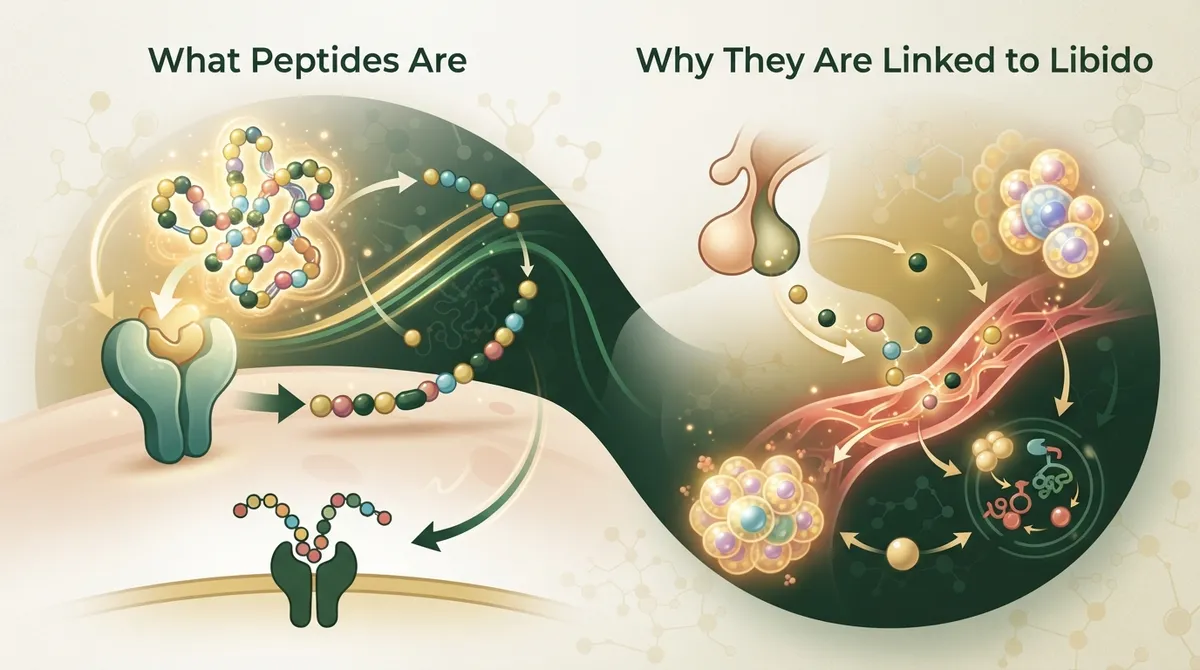
What Peptides Are and Why People Link Them to Libido
Peptides are short chains of amino acids. They act like tiny messengers in the body. Some tell your body to release hormones. Others affect brain pathways tied to mood, appetite, or desire. If you want a simple primer, our guide on 8 Facts That Explain What Are Peptides in 2026 covers the basics, and what are peptides from WebMD is another helpful starting point.
Because desire is partly driven by brain signals, a few peptides have drawn attention in sexual wellness. That is why the topic of the best peptides for midlife libido keeps popping up. But “talked about” and “proven” are two different things.

The Honest Answer: Is There a Single Best Peptide?
No. There is no broadly approved peptide for postmenopausal or midlife libido. The peptide most often discussed for sexual desire is bremelanotide, also called PT-141. In the United States it is sold as Vyleesi. A second peptide, kisspeptin, is still being studied.
That does not mean you have no options. It means the right answer depends on your body, your health history, and the real cause of your low desire. A good clinician starts with questions and lab work, not a one-size-fits-all injection.
| Peptide | Status | Evidence for Midlife Libido |
|---|---|---|
| Bremelanotide (PT-141 / Vyleesi) | FDA-approved for a limited group | Studied in premenopausal women; not approved for postmenopausal women or men |
| Kisspeptin | Investigational | Early research only; small study in men with low desire |
| Compounded PT-141 | Not FDA-approved | Not equivalent to Vyleesi; quality and safety not established through approval review |
Bremelanotide (PT-141): The Best-Known Option
Bremelanotide is a melanocortin-receptor agonist. In plain words, it works on brain pathways linked to sexual desire, rather than on blood flow. It is given as a 1.75 mg/0.3 mL injection under the skin, used as needed rather than every day.
What the FDA Label Actually Says
This part matters a lot. Vyleesi is approved only for premenopausal women with acquired, generalized hypoactive sexual desire disorder (HSDD) that causes distress. It must not be mainly explained by another medical or mental health condition, relationship problems, or a medication. The label says it is not indicated for postmenopausal women or men.
The two phase III trials enrolled 613 and 628 premenopausal women and tracked results over 24 weeks. Those groups do not tell us how it works in postmenopausal women. So when you see big promises online for midlife use, remember that the approval does not cover it.
Side Effects and Safety Points
Knowing the risks is part of making a smart choice. According to the FDA label, common side effects include:
- Nausea and vomiting
- Flushing
- Headache
- Injection-site reactions
There are bigger flags too. Vyleesi can cause a temporary rise in blood pressure, usually fading within about 12 hours of a dose. It should not be used with uncontrolled high blood pressure or known cardiovascular disease. It can also cause focal skin darkening, which may not go away. If you want more detail, read our piece on 8 Peptide Facts That Redefine Sexual Wellness in 2026 and 9 Intimate Wellness Facts About PT-141 in 2026.
Kisspeptin: Interesting, But Still Experimental
Kisspeptin is a peptide that plays a role in the body’s reproductive hormone signals. It has sparked curiosity in sexual wellness research. But it is not an approved libido treatment.
One small randomized crossover study looked at 32 men with HSDD. Kisspeptin-54 changed brain activity tied to sexual processing and increased penile tumescence in response to visual stimuli. That is exciting early science. It is not proof of a routinely effective treatment, and it does not tell us anything solid about midlife women. For a deeper look at how it compares to related peptides, see Kisspeptin vs. Gonadorelin: Which Fertility Peptide Wins?
Approved vs. Compounded: A Difference Worth Knowing
You may see online clinics offering compounded PT-141 and other peptides. It is important to understand that compounded drugs are not the same as an FDA-approved product. Compounded medications are not FDA-approved, so their safety, strength, quality, and fit for you are not established through the FDA’s approval review.
That does not make every compounded product unsafe. It means you should ask good questions and work with licensed providers who explain the difference clearly. Our guides on FDA-Approved vs. Compounded Peptides: What Wins? and How to Get Prescription Peptides Safely in 2026 can help you vet any provider.
What Really Lowers Libido in Midlife
Here is the part many people skip. Low desire is rarely about one thing. In midlife it often comes from several factors working together. Reaching for a peptide first can miss the real cause.
- Menopause-related changes: Vaginal dryness, pain with sex, and other genitourinary symptoms can make intimacy uncomfortable.
- Sleep and mood: Poor sleep, stress, anxiety, or low mood can quietly drain desire.
- Chronic illness and pain: Conditions like diabetes, thyroid problems, or ongoing pain affect sexual interest.
- Medications: Some antidepressants, blood pressure drugs, and others can lower libido.
- Relationship and life context: Stress, communication, and major life changes all play a role.
This is why a real clinical review matters so much. Our article on 6 Real Treatments for Low Libido in Women (2026) walks through options beyond peptides, and How to Find the Right Peptide for Low Libido covers how to match a plan to your situation.
A Smarter Step-by-Step Approach to Midlife Desire
Instead of chasing a single product, try this practical path. It keeps you safe and focused on what actually helps.
- Name what is changing. Is it desire, comfort, energy, or all three? Notice when it started.
- Review your medications and health conditions. Bring a full list to your provider.
- Get proper lab work. Hormones, thyroid, blood sugar, and other markers can reveal hidden causes. See 5 Blood Work Analysis Steps Before Peptides in 2026.
- Address comfort and sleep first. Treating pain, dryness, and poor rest can bring desire back on its own.
- Discuss all options openly. This may include hormone therapy, counseling, lifestyle changes, or a peptide where appropriate.
- Monitor and adjust. Check in regularly and change the plan as needed.
Where Hormones Fit In
For many people in midlife, hormones are part of the picture. Declining estrogen, testosterone, or other hormones can affect desire and comfort. A provider may talk with you about hormone therapy alongside, or instead of, a peptide. If you are weighing these paths, explore How to Choose Between Bioidentical Hormones and Peptides and Testosterone vs. Peptides for Women: Which Wins?
For men, low desire can also tie into testosterone, stress, and heart health. Our resource on 12 Facts on Sexual Wellness for Men in 2026 is a good place to start.
| Possible Contributor | What a Clinician May Check | Possible Next Step |
|---|---|---|
| Menopause symptoms | Dryness, pain, hot flashes, sleep | Discuss hormone or local treatment options |
| Medication effects | Full medication list | Review alternatives with your prescriber |
| Mood or stress | Screening for anxiety or low mood | Counseling or other supportive care |
| Hormone imbalance | Blood work | Personalized hormone plan |
| Blood pressure or heart health | Blood pressure, history | Confirm any peptide is safe for you |
How a Personalized Telehealth Plan Works
At Allura Longevity, care is built around you, not a trend. It starts with a $50 virtual consultation. You complete blood work through LabCorp, and your licensed provider reviews the results with you. If a treatment is a good fit, you receive a customized six-month plan delivered to your home. Ongoing monitoring and adjustments keep things safe and on track. The team is led by Ashley, a board-certified Family Nurse Practitioner, and telehealth care is available in Florida, Georgia, Texas, Connecticut, Indiana, Maryland, New York, and California.
This kind of approach respects the evidence. It means no promises that a peptide will fix everything. It means looking at your whole picture first. If you are curious how it all comes together, read How to Start Peptide Therapy the Smart, Safe Way and Is Peptide Therapy Safe? What You Really Need to Know. You can also browse the research on peptides through the National Library of Medicine.
Red Flags to Watch For
Because libido products are so popular, some sellers overpromise. Be cautious if you see any of these:
- Claims that a peptide is “FDA-approved for menopause libido”
- No lab work or health review before prescribing
- No clear explanation of side effects or blood pressure risks
- Pressure to buy quickly without a licensed provider
- Compounded products described as identical to Vyleesi
Final Thoughts: Your Desire Matters
Wanting to feel connected and vibrant in midlife is completely valid. The best peptides for midlife libido are not a simple list with a clear winner. Bremelanotide is the best known, but its approval is limited. Kisspeptin is promising but experimental. And the real key is finding out why your desire changed in the first place.
The good news is that you do not have to figure it out alone. A caring, personalized plan can help you sort fact from hype and find what truly supports you. Limited spots are available for new clients each month, so if you are ready to talk it through with a licensed provider, request a consultation today or call (813) 510-6277. Your next chapter can feel a lot more like you.
FAQs
Q: What is the best peptide for libido during perimenopause or menopause?
A: There is no established, FDA-approved peptide for midlife or postmenopausal libido. Bremelanotide (PT-141) is the best known, but its approval covers only certain premenopausal women. A provider can help you look at all the possible causes first.
Q: Is PT-141 (bremelanotide) FDA-approved for postmenopausal women?
A: No. The FDA-approved version, Vyleesi, is indicated only for premenopausal women with acquired, generalized HSDD that causes distress. The label states it is not indicated for postmenopausal women or men.
Q: What are the side effects and risks of PT-141?
A: Common side effects include nausea, flushing, headache, vomiting, and injection-site reactions. It can also temporarily raise blood pressure and may cause skin darkening that does not always fade. It should not be used with uncontrolled high blood pressure or known cardiovascular disease.
Q: Is compounded PT-141 the same as Vyleesi?
A: No. Compounded drugs are not FDA-approved, so their safety, quality, and effectiveness are not established through the FDA approval process. Always ask a licensed provider to explain the difference before you start.
Q: What is kisspeptin, and is it approved for low libido?
A: Kisspeptin is a peptide involved in reproductive hormone signaling. It is investigational and not approved for low libido. The early research, including a small study in men, is interesting but does not prove it works as a routine treatment.





