
Key Takeaways
-
Standard TRT costs $100-$500 monthly, while peptide therapy ranges from $200-$1,500 monthly depending on protocol; first-year costs are higher due to upfront testing and evaluation.
-
Insurance rarely covers hormone therapy for anti-aging or performance goals; coverage typically requires documented hypogonadism with two separate early-morning testosterone tests showing low levels near 300 ng/dL plus symptoms.
-
Complete cost estimates must include consultation ($100-$400), baseline hormone panel ($150-$600), monthly medication, follow-up visits ($40-$250 each), and monitoring labs every 3-6 months ($100-$300 per cycle).
-
Telehealth providers often cost less than traditional clinics without cutting medical oversight by eliminating office overhead while maintaining licensed provider supervision and lab work through trusted partners.
-
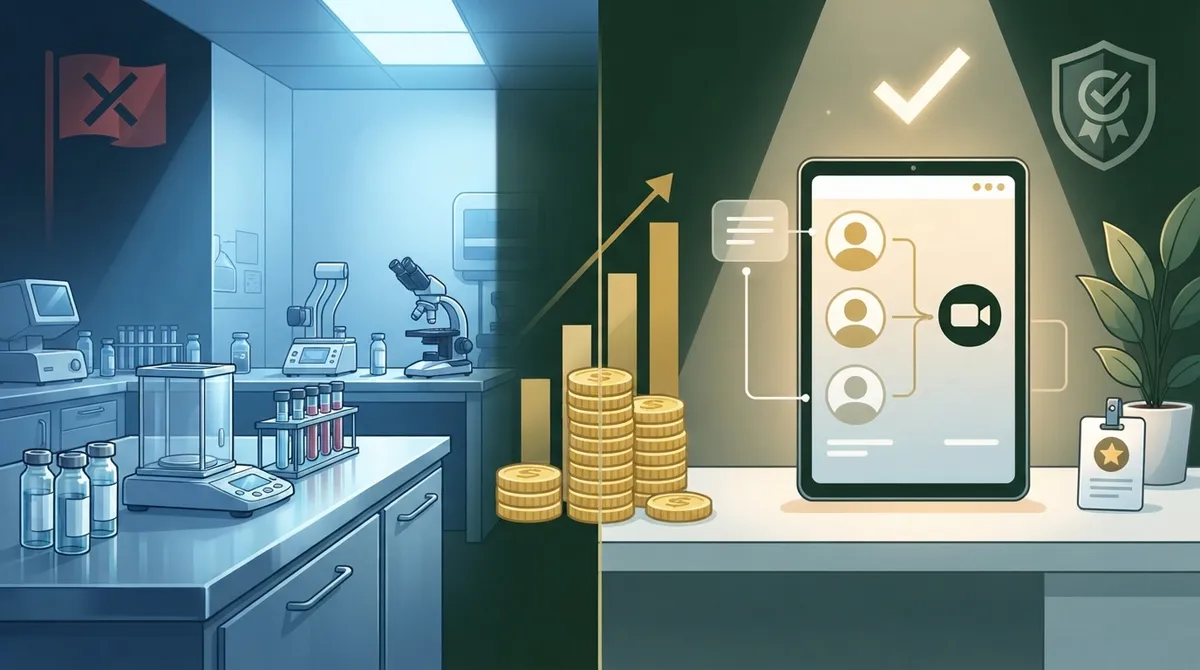
Avoid clinics with red flags: no baseline lab work required, vague pricing that doesn't specify inclusions, no licensed medical provider review, or pressure to start immediately without discussing health history.
-
Ask providers specifically what's included in advertised prices (labs, consultation, shipping, medication) since some bundle everything while others charge separately for each component.
If you’ve been Googling “hormone therapy for men cost” late at night, you’re not alone. Maybe you’re tired, your motivation has dipped, or your gym gains just aren’t happening like they used to. Before you swipe a credit card for the first clinic that pops up, let’s talk numbers. Real numbers. The kind that help you budget with confidence instead of guessing.
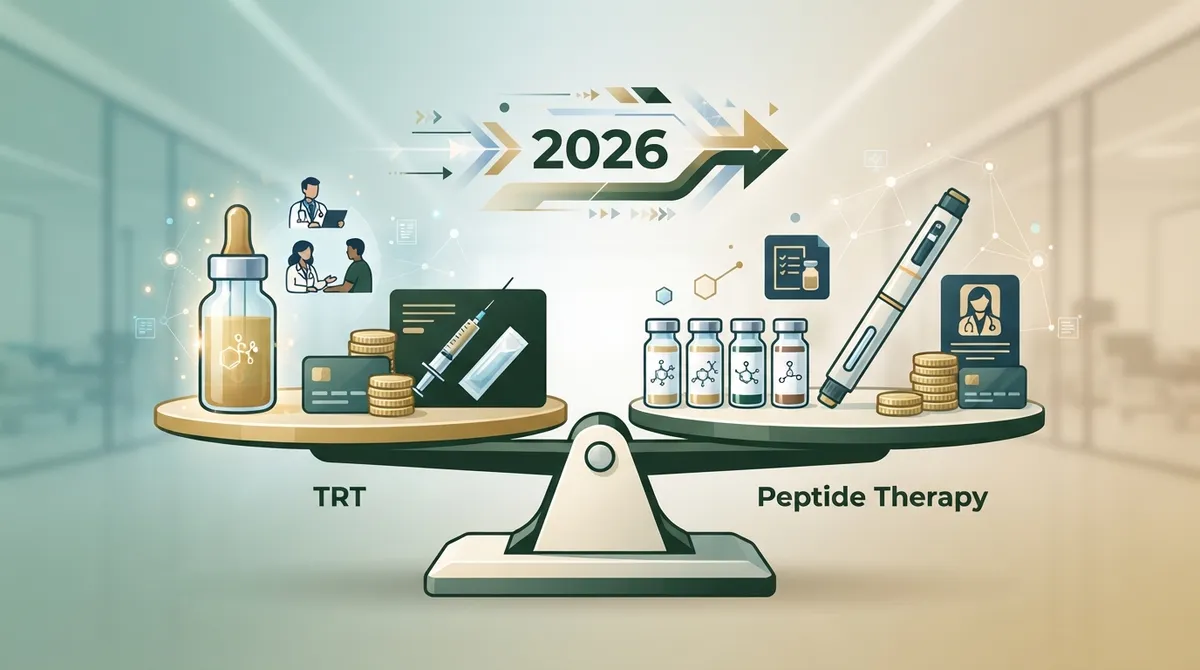
Here’s the truth: hormone therapy for men cost varies a lot depending on what you actually need. Testosterone replacement therapy (TRT) and peptide therapy are two different paths, and they come with two different price tags. Some men need one, some need both, and some need neither yet. This guide breaks down what you’ll pay in 2026, what’s usually included, and how to avoid overpaying for care that skips the important stuff, like lab work and physician oversight.
Whether you’re a busy professional squeezing in a telehealth visit between meetings, or a biohacker who wants every line item explained, we’ve got you covered. Let’s dig into the real cost of feeling like yourself again.
What Drives Hormone Therapy for Men Cost in 2026
The price of hormone therapy isn’t just about the medication itself. Several moving pieces combine to create your final bill.
- Initial consultation: A visit where a provider reviews your symptoms and history.
- Diagnostic lab testing: Blood work to check testosterone, thyroid, and other key markers.
- Medication: Injectable, topical, or pellet-based testosterone, or a peptide protocol.
- Supplies: Needles, syringes, alcohol swabs, or applicator devices.
- Ongoing monitoring: Follow-up labs every three to six months to track progress and safety.
Skipping any of these steps might save money upfront, but it can cost you more in poor results or missed side effects later. A trustworthy clinic includes these basics in a clear, upfront price. If you want to understand how these pieces fit together, this guide on how to understand testosterone replacement therapy in 2026 is a great next read.
Testosterone Replacement Therapy: Typical Monthly Costs
Generic injectable testosterone, like testosterone cypionate, is usually the most affordable option. Reported pharmacy prices run about $20 to $80 per month. Compounded or clinic-supplied versions may cost more, often landing between $60 and $180 monthly before you add consultation and lab fees.
Topical testosterone tends to cost more. Generic gels run roughly $50 to $350 per month, while brand-name products can reach $200 to $850 monthly, depending on your pharmacy and insurance status.
| TRT Format | Typical Monthly Cost | Notes |
|---|---|---|
| Generic Injectable Testosterone | $20–$80 | Lowest-cost option through standard pharmacy |
| Compounded Injectable | $60–$180 | Before consultation and lab fees |
| Generic Topical Gel | $50–$350 | Price varies by pharmacy and dose |
| Brand-Name Topical (e.g., AndroGel) | $200–$850 | Depends on insurance and discounts |
| Telehealth TRT Program | $150–$300 | Often bundles consultation and shipping |
Broader cash-pay TRT estimates for 2026 range from about $100 to $500 monthly for standard care, and up to $1,500 for premium clinics or pellet-based treatment. If you’re weighing your options, this breakdown of how much testosterone therapy men pay can help you set realistic expectations.
Peptide Therapy: A Separate Cash-Pay Category
Peptide therapy isn’t a replacement for diagnosed testosterone deficiency. It’s a different tool entirely, often used alongside or instead of TRT for goals like recovery, energy, and metabolic support.
Men’s peptide programs commonly range from about $200 to $1,500 per month. The wide range depends heavily on which peptide you choose and how it’s dosed.
- Sermorelin-based programs: Roughly $400 to $800 per month, often used to support natural growth hormone release.
- BPC-157 protocols: Approximately $300 to $600 per month, popular for tissue repair and recovery.
- TB-500 protocols: Around $800 to $1,200 per month, frequently paired with BPC-157 for injury support.
Curious how these peptides actually work in the body? Check out this deep dive on TB-500 peptide facts you need in 2026, or learn the basics with 8 facts that explain what are peptides in 2026. For a deeper scientific look, the what are peptides overview from WebMD is a solid resource too.
Breaking Down the First-Year Bill
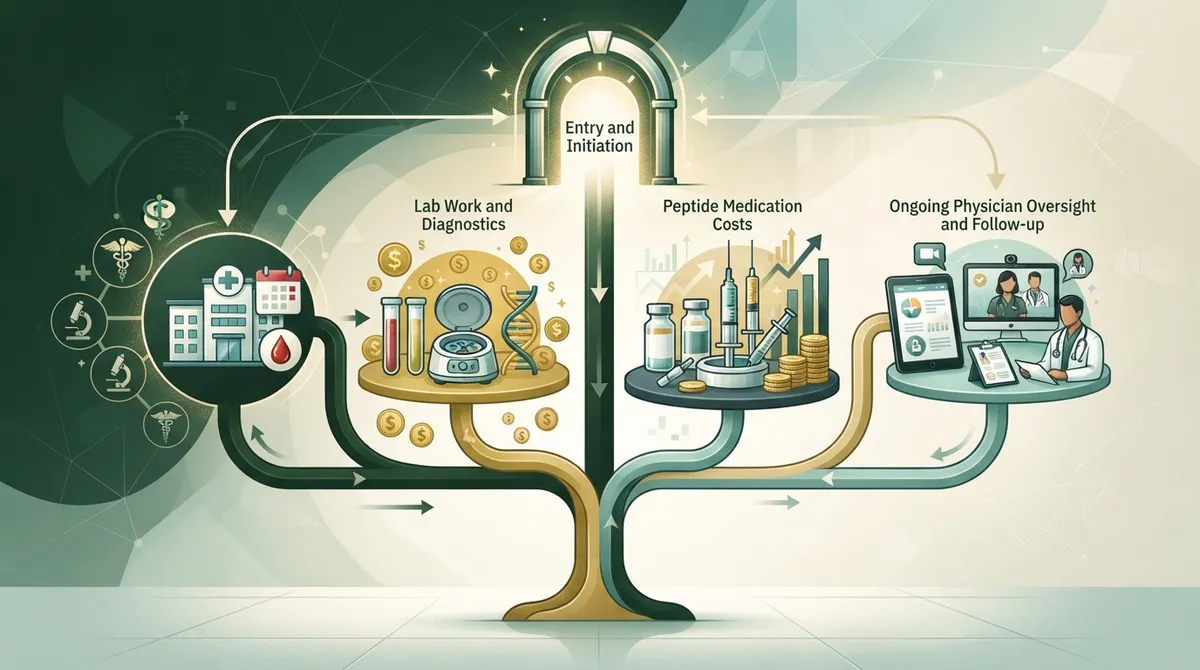
Many men focus only on the monthly number, but the first year often costs more because of upfront testing and evaluation. Here’s what a realistic first-year budget might include.
| Cost Category | Typical Range |
|---|---|
| Initial Consultation | $100–$400 |
| Baseline Hormone Panel | $150–$600 |
| Monthly Medication (TRT) | $100–$500 |
| Follow-Up Visits | $40–$250 each |
| Monitoring Labs (every 3–6 months) | $100–$300 per cycle |
If you add peptide therapy on top of TRT, expect your monthly spend to climb depending on the protocol chosen. This is exactly why understanding your full plan matters more than chasing the cheapest advertised price. For a closer look at common pitfalls, read 6 hormone therapy cost mistakes that drain your wallet.
Is Hormone Therapy for Men Covered by Insurance?
This is one of the most common questions we hear, and the answer is: sometimes, but not always. Insurance may cover TRT when you have documented hypogonadism. That usually means two separate early-morning testosterone tests showing low levels, often near 300 ng/dL, plus clinical symptoms.
Cosmetic, anti-aging, or performance-focused treatment is much less likely to be covered. Peptide therapy is almost always a cash-pay service, even when a licensed provider prescribes it, because most peptides used for wellness goals don’t have FDA-approved indications for those uses. Learn more about navigating this in our guide on how to navigate hormone therapy insurance coverage.
What About Medicare?
Medicare rarely covers elective peptide protocols. Even FDA-approved testosterone products may require prior authorization and proof of medical necessity. Don’t assume coverage. Always ask your provider to check your specific plan before starting treatment.
TRT vs. Peptide Therapy: Which Fits Your Goals and Budget
Choosing between TRT and peptide therapy isn’t about picking the cheaper option. It’s about matching treatment to your actual health needs.
- Choose TRT if: Lab work confirms low testosterone and you have symptoms like fatigue, low libido, or muscle loss.
- Choose peptide therapy if: You’re focused on recovery, sleep, skin, or metabolic support without a testosterone deficiency diagnosis.
- Consider both if: Your provider identifies multiple goals that benefit from a combined, personalized approach.
For a side-by-side comparison, this article on TRT vs. peptides: which hormone fix wins for men walks through the decision in more detail. You might also enjoy how to compare peptide therapy vs testosterone replacement for a practical checklist.
Why Membership Pricing Can Be Confusing
Not all “monthly fees” mean the same thing. Some clinics bundle everything, consultations, labs, shipping, and medication, into one price. Others charge separately for each piece. Always ask what’s included before comparing numbers side by side.
A low advertised price that excludes labs and follow-ups isn’t actually a deal. It’s an incomplete picture. According to the National Library of Medicine, proper hormone evaluation requires repeat testing and clinical correlation, not just a single number on a lab report.
Steps to Get an Accurate Cost Estimate
Ready to get real numbers instead of guesswork? Here’s how to approach it.
- Ask for a full price breakdown, including labs, consultation, medication, and follow-ups.
- Confirm whether your baseline labs are included or billed separately.
- Check if the clinic uses a licensed pharmacy and verifies dosing with a medical provider.
- Ask how often monitoring labs are required and what they cost.
- Compare all-inclusive telehealth plans against traditional in-person clinic pricing.
This process takes a little time, but it saves you from surprise bills later. If you’d like a step-by-step walkthrough, see how to start peptide therapy safely and see real results.
Why Telehealth Often Costs Less Without Cutting Corners
Traditional clinics carry overhead costs like office space and in-person staff. Telehealth providers can often pass on savings while still offering licensed medical oversight, lab work through trusted partners like LabCorp, and home delivery of your treatment plan.
At Allura Longevity, care starts with a $50 virtual consultation and complete blood work, followed by a custom six-month treatment plan shipped straight to your door. Licensed providers, led by board-certified Family Nurse Practitioner Ashley, monitor your progress and adjust your plan as needed. This model keeps hormone therapy for men cost transparent while still delivering real medical supervision. Spots are limited each month, so if you’ve been curious, it might be worth reaching out sooner rather than later.
Want to see what a personalized plan might look like for you? Explore peptides for men to learn more about available protocols, or read local clinic vs. telehealth: best peptide therapy near you to compare your options.
Red Flags to Watch For When Comparing Prices
Not every low-cost clinic is a bargain. Watch for these warning signs before signing up.
- No baseline lab work required before starting treatment.
- Vague pricing that doesn’t specify what’s included.
- No licensed medical provider reviewing your case.
- Peptides sold without prescription or pharmacy verification.
- Pressure to start immediately without discussing your health history.
A trustworthy provider will always prioritize safety over speed. If something feels rushed or unclear, it’s okay to ask more questions or look elsewhere.
Bringing It All Together
Hormone therapy for men cost isn’t one-size-fits-all. TRT tends to run $100 to $500 per month for standard care, while peptide therapy often falls between $200 and $1,500 monthly depending on your protocol. Add in consultations, labs, and monitoring, and your first year will look different from your ongoing monthly spend.
The best way to protect your wallet and your health is to choose a provider who explains every cost clearly, uses real lab data to guide your plan, and checks in regularly to adjust your treatment. That’s the kind of care that actually delivers results, not just a monthly charge on your statement.
If you’re ready to stop guessing and start feeling like yourself again, request a consultation with Allura Longevity today. With licensed providers, personalized six-month plans, and nationwide telehealth access across Florida, Georgia, Texas, Connecticut, Indiana, Maryland, New York, and California, help is closer than you think. You can also call (813) 510-6277 to ask questions before you commit. Limited spots open each month, so don’t wait too long to claim yours.
FAQs
Q: How much does hormone therapy for men cost per month?
A: It really depends on the treatment path you take. Standard TRT usually runs about $100 to $500 monthly, while peptide programs can range from $200 to $1,500 depending on the protocol. The best way to know your number is to get a full breakdown from your provider before you start.
Q: Is testosterone replacement therapy covered by insurance?
A: Sometimes, yes! If your labs confirm low testosterone with symptoms, many plans will cover medically necessary treatment. But if you’re seeking therapy purely for anti-aging or performance reasons, coverage becomes much less likely, so it’s smart to ask upfront.
Q: How much does peptide therapy cost for men?
A: Most men’s peptide programs land between $200 and $1,500 per month, depending on the specific peptide and dosing. For example, sermorelin often runs $400 to $800 monthly, while BPC-157 tends to be a bit more affordable at $300 to $600.
Q: What labs are needed before starting hormone therapy?
A: You’ll typically need a baseline hormone panel checking testosterone, and sometimes free testosterone, LH, FSH, and other markers. This usually costs $150 to $600 out of pocket, but it’s essential for building a safe, personalized plan rather than guessing at doses.
Q: Is compounded peptide therapy FDA approved?
A: Not usually! Many popular peptides are compounded products rather than FDA-approved medications, which means their regulatory status varies. That’s why it’s so important to work with a licensed provider and pharmacy who can explain exactly what you’re getting and why.





