

Key Takeaways
-
TRT directly replaces testosterone and works faster with stronger clinical evidence for diagnosed hypogonadism, but suppresses natural production; peptides signal your body to produce hormones naturally and may better preserve fertility.
-
Diagnosis requires two separate blood tests showing testosterone below 300 ng/dL—guessing based on symptoms alone risks wasted money and unnecessary risk, so comprehensive blood work must come first.
-
Most popular peptides don't raise testosterone directly; growth hormone peptides mainly influence GH and IGF-1 for recovery and sleep support, making them non-interchangeable with TRT despite common confusion.
-
Combining TRT and peptide therapy is often possible and increasingly common for fuller hormone optimization, but requires careful monitoring, updated labs, and a licensed provider experienced with treatment interactions.
-
Generic TRT costs under $50 monthly while peptide protocols range $100-$400 monthly; fertility goals, timeline for symptom relief, and broader wellness needs should guide your choice between approaches.
-
Work only with licensed providers using properly sourced pharmacies with correct dosing and monitoring—online marketing claims vary widely in quality and safety, making medical oversight essential for effective care.
Feeling tired, foggy, or just not like yourself lately? You’re not alone, and you’re definitely not stuck. So many of our clients come to us wondering which path makes more sense for them: peptide therapy or testosterone replacement therapy (TRT). It’s a great question, and honestly, one worth taking your time with. This guide walks you through a real, honest therapy comparison testosterone replacement seekers actually need, so you can talk to your provider with confidence and pick the option that fits your body and your goals.
Whether you’re a busy professional squeezing in a lunchtime lab draw, a biohacker who tracks every metric, or someone simply hoping to feel like yourself again, this comparison is for you. We’ll break down how each approach works, what the science says, and how to figure out which one (or both!) might be right for you. Let’s dig in together.
What Is Testosterone Replacement Therapy, Really?
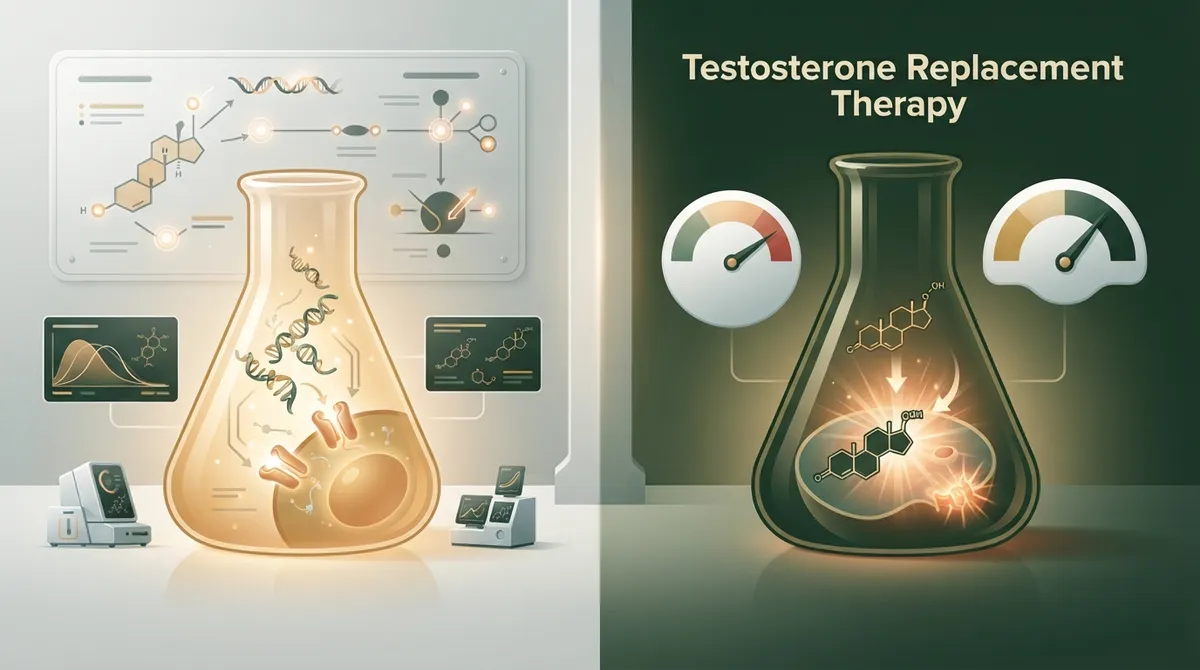
Testosterone replacement therapy does exactly what it sounds like. It replaces testosterone directly, usually through injections, gels, or pellets. It’s designed for men with medically diagnosed low testosterone, also called hypogonadism.
Doctors typically confirm this with blood work showing a morning total testosterone below roughly 300 ng/dL, checked on two separate tests. This isn’t guesswork. It’s a clear, measurable diagnosis backed by National Library of Medicine research and reinforced by a 2026 Endocrine Society statement confirming TRT’s clear benefits for appropriately diagnosed men.
How TRT Works in the Body
TRT adds testosterone from an outside source. Your body doesn’t have to make it anymore, so your natural production often slows down or stops. This is one of the biggest trade-offs to understand before starting treatment.
What Is Peptide Therapy in This Context?
Peptide therapy takes a different route. Instead of replacing a hormone, many peptides send signals that encourage your body to produce more of its own hormones or support related pathways. Think of it like nudging your internal factory to work smarter, rather than shipping in the finished product.
According to what are peptides resources, these are short chains of amino acids that act as messengers throughout the body. Some peptides target growth hormone and IGF-1 pathways. Others, like gonadorelin or kisspeptin-based approaches, aim upstream at the signals that control testosterone production itself.
Peptides Aren’t a Direct Testosterone Swap
Here’s the honest truth: most popular peptides don’t raise testosterone directly. Growth hormone peptides mainly influence GH and IGF-1, which support recovery, sleep, and body composition. They’re not interchangeable with TRT, even though they’re often mentioned in the same conversation.
Therapy Comparison Testosterone Replacement: Side-by-Side Look
Sometimes a simple table says it best. Here’s how these two approaches stack up across the factors that matter most to real people.
| Factor | Testosterone Replacement Therapy | Peptide Therapy |
|---|---|---|
| Mechanism | Directly replaces testosterone | Signals body to produce hormones or support pathways |
| Best For | Diagnosed hypogonadism | Hormone support, recovery, optimization |
| Speed of Results | Often faster, more predictable | Typically 4 to 12 weeks |
| Fertility Impact | Can suppress natural production and fertility | May be gentler on fertility, depending on peptide |
| Evidence Strength | Strong, well-established | Growing but more limited in humans |
| Typical Monthly Cost (2026) | Under $50 for generic cypionate | $100 to $400 for compounded protocols |
Key Differences You Should Know Before Choosing
Let’s break this down into clear takeaways so you can walk into your next consultation feeling prepared.
- TRT works faster. Because it directly replaces the hormone, many men notice symptom improvement sooner than with peptide-based approaches.
- Peptides may protect fertility better. Since TRT can shut down natural production, men hoping to preserve fertility often explore peptide options like gonadorelin first.
- Evidence favors TRT for diagnosed low T. Clinical research and comparison data consistently show stronger, broader evidence for TRT in men with confirmed hypogonadism.
- Peptides offer broader wellness support. Beyond hormones, certain peptides support recovery, sleep quality, immune health, and metabolism.
- Cost varies significantly. Generic TRT is often the more budget-friendly monthly option, while peptide protocols can cost more depending on the combination used.
Who Tends to Benefit From Each Option?
This is where things get personal. What works beautifully for your gym buddy might not be the right fit for you. Let’s look at some common scenarios.
Good Candidates for TRT
- Men with two confirmed low testosterone lab results
- Those experiencing significant fatigue, low libido, or muscle loss tied to diagnosed hypogonadism
- Men who aren’t currently trying to conceive or who understand fertility trade-offs
- Anyone wanting faster, more predictable symptom relief
Good Candidates for Peptide Therapy
- Men hoping to preserve fertility while addressing hormone signaling
- Health optimizers wanting to support recovery, sleep, and body composition
- Biohackers curious about upstream signaling pathways
- Wellness seekers already investing in preventive, personalized care
If you’re unsure which category fits you best, that’s exactly what a licensed provider is for. Our team at Allura Longevity reviews your blood work and health goals before recommending anything, because your plan should be as unique as you are.
Can You Combine TRT and Peptide Therapy?
Great question, and the answer is often yes. Many providers pair TRT with certain peptides to support recovery, manage side effects, or maintain other hormone pathways while testosterone levels stabilize. This combined approach is becoming more common as patients seek fuller-picture hormone optimization.
That said, combining therapies isn’t a DIY project. It requires careful monitoring, updated labs, and a provider who understands how these treatments interact. This is exactly the kind of nuanced planning our team specializes in through ongoing check-ins and adjustments.
Steps to Decide Which Path Is Right for You
Feeling a little overwhelmed by all this information? Totally normal. Here’s a simple roadmap to help you move forward with clarity.
- Start with comprehensive blood work to understand your actual testosterone levels, not just how you feel.
- Discuss your fertility goals honestly with your provider before choosing a path.
- Consider your timeline. If you need faster relief, TRT may be the better starting point.
- Think about your broader wellness goals, like sleep, recovery, and energy, which peptides may support.
- Ask about combination protocols if you want the benefits of both approaches.
- Schedule regular follow-up labs to track progress and adjust your plan as needed.
Common Peptides Used for Hormone Support
If you’re leaning toward the peptide side of this therapy comparison testosterone replacement conversation, here are some names you might hear.
| Peptide | Primary Role | Fertility Friendly? |
|---|---|---|
| Gonadorelin | Stimulates natural hormone signaling pathway | Often yes |
| Kisspeptin-based peptides | Supports upstream hormone signaling | Potentially yes |
| CJC-1295 | Growth hormone and recovery support | Not primarily fertility related |
| Ipamorelin | Growth hormone release, sleep support | Not primarily fertility related |
Curious about how these fit into a bigger picture plan? Our article on how GHRP peptides really work in your body breaks it down further, and if you want a deeper dive into testosterone-specific protocols, check out how to understand testosterone replacement therapy in 2026.
Safety and Quality Considerations
This part matters a lot, so let’s be direct. Peptide therapy is often marketed enthusiastically online, but not every product is created equal. Regulatory status and quality can vary widely between suppliers.
Working with a licensed provider means your peptides come from properly sourced pharmacies, dosed correctly for your body, and monitored over time. This is a huge reason telehealth clinics with real medical oversight matter so much. If you want to understand what separates safe, effective care from risky shortcuts, our guide on whether peptide therapy is safe is worth a read.
Why Diagnosis Comes First
Neither TRT nor peptide therapy should start without proper testing. Guessing at hormone levels based on symptoms alone can lead to wasted money and unnecessary risk. That’s why every plan at Allura Longevity begins with LabCorp blood work, so your provider sees the full picture before recommending anything.
How Allura Longevity Makes This Comparison Easier
We get it. Sorting through medical jargon and conflicting information online is exhausting. That’s why Allura Longevity built a simple, supportive process around this exact decision.
- A $50 virtual consultation to start the conversation
- Comprehensive LabCorp blood work to confirm your actual hormone levels
- A personalized six-month treatment plan built around your goals and labs
- Peptides and medications delivered right to your door
- Ongoing monitoring and adjustments led by Ashley, our board-certified Family Nurse Practitioner
- Nationwide telehealth access across Florida, Georgia, Texas, Connecticut, Indiana, Maryland, New York, and California
We know spots fill up fast each month, so if you’ve been putting off this decision, now’s a great time to explore your options. You can also learn more about our approach to hormone care in what hormone replacement therapy is and whether you need it.
Questions to Bring to Your Provider
Walking into your consultation prepared makes a huge difference. Here are a few questions worth writing down.
- What do my testosterone levels actually show, and how do they compare to normal ranges?
- Am I a candidate for TRT, peptide therapy, or a combination of both?
- How will this affect my fertility goals?
- What results should I expect, and by when?
- How often will my labs and plan be reviewed?
These questions help you feel like an active participant in your care, not just a passenger. And that’s exactly how it should feel.
Your Next Step Toward Feeling Like Yourself Again
Choosing between peptide therapy and testosterone replacement doesn’t have to feel confusing or overwhelming. With the right blood work, an honest conversation, and a provider who genuinely listens, you can find a path that fits your body, your goals, and your lifestyle. Whether that means TRT, targeted peptides, or a thoughtful combination of both, the most important step is simply starting with real data instead of guesswork.
If you’re ready to get personalized answers instead of generic advice, our team would love to help you map out the right plan. You can request a consultation today and take that first confident step toward feeling more energized, balanced, and like the best version of you. Spots are limited each month, so don’t wait too long to reach out.
FAQs
Q: What is the difference between peptide therapy and testosterone replacement therapy?
A: TRT directly replaces testosterone in your body, while peptide therapy usually signals your body to produce more of its own hormones or support related pathways. They work differently, so the right choice depends on your labs and goals.
Q: Can peptide therapy increase testosterone naturally?
A: Some peptides, like gonadorelin, may stimulate your body’s natural hormone production, but most common peptides don’t raise testosterone directly. It’s a gentler, more indirect approach compared to TRT.
Q: Is TRT better than peptides for low testosterone?
A: For diagnosed hypogonadism, TRT typically works faster and has stronger clinical evidence behind it. That said, peptides can be a great option for men prioritizing fertility or broader wellness support.
Q: Do peptides preserve fertility better than TRT?
A: Generally, yes. TRT can suppress natural testosterone production and reduce fertility, while certain peptides may support hormone signaling without shutting things down the same way.
Q: Can TRT and peptide therapy be used together?
A: Absolutely, many providers combine both approaches for a fuller hormone optimization plan. Just make sure you’re working with a licensed provider who can monitor your labs and adjust things safely along the way.





