
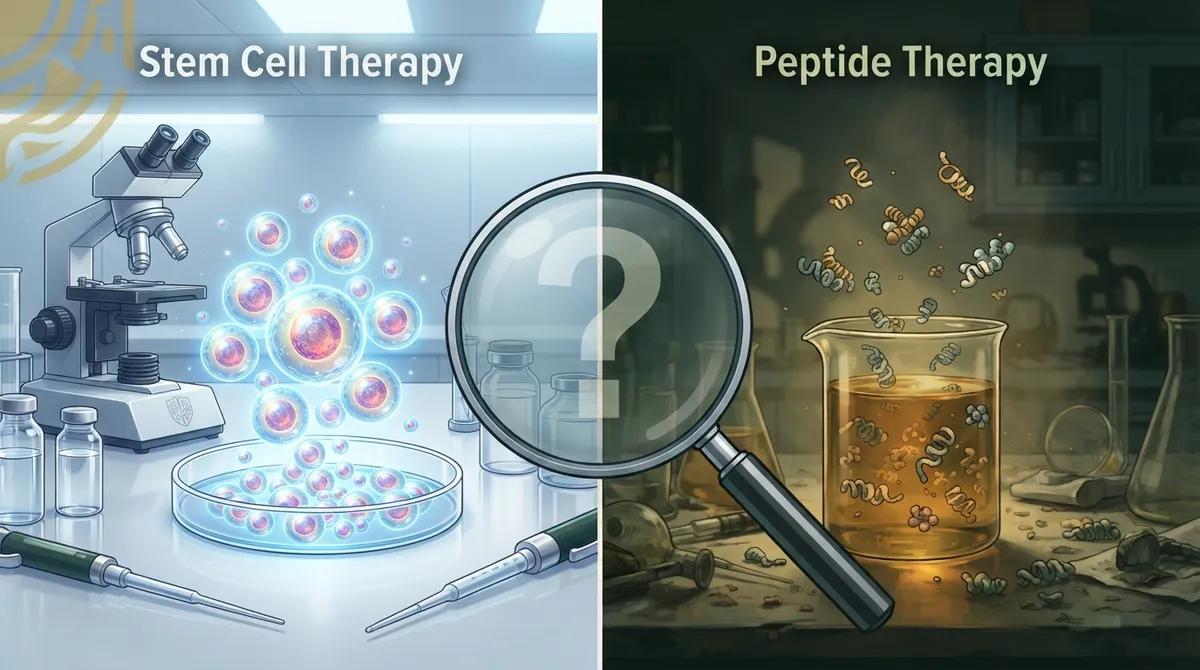
Key Takeaways
-
Only FDA-approved stem cell products in the U.S. are blood-forming cells from umbilical cord blood for specific blood disorders; most advertised uses like joint repair and anti-aging are unapproved and unproven.
-
Stem cell therapy and peptide therapy are completely different: stem cells are living cells while peptides are signaling molecules, and peptides do not contain or activate stem cells despite marketing claims.
-
Unapproved stem cell and peptide treatments carry serious risks including infection, immune reactions, poor quality control, wasted money, and false hope that may delay proven medical care.
-
No solid human evidence proves that peptides can reliably activate stem cells or that combining peptides with stem cells delivers effective regeneration; most claims rely only on lab or animal studies.
-
Before choosing any regenerative treatment, verify the product source, FDA status, authorized trial registration, human studies for your specific condition, and whether a licensed provider oversees your care.
-
Lab and animal research hints are not proof for humans; distinguish between preclinical findings (cells/animals), early human data (small studies), and strong human evidence (well-designed trials) when evaluating claims.
If you’ve been exploring ways to feel younger, recover faster, or bounce back from an injury, you’ve probably seen the buzz. Clinics everywhere advertise stem cell therapy as a cure-all. Others pitch peptides as a way to “wake up” your stem cells. It’s easy to feel confused, and you’re not alone.
Here’s the friendly truth: these are two very different things. Stem cell therapy uses living cells. Peptide therapy uses small signaling molecules. Mixing them up can lead to wasted money and, in some cases, real health risks.
In this guide, we’ll break down what stem cell therapy actually is, what the FDA says about it in 2026, and where peptides fit in. We’ll keep the science simple and the claims honest. By the end, you’ll know what questions to ask, what to avoid, and how to make smart choices about your health. Let’s dive in.
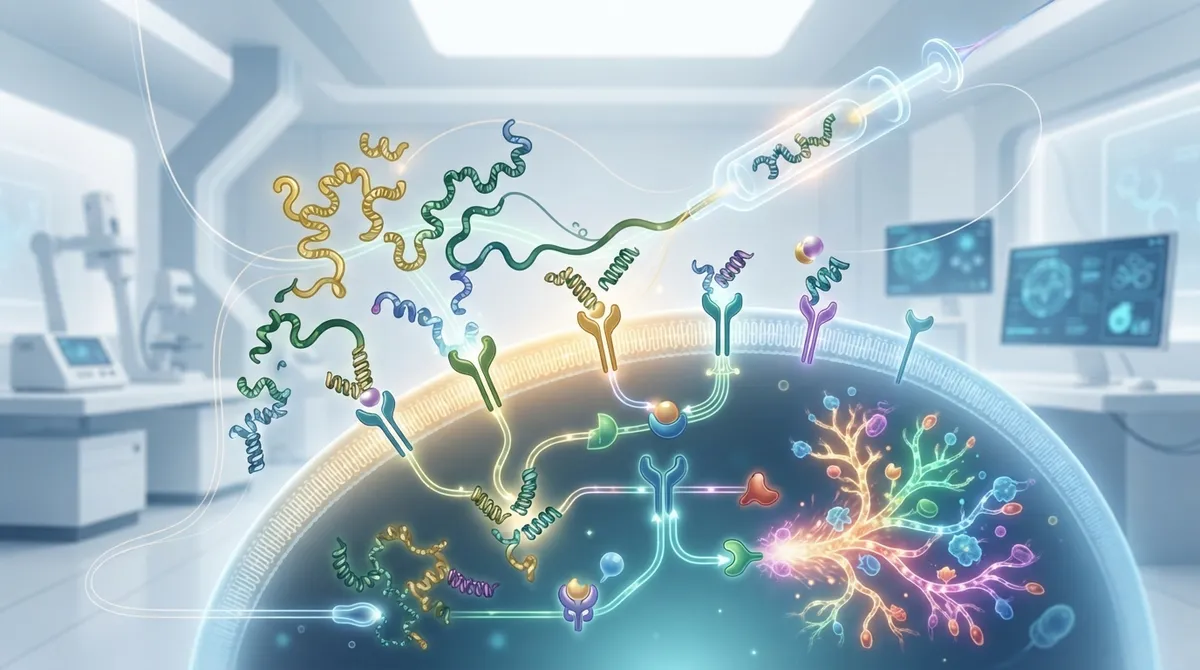
What Is Stem Cell Therapy?
Stem cell therapy uses living cells to replace, repair, or support damaged tissue. The most established example is the use of blood-forming stem cells, called hematopoietic stem cells. Doctors use these to treat certain blood and immune system disorders.
Think of stem cells like blank-slate workers. They can grow into different cell types. That’s why the idea is so exciting. But excitement and proof are not the same thing.
Many clinics today sell stem cell therapy for joint pain, anti-aging, fatigue, and more. Most of those uses have not been proven safe or effective through rigorous research. The International Society for Stem Cell Research (ISSCR) draws a clear line between approved, investigational, and unproven treatments. Knowing which category you’re looking at is step one.
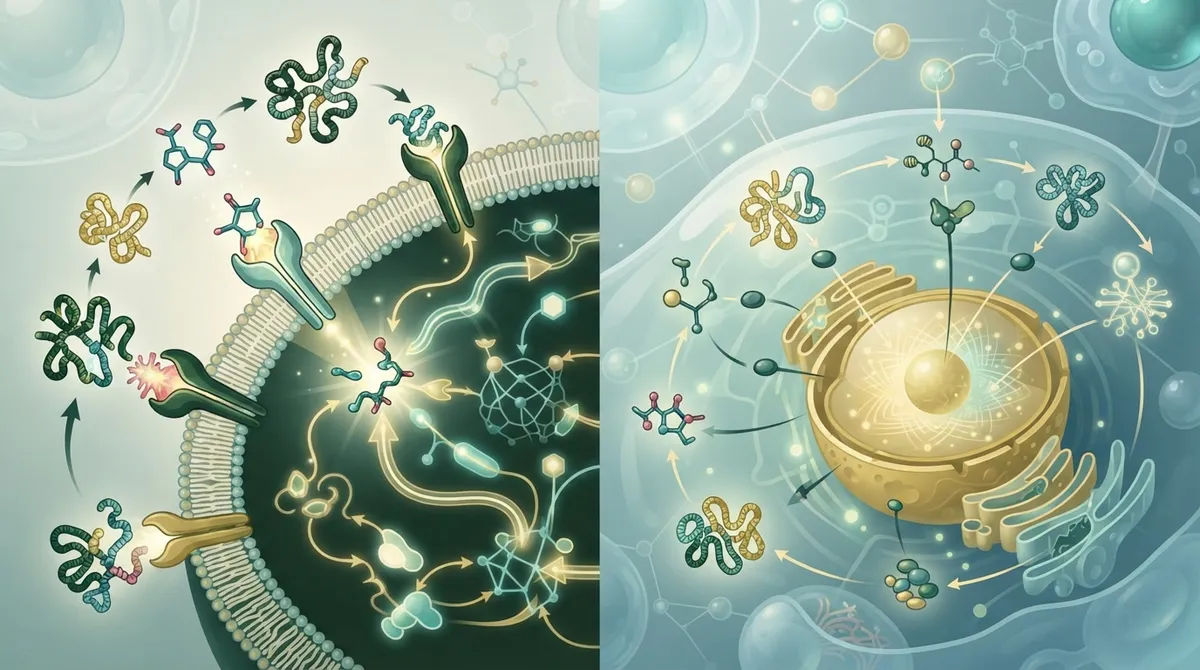
What Is Peptide Therapy?
Peptides are short chains of amino acids. Your body makes many of them naturally, and they act like tiny messengers. They tell cells to do things like release hormones, calm inflammation, or support tissue repair. If you want a quick refresher, this overview explains what are peptides in plain language. You can also read our guide on 8 Facts That Explain What Are Peptides in 2026.
Here’s the key point: peptide therapy does not supply stem cells. It doesn’t contain them, and it isn’t a stem cell treatment. Peptides are signals. Stem cells are living cells. They are not the same.
Stem Cell Therapy vs. Peptide Therapy: Side-by-Side
A quick comparison makes the difference clear.
| Feature | Stem Cell Therapy | Peptide Therapy |
|---|---|---|
| What it is | Living cells given to the body | Short amino-acid chains that act as signals |
| How it works | Cells may replace or support damaged tissue | Peptides may influence hormones, inflammation, or repair signals |
| FDA-approved uses | Limited to cord-blood-derived blood-forming cells for certain blood disorders | Varies by peptide; some are approved drugs, many are not |
| Common marketing claims | Joint repair, anti-aging, energy | Recovery, sleep, metabolism, vitality |
| Main concern | Many clinic uses are unapproved and unproven | Evidence differs a lot from one peptide to the next |
Notice that both fields have a gap between hype and evidence. That’s why a careful, honest approach matters so much.
What the FDA Says About Stem Cell Therapy in 2026
This is the part many people miss. According to the FDA, the only FDA-approved stem cell products in the United States are blood-forming cells made from umbilical cord blood. They are approved for certain disorders of the blood-forming system. They are not approved for general anti-aging, orthopedic, neurologic, or wellness use.
The FDA also notes that regenerative medicine products generally need approval before they can be marketed. Their consumer information, updated in September 2026, points out that many advertised uses are not approved. These include chronic pain, fatigue, autism, macular degeneration, and neurological disorders.
The agency also warns that unapproved regenerative products can cause serious harm. Side effects may also be underreported. You can read the official guidance in the FDA’s consumer alert on regenerative medicine products, including stem cells and exosomes.
What About “Investigational” Treatments?
Some clinics say their stem cell therapy is “investigational.” That sounds reassuring, but it doesn’t prove anything. A treatment can be studied only under FDA oversight in an authorized clinical trial. A clinic simply using the word “investigational” does not mean the trial is authorized. It also doesn’t mean the treatment works.
If you’re offered a trial, ask for the trial registration details. Then check with official sources and your own doctor.
Can Peptides Activate or Increase Stem Cells?
This is the big question for many readers. Short answer: it hasn’t been proven in people.
Some peptides are promoted in regenerative settings. The proposed ideas include influencing cell signaling, calming inflammation, or supporting blood-vessel growth and tissue repair. Lab and animal studies sometimes hint at these effects. But a lab hint is not a human result.
The available evidence does not show that peptide therapy can create, replace, or reliably activate stem cells in patients. It also doesn’t show that a peptide-plus-stem-cell combo is effective. Any claim should be tied to human studies of the exact product and the exact condition. A review in the National Library of Medicine database is a good place to see how research on therapeutic peptides is evolving.
Peptides People Often Ask About
Names like BPC-157 and thymosin beta-4 (often discussed alongside TB-500) come up a lot. They’re popular in recovery conversations. But popularity isn’t proof. Human evidence for many of these is limited. If you’re curious, our posts on BPC-157 facts and TB-500 walk through what is and isn’t known.
Preclinical Hypotheses vs. Human Results
Here’s a simple way to sort claims you’ll see online. We can split them into three levels of evidence.
- Preclinical: Seen in cells or animals. Interesting, but not proof for people.
- Early human data: Small studies or case reports. Helpful clues, not final answers.
- Strong human evidence: Well-designed trials showing safety and benefit for a specific use.
Many regenerative claims, for both stem cells and peptides, sit in the first two levels. That doesn’t mean they’re worthless. It means you should stay curious and careful. Our guide on regenerative medicine peptides goes deeper on this.
Risks of Unapproved Treatments
We want you to feel excited about your health goals. We also want you to stay safe. Unapproved stem cell products and poorly sourced peptides carry real risks.
- Infection: Products made without proper standards can be contaminated.
- Unexpected immune reactions: Your body may react to what’s injected.
- Wasted money: Many of these treatments are costly and not covered by insurance.
- False hope: Delaying proven care can make a health problem worse.
- Poor oversight: Without clear rules, quality and dosing can vary widely.
For a closer look at money pitfalls, see our article on 9 stem cell therapy mistakes that waste your money. And if you’re weighing options side by side, our comparison of peptide therapy vs. stem cells may help.
How to Check a Stem Cell Treatment Before You Say Yes
A little homework goes a long way. Use this simple checklist when a clinic offers stem cell therapy.
- Ask what the product is. Where do the cells come from, and how are they processed?
- Ask about FDA status. Is it an approved product, or part of an authorized clinical trial?
- Request trial details. If it’s a trial, ask for the registration number and verify it independently.
- Ask for human evidence. Look for studies on this exact treatment for your exact condition.
- Talk to your own doctor. A second opinion from someone with no financial stake is gold.
- Watch for red flags. Be wary of promises of guaranteed results or “cure-all” language.
The ISSCR’s patient guide to stem cell treatments is another trusted resource for checking claims.
Where Peptide Therapy Fits In Your Health Plan
So where does that leave peptide therapy? It’s a different tool for different goals. For many people, personalized peptide plans focus on things like energy, sleep, recovery, metabolism, and healthy aging. Peptide medications range from well-studied, FDA-approved drugs to compounded options with less research behind them. Our post on FDA-approved vs. compounded peptides explains the difference.
The smartest approach is personalized and data-driven. That means starting with blood work, setting clear goals, and working with licensed providers who track your progress. If you want a roadmap, read How to Start Peptide Therapy Safely and See Real Results.
Who Benefits Most From a Peptide-First Approach?
Different people come to peptide therapy for different reasons. Here’s how it tends to line up.
| Reader Type | Common Goal | What a Smart Plan Focuses On |
|---|---|---|
| Health optimizers | Better energy, sleep, and recovery | Labs, tracking, and steady adjustments |
| Aging adults | Healthy longevity and vitality | Hormone and metabolic markers, safe protocols |
| Biohackers | Performance and data | Biomarker testing and measured changes |
| Busy professionals | Convenience | Telehealth visits and at-home delivery |
| Wellness seekers | Going beyond supplements | Personalized, medically supervised plans |
How Allura Longevity Approaches Regenerative Goals
At Allura Longevity, we believe in honesty first. We don’t offer stem cell therapy, and we don’t claim our peptides turn on your stem cells. What we do offer is personalized, medically supervised peptide therapy through telehealth.
Here’s how it works. You start with a $50 virtual consultation. You complete blood work through LabCorp. Then your licensed provider, led by board-certified Family Nurse Practitioner Ashley, builds a customized six-month plan. Your treatment is delivered to your door, with ongoing monitoring and adjustments along the way.
We’re licensed in Florida, Georgia, Texas, Connecticut, Indiana, Maryland, New York, and California. Whether you’re looking at peptides for women or peptides for men, the plan is built around your labs and goals. Our guide to getting prescription peptides safely explains what a safe process looks like.
Smart Questions to Ask Any Clinic
Whether a clinic offers peptides, stem cells, or both, these questions protect you.
- Who is the licensed provider overseeing my care?
- What exactly is in the product, and where does it come from?
- What is its FDA status for my specific use?
- What human studies support this for my condition?
- What are the known risks and side effects?
- How will my progress be tracked with labs and follow-ups?
A trustworthy clinic will welcome these questions. If you get vague answers or pressure to decide fast, take a step back.
The Bottom Line on Stem Cell Therapy and Peptides
Stem cell therapy and peptide therapy are not the same. Stem cell therapy uses living cells, and in the United States only a narrow set of cord-blood-derived products are FDA-approved for specific blood disorders. Peptides are signaling molecules, and their evidence varies a lot from one to the next. No solid proof shows that peptides reliably activate stem cells or that combining them delivers proven regeneration.
That’s not bad news. It means you can make clear-eyed choices and focus on what’s supported, personalized, and safely supervised. If you’re ready to explore a plan built around your own labs and goals, request a consultation with our team today. Spots for new clients are limited each month, so don’t wait too long. You can also call us at (813) 510-6277.
FAQs
Q: Is peptide therapy the same as stem cell therapy?
A: Nope, they’re two different things. Stem cell therapy uses living cells, while peptide therapy uses short amino-acid chains that act as signals in your body. Peptide therapy doesn’t contain or supply stem cells.
Q: Can peptides activate or increase stem cells?
A: Some lab and animal research explores this idea, but it hasn’t been proven in people. Right now, there’s no solid human evidence that peptides reliably activate stem cells, so it’s smart to treat those claims with caution.
Q: Which stem cell treatments are FDA-approved in the United States?
A: The FDA says the only approved stem cell products are blood-forming cells from umbilical cord blood. They’re approved for certain blood-system disorders, not for anti-aging, joint pain, or general wellness.
Q: What are the risks of unapproved stem cell or peptide treatments?
A: Risks can include infection, immune reactions, poor product quality, and wasted money. The FDA also notes that adverse events from unapproved regenerative products may be underreported, so always verify the product and who is overseeing your care.
Q: How can I check if a stem cell treatment is part of an authorized clinical trial?
A: Ask the clinic for the trial’s official registration details, then confirm them through official sources and your own doctor. Remember, a clinic calling a treatment “investigational” doesn’t prove the trial is authorized or that the treatment works.





