

Key Takeaways
-
Peptide therapy is not one thing: FDA-approved peptide medicines are reviewed for specific conditions, while compounded and research-grade peptides lack FDA review for safety, effectiveness, or quality.
-
A legitimate online peptide clinic should name a licensed clinician in your state, identify the dispensing pharmacy, and require lab work before any treatment plan.
-
Red flags include guaranteed results, one-size-fits-all protocols, and plans with no blood work; avoid research-grade or unverified peptides sold online.
-
Many peptides marketed for menopause, recovery, or anti-aging lack FDA approval for those uses, and little women-specific research exists, so ask about approval status for the exact product and purpose.
-
Telehealth prescribing rules vary by state, so confirm the clinic is licensed where you live before booking.
-
If you are pregnant, breastfeeding, or trying to conceive, tell your clinician first and never start peptides on your own.
If you have been curious about peptide therapy, you are not alone. Lots of women are looking for ways to feel more energized, sleep better, and age well. And with so many options popping up online, it can feel like a lot to sort through.
An online peptide clinic for women offers care by telehealth. You talk with a licensed clinician from home, review your health history and lab work, and, when it fits, get a prescribed plan. That sounds simple. But “peptide therapy” covers very different products, with very different levels of proof and oversight.
In this guide, we will walk you through how these clinics work, what is approved and what is not, and how to spot a trustworthy provider. Think of this as a chat with a friend who has done the homework. Let’s dive in.

What an Online Peptide Clinic for Women Actually Does
A real online peptide clinic is a medical service, not a webshop. It is different from buying peptides straight from a random seller. A legitimate clinic provides remote visits, health assessment, prescribing when it is clinically appropriate, and follow-up care.
Here is what you should expect from a good clinic:
- A clinician who is named and licensed in your state
- A review of your medical history, medications, and goals
- Lab testing to guide decisions
- A clear explanation of risks, side effects, and unknowns
- Follow-up visits to monitor and adjust your plan
If you want a closer look at the visit itself, our guide on what really happens during a peptide telehealth visit breaks it down step by step.
Peptide Therapy Is Not One Thing
This is the most important point in this whole article. Peptides are short chains of amino acids. Your body makes many of them naturally. You can read a plain-language overview in WebMD’s explainer on what are peptides.
But when a clinic says “peptide therapy,” it might mean very different things. Some peptide-based medicines have FDA approval for specific uses. Many others, promoted for recovery, anti-aging, or menopause, do not have FDA approval for those uses.
Approval for one purpose does not prove benefit for another. That is a key idea to hold onto as you shop around.
| Category | What It Means | What to Know |
|---|---|---|
| FDA-approved peptide medicines | Reviewed for safety and effectiveness for a specific condition | Benefit applies only to the approved use |
| Compounded peptides | Made by a pharmacy for an individual patient when a prescriber sees a need | Not FDA-approved; FDA does not review them for safety, effectiveness, or quality before marketing |
| Research-grade or unverified products | Sold online with no medical oversight | Avoid these; quality and purity are unknown |
For a deeper comparison, see our post on approved peptides versus wellness peptides.
How Telehealth Prescribing Works (and Why State Rules Matter)
Telehealth rules are not the same everywhere. Clinicians generally must be licensed in the state where you are located. They also must follow standards for evaluation, documentation, and follow-up. These rules can differ by state and by medication.
That is why it helps to check where a clinic operates. Allura Longevity, for example, is licensed in Florida, Georgia, Texas, Connecticut, Indiana, Maryland, New York, and California. If you live elsewhere, ask any clinic how they handle your state before you book.
If you want to know more about the process, our article on how a telehealth prescription works for peptides covers the basics. You can also read which states allow telehealth peptide prescriptions.
What the Evidence Says (and Does Not Say)
Let’s be honest, because you deserve that. Peptides like BPC-157, ipamorelin, and CJC-1295 get a lot of buzz. But the research is limited. Much of the evidence behind some of these products comes from lab and animal studies, not large human trials.
There is also very little women-specific research. So claims about menopause, weight loss, tissue repair, or “hormone optimization” should be judged against the evidence for the exact product and the exact use. A good clinician will tell you what is known and what is not.
The National Library of Medicine is a helpful place to look up published research on peptide topics. To dig into specific products, you can read about ipamorelin benefits, dosing, and safety or how to use CJC-1295 peptides safely.
The Safety and Regulatory Picture in 2026
Safety deserves a real conversation. The FDA has flagged concerns about certain peptides used in compounding, including immune reactions, impurities, and products that are not fully characterized. In 2023, the FDA restricted compounding of seven peptides.
In July 2026, the FDA’s Pharmacy Compounding Advisory Committee discussed seven peptides. It is important to know that an advisory discussion or vote is not the same as FDA approval. It also does not by itself change FDA policy or prove a product is safe and effective.
Rules can change quickly. Before you start any therapy, confirm the current FDA status for the specific peptide your clinician recommends. A trustworthy clinic will welcome that question.
Want to weigh the pros and cons more? Read how to weigh the risks of peptide therapy safely.
A Quick Checklist to Vet Any Online Peptide Clinic
Use this simple list before you hand over any personal or payment details:
- Find the clinician. The clinic should name the licensed provider who will treat you.
- Check the license. Confirm the provider is licensed in your state.
- Ask about the pharmacy. The clinic should identify the dispensing pharmacy and explain how products are made and shipped.
- Look for labs. A plan with no blood work is a red flag.
- Watch for big promises. Guaranteed results or one-size-fits-all protocols are warning signs.
- Ask about monitoring. You should know how follow-up works and how your plan will be adjusted.
Our guides on signs of a legitimate peptide therapy clinic and how to choose a peptide therapy clinic you trust go even deeper.
Questions to Ask Before You Start
A great first visit is a two-way conversation. Come ready with questions. Here are a few good ones:
- Is this peptide FDA-approved, and for what use?
- If it is compounded, which pharmacy makes it?
- What does the evidence show for women like me?
- What are the side effects, and what will we monitor?
- How does this fit with my current medications or hormone therapy?
- What are the alternatives, including lifestyle options?
Not sure what to ask? Browse our list of 15 peptide consultation questions to ask. You can also avoid common slip-ups with 3 peptide consultation mistakes that waste your first visit.
Who Should Be Extra Careful
Your health history matters a lot here. A responsible clinic will review pregnancy or breastfeeding status where it is relevant, along with your medications, existing conditions, and any hormone therapy you use.
If you are pregnant, nursing, or trying to conceive, tell your clinician right away. Do not start any peptide on your own. And please skip any research-grade or unverified product you find online. If you are not sure whether peptides fit your situation, read our post on how to spot peptide therapy contraindications safely.
How Peptides Fit Into Women’s Health Goals
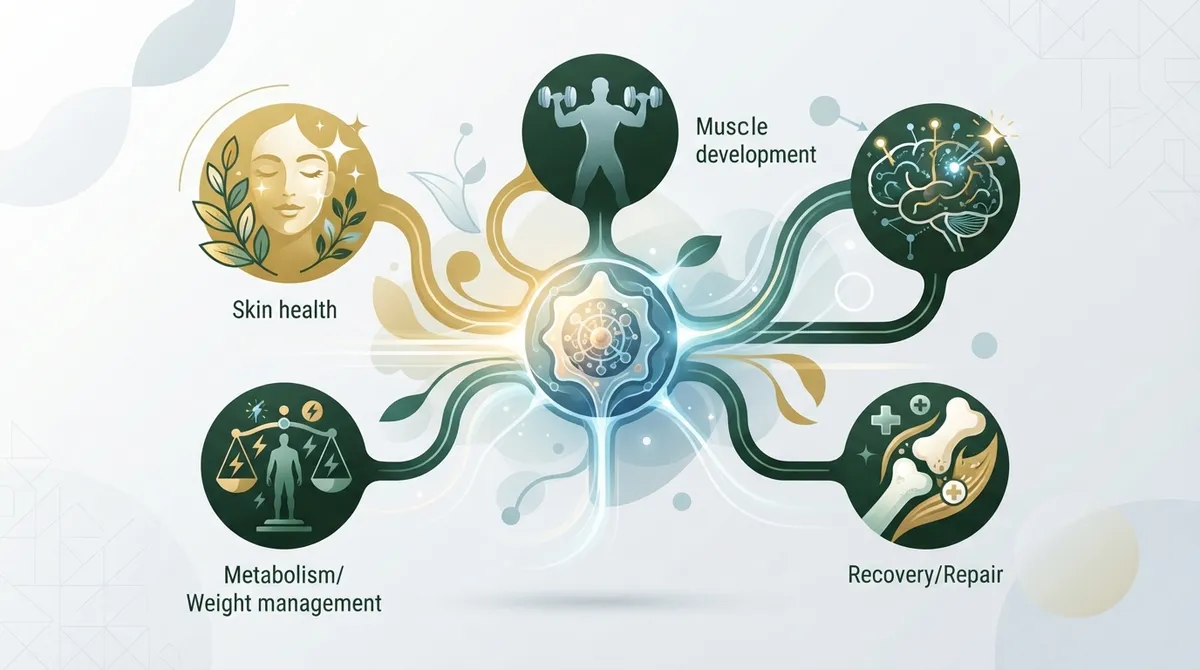
Women come to peptide care for many reasons. Some want more energy or better sleep. Others want support during perimenopause, help with skin, recovery after workouts, or help with weight management. Peptides are one tool, not a cure-all.
For some goals, other options may have stronger evidence. For menopause symptoms, for example, standard hormone therapy has a longer research track record. Our guides on navigating perimenopause with BHRT and peptides and judging peptides for women’s healthspan help you compare.
You may also want to look at whether peptides can help balance your hormones. A good clinic will look at the full picture, not just one product.
What Care Can Look Like With Allura Longevity
Allura Longevity is a telehealth wellness clinic built around personalized, medically supervised care. The process starts with a $50 virtual consultation. Next comes blood work through LabCorp. Then your licensed provider builds a customized six-month plan, and your treatment is delivered to your home.
Care is led by Ashley, a board-certified Family Nurse Practitioner. You get ongoing monitoring and plan adjustments along the way. Services include peptide therapy for energy, sleep, skin, recovery, and metabolism, plus GLP-1 medications for weight loss, BPC-157 for injury recovery, and testosterone replacement. Telehealth is available nationwide, though licensing varies by state.
Want to see how it fits your life? Our guide on what to expect from home delivered peptides explains the delivery side. Spots for new clients are limited each month, so it helps to plan ahead.
Cost and Timing: Setting Honest Expectations
Costs vary based on the product, the lab work, and the length of your plan. Insurance usually does not cover wellness peptides, so ask about total cost up front. Our post on how much peptide therapy costs can help you budget.
Results take time, and they differ from person to person. Anyone promising overnight changes is overselling. For a realistic picture, read what a realistic peptide therapy timeline looks like.
Final Thoughts: Choose Care You Can Trust
An online peptide clinic for women can be a convenient, supportive way to explore your health goals. The best ones are clear about what is approved, honest about what is unproven, and careful about safety. Ask questions, check credentials, and never settle for hype.
You deserve a plan built around your body, your labs, and your goals. If you are ready to talk it through with a licensed provider, you can request a consultation with Allura Longevity. You can also learn more about peptides for women on our site. Call (813) 510-6277 with any questions. You have got this.
FAQs
Q: What does an online peptide clinic for women do?
A: It offers remote visits with a licensed clinician who reviews your health history and labs, then prescribes a plan when it is clinically appropriate. A good clinic also provides follow-up and monitoring. It is a medical service, not just a place to buy products.
Q: Are peptide therapies FDA-approved for menopause or hormone balance?
A: Many peptides promoted for menopause, recovery, or anti-aging are not FDA-approved for those uses. Some peptide-based medicines are approved, but only for specific conditions. Always ask your clinician about the FDA status for the exact product and purpose.
Q: Are compounded peptides safe?
A: Compounded drugs are not FDA-approved, and the FDA does not review them for safety, effectiveness, or quality before they are marketed. They may fit certain individual needs when a prescriber sees a clinical reason. Ask which pharmacy makes yours and how it is checked.
Q: How can I tell if an online peptide clinic is legitimate?
A: Look for a named, licensed clinician in your state, a clearly identified dispensing pharmacy, and lab testing before treatment. Be wary of guaranteed results or one-size-fits-all plans. A trustworthy clinic will gladly answer your safety and evidence questions.
Q: Can women use peptide therapy while pregnant or breastfeeding?
A: Peptide therapy is generally something to discuss carefully with a clinician if you are pregnant, nursing, or trying to conceive. Never start peptides on your own during these times. Share your full health picture so your provider can advise you safely.





