

Key Takeaways
-
Women under 60 or within 10 years of menopause onset have the most favorable benefit-to-risk ratio for hormone therapy, while starting later carries higher risks for coronary disease, stroke, and blood clots.
-
Hormone therapy is the most effective treatment available for hot flashes, night sweats, vaginal symptoms, and helps prevent bone loss, but choosing no treatment is valid if symptoms are mild or hormone therapy is contraindicated.
-
If you have a uterus, estrogen must be paired with a progestogen to protect the uterine lining; women with hysterectomies typically need estrogen only, making personalized dosing and delivery critical.
-
Untreated menopause may see hot flashes ease over time, but bone loss, sleep disruption, and vaginal symptoms often persist without estrogen support or local vaginal treatment options.
-
Peptide therapy is not proven to treat menopause symptoms or replace hormone therapy; while it may support energy and sleep, it should complement rather than substitute evidence-based hormone treatment.
-
Track symptoms, review health history, get labs checked, and discuss delivery options (patches, gels, rings may carry lower clot risk than pills) before starting hormone therapy, then reassess regularly with your provider.
Menopause hits every woman a little differently. Some sail through with mild hot flashes. Others feel like their body has turned against them overnight. If you are stuck wondering whether to try hormone therapy or just tough it out, you are not alone. This is one of the most common questions we hear from women exploring wellness options today.
This guide walks you through the real differences between hormone therapy and skipping treatment altogether. We will also talk honestly about where peptide therapy fits into the bigger picture, since that is a hot topic right now. Our goal is simple: give you clear, friendly, accurate information so you can make a choice that feels right for your body and your life.
What Menopause Actually Does to Your Body
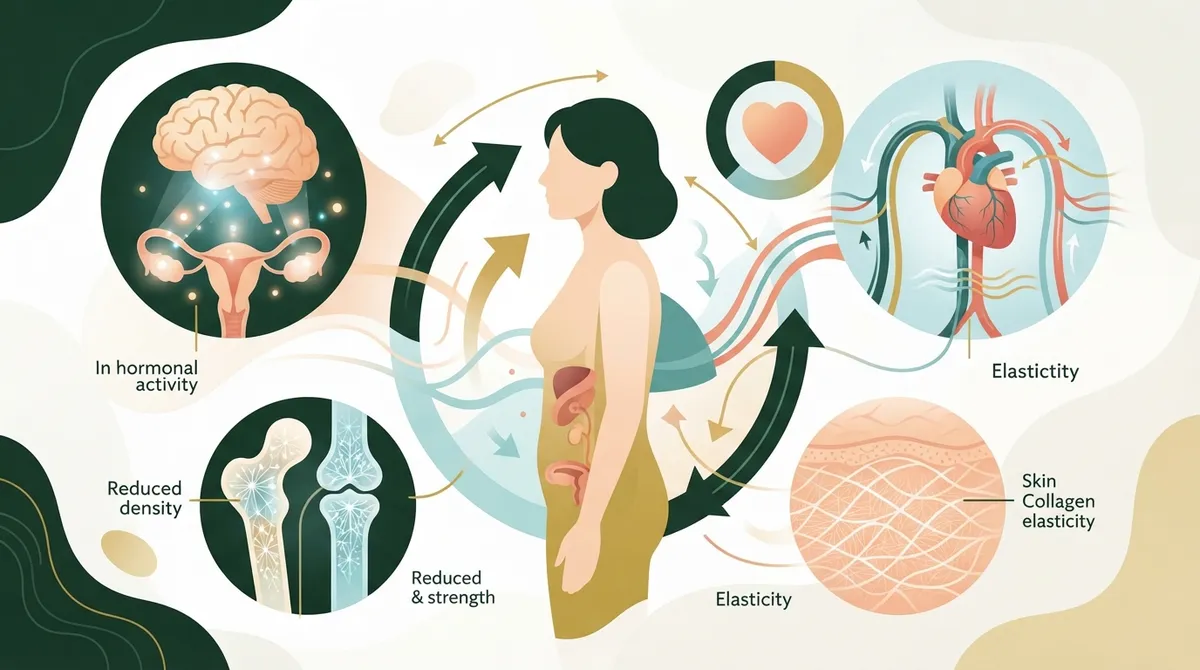
Menopause is not a disease. It is a natural stage of life, like puberty in reverse. Your ovaries slow down and eventually stop making estrogen and progesterone. This shift can bring hot flashes, night sweats, mood swings, sleep trouble, and vaginal dryness.
Here is the tricky part. Estrogen does more than regulate your cycle. It supports bone strength, heart health, skin elasticity, and even brain function. When estrogen drops, some women barely notice. Others feel it in nearly every part of daily life.
Common Symptoms Women Experience
- Hot flashes and night sweats that disrupt sleep and daily focus
- Vaginal dryness or discomfort during intimacy
- Mood changes, irritability, or new anxiety
- Bone density loss over time
- Brain fog or trouble concentrating
- Changes in skin texture and elasticity
If brain fog sounds familiar, you might enjoy our deeper look at why brain fog lifts with peptide therapy for extra context on cognitive support during hormonal shifts.

Hormone Therapy vs. Menopause Without Treatment
Let’s get straight to the heart of it. Menopausal hormone therapy, often called MHT, is currently the most effective treatment for hot flashes, night sweats, and vaginal or urinary symptoms tied to menopause. According to the Menopause Society’s 2022 position statement, MHT also helps prevent bone loss and fractures while you are using it.
Choosing no treatment is also a completely valid path. Many women’s symptoms ease up over time on their own. But without estrogen support, bone loss can continue quietly in the background, and sleep or comfort issues may stick around longer than expected.
| Factor | Hormone Therapy (MHT) | No Treatment |
|---|---|---|
| Hot flashes and night sweats | Most effective option available | May improve slowly over years, but often lingers |
| Bone health | Helps prevent bone loss while used | Bone density loss may continue untreated |
| Vaginal and urinary symptoms | Systemic or local estrogen can help | Symptoms often persist or worsen |
| Cardiovascular risk | Not recommended solely for prevention; risk depends on timing and health history | No added hormone-related risk, but no added protection either |
| Best candidates | Healthy, symptomatic women under 60 or within 10 years of menopause onset | Women with mild symptoms or contraindications to hormones |
Who Tends to Benefit Most From Hormone Therapy
The Menopause Society’s guidance points to a specific group. Women under age 60, or within 10 years of their last period, tend to have the most favorable benefit to risk ratio, as long as there are no contraindications. Starting hormone therapy later in life carries higher risks for coronary disease, stroke, and blood clots.
This is why timing matters so much. A conversation with a licensed provider helps you figure out where you fall on that timeline and whether hormone therapy makes sense for your unique health history.
How to Decide: A Simple Step-by-Step Approach
- Track your symptoms. Write down what you are experiencing and how often. Are hot flashes mild and occasional, or are they wrecking your sleep every night?
- Review your personal health history. Conditions like blood clots, certain cancers, or liver disease can change whether hormone therapy is appropriate for you.
- Get your labs checked. Blood work gives your provider real data instead of guesswork. This is standard practice before starting any hormone or peptide protocol.
- Talk through your goals. Do you want symptom relief, bone protection, or both? Your goals shape the treatment plan.
- Discuss delivery options. Estrogen comes in pills, patches, gels, and rings. Transdermal options may carry a lower risk of blood clots and stroke than oral estrogen for some women.
- Reassess regularly. Hormone therapy is not a one-and-done decision. Your provider should check in and adjust your plan as your body changes.
If you already work with a provider on other treatments, you may also want to read how to know if you need hormone therapy in 2026 for a broader self-check before your appointment.
Understanding the Estrogen and Progesterone Pairing
If you still have your uterus, estrogen alone is usually not enough. You typically need a progestogen alongside it to protect the uterine lining. Women who have had a hysterectomy usually only need estrogen.
The type of progestogen, the dose, and the delivery method all affect your personal risk profile. This is exactly why cookie-cutter treatment plans do not work well for hormone therapy. Everybody’s chemistry, history, and goals are different.
Local Estrogen for Targeted Relief
Not every woman needs full-body hormone therapy. If your main complaint is vaginal dryness or urinary discomfort, low-dose vaginal estrogen can help without the broader systemic effects. This local option is often a good fit for women who cannot or prefer not to use systemic hormones.
What Happens If You Skip Treatment Entirely
Choosing to go without treatment is a legitimate personal decision. Menopause is not an illness, and plenty of women manage it without hormones. But it helps to know what that path may look like.
- Hot flashes and night sweats may ease over time, though timing varies a lot from person to person
- Sleep disruption can continue and affect energy, mood, and focus
- Vaginal and urinary symptoms often do not resolve without some form of treatment
- Bone loss tied to estrogen deficiency can continue quietly in the background
- Nonhormonal options and lifestyle changes can help some symptoms, but they rarely match the full benefits of hormone therapy
Nonhormonal support like better sleep habits, strength training, and stress management can genuinely help. But it is worth being realistic about what these strategies can and cannot do compared to hormone therapy.
Where Peptide Therapy Fits Into the Picture
Here is where we want to be very honest with you. Peptide therapy is an exciting, fast-growing area of wellness care, but it is not currently proven to treat menopause symptoms or replace hormone therapy. Popular peptides like CJC-1295 and ipamorelin have not been shown in clinical trials to relieve hot flashes or prevent menopause-related bone loss.
That does not mean peptides have no place in a woman’s wellness plan during midlife. Many women use peptide therapy alongside other care to support energy, sleep quality, muscle recovery, and skin health, all of which can feel harder to maintain during the menopause transition. If you want to learn more about how peptides work in general, this overview of what are peptides is a helpful starting point.
At Allura Longevity, we believe in transparency. We will never suggest peptides as a substitute for medically necessary hormone therapy. Instead, we look at your complete picture, including labs, symptoms, and goals, to build a plan that actually fits your life. You can read more about our approach to peptides for women and how personalized care works.
FDA Approval Matters
Some peptides, like certain GLP-1 medications, do have FDA approval, but only for specific uses such as weight management or blood sugar control. That approval does not extend to treating menopause. Compounded or unregulated peptide products can carry real uncertainty around quality, dosing, and safety. Always check the regulatory status of any product before starting it, and lean on licensed providers for guidance.
Nonhormonal and Supportive Options Worth Knowing
If hormone therapy is not right for you, or you simply want extra support, there are other tools worth discussing with your provider.
| Option | What It May Help With | Considerations |
|---|---|---|
| Lifestyle changes (sleep, exercise, diet) | Overall wellness, mild symptom relief | Requires consistency; results vary |
| Nonhormonal prescription medications | Hot flashes in women who cannot use hormones | Effectiveness usually lower than MHT |
| Vaginal moisturizers or lubricants | Mild dryness or discomfort | Does not address deeper tissue changes |
| Peptide therapy for energy, sleep, recovery | General wellness support during midlife | Not proven to treat menopause symptoms directly |
A trusted resource like the National Library of Medicine offers deeper research on hormone therapy safety profiles if you want to dig into the clinical data yourself.
Building a Plan That Actually Works for You
The best approach is rarely all-or-nothing. Many women benefit from combining evidence-based hormone therapy with supportive wellness strategies, including peptide therapy for energy, sleep, or recovery goals that go beyond menopause symptoms alone.
This is exactly the kind of personalized planning we specialize in. Every client starts with a simple virtual consultation, followed by real lab work through LabCorp. From there, our licensed providers, led by board-certified Family Nurse Practitioner Ashley, build a six-month plan tailored to your blood work, symptoms, and goals. If you are curious how this process works from start to finish, check out how to start peptide therapy safely and see real results.
Questions to Bring to Your Provider
- Am I a good candidate for hormone therapy based on my age and health history?
- What delivery method fits my lifestyle and risk profile best?
- Do I need a progestogen along with estrogen?
- How often should we reassess my treatment plan?
- Could peptide therapy support my energy or recovery goals alongside my current care?
Take the Next Step With Confidence
Deciding between hormone therapy and no treatment does not have to feel overwhelming. With the right information and a caring provider by your side, you can make a choice that truly fits your body and your life. Whether you are drawn to hormone therapy, curious about supportive peptide options, or simply want expert guidance to sort through it all, our team at Allura Longevity is here to help.
We keep spots limited each month so every client gets real, personalized attention from our licensed providers. If you are ready to talk through your symptoms, your labs, and your goals with someone who genuinely listens, request a consultation today or give us a call at (813) 510-6277. Your next chapter deserves a plan built just for you.
FAQs
Q: What are the benefits and risks of hormone therapy for menopause?
A: Hormone therapy is the most effective option for hot flashes, night sweats, and vaginal symptoms, and it also helps protect bone density. Risks can include blood clots, stroke, and certain cancers, but these vary based on your age, health history, and the type of therapy used, so a personalized conversation with your provider is key.
Q: What happens if menopause is left untreated?
A: Many symptoms like hot flashes may ease over time on their own, but bone loss and sleep disruption can continue quietly in the background. It is a completely valid choice for some women, especially those with mild symptoms or health conditions that make hormone therapy less suitable.
Q: Is hormone therapy safe if I am under 60 or within 10 years of menopause?
A: Yes, this is generally the group where the benefit to risk ratio is most favorable, according to the Menopause Society’s 2022 guidance. Starting therapy later in life tends to carry higher risks, so timing really does matter.
Q: Can peptides treat hot flashes, night sweats, or other menopause symptoms?
A: Not currently. Peptides like CJC-1295 or ipamorelin have not been proven in clinical trials to relieve menopause symptoms or prevent related bone loss. They can support energy, sleep, and recovery, but they are not a substitute for evidence-based hormone therapy.
Q: Do I need progesterone if I take estrogen for menopause?
A: If you still have your uterus, yes, you typically need a progestogen to protect the uterine lining. Women who have had a hysterectomy usually only need estrogen, but your provider will confirm what is right for your specific situation.





