
Key Takeaways
-
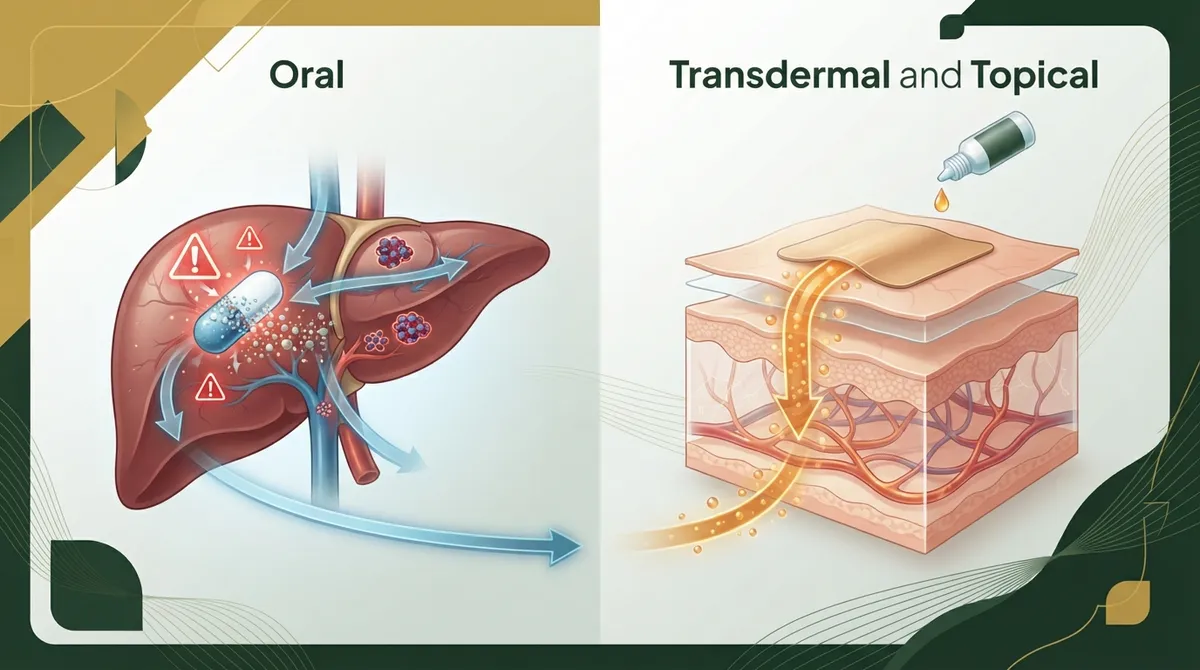
Oral hormone pills carry higher blood clot and gallbladder risk than transdermal options because they undergo liver metabolism first, while patches and gels bypass the liver and absorb directly through skin.
-
Hormone therapy is a broad category encompassing pills, patches, gels, injections, and implants—not synonymous with pills alone—and the right delivery method depends on your individual health history and risk factors.
-
If you have a uterus and take systemic estrogen, you need added progestin to prevent endometrial cancer risk; however, low-dose vaginal estrogen is different and doesn't carry this same concern.
-
Peptide therapy is distinct from hormone replacement—peptides are amino acid chains that either trigger your body's own hormone release or support functions like metabolism and tissue repair, not direct hormone substitutes.
-
Blood clot risk with oral estrogen is highest in the first year of treatment and particularly relevant for older women or those 10+ years past menopause, making personalized provider assessment essential.
-
Compounded peptide products lack FDA approval for safety and effectiveness as a class, requiring extra scrutiny—always verify products and doses with a licensed clinician rather than relying on marketing claims.
Trying to figure out hormone therapy vs hormone pills can feel like a maze. Pills, patches, gels, injections, peptides—so many options, so many opinions online. If you’re feeling overwhelmed, take a breath. You’re not alone, and you’re definitely not stuck making this decision by yourself.
Here’s the truth: “hormone therapy” is the big umbrella term. “Hormone pills” are just one way to deliver that treatment. Understanding the difference matters, especially in 2026, when more people are also asking how peptide therapy fits into the picture. This guide breaks down eight key facts you need to know, in plain language, so you can have a smarter conversation with your provider. Whether you’re optimizing your health, managing menopause symptoms, or exploring options like peptides for women or peptides for men, this article will help you feel confident about your next step.

1. Hormone Therapy Is the Category, Pills Are Just One Delivery Method
Let’s clear up the biggest misunderstanding right away. Hormone therapy is not the same thing as hormone pills. Hormone therapy simply means treating the body with hormones. Hormone pills are one route among several ways to deliver those hormones.
Other delivery methods include patches, gels, sprays, injections, implants, and vaginal products. The right choice depends on which hormone you need, your health history, and your goals. This is why a one-size-fits-all approach rarely works well, and why personalized care matters so much.
2. Oral and Non-Oral Hormones Work Differently in Your Body
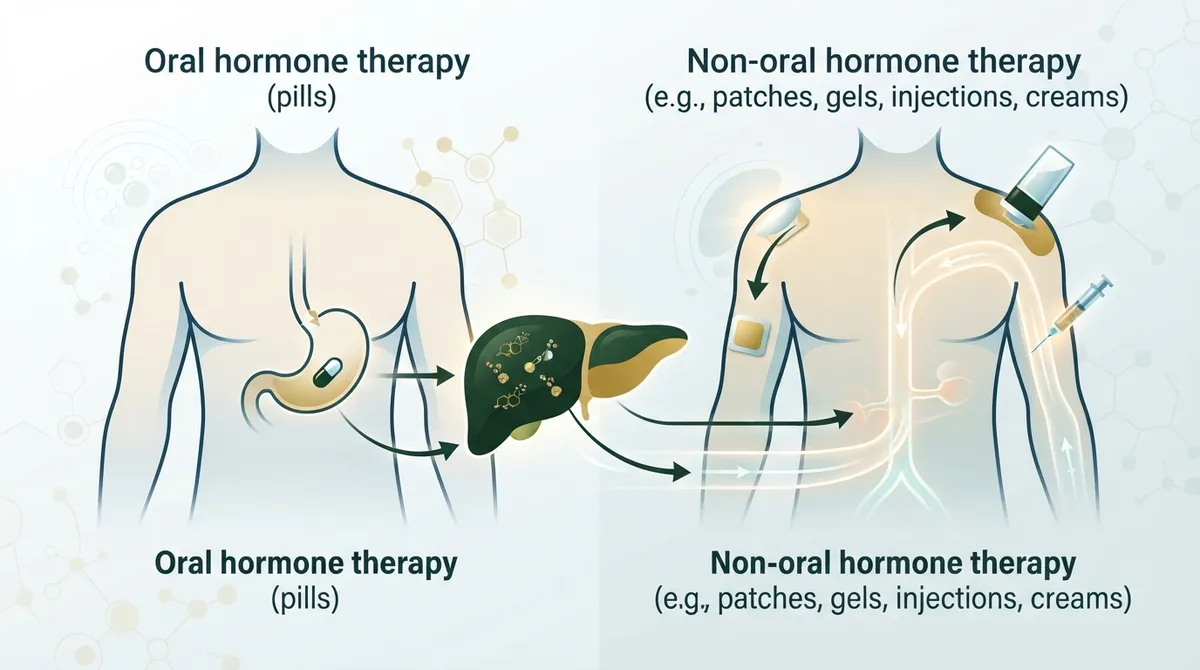
Here’s something a lot of people don’t realize. When you swallow a hormone pill, it travels through your digestive system and gets processed by your liver before it reaches your bloodstream. This is called “first-pass metabolism.” It changes how the hormone behaves.
Transdermal options, like patches, gels, or sprays, skip this liver step entirely. The hormone absorbs through your skin and goes straight into your bloodstream. This difference isn’t just a technical detail. It actually affects your risk profile, which we’ll cover next.
Why This Matters for Your Health
Research summarized in the 2025 Menopausal Hormone Therapy Guidelines review found that oral estrogen is linked to a higher risk of venous thromboembolism (blood clots) compared to transdermal estradiol. Gallbladder risk also appears higher with oral options. This doesn’t mean pills are bad for everyone. It means your individual risk factors and formulation choice matter a lot.
| Delivery Method | How It’s Absorbed | Key Consideration |
|---|---|---|
| Oral Pills | Digested, processed by liver first | Linked to higher clotting and gallbladder risk |
| Transdermal Patch/Gel | Absorbed through skin, bypasses liver | Generally lower clotting risk per observational data |
| Injections | Delivered directly into muscle or fat tissue | Common for testosterone and some peptide therapies |
| Vaginal Products | Localized absorption | Primarily treats local symptoms, not systemic |
3. Blood Clot Risk Is Real, But It’s Not the Same for Everyone
One of the most common questions people ask is whether hormone pills increase blood clot risk. Based on current evidence, yes, oral estrogen does carry a higher risk of blood clots than transdermal options. This risk is especially relevant for women who are older or more than 10 years past menopause.
The 2025 guideline review also points out that the first year after starting hormone therapy carries a higher clot risk, which tends to decrease after that. This is a population-level pattern, not a personal guarantee. Your own risk depends on your age, weight, smoking status, and family history. This is exactly why working with a licensed provider who reviews your full health picture is so important.
4. If You Have a Uterus, Progesterone Usually Comes Along for the Ride
If you’re taking systemic estrogen and you still have your uterus, you generally need a progestogen too. Why? Estrogen alone can cause the uterine lining to thicken, which raises the risk of endometrial cancer over time.
It’s worth noting that low-dose vaginal estrogen is a different story. It works locally and isn’t the same as systemic therapy, so it doesn’t carry that same endometrial concern in most cases. This distinction trips up a lot of people, so don’t hesitate to ask your provider to explain which category your treatment falls into.
5. Peptide Therapy Is Not the Same Thing as Hormone Replacement
Here’s where things get interesting for anyone exploring modern wellness options. Peptide therapy is often mentioned alongside hormone therapy, but they are not interchangeable. Peptides are short chains of amino acids. Some peptides stimulate your body to release its own hormones. Others support different functions entirely, like tissue repair, metabolism, or immune health.
According to what are peptides, some peptide-based medicines are FDA-approved, but many products marketed for anti-aging or “hormone optimization” don’t have strong evidence behind those specific claims. If you’re curious about the science, our article on what peptides actually are breaks it down further.
A Peptide That Triggers Hormone Release Is Not the Hormone Itself
This distinction matters a lot. A growth hormone-releasing peptide works differently in your body than taking growth hormone directly. Effects, approved uses, and safety monitoring vary by molecule. You can’t assume that evidence for one peptide applies to every other peptide out there.
- Some peptides support better sleep and recovery
- Others are used for fat loss or muscle preservation
- Some support gut health or immune function
- None should be treated as a universal substitute for hormone pills or patches
6. Compounded Peptides Need Extra Scrutiny
This is a big one. Compounded peptide products are not FDA-approved as a class for safety, effectiveness, or quality. That doesn’t mean they’re automatically unsafe, but it does mean you need to be careful about where you get them and who is guiding your treatment.
Always verify the exact product, dose, and indication with a licensed clinician and pharmacist. Don’t rely on flashy marketing claims from clinics or online sellers. If you want to understand how to vet a provider properly, check out our guide on FDA-approved vs. compounded peptides.
7. Choosing Between Hormone Pills and Other Options Comes Down to Individual Factors
So how do you actually decide? There’s no universal right answer here. Menopausal hormone therapy is generally considered for bothersome symptoms like hot flashes and night sweats. It’s not recommended purely to prevent chronic disease down the road.
Here are the main factors that should guide your decision:
- Your age and time since menopause — younger, recently menopausal women often have a more favorable risk profile
- Personal and family medical history — clotting disorders, liver issues, or hormone-sensitive cancers change the calculation
- Whether you still have a uterus — this determines if you need added progesterone
- Your symptom severity — mild symptoms may warrant a more conservative approach
- Your comfort level with different delivery methods — some people prefer pills, others prefer patches or injections
The Women’s Health Initiative found increased blood clot and stroke risk with oral therapy, plus increased breast cancer risk with combined estrogen-progestin therapy in the age groups studied. However, large randomized trials comparing oral to non-oral routes are limited, so some of what we know about safety comes from observational data rather than head-to-head trials. This is exactly why individualized care beats generic advice every time.
8. Working With a Licensed Telehealth Provider Makes This Easier
You don’t have to sort through all this medical nuance alone. This is where working with a dedicated team makes a real difference. At Allura Longevity, licensed providers review your blood work and health history before recommending any treatment plan, whether that includes hormone support, peptide therapy, or a combination tailored to your goals.
The process typically starts with a simple virtual visit, followed by labs through LabCorp, and then a personalized six-month plan shipped right to your door. This kind of ongoing, monitored care is especially valuable for busy professionals and health optimizers who want expert guidance without constant in-person visits. Curious how the process works step by step? Read our guide on how to start peptide therapy safely.
Why Personalized Plans Beat Generic Prescriptions
Every body is different. Your hormone levels, lifestyle, goals, and risk factors are unique to you. A cookie-cutter prescription doesn’t account for any of that. Personalized plans built from real lab data give you a much clearer picture of what your body actually needs.
According to the National Library of Medicine, individualized decision-making remains the standard for hormone treatment, factoring in formulation, dose, and patient preference. This is the same philosophy behind well-run peptide therapy programs. If you’re weighing bioidentical hormones against peptide options, our comparison on choosing between bioidentical hormones and peptides can help clarify your options further.
Quick Comparison: Hormone Therapy Routes at a Glance
| Factor | Oral Hormone Pills | Transdermal/Injectable Options | Peptide Therapy |
|---|---|---|---|
| Clot Risk | Higher (per observational data) | Generally lower | Varies by specific peptide |
| FDA Approval Status | Many approved formulations | Many approved formulations | Some approved, many compounded |
| Best For | Systemic symptom relief | Symptom relief with lower clot risk | Targeted support (energy, recovery, metabolism) |
| Monitoring Needed | Yes, ongoing | Yes, ongoing | Yes, provider-guided |
Recent FDA communications in late 2025 also addressed updates to boxed warning language on hormone therapy labeling. It’s worth knowing that this update didn’t mean hormone therapy became risk-free. Endometrial cancer warnings remain in place for systemic estrogen-alone products, so risk information is still very relevant when you’re making a decision.
Bringing It All Together
The hormone therapy vs hormone pills conversation isn’t about picking a winner. It’s about understanding that pills are one tool in a much bigger toolbox. Patches, gels, injections, and peptide-based options all have their place, depending on your body and your goals.
If you’re dealing with fatigue, sluggish metabolism, or symptoms tied to hormonal shifts, exploring options like how to know if you need hormone therapy is a smart first step. And if you’re curious whether peptides could complement your plan, our piece on how hormone therapy works with peptides is a great next read.
You deserve care that’s built around you, not a generic script. Allura Longevity offers personalized, medically supervised peptide therapy with licensed providers who actually take the time to understand your labs and your goals. With plans shipped straight to your home and ongoing monitoring built in, getting started has never been easier. Ready to take the next step toward feeling like yourself again? Request a consultation today and see what a personalized plan can do for you.
FAQs
Q: What is the difference between hormone therapy and hormone pills?
A: Hormone therapy is the broad category of treating your body with hormones, while hormone pills are just one way to deliver that treatment. Other options include patches, gels, sprays, injections, and implants, each with its own risk profile and benefits.
Q: Are hormone patches safer than hormone pills for menopause?
A: Patches and other transdermal options are generally associated with lower blood clot and gallbladder risk compared to oral pills, based on current evidence. That said, safety always depends on your personal health history, so it’s worth chatting with a licensed provider about what fits you best.
Q: Do hormone pills increase the risk of blood clots?
A: Yes, research shows oral estrogen carries a higher risk of blood clots compared to transdermal estradiol, especially in the first year of treatment. This doesn’t mean pills are wrong for everyone, but it’s an important factor to discuss with your provider.
Q: Can peptides replace estrogen, progesterone, or testosterone therapy?
A: Not exactly. Peptides work differently than hormones themselves, and some peptides simply encourage your body to release more of its own hormones. They’re a separate category of treatment, not a proven blanket substitute for established hormone therapy.
Q: What are the risks of compounded peptide injections?
A: Compounded peptides aren’t FDA-approved as a class, so quality and safety can vary between products and pharmacies. That’s why it’s so important to work with a licensed provider who can verify the exact product and guide your treatment safely.





