
Key Takeaways
-
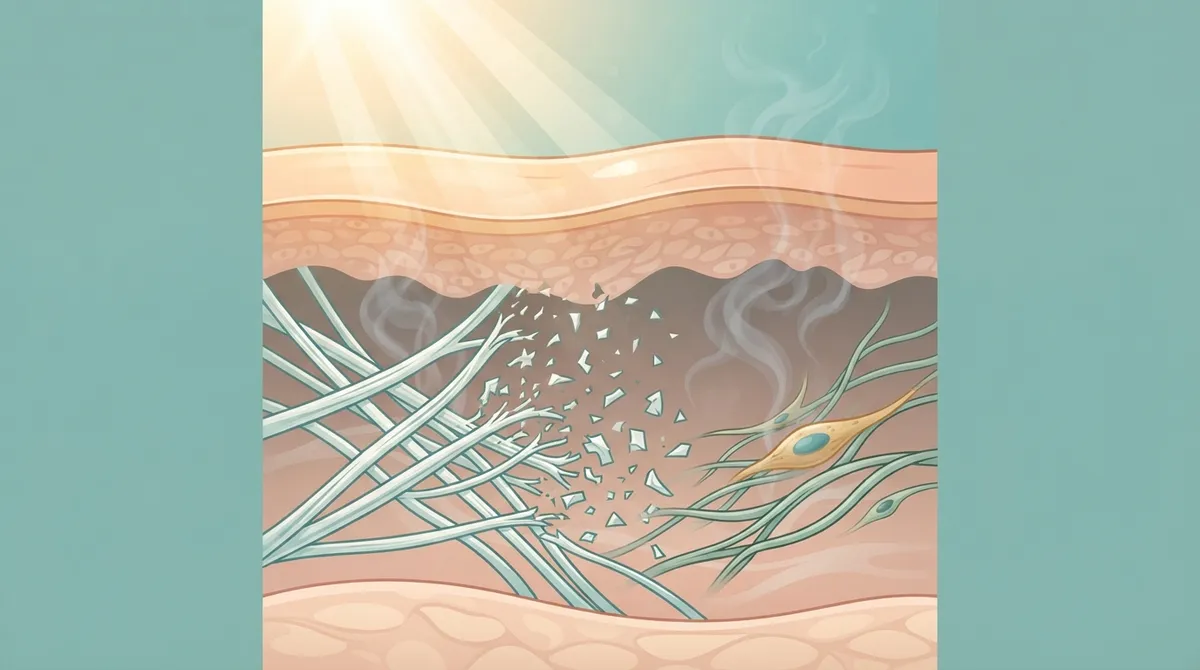
UV sun exposure is a major preventable cause of collagen loss: it raises MMP enzymes that break down collagen and reduces the skin's ability to make new collagen.
-
Smoking constricts skin blood vessels, cuts oxygen and nutrient delivery, and boosts oxidative stress, making it one of the strongest changeable factors for collagen loss.
-
Collagen declines through two processes at once: fibroblasts make less collagen, and enzymes called MMPs break it down faster.
-
Declining estrogen after menopause can reduce collagen production, with one review reporting an average skin-collagen decline of about 2.1% per year, though individual rates vary.
-
Peptide evidence is limited and depends on the specific peptide and delivery route; peptides should not replace sun protection and should be discussed with a licensed provider.
-
Daily broad-spectrum sunscreen, avoiding smoking, sleeping well, eating protein-rich foods, and staying active are practical steps to protect the collagen you still have.
Have you ever looked in the mirror and wondered where your skin’s bounce went? You are definitely not alone. Many of us notice fine lines, softer texture, or a little less spring in our skin as the years go by. The big question is usually the same: what causes loss of skin collagen, and can we do anything about it?
The good news is that once you understand the causes, you can take smart steps to protect the collagen you have. Some causes are built into aging. Others, like sun exposure and smoking, are things you can influence. In this friendly guide, we will walk through how to spot what is driving collagen loss in your own life, what the research says about peptides, and how to build a plan that fits your goals.
Whether you are a busy professional, a data-loving biohacker, or simply someone who wants to age well, this guide is for you. Let’s dig in together.

What Is Collagen and Why Does It Matter?
Collagen is a protein that gives your skin structure, firmness, and stretch. Think of it like the scaffolding inside a building. When the scaffolding is strong, the walls stay smooth and upright. When it weakens, things start to sag and crease.
Your skin’s deeper layer, called the dermis, is packed with collagen. Cells called fibroblasts make it. Over time, those cells slow down, and the skin’s support system changes. That is the heart of what causes loss of skin collagen: your body makes less of it, and it breaks down faster.
Understanding this two-sided problem is key. Collagen loss is not just about making less. It is also about losing more. Let’s look at both sides.
Step 1: Understand the Two Sides of Collagen Loss
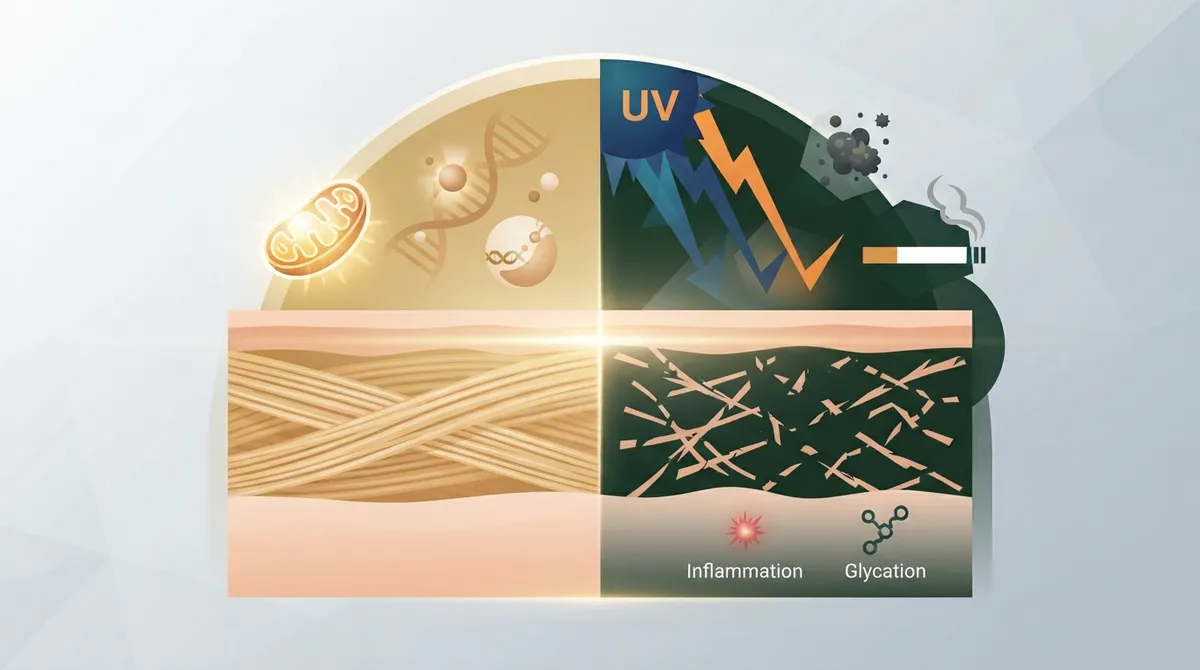
Skin collagen declines through reduced production and increased breakdown. Here is how each side works:
- Less production: With natural aging, fibroblasts become less active. Aging cells can also stop dividing and send signals that make the skin’s support network harder to maintain.
- More breakdown: Enzymes called matrix metalloproteinases (MMPs) chop up collagen and other support proteins. Sun damage and other stressors can turn these enzymes up.
When production slows and breakdown speeds up at the same time, collagen levels drop. That is why the skin can look thinner, drier, and less elastic over the years.
Step 2: Check Your Sun Exposure History
If you want to know what causes loss of skin collagen the most, start with the sun. Ultraviolet (UV) exposure is a major preventable cause of collagen damage.
Here is what happens. UV light creates oxidative stress in the skin. That stress can raise MMP enzymes, which break down collagen. At the same time, UV can reduce the skin’s ability to make new collagen. It is a double hit.
Ask Yourself These Questions
- Did you have frequent sunburns or tanning sessions in your younger years?
- Do you spend a lot of time outdoors without sunscreen?
- Do you drive often, where side windows let UVA rays through?
- Do you skip sun protection on cloudy days?
If you answered yes to a few of these, sun exposure may be a big player in your collagen story. The good news is that daily broad-spectrum sunscreen, shade, and protective clothing can help protect the collagen you still have.
Step 3: Look at Smoking and Lifestyle Habits
Smoking is another important, changeable contributor. It constricts the skin’s blood vessels, which lowers oxygen and nutrient delivery. It also increases oxidative stress and promotes collagen-degrading pathways.
Here is a stat worth knowing. A 2024 review reported that one study found each pack-year of smoking was associated with more than a fivefold risk of wrinkle development. That is an association, not proof that smoking alone causes it. Still, it shows how strongly smoking and skin aging tend to go together.
Other lifestyle factors can play a role too. These include air pollution, poor nutrition, chronic inflammation or illness, inadequate sleep, and heavy alcohol use. Their effects vary, and they are not equal in strength to UV exposure or smoking. Still, they add up over time.
A Quick Lifestyle Self-Check
- Note whether you smoke or are around heavy smoke often.
- Rate your sleep. Are you getting restful sleep most nights?
- Look at your diet. Are you eating enough protein, colorful produce, and healthy fats?
- Think about alcohol use and how often you drink.
- Consider your exposure to city air pollution or workplace irritants.
Be kind to yourself here. This is not about blame. It is about finding the levers you can pull.
Step 4: Consider Hormonal Changes
Hormones matter for skin. Declining estrogen around and after menopause can reduce collagen production and contribute to thinner, drier, less elastic skin.
A 2024 review described an average postmenopausal skin-collagen decline of about 2.1% per year, citing earlier research. Treat that number as a reported average, not a rule that applies to everyone. Each person’s pace is different.
Menopause-related changes also happen alongside natural aging and a lifetime of sun exposure, so it can be hard to separate them. If you are in perimenopause or menopause, it may help to talk with a provider about your whole picture. You can learn more in 6 Facts About Menopause Hormone Imbalance in 2026.
Men experience hormonal shifts too, and these can affect overall vitality. Looking at lab data can reveal a lot about what is going on inside.
Step 5: Use a Quick Cause Comparison Table
Sometimes a simple chart makes everything click. This table summarizes the main causes of collagen loss and how much control you have over each one.
| Cause | How It Affects Collagen | Can You Influence It? |
|---|---|---|
| Natural aging | Fibroblasts slow down; less collagen made | Only partly; healthy habits help |
| UV exposure | Raises MMP enzymes; lowers new collagen | Yes, with sun protection |
| Smoking | Reduces blood flow; boosts oxidative stress | Yes, by quitting |
| Hormonal changes | Lower estrogen reduces collagen production | Discuss options with a provider |
| Pollution, poor sleep, diet, alcohol | Add stress and inflammation to skin | Often, through lifestyle changes |
Notice that UV exposure and smoking are the strongest changeable factors. That is a hopeful message, because it means small daily choices can make a real difference.
Step 6: Learn Where Peptides Fit In
Now let’s talk peptides, since this is where many people get curious. What are peptides? They are short chains of amino acids, the building blocks of proteins. You can read more in 8 Facts That Explain What Are Peptides in 2026.
Some peptides are proposed to signal skin cells or support collagen-related processes. But here is the honest truth: the evidence depends on the specific peptide, the formula, and how it is delivered. Results from one product cannot be applied to every peptide therapy.
A 2024 review of topical exosome and peptide studies reported possible improvements in fine lines, texture, elasticity, and wound healing. The authors also stressed that robust human evidence for topical peptide rejuvenation is limited. A 2026 systematic review found mixed results and only two high-quality topical peptide studies, so strong claims of effectiveness are not justified yet.
That does not mean peptides are useless. It means we should stay curious, stay realistic, and work with a licensed provider. You can explore the science further in Does Peptide Therapy Really Boost Collagen Production?
Know the Difference Between Peptide Types
Not all peptide products work the same way. Evidence for one route does not prove safety or results for another.
| Type | How It Is Used | What to Know |
|---|---|---|
| Topical cosmetic peptides | Creams and serums on the skin | Some small studies show modest benefits; evidence is limited |
| Oral collagen peptides | Powders or capsules by mouth | Studied separately; results do not apply to other routes |
| Injected or compounded peptides | Prescribed by a licensed provider | Not proven to restore skin collagen; needs medical oversight |
Please remember that peptides are not a substitute for sun protection or medical care. They are one possible piece of a bigger plan. For a closer look at skin-focused options, check out What Peptides Do for Skin: A Real-World Guide for 2026.
Step 7: Get Data, Not Guesses
If you love numbers, this step is for you. Instead of guessing why your skin is changing, look at your health data. Blood work can reveal hormone levels, inflammation markers, and nutrient status, all of which can influence how your body ages.
This is where personalized care shines. A licensed provider can review your labs, your history, and your goals, then build a plan around you. Learn more about why this matters in Lab Work for Peptide Therapy: What to Test and Why.
Allura Longevity offers personalized, medically supervised peptide therapy through telehealth. Clients start with a virtual consultation, complete blood work through LabCorp, and receive a customized treatment plan delivered right to their door. It is a convenient fit for busy schedules, and care is available in Florida, Georgia, Texas, Connecticut, Indiana, Maryland, New York, and California.
Step 8: Build Your Collagen-Protecting Plan
Now let’s put it all together. Here is a simple, friendly action plan you can start today.
- Protect your skin from UV. Use broad-spectrum sunscreen daily, wear a hat, and seek shade.
- Quit or cut back on smoking. This is one of the strongest changes you can make for your skin.
- Prioritize sleep. Aim for steady, restful sleep to support your skin’s overnight repair.
- Eat for your skin. Include protein, antioxidant-rich fruits and vegetables, and healthy fats.
- Move your body. Regular exercise supports overall skin function and circulation.
- Check your hormones and labs. Work with a provider to understand your personal picture.
- Ask about peptide options. Discuss what evidence exists for the specific peptide and delivery route you are considering.
You do not have to do everything at once. Pick one or two steps, build the habit, and add more over time. Small wins really do add up.
Common Mistakes to Avoid
As you work to protect your collagen, watch out for these common slip-ups:
- Believing one product fixes everything. No single cream or injection reverses collagen loss on its own.
- Skipping sunscreen because you use peptides. Peptides do not replace sun protection.
- Buying unregulated products online. Quality and safety can vary widely.
- Comparing yourself to others. Collagen loss depends on genetics, history, and habits.
- Starting without a medical review. Personalized guidance helps you avoid wasted money and unwanted surprises.
If you are thinking about starting, our guide on How to Start Peptide Therapy Safely and See Real Results is a great next read. You can also see how timelines work in When Do Peptide Therapy Before and After Results Show?
What the Research Says: A Quick Snapshot
Here is a short summary of what we know and what we are still learning, so you can set realistic expectations.
| Topic | What Research Suggests |
|---|---|
| UV exposure | Major preventable cause of collagen damage |
| Smoking | Strongly associated with wrinkles and collagen loss |
| Menopause | Reported average decline of about 2.1% per year, but varies |
| Topical peptides | Possible modest benefits; human evidence is limited |
| Injectable peptides | Not proven to restore skin collagen |
For deeper reading, the National Library of Medicine offers peer-reviewed research on skin aging and related topics.
Putting It All Together
So, what causes loss of skin collagen? It comes down to a mix of natural aging, UV exposure, smoking, hormonal changes, and lifestyle factors. Your body makes less collagen and breaks down more of it over time. The strongest changeable pieces are sun protection and avoiding smoking.
Peptides may offer support for some people, but the research is still growing, and results depend on the specific peptide and how it is delivered. The smartest approach is a balanced one: protect your skin, look at your data, and work with a licensed provider who can tailor a plan to you.
You deserve care that fits your life and your goals. If you are ready to explore a personalized path, request a consultation with Allura Longevity and see how a customized peptide plan could fit into your longevity journey. Spots for new clients are limited each month, so reach out today or call (813) 510-6277.
FAQs
Q: What are the main causes of collagen loss in skin?
A: The main causes are natural aging, UV sun exposure, and smoking. Hormonal changes like declining estrogen after menopause also play a role, along with factors like pollution, poor nutrition, and lack of sleep. UV exposure and smoking are the biggest ones you can change.
Q: Can peptides stimulate collagen production in skin?
A: Some peptides are studied for supporting collagen-related processes, but the evidence depends on the specific peptide and how it is delivered. Current research does not support broad claims that peptide therapy reverses collagen loss. A licensed provider can help you understand what fits your goals.
Q: Does menopause cause collagen loss in the skin?
A: Yes, it can contribute. Declining estrogen around and after menopause can reduce collagen production, leading to thinner, drier, less elastic skin. One review reported an average decline of about 2.1% per year, though this varies from person to person.
Q: What can help protect skin collagen as you age?
A: Daily sun protection is the top step, followed by avoiding smoking, eating well, sleeping enough, and staying active. Checking your hormones and labs with a licensed provider can also help you build a personalized plan. Peptides may be one part of that plan, not a replacement for these basics.





