

Key Takeaways
-
Peptide therapy is only safe and appropriate under medical supervision: a licensed clinician should review your history, medications, and labs before any peptide is prescribed.
-
FDA-approved peptide medicines have defined uses and stronger evidence than compounded or 'research use only' products, which are not reviewed by the FDA for safety, effectiveness, or quality.
-
Human evidence for popular wellness peptides like BPC-157, TB-500, CJC-1295, and ipamorelin is limited, so benefits, ideal dosing, and long-term safety are not firmly established.
-
Start with a specific, measurable goal and a clear reason for each medication; a plan that is a bundle of random peptides or a 'stack' is a red flag.
-
Favor starting with a single peptide and changing one thing at a time, since combining peptides makes it harder to tell what is helping or causing side effects.
-
Avoid providers offering guaranteed results, selling products without a consultation, or pushing large bundles; seek urgent care for severe allergic symptoms like trouble breathing or facial swelling.
Let’s be honest: peptide therapy is everywhere right now. Scroll through any wellness feed and you’ll see promises of better sleep, faster recovery, sharper focus, and a younger-feeling body. It’s exciting! It’s also confusing, because not every peptide is the same, and not every plan is built with your health in mind.
That’s where a custom peptide therapy plan comes in. Instead of copying a trend or a friend’s routine, a custom plan starts with you: your history, your labs, your goals, and your risks. Whether you’re a health optimizer, a busy professional, or someone who simply wants to feel more like yourself again, this guide will walk you through how a thoughtful, medically supervised plan comes together.
We’ll cover what “custom” really means, how to separate FDA-approved medicines from experimental products, what a smart plan should include, and the red flags to avoid. Think of this as a friendly roadmap, so you can walk into a consultation feeling confident, not overwhelmed.

What Is a Custom Peptide Therapy Plan?
A custom peptide therapy plan is an individualized medical approach. A licensed clinician matches a specific health goal to a peptide that has an appropriate evidence base, then builds a schedule, dose, and follow-up routine around your body and your risks.
The key word is medical. A real plan isn’t a generic “anti-aging stack.” It’s based on a clinician’s review of your diagnosis or concern, medical history, current medications, and treatment goals. If you’re new to the basics, our guide on 8 Facts That Explain What Are Peptides in 2026 is a great starting point. You can also read a plain-language overview from what are peptides on WebMD.
What “custom” should and shouldn’t mean
- Should mean: a plan shaped by your labs, health history, goals, and preferences.
- Should mean: a clear reason for each medication, with realistic expectations.
- Shouldn’t mean: a long list of random peptides sold as a bundle.
- Shouldn’t mean: guaranteed results or “miracle” language.
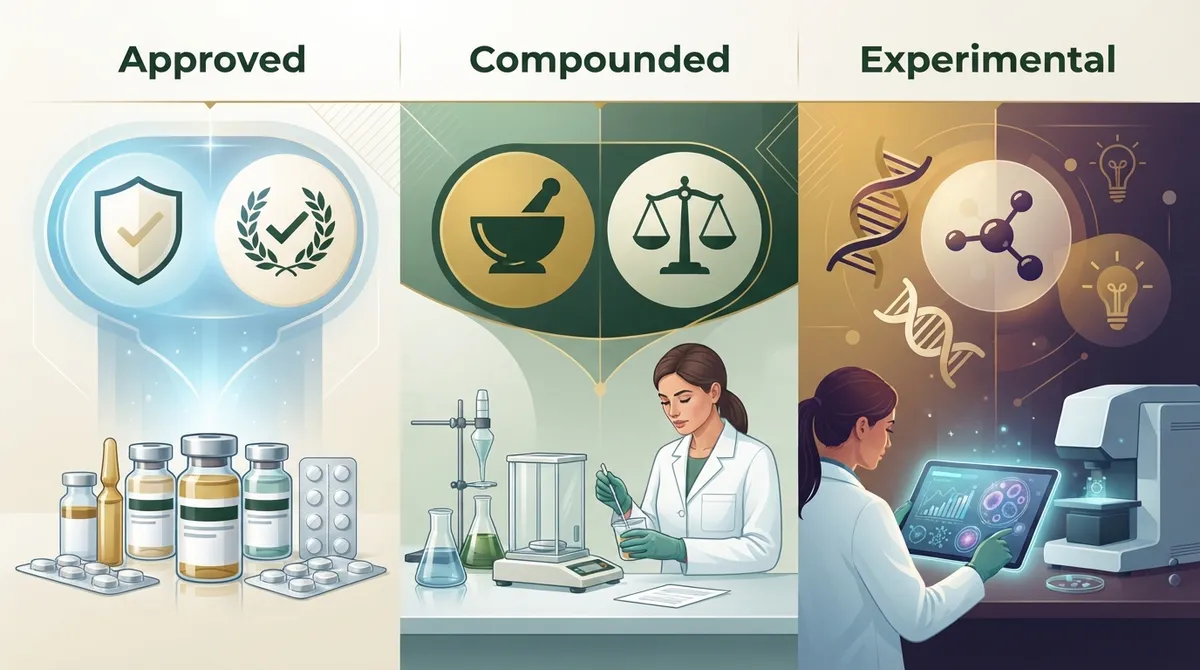
Know the Difference: Approved, Compounded, and Experimental
This is the single most important thing to understand before you start. “Peptide therapy” covers very different products, and approval of one peptide does not prove that another is safe or effective.
| Category | What it means | What to know |
|---|---|---|
| FDA-approved peptide medicines | Reviewed by the FDA for defined uses and dosing | Strongest evidence and regulatory oversight for their approved indications |
| Compounded peptides | Made by a pharmacy for a patient-specific need | Not FDA-approved and not reviewed by the FDA for safety, effectiveness, or quality before marketing |
| Investigational or “research use only” products | Sold for lab study, often online | Identity, potency, and sterility may be uncertain; avoid for personal use |
Compounding is generally meant for a patient-specific medical need when an approved drug can’t meet that need. Regulatory status can also change, so a good provider will verify current FDA and state requirements for each substance. For a deeper look, see FDA-Approved vs. Compounded Peptides: What Wins?
How to Build a Custom Peptide Therapy Plan Step by Step
Here’s how a thoughtful, medically supervised plan typically comes together. Use this as a checklist when you’re comparing providers.
- Define your goal. Be specific. “Better sleep quality” or “help with weight management” is more useful than “feel younger.”
- Share your full health history. Include past conditions, surgeries, allergies, family history, and everything you take, including supplements.
- Get a clinical review and labs. Blood work gives your clinician a baseline and helps flag risks.
- Discuss the evidence and alternatives. Your provider should explain what’s known, what isn’t, and what other options exist.
- Choose a treatment and set measurable goals. Decide how you’ll know it’s working.
- Start with a clear dose and schedule. Dosing depends on the specific medicine and your individual situation.
- Follow up and adjust. Plans should change as your labs, symptoms, and goals change.
Why blood work comes first
Labs aren’t a formality. They help your clinician understand your starting point and decide whether a peptide is appropriate at all. There’s no single lab panel that fits every peptide, so monitoring should match the specific medicine you’re taking. To learn more, read Lab Work for Peptide Therapy: What to Test and Why.
Match the Peptide to the Goal (and the Evidence)
Different goals call for different medicines, and the strength of the evidence varies a lot. Here’s a simple way to think about it.
| Common goal | Examples people ask about | Evidence picture |
|---|---|---|
| Weight management | GLP-1 medications such as semaglutide and tirzepatide | Approved products exist for defined indications; clinical trial data are much stronger here than for most wellness peptides |
| Recovery and tissue repair | BPC-157, TB-500 | Much of the rationale comes from preclinical research; human evidence is limited |
| Growth hormone support | CJC-1295, ipamorelin, sermorelin | Human evidence for wellness uses is limited; long-term safety is not well established |
| Skin and sexual wellness | GHK-Cu, PT-141 | Varies by product and use; discuss approval status and evidence with your clinician |
It’s worth saying plainly: for popular wellness peptides like BPC-157, TB-500, CJC-1295, and ipamorelin, the available human evidence is limited, so reliable benefits, ideal dosing, and long-term safety are not firmly established. A trustworthy provider will tell you that honestly. For deeper dives, check out 9 BPC-157 Peptide Facts to Know Before You Start and Ipamorelin Peptide Therapy: Benefits, Dosing & Safety.
What a Safe, Well-Built Plan Should Include
When you review a proposed plan, look for these building blocks. A solid plan is more than a prescription. It’s a process.
- A clear indication. You and your provider can state why you’re using each peptide.
- Measurable goals. For example, sleep tracking, body composition changes, or lab markers, depending on the goal.
- A contraindication and interaction review. Your clinician checks how a peptide might affect your conditions or medications.
- A defined follow-up schedule. Regular check-ins to review progress and side effects.
- Drug-specific monitoring. Monitoring should fit the medicine, not a one-size-fits-all template.
- Storage and injection guidance. Proper handling matters for safety. See How to Prepare for Safe, Effective Peptide Injections.
Single peptides or stacks?
Many people assume more is better. Often it isn’t. Combining several peptides adds complexity, and it can make it harder to tell what’s helping or causing a side effect. Most clinicians prefer starting simple and changing one thing at a time. Our comparison, Single Peptides vs. Peptide Stacks: Which Wins?, breaks this down. And never combine multiple peptides on your own without medical oversight.
Red Flags to Watch For
Your health is worth protecting, so keep an eye out for these warning signs. Reports to the FDA and public health experts have raised concerns about limited human evidence, impurities, unwanted immune reactions (immunogenicity), and sterile-product quality with certain compounded peptides. Adverse-event reports don’t prove a product caused a problem, but they’re a good reason to be careful.
- “Research use only” labels. These products aren’t meant for human use.
- No labs or consultation. If you can buy it without a clinician reviewing your health, walk away.
- Guaranteed results. Honest providers talk in probabilities, not promises.
- Unverified online sellers. Product identity, potency, and sterility may be uncertain.
- Pressure to buy big bundles. A custom plan shouldn’t feel like a sales funnel.
If you ever notice severe allergic symptoms, such as trouble breathing, swelling of the face or throat, or widespread hives, seek urgent medical care right away. To learn how to find a legitimate source, read How to Get Prescription Peptides Safely in 2026 and the research summary on National Library of Medicine.
Is Telehealth a Good Fit for Your Plan?
For busy professionals and anyone who values convenience, telehealth can be a great option. You can meet with a licensed provider from your couch, complete lab work at a local draw site, and have medication delivered to your door. The key is that the care is still real medical care: a proper intake, a licensed clinician, lab review, and ongoing follow-up.
Allura Longevity offers exactly this kind of medically supervised experience. It starts with a $50 virtual consultation, blood work through LabCorp, and a personalized six-month treatment plan designed by licensed providers, led by board-certified Family Nurse Practitioner Ashley. Your plan is monitored and adjusted over time, and medication is delivered to your home. Allura Longevity is licensed in Florida, Georgia, Texas, Connecticut, Indiana, Maryland, New York, and California. To compare care models, see Local Clinic vs. Telehealth: Best Peptide Therapy Near You?
Questions to Ask Before You Start
Bring these questions to your first appointment. A good provider will welcome them.
- Is this medicine FDA-approved, compounded, or investigational for my goal?
- What does the human evidence actually show?
- What are the risks, side effects, and alternatives?
- Which labs will you check, and how often?
- How will we measure whether it’s working?
- When would we stop or change the plan?
For more ideas, our list of 15 Peptide Consultation Questions to Ask in 2026 is a handy companion.
Set Realistic Expectations
Peptide therapy isn’t a magic switch. Results, when they occur, often build gradually and depend on the specific medicine, your starting point, and your lifestyle. Sleep, nutrition, movement, and stress management still do much of the heavy lifting. A custom plan works best as one piece of a bigger wellness picture, not a replacement for it.
Curious about pacing? Read How Long for Peptide Therapy Results? A Real Timeline for an honest look at what to expect.
Ready to Take the Next Step?
A custom peptide therapy plan should feel personal, transparent, and safe. It starts with your goals, is guided by labs and a licensed clinician, and stays honest about what the evidence does and doesn’t show. When you know what to look for, you can avoid the hype and choose care that truly fits you.
If you’re ready to explore a personalized, medically supervised plan, request a consultation with Allura Longevity. New-client spots are limited each month, so reach out soon, or call (813) 510-6277 to talk with the team. You can also explore options for peptides for women and peptides for men. Here’s to feeling energized, informed, and in good hands.
FAQs
Q: What is a custom peptide therapy plan?
A: It’s an individualized medical plan where a licensed clinician matches a specific health goal to a peptide with an appropriate evidence base. The plan is built around your health history, labs, medications, and risks, and includes follow-up and monitoring.
Q: Are peptide therapies FDA-approved?
A: Some peptide medicines are FDA-approved for specific uses, but many peptides marketed for recovery, longevity, or body composition are not. Compounded peptides are not FDA-approved or reviewed by the FDA for safety, effectiveness, or quality before marketing, so it’s important to ask your provider about the status of each product.
Q: Are BPC-157, TB-500, CJC-1295, or ipamorelin proven to work in humans?
A: Not firmly. Human evidence for these popular wellness peptides is limited, and much of the promoted rationale comes from preclinical research. Reliable benefits, ideal dosing, and long-term safety haven’t been well established, so medical guidance is essential.
Q: What tests or monitoring might be needed during peptide therapy?
A: There’s no single lab panel that fits every peptide. Your clinician will usually start with baseline blood work and choose follow-up monitoring based on the specific medicine, your health history, and your goals.
Q: How can I tell whether a peptide provider and product are legitimate?
A: Look for licensed clinicians, a real consultation, lab review, and clear information about the product’s approval or compounding status. Avoid “research use only” products, unverified online sellers, and anyone promising guaranteed results.





