
Key Takeaways
-
Clinical peptide therapy is not a standardized treatment or regulatory category; it is an umbrella term covering both FDA-approved peptide drugs and compounded or investigational wellness peptides with far less evidence.
-
Approval of one peptide drug does not prove other peptides are safe or effective; FDA approval applies only to specific products, doses, routes, and uses.
-
Popular wellness peptides like BPC-157, CJC-1295, and ipamorelin are not FDA-approved for the recovery, anti-aging, or performance uses they are often marketed for, and much of their support comes from lab or animal studies.
-
Compounding does not guarantee safety: the FDA has raised concerns about immune reactions, impurities, and limited human safety data for certain compounded peptide substances.
-
Avoid products labeled 'research use only,' sellers that skip medical review or lab work, and vague 'proprietary blends'; legitimate programs name the exact peptide and discuss its regulatory status.
-
Responsible care starts with a consultation and lab work, followed by a personalized plan, clear side-effect discussion, and ongoing monitoring and follow-up.
If you have scrolled through wellness social media lately, you have probably seen the words “peptide therapy” everywhere. It sounds high-tech, a little mysterious, and maybe a bit too good to be true. So let’s slow down and sort it out together. What is clinical peptide therapy, really?
Here is the short answer. Clinical peptide therapy is a loose, non-standard term for treatment with peptide-based medicines that a licensed clinician oversees. Sometimes that means well-studied, FDA-approved drugs. Other times it means compounded or investigational peptides that have far less evidence behind them. Those two things are not the same, and knowing the difference is the most useful thing you can learn.
In this guide, we will walk through five honest truths. You will learn what peptides are, which ones are approved, where the hype outruns the science, and how to spot a safe, well-run program. Whether you are a busy professional, a biohacker, or just curious about healthy aging, you are in the right place.
Truth 1: “Clinical Peptide Therapy” Is a Broad Term, Not One Treatment
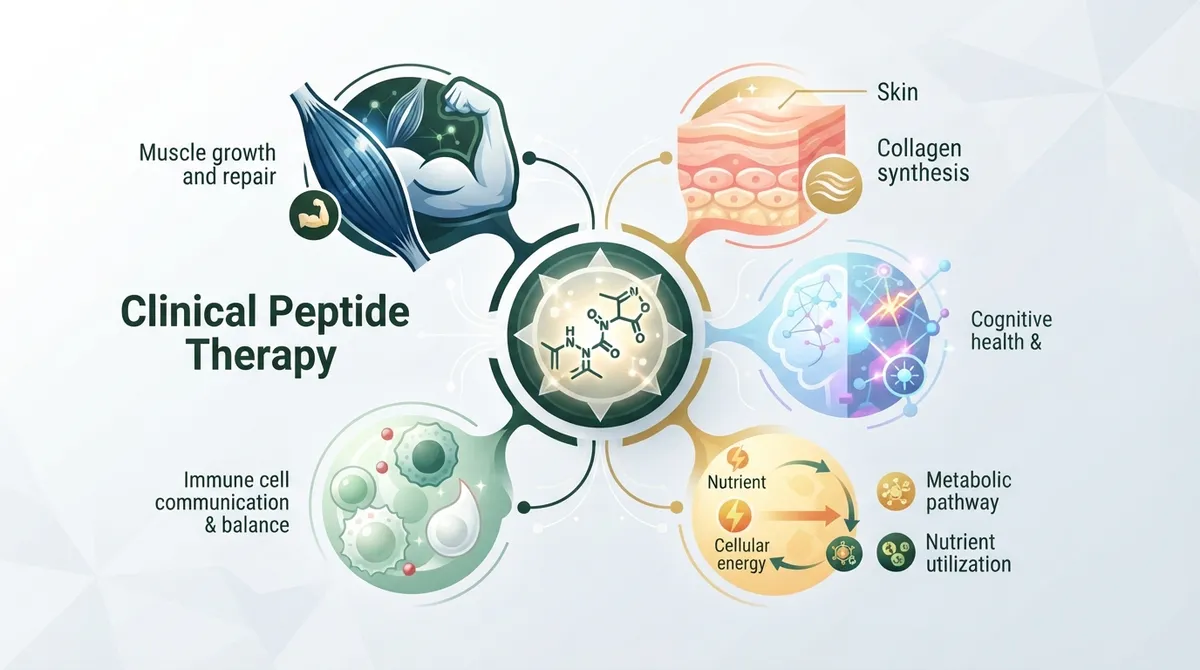
First, a gentle reality check. There is no single, standardized medical treatment called “clinical peptide therapy.” It is not a regulatory category. It is an umbrella phrase that people use in different ways.
In practice, the term usually points to one of two things:
- Approved peptide medicines: prescription drugs with defined formulations, prescribing information, and evidence reviewed for specific uses.
- Wellness-style peptides: compounded or investigational substances marketed for recovery, anti-aging, or general vitality, often with limited human data.
Think of it like the word “supplement.” A vitamin D tablet and an unlabeled powder from a random website can both get called supplements, but they are very different products. The same idea applies here.
That is why a good clinician will never just say “peptides work.” They will ask, which peptide, for what purpose, and what does the human evidence say? If you want a deeper definition, our guide on the peptide therapy definition breaks it down further.

Truth 2: Peptides Are Simply Short Chains of Amino Acids
Let’s start with the basics. What are peptides? They are short chains of amino acids, the same building blocks that make up proteins. Peptides are just smaller. Your body already makes thousands of them, and they act like tiny messengers, telling cells what to do.
Peptide-based medicines work by targeting specific spots in the body, such as hormone receptors or cell-surface receptors. When the peptide fits the receptor, it can switch a process on or off.
You may already know some famous peptide medicines:
- Insulin for diabetes, one of the oldest peptide drugs in medicine.
- GLP-1 receptor agonists such as semaglutide, used for approved indications that vary by product.
- Tirzepatide, another peptide-based medicine with its own approved uses.
The peptide field is large and growing. A 2024 review reports that more than 100 peptide medicines have been approved by US and European regulators, though counts vary based on how researchers define a peptide drug. The same review notes that 31 peptide-based drugs received FDA approval between 2016 and 2023, and it estimates the global peptide-therapeutics market at about US$50 billion. Keep in mind that a market size says nothing about whether any single product works. It only tells us that peptides are a big business.
To see how these messengers function inside your body, check out how peptide therapy mechanisms work.
Truth 3: Approved Peptides and Wellness Peptides Are Not Equal
This is the big one. If you remember only one thing from this article, make it this: approval of one peptide drug does not prove that other peptides are safe or effective.
FDA-approved peptide medicines have gone through a formal review. They come with controlled manufacturing, set doses, and prescribing information. That approval is specific to each product and each use. A different dose, route, or purpose is a different question.
Wellness peptides are a different story. Substances such as BPC-157, CJC-1295, and ipamorelin are often marketed for recovery, anti-aging, or performance. Based on current information, these are not FDA-approved for those marketed uses. Much of the excitement comes from lab or animal studies, and results in animals do not guarantee results in people.
Here is a simple side-by-side look:
| Feature | FDA-Approved Peptide Medicines | Wellness or Investigational Peptides |
|---|---|---|
| Regulatory review | Reviewed for specific indications | Not approved for the marketed wellness uses |
| Human evidence | Defined clinical data for approved uses | Often limited, small, or mostly animal and lab data |
| Manufacturing | Controlled, standardized formulations | May be compounded; quality varies by source |
| Prescribing information | Detailed labeling on dosing and risks | Often limited or unavailable |
| Examples | Insulin, semaglutide, tirzepatide | BPC-157, CJC-1295, ipamorelin (marketed uses) |
Take BPC-157 as an example. An FDA briefing document describes a randomized study of 53 people with ulcerative colitis. But it also notes that key details and the safety evidence were not enough to describe the substance’s safety profile. One small study does not prove benefit for other conditions. If you are curious, our article on whether BPC-157 is safe explores what the research really shows.
Want the full comparison? Read approved peptides vs. wellness peptides.
Truth 4: Compounding Is Not a Free Pass for Safety
You may have heard the word “compounded” when people talk about peptides. Let’s clear it up kindly and simply.
Compounding means a pharmacy prepares a custom medicine for an individual patient. It can be appropriate in limited situations when legal requirements are met. But a compounded medicine is not FDA-approved in the same way as a commercially made drug. Being compounded does not make a substance proven, approved, or risk-free.
The FDA has raised concerns about compounding certain peptide substances. The concerns include:
- Immune reactions (immunogenicity), where the body reacts to the peptide.
- Impurities or aggregation, where peptide molecules clump or contain unwanted material.
- Limited human safety information for some substances.
These worries are specific to the substance and the route. They do not mean every peptide, every route, or every pharmacy carries the same risk. That is exactly why details matter.
A few quick red flags to avoid:
- Products labeled “research use only.” These are not meant for people.
- Sellers who skip a medical review or lab work.
- Claims that sound like a cure-all.
- No clear information about who made the product.
Our guide on how to weigh the risks of peptide therapy safely offers more detail, and you can also read about peptide therapy side effects so nothing catches you off guard.
Truth 5: Good Clinical Care Looks Personal, Careful, and Monitored
So what does responsible clinical peptide therapy look like? It looks a lot like good medicine in general. It is personal, data-informed, and closely followed.
A well-run program should be able to clearly identify:
- The exact peptide being used.
- The reason it is being used (the indication).
- What the human evidence actually shows.
- The regulatory status of that substance.
- The formulation and route (for example, an injection under the skin).
- Possible side effects and interactions.
- The monitoring plan to track how you respond.
Here is how a typical, thoughtful process unfolds:
- Consultation: You talk through your health goals and history with a licensed provider.
- Lab work: Blood tests give a picture of what your body actually needs. Learn more about lab work for peptide therapy.
- Personalized plan: Your provider designs a plan around your results and goals. See how a peptide plan gets personalized.
- Safe delivery and guidance: You learn how to take your treatment correctly, often at home.
- Follow-up: Your provider checks in, reviews progress, and adjusts as needed.
This is where a telehealth model can really shine, especially for busy professionals who cannot spend half a day in a waiting room. At Allura Longevity, clients begin with a $50 virtual consultation, complete blood work through LabCorp, and receive a customized six-month plan delivered to their door. Care includes ongoing monitoring and adjustments by licensed providers, led by Ashley, a board-certified Family Nurse Practitioner. Telehealth care is available in Florida, Georgia, Texas, Connecticut, Indiana, Maryland, New York, and California.
Want to know what to ask before you start? Our list of peptide consultation questions is a great place to begin, and common consultation mistakes will help you make the most of your first visit.
What Peptide Therapy Can Realistically Support
Let’s be fair and hopeful here. When peptide therapy is chosen carefully and supervised well, it can fit into a broader plan for several goals. The key is matching the right substance to the right goal and being honest about what the evidence supports.
| Goal | What to Know |
|---|---|
| Weight management | GLP-1 medications are established peptide-based drugs with approved uses that vary by product. See how GLP-1 works for weight loss. |
| Injury and muscle recovery | BPC-157 is popular, but human evidence is limited. Read what peptides really do for muscle recovery. |
| Energy and sleep | Claims vary widely. Lifestyle basics matter a lot. See what the evidence says about fatigue. |
| Skin and aging | Interest is high, results depend on the product and route. See whether peptide therapy can slow aging. |
Notice the pattern? Almost every row says the same thing: it depends. That is not a weakness. It is honesty, and honesty is what keeps you safe and your money well spent.
How to Judge Whether a Program Is Legitimate
With so much buzz, it pays to be a smart shopper. Here is a simple checklist you can use with any provider:
- They are licensed and transparent. You can see who your clinician is and what they are qualified to do.
- They order labs first. A plan built without data is a guess.
- They name the exact peptide and explain its regulatory status. No vague “proprietary blends.”
- They talk about risks, not just benefits.
- They plan follow-up. Monitoring should not stop after the first order.
- They use legitimate pharmacies, not “research use only” products.
You may also want to read our tips on signs longevity medicine telehealth is legit and how to know online peptide therapy is safe. And if you want a broader, evidence-focused review, the National Library of Medicine hosts peer-reviewed research you can explore yourself.
Who Might Be a Good Fit?
Peptide care is not for everyone, and that is okay. People who often explore it include:
- Health optimizers who want to fine-tune energy, sleep, and recovery.
- Aging adults who want to protect vitality and independence.
- Biohackers who love labs, tracking, and customized protocols.
- Busy professionals who need convenient, at-home care.
- Wellness seekers who already invest in prevention and want to go further.
The best candidates go in with realistic expectations and a willingness to follow a medical plan. Not sure where you stand? Our article on who is a candidate for peptide therapy can help, and a look at contraindications shows who should be extra cautious.
Final Thoughts: Curious Is Good, Careful Is Better
So, what is clinical peptide therapy? It is clinician-guided treatment that uses peptide-based medicines, ranging from well-studied approved drugs to newer or compounded substances with much thinner evidence. The label alone tells you very little. The details tell you everything.
Remember the five truths: the term is broad, peptides are short amino acid chains, approved and wellness peptides are not equal, compounding is not a safety guarantee, and good care is personal and monitored. Armed with that, you can ask sharper questions and choose with confidence.
If you are ready to explore a personalized, medically supervised path, we would love to meet you. Request a consultation with Allura Longevity to talk through your goals with a licensed provider. New client spots are limited each month, so reach out soon, or call (813) 510-6277. You can also read more about peptides for women and peptides for men. Your wellness journey deserves a plan built just for you.
FAQs
Q: What does clinical peptide therapy mean?
A: It is a broad, non-standard term for clinician-supervised treatment with peptide-based medicines. It can describe well-studied FDA-approved drugs, but it is also used for compounded or investigational peptides with less evidence. Always ask which exact peptide is being used and why.
Q: Are BPC-157, CJC-1295, and ipamorelin FDA-approved?
A: Based on current information, these substances are not FDA-approved for the recovery, anti-aging, or wellness uses they are often marketed for. Much of the excitement comes from lab or animal studies, which do not prove benefit in people. A licensed clinician and pharmacist can help you understand the risks.
Q: What is the difference between an approved peptide and a compounded peptide?
A: An approved peptide medicine has gone through FDA review for specific uses, with controlled manufacturing and prescribing information. A compounded peptide is prepared by a pharmacy for an individual patient and is not FDA-approved in the same way. Compounding can be appropriate in limited cases, but it does not make a product proven or risk-free.
Q: How can I tell if a peptide product is safe and legitimate?
A: Look for a licensed clinician, lab work before treatment, a clearly named peptide, and a real follow-up plan. Avoid anything labeled “research use only” or sold without a medical review. When in doubt, check with your clinician and a pharmacist.
Q: What should I ask a clinician before starting peptide treatment?
A: Ask which exact peptide they recommend, what the human evidence shows, and what its regulatory status is. Also ask about the route, possible side effects, and how they will monitor you. A good provider will answer openly and welcome your questions.