

Key Takeaways
-
No peptide has strong, repeated clinical trial evidence proving it treats insomnia or improves restorative sleep, so claims of a 'best' sleep peptide are not supported by current research.
-
DSIP has the longest sleep research history, but small, older trials showed weak or clinically limited effects, and no large confirmatory trial exists.
-
Epitalon's sleep claims rest mainly on melatonin changes, which do not prove you sleep longer, deeper, or better.
-
CBT-I is strongly recommended by the American Academy of Sleep Medicine for chronic insomnia, and persistent sleep problems should be checked for causes like sleep apnea, medications, mood disorders, and hormone changes.
You’ve tried the blackout curtains, the magnesium, the no-screens-after-9 rule, and you’re still staring at the ceiling at 2 a.m. Sound familiar? You’re far from alone. CDC data for 2024 show that 30.5% of U.S. adults slept fewer than seven hours on average, 15.4% had trouble falling asleep, and 18.1% had trouble staying asleep. So it’s no surprise that people are searching for the best peptides for restorative sleep.
Here’s the friendly, honest truth: no peptide has been proven by strong, repeated clinical trials to treat insomnia or deliver deeper, more restorative sleep. That doesn’t mean the conversation ends here. It means we should talk about evidence, not hype. Let’s walk through what peptides like DSIP and epitalon actually have behind them, what the risks are, and what truly works while you explore your options with a licensed provider.
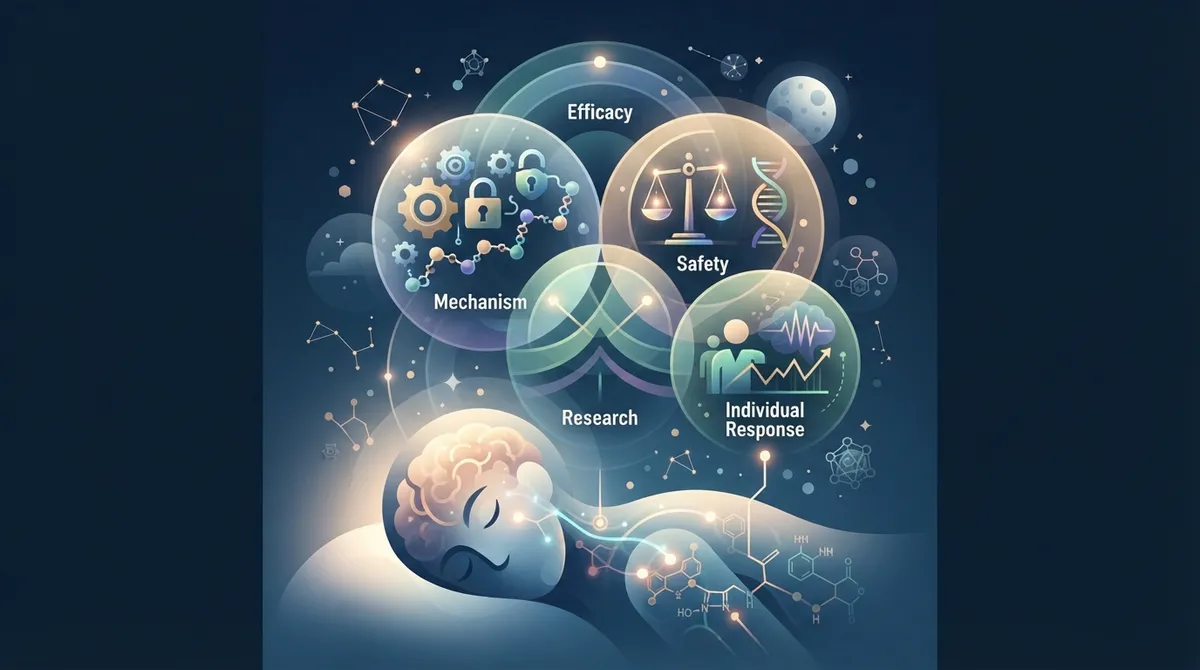
What Does ‘Best’ Really Mean for Sleep Peptides?
When people search for the best peptides for restorative sleep, they usually expect a ranked list with a clear winner. In reality, ‘best’ has to be defined by evidence, and the evidence here is thin. A fair ranking would simply sort peptides by how much human research exists and how clear the results are.
It also helps to know what ‘restorative’ means. Restorative sleep is sleep that leaves you feeling refreshed. It involves enough total sleep, healthy deep sleep, and steady sleep through the night. Any peptide claiming to improve it should show measured gains in those areas, not just a lab number that sounds impressive.
For a broader look at how sleep fits into a peptide plan, see our guide on which peptides actually help you sleep better.

Why Is the Evidence So Limited?
Peptides are short chains of amino acids that act as signals in your body. You can read a plain-language overview in this explainer on what are peptides. Many peptides are well studied for other uses, but sleep is a different story. Few have been tested in large, well-run human trials for insomnia.
Most sleep-peptide claims lean on small, older studies or on indirect markers, like changes in a hormone level. A change in a lab value is not the same thing as better sleep. That gap is where a lot of marketing lives, so it’s worth slowing down and looking at each option carefully.
DSIP: The Most Studied Sleep Peptide
Delta sleep-inducing peptide, or DSIP, is the peptide most directly tied to sleep research. Its name suggests it promotes deep, delta-wave sleep. Researchers explored it for insomnia in small trials in the 1980s and early 1990s.
The results were mixed at best. In a 1992 double-blind study, 16 people with chronic insomnia received DSIP or a placebo. The effects were weak, and the investigators concluded that short-term DSIP was unlikely to offer major benefit. A separate four-night crossover trial found differences in total sleep and stage-2 sleep, but those differences were already present before treatment and were judged of little clinical importance.
There are other caveats too:
- The studies were short and small.
- Many used intravenous dosing in sleep-lab settings.
- No large confirmatory trial turned up in the available research.
- The findings don’t prove that today’s at-home or subcutaneous regimens work or are safe.
Want a head-to-head view? Read DSIP vs. CBT-I: which deep sleep fix wins in 2026.
Epitalon: Melatonin Claims vs. Sleep Results
Epitalon (also called epithalon) is often promoted for circadian rhythm and sleep support. The human evidence mentioned most often is a small 2007 report describing changes in nighttime melatonin in older adults linked to pineal peptides, including epitalon. The available summary doesn’t list participant numbers, and it doesn’t report measured sleep outcomes.
That distinction matters. Melatonin is a signal that helps time your sleep, but a shift in melatonin levels doesn’t prove you slept longer, deeper, or better. Saying epitalon ‘restores circadian rhythm’ or ‘creates restorative sleep’ goes further than the data allows.
Evidence Snapshot: Common Sleep Peptide Claims
| Peptide | What Is Claimed | What Research Shows | Evidence Strength for Sleep |
|---|---|---|---|
| DSIP | Promotes deep sleep, eases insomnia | Small, older, mixed trials; weak or clinically limited effects | Low |
| Epitalon | Supports circadian rhythm and sleep | Melatonin changes reported; no proven sleep improvement | Very low |
| Other ‘sleep stack’ peptides | Better recovery and rest | Mostly indirect, anecdotal, or studied for other goals | Very low |
Approved Medicines vs. Compounded or Online Peptides
Here’s a point that protects your health. Unapproved or compounded peptides are not the same as FDA-approved medicines. Compounded drugs aren’t reviewed by the FDA for safety, effectiveness, or quality before they’re marketed. And products sold online as ‘research use only’ have not been shown to be safe for human use.
That’s why where you get a peptide matters as much as which one you choose. Our breakdown of approved peptides vs. wellness peptides explains the difference in plain terms. You can also review the research landscape through the National Library of Medicine.
Risks of Buying Sleep Peptides Online
- Unknown purity, strength, and sterility
- No medical screening for drug interactions or health conditions
- Risk of injection mistakes without training
- A false sense of security that delays real treatment of an underlying problem
What Actually Works for Chronic Insomnia?
Here’s the good news. There is a treatment with strong support. The American Academy of Sleep Medicine’s 2021 guideline strongly recommends multicomponent cognitive behavioral therapy for insomnia, known as CBT-I, for adults with chronic insomnia. It targets the thoughts and habits that keep you awake, and it doesn’t rely on a pill or a shot.
CBT-I commonly includes:
- Setting a consistent sleep and wake schedule
- Limiting time in bed to the hours you actually sleep
- Building a calming wind-down routine
- Challenging worried thoughts about sleep
- Using the bed only for sleep
See how the two approaches compare in sleep peptides vs. CBT-I.
Rule Out the Real Causes First
If you’ve had trouble sleeping for weeks or months, the fix may not be a peptide at all. Persistent sleep problems deserve a proper look at causes such as:
- Sleep apnea, which fragments your sleep without you knowing
- Medication side effects
- Anxiety, depression, or other mood disorders
- Circadian disruption from shift work or travel
- Hormone shifts, including perimenopause and low testosterone
Hormones are a big piece of the puzzle for many adults. Learn more in our article on hormone therapy and sleep quality, and why lab work matters for peptide therapy.
How a Smart Sleep Plan Fits Different Lifestyles
| Reader | Common Sleep Challenge | Smart First Step |
|---|---|---|
| Busy professional | Racing mind, short nights | CBT-I habits and a fixed wake time |
| Aging adult | Waking at night, lighter sleep | Screen for apnea and hormone changes |
| Biohacker | Wearable data looks ‘off’ | Pair tracking with labs and a clinician review |
| Wellness seeker | Already tried supplements | Check basics, then discuss options with a provider |
How to Approach Peptides for Sleep Safely
If you’re still curious about peptides, a careful approach keeps you safer. Think of it as using peptides as one possible tool inside a bigger plan, not as a magic switch.
- Start with a clinician. A licensed provider can review your history, medications, and goals.
- Get blood work. Labs help find hormone or nutrient issues that affect sleep.
- Fix the foundations. Light, caffeine timing, alcohol, and routine come first.
- Ask about evidence. A good provider will tell you plainly what is and isn’t proven.
- Track and adjust. Review how you feel and what your data show, and change course if needed.
For more on setting realistic expectations, read how to evaluate peptides for sleep before you try them and 5 mistakes to avoid when using peptides for restless sleep.
Where Allura Longevity Fits In
Allura Longevity is a telehealth clinic offering personalized, medically supervised peptide therapy. The process starts with a virtual consultation and blood work through LabCorp. Licensed providers, led by Ashley, a board-certified Family Nurse Practitioner, build a customized plan, and treatment is delivered to your home with ongoing monitoring. Telehealth is available in Florida, Georgia, Texas, Connecticut, Indiana, Maryland, New York, and California.
Because sleep is tied to energy, hormones, and recovery, a lab-guided approach can help you spot what may be getting in your way, rather than guessing. You may also like our look at the best peptide plan for sleep and how a peptide therapy plan gets personalized.
Final Thoughts: Aim for Real Rest, Not Just a Trend
The honest answer to ‘what are the best peptides for restorative sleep?’ is that the evidence doesn’t yet crown a clear winner. DSIP has the longest research history, but its results were modest. Epitalon’s sleep claims rest mostly on melatonin findings, not better sleep. The strongest proven tool for chronic insomnia remains CBT-I, paired with checking for underlying causes.
You deserve nights that leave you feeling like yourself again, and you deserve straight answers on the way there. If you’d like a provider to look at your whole picture, request a consultation with Allura Longevity. New-client spots are limited each month, and you can reach the team at (813) 510-6277.
FAQs
Q: Are any peptides proven to improve restorative sleep?
A: Not yet. No peptide has strong, repeated clinical trial evidence showing it safely and effectively treats insomnia or boosts restorative sleep. That’s why talking with a licensed provider about what is and isn’t proven matters so much.
Q: Does DSIP help with insomnia?
A: The research is underwhelming. Small trials from the 1980s and early 1990s found weak or clinically limited effects, and no large follow-up trial confirmed benefits. Those studies also don’t tell us whether today’s at-home regimens are effective or safe.
Q: Is epitalon proven to improve sleep?
A: No. The human evidence people point to involves changes in nighttime melatonin, not measured gains in sleep length, quality, or insomnia symptoms. A melatonin shift alone doesn’t prove you’ll sleep better.
Q: Are sleep peptides FDA-approved?
A: The peptides marketed for sleep, like DSIP and epitalon, aren’t FDA-approved sleep treatments. Compounded products aren’t FDA-reviewed for safety, effectiveness, or quality, and ‘research use only’ products aren’t established as safe for people.
Q: What should I do if I have chronic trouble sleeping?
A: Start with CBT-I, which the American Academy of Sleep Medicine strongly recommends for chronic insomnia. Also ask a provider to check for causes like sleep apnea, medication effects, mood concerns, and hormone changes before turning to unproven options.





