

Key Takeaways
-
Stamina supporting peptide therapy is a marketing phrase, not a formal diagnosis or standard treatment, and no peptide has been proven to improve stamina in healthy people.
-
Approval for one narrow condition does not prove a peptide boosts endurance: tesamorelin is FDA-approved only for excess abdominal fat in adults with HIV-associated lipodystrophy.
-
Evidence for BPC-157 is mostly preclinical, and the one small uncontrolled report of 12 knee-pain patients has no comparison group and says nothing about stamina.
-
Before considering any peptide, rule out common causes of low energy such as poor sleep or sleep apnea, anemia, thyroid disease, medication effects, and hormone shifts, using baseline lab work.
-
Compounded and online 'research' peptides carry unreliable purity, dosing, and labeling, so always check FDA status and your state's rules before starting.
-
Build a foundation first with 7-9 hours of sleep, 2-3 strength sessions weekly, steady cardio, adequate protein, hydration, and stress management.
If you have ever hit a wall at 2 p.m. and wondered whether there is a smarter fix than another coffee, you are not alone. Lots of busy adults, aging athletes, and data-loving biohackers are curious about stamina supporting peptide therapy. The idea sounds exciting. A small injection that helps you feel energized, recover faster, and keep going longer.
Here is the friendly, honest truth. “Stamina supporting peptide therapy” is a marketing phrase, not a formal medical diagnosis or a standard treatment. Some peptides are FDA-approved for specific conditions. Others are popular in wellness circles but have limited human research behind them.
In this guide, we will walk through what peptides are, which ones people talk about for stamina, what the evidence really says, and how to stay safe. We will also cover what to check first when your energy is low. Think of this as a calm, clear map so you can make smart choices with a licensed provider.

What Does Stamina Supporting Peptide Therapy Actually Mean?
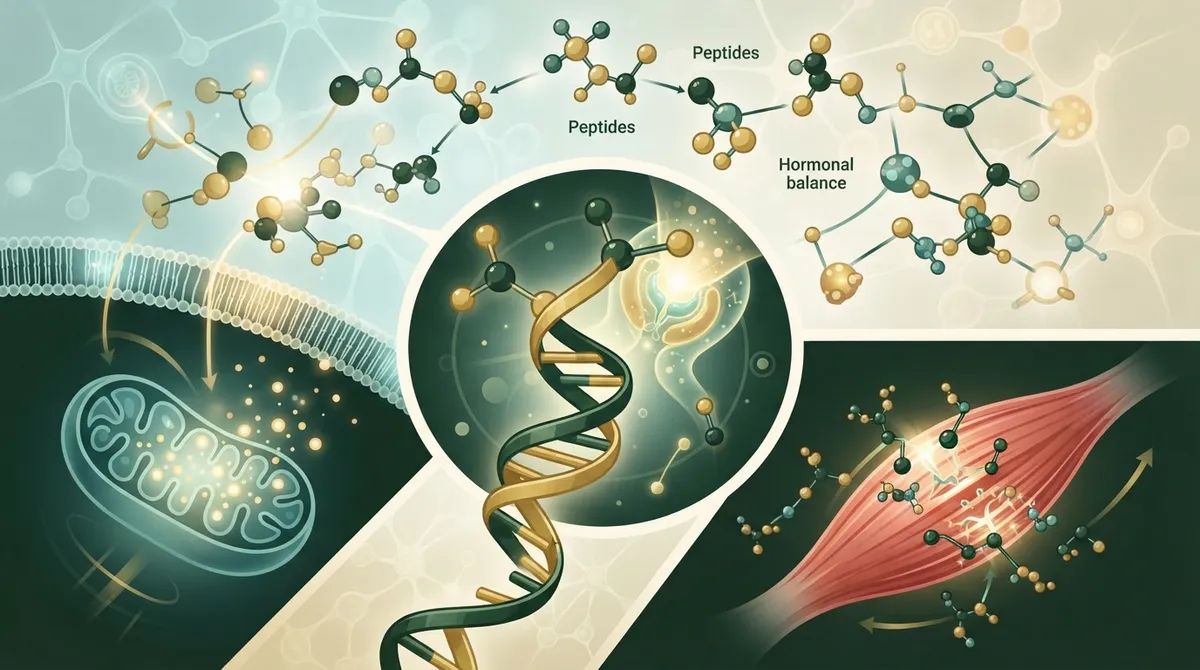
Let’s start with the basics. Peptides are short chains of amino acids, the building blocks of proteins. Your body makes many of them naturally, and they act like tiny messengers that tell cells what to do.
Stamina supporting peptide therapy is not an official category. It usually describes peptides that may influence growth hormone signaling, tissue recovery, or fatigue. Those are three different goals, and they should not be treated as the same thing.
That matters because “stamina” can mean many things:
- Physical endurance: how long you can work out or stay active
- Recovery: how quickly you bounce back after exercise or injury
- Daily energy: how alert and steady you feel from morning to evening
- Mental stamina: focus and clarity through a long workday
No single peptide has been proven to improve all of these in healthy people. A responsible plan starts by naming which goal matters most to you. For a broader primer, see our guide on peptide therapy basics every beginner should know.
Which Peptides Are Marketed for Stamina and Energy?
You will hear a handful of names again and again. Here is a quick, honest snapshot of what each one is and what the evidence looks like.
| Peptide | How It Is Marketed | What the Evidence Shows |
|---|---|---|
| CJC-1295 | Growth hormone support, energy, recovery | Limited clinical data; FDA materials note serious adverse events, including increased heart rate and a systemic vasodilatory reaction |
| Ipamorelin | Growth hormone release, recovery, vitality | FDA reviewers have not identified data supporting its effectiveness for growth hormone deficiency |
| BPC-157 | Injury healing, recovery | Mostly preclinical (animal and lab) research; few robust human trials |
| Tesamorelin | Sometimes mentioned for body composition | FDA-approved only to reduce excess abdominal fat in adults with HIV-associated lipodystrophy, not for endurance |
Notice a pattern? Approval for one narrow use does not prove a drug improves stamina. That is a key point worth remembering when you read marketing claims.
If you want a deeper look at one of these, our article on ipamorelin peptide therapy benefits, dosing and safety breaks it down in plain language.
Can Peptide Therapy Really Improve Stamina?
This is the big question, and we want to answer it with care. Current research does not show that commonly marketed peptides boost endurance or stamina in healthy people. We did not find high-quality human trials that prove a clear percentage improvement.
Here is what we do know:
- CJC-1295 and ipamorelin are promoted as growth hormone secretagogues. Available evidence does not establish meaningful gains in stamina, exercise performance, or muscle in healthy adults.
- BPC-157 is popular for recovery. One small, uncontrolled report described 12 people with knee pain, and 11 reported improvement. With no comparison group, that cannot prove it works, and it says nothing about stamina.
- Feeling better after starting any new plan can be partly due to better sleep, nutrition, and attention to your health.
Does that mean peptides have no place? Not at all. Some people work with a licensed provider as part of a bigger wellness plan, and some peptides have real approved uses. The key is honest expectations and medical oversight. To see how the science lines up, read what research supports peptide therapy.
Check the Common Causes of Low Stamina First
Before chasing any peptide, it helps to rule out the everyday culprits. Low stamina is often a symptom, not a standalone problem. A good clinician looks for the root cause first.
Medical and Lifestyle Causes to Rule Out
- Sleep problems: short sleep, poor sleep quality, or sleep apnea
- Anemia: low iron or low red blood cell counts
- Thyroid disease: an underactive thyroid can drain energy
- Medication effects: some prescriptions cause fatigue
- Infections: lingering illness can sap strength
- Heart or lung conditions: breathlessness and fatigue can be early signs
- Hormone shifts: low testosterone or menopause-related changes
This is why lab work matters so much. Blood tests give you real data instead of guesses, which biohackers and busy professionals tend to love. Learn more in our guide to lab work for peptide therapy and what to test.
If you are over 40, you may also like how to increase energy after 40 the smart way. And if you are a man noticing a slump, 5 real fixes for low energy in men over 40 is a helpful read.
The Safety Picture: What You Should Know
We want you to feel excited about your health goals and also protected. Peptides are not all the same, and quality matters a lot.
The FDA has raised concerns about certain peptide substances used in compounding. These concerns include immune reactions, peptide impurities, and difficulty fully characterizing the active ingredient. Injectable products can also carry risks from contamination or inaccurate labeling, especially when sourced outside regulated medical channels.
Potential risks depend on the substance, dose, route, product quality, and the person. Growth hormone and IGF-1 stimulation, for example, may affect blood sugar regulation and fluid balance.
Here is a quick comparison to keep things clear.
| Source | Oversight | Main Concern |
|---|---|---|
| FDA-approved peptide medicine | Reviewed for specific approved uses | Only proven for the approved condition |
| Compounded peptide from a licensed pharmacy | Pharmacy rules apply, but not FDA-approved | Effectiveness and safety may not be established |
| Online “research” peptides | Little to none | Purity, dosing, and labeling are unreliable |
Compounded drugs are not FDA-approved, and compounding rules keep changing. Just because a clinic or pharmacy offers something does not prove it is effective or well studied. Always check current FDA status and your state’s rules. For a full risk discussion, see how to weigh the risks of peptide therapy safely and 7 peptide therapy side effects you should know.
What a Responsible Peptide Plan Looks Like
Good peptide care is slow, careful, and personal. It should never feel like a one-size-fits-all product pushed on you. Here is a simple path many people follow with a licensed provider.
- Start with your story. Share your goals, symptoms, sleep habits, medications, and health history.
- Get baseline labs. Blood work helps spot anemia, thyroid issues, hormone changes, and blood sugar concerns.
- Fix the foundations. Sleep, protein, hydration, strength training, and stress care often make the biggest difference.
- Discuss options honestly. Your provider explains what is approved, what is experimental, and what is unknown.
- Monitor and adjust. Follow-ups, repeat labs, and open conversation keep your plan safe.
Allura Longevity follows a similar approach. It is a telehealth clinic offering personalized, medically supervised peptide therapy led by a board-certified Family Nurse Practitioner. Clients begin with a $50 virtual consultation, complete blood work through LabCorp, and receive a customized six-month plan delivered to their home, with ongoing monitoring along the way. You can read how this works in 15 ways a peptide therapy plan gets personalized.
Who Might Be a Good Fit for This Conversation?
Different people come to this topic for different reasons. See if you recognize yourself below.
Health Optimizers and Wellness Seekers
You already invest in sleep, supplements, and prevention. You want to know whether personalized therapy can add anything beyond the basics. A lab-guided plan helps you decide with facts rather than hype.
Aging Adults
You want to keep your get-up-and-go as the years pass. Hormone levels, sleep, and muscle mass all shift with age, so a thorough check is a smart starting point. Our piece on whether peptide therapy can really help slow aging offers a grounded view.
Biohackers and Busy Professionals
You like data and convenience. Telehealth lets you do consultations from your couch and receive treatment at home, which fits a packed schedule. Just remember that more data only helps when the plan is built on solid medical reasoning.
Realistic Timelines and Expectations
It is tempting to expect a dramatic shift in a week. Real life is usually gentler and slower. Many wellness changes build over weeks to months, and some people notice no change at all.
If a provider suggests a peptide, ask what specific result to watch for and when to check in. Tracking sleep, workout performance, and daily energy in a simple journal can help you see real trends. Our guide on a realistic peptide therapy timeline in 2026 can help you set fair expectations.
Also keep in mind that some peptides in this space can be misused in sports, and athletic organizations may restrict certain substances. If you compete, talk with your provider and your governing body first.
Smart Questions to Ask Before You Start
A great provider welcomes your questions. Bring this list to your consultation:
- Is this peptide FDA-approved, compounded, or experimental for my goal?
- What human research supports it, and how strong is it?
- What are the risks, side effects, and warning signs?
- Which labs will you run first, and how often will we repeat them?
- Where is the product made, and how is quality verified?
- What happens if I do not feel a difference?
You can find more ideas in 15 peptide consultation questions to ask in 2026 and 3 peptide consultation mistakes that waste your first visit. For extra reading on the science, the National Library of Medicine hosts peer-reviewed peptide research.
Evidence-Based Ways to Build Stamina Right Now
While you explore your options, these proven habits can lift your energy at almost no risk. They also make any future therapy work on a stronger foundation.
- Aim for 7 to 9 hours of consistent sleep.
- Lift weights two to three times a week to build muscle and resilience.
- Add steady cardio like brisk walking or cycling.
- Eat enough protein and whole foods through the day.
- Stay hydrated and limit alcohol.
- Manage stress with walks, breathing, or time offline.
None of these are glamorous, but they work. Think of peptides, if they are right for you at all, as an optional extra layer rather than a shortcut around the basics.
Final Thoughts: Curious, Careful, and Supported
Stamina supporting peptide therapy is a hopeful idea, but it is still a marketing phrase rather than a proven treatment category. The wisest path is to stay curious, ask tough questions, and work with licensed professionals who put safety and evidence first. Start with your labs, fix the foundations, and then decide together what makes sense for your body and goals.
If you are ready for a personalized, medically supervised approach, request a consultation with Allura Longevity or call (813) 510-6277. New client spots are limited each month, so reach out when you are ready to take the first step. You can also explore options for peptides for men or peptides for women.
FAQs
Q: Can peptide therapy improve stamina or endurance?
A: Current evidence does not show that commonly marketed peptides improve stamina or endurance in healthy people. Some peptides have approved medical uses, but those are narrow and do not include boosting athletic performance. The best first step is a full check of sleep, labs, and lifestyle with a licensed provider.
Q: Is CJC-1295 or ipamorelin proven to improve athletic performance?
A: No, not based on the research we have today. FDA materials report limited clinical data for CJC-1295 and note serious adverse events, and reviewers have not identified data supporting ipamorelin’s effectiveness for growth hormone deficiency. Talk with a clinician before considering either one.
Q: Are compounded peptides FDA-approved?
A: No. Compounded drugs are not FDA-approved, and the rules around compounding can change. A clinic or pharmacy offering a peptide does not prove it is effective or well studied, so always ask about its FDA status and your state’s rules.
Q: What should I ask a clinician before trying peptide therapy for fatigue?
A: Ask whether the peptide is approved, compounded, or experimental for your goal, what human research backs it, and which labs you need first. Also ask about risks, product quality, and follow-up. A good provider will welcome every one of these questions.
Q: What are the best evidence-based ways to fix persistent low stamina?
A: Start with the basics: consistent sleep, strength training, balanced nutrition, and stress care. Then ask your provider to check for anemia, thyroid problems, medication effects, and hormone changes. Treating the true cause usually brings the biggest improvement.





