

Key Takeaways
-
Injectable and compounded peptides are not proven cosmetic skin treatments and are not FDA-approved for skin renewal, so be cautious of online sellers promising dramatic results.
-
Topical peptides show promise in small studies, such as a 12-week GHK-Cu cream trial in women aged 50 to 59, but results vary by formula and many products lack independent testing.
-
Oral collagen peptides may improve skin hydration and elasticity according to a 2026 systematic review of 35 trials, but evidence for reducing wrinkles is inconsistent.
-
Daily broad-spectrum sunscreen, moisturizing, sleep, and a dermatologist visit remain the foundation of mature skin care, with peptides serving only as a supporting option.
-
Check which type of peptide product you are considering, since evidence for a cream does not prove an injection or supplement works.
-
Set realistic expectations by giving topical products about 12 weeks, tracking progress with same-light photos, and stopping any product that causes irritation.
If you are over 50 and your skin feels different lately, you are in good company. Maybe it looks thinner, drier, or a little less bouncy than it did a decade ago. Many women start searching for answers around this time, and “peptide skin renewal for women over 50” is a phrase that pops up again and again.
Here is the tricky part. The word “peptide” covers a lot of ground. It can mean a face cream, a collagen powder you stir into your coffee, or a prescription injection. These are not the same thing, and the proof behind each one is very different.
In this friendly guide, we will walk through seven facts that help you sort the real science from the hype. You will learn what peptides are, what the research says, and how to make safe choices. Think of this as a chat with a well-read friend who wants you to feel confident, not confused. Let’s dive in.
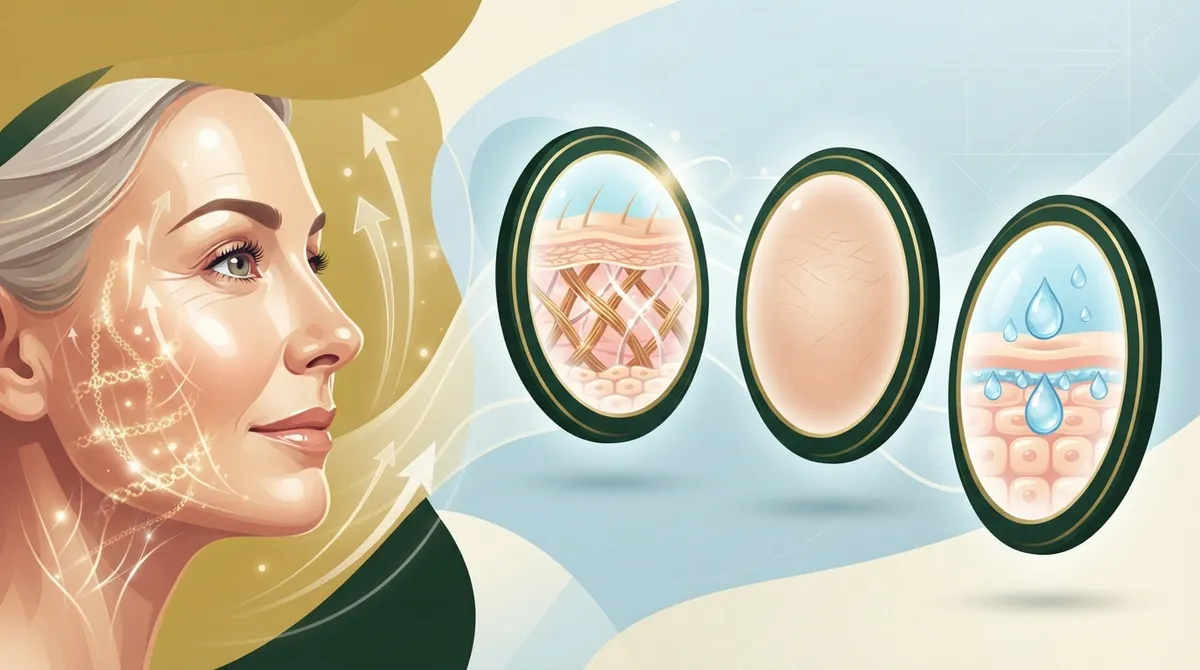
Fact 1: “Peptide Skin Renewal” Means Different Things
Before you spend a dime, it helps to know which type of peptide product someone is talking about. A peptide is a short chain of amino acids, the building blocks of proteins. Skin, hair, and muscle all rely on them. If you want a deeper basics refresher, our guide on 8 Facts That Explain What Are Peptides in 2026 is a great place to start.
When people talk about peptide skin renewal for women over 50, they usually mean one of three things:
- Topical peptides: creams and serums applied to the skin.
- Oral collagen peptides: powders or capsules taken by mouth.
- Prescription or compounded peptides: products that need a licensed medical provider.
Evidence for one type does not prove the others work. A cream study tells us nothing about an injection, and a supplement study does not prove a cream works. Keep this in mind as you read on.
| Type | How You Use It | Strength of Evidence for Skin |
|---|---|---|
| Topical peptides | Cream or serum on the skin | Small studies, varies by peptide |
| Oral collagen peptides | Powder or capsule by mouth | Growing, with mixed results |
| Prescription or compounded peptides | Provider-guided, often injected | Not an established cosmetic skin treatment |
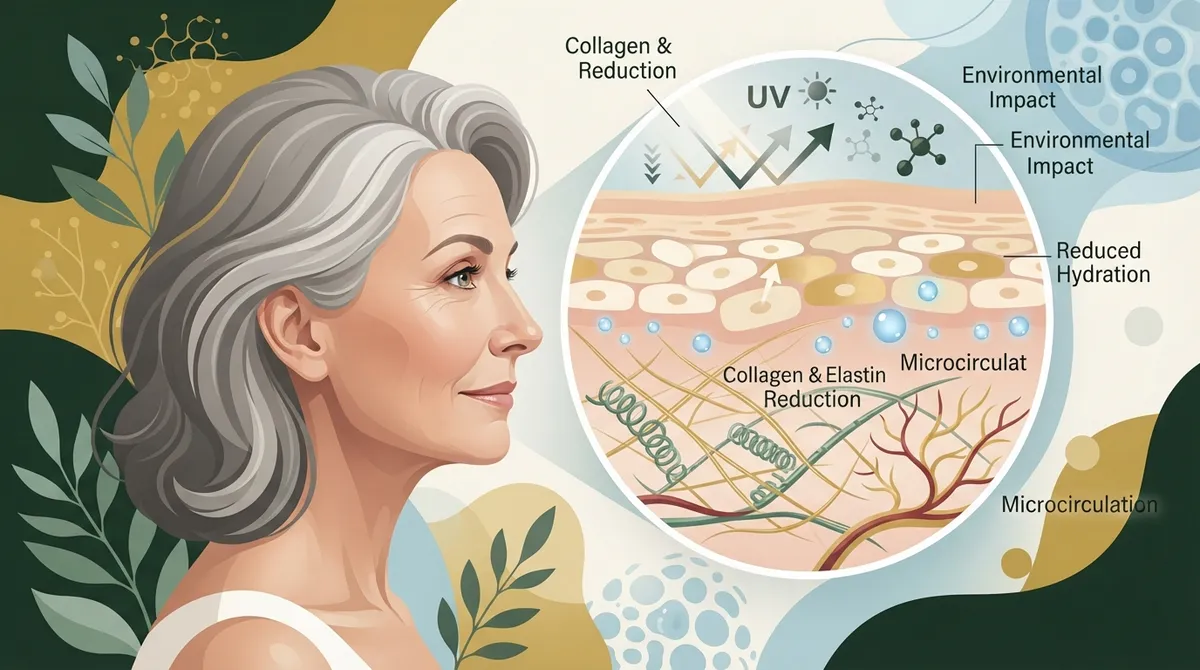
Fact 2: Skin Changes After 50 Have Several Causes
Your skin is not changing for just one reason. After 50, a few things tend to happen at once.
- Years of sun exposure add up. Ultraviolet light slowly breaks down collagen and elastin.
- Natural collagen and elastin decline. Skin loses some of its firmness and spring.
- Hormones shift around menopause. These changes can affect dryness and thickness.
Because so many factors are at play, no single product can undo everything. Peptide products may be a helpful extra step, but they cannot replace daily sunscreen or good care from a dermatologist. That is not meant to discourage you. It simply sets realistic expectations, which is the best way to feel happy with your results.
Fact 3: Topical Peptides Show Promise, With Limits
Topical peptides are probably the most familiar option. You see them in serums, night creams, and eye products. So do they work?
Some small, controlled studies report improvements in things like wrinkles, laxity, clarity, or skin thickness. The catch is that results vary by peptide and by formula. Many products on the shelf have never been tested in large, independent trials.
One often-cited example involves copper peptide, also called GHK-Cu. A 2009 review in the International Journal of Cosmetic Science described a 12-week, placebo-controlled study of a GHK-Cu cream. It included 67 women aged 50 to 59 with sun-damaged skin. The review reported improvements in several appearance measures. The same review also summarized a second study of 71 women with mild to advanced photodamage, using the cream twice daily for 12 weeks.
These are encouraging results, but they are small studies. They do not prove that every copper peptide product works. They also say nothing about injectable GHK-Cu. If you want to go deeper, you can read How to Evaluate GHK-Cu Peptide Safely in 2026.
How to Shop Smarter for Topical Peptides
- Look for products that name the specific peptide on the label.
- Be wary of big promises like “erases wrinkles.”
- Patch test new products, especially if your skin is sensitive.
- Introduce one new product at a time so you can spot any irritation.
Fact 4: Oral Collagen Peptides May Help Hydration and Elasticity
Collagen powders are everywhere, and many women over 50 add them to their routines. These are supplements, not the same as injectable peptide therapy. It is an important difference.
A 2026 systematic review in the Journal of Cosmetic Dermatology looked at 35 randomized controlled trials with 2,534 participants. It found improvements in measured skin hydration and elasticity. However, results for wrinkles and other structural changes were inconsistent.
So what does that mean for you? Oral collagen peptides may support skin moisture and bounce for some people, but they are not a guaranteed wrinkle eraser. Results can depend on the exact formula and dose. You can also explore our article on collagen peptides vs. peptide therapy to see how these two paths compare.
| What Research Suggests | Confidence Level |
|---|---|
| Improved skin hydration | Moderate, formulation-specific |
| Improved skin elasticity | Moderate, formulation-specific |
| Reduced wrinkles | Inconsistent across studies |
| Reversing all signs of aging | Not supported |
Fact 5: Injectable Peptides Are Not Proven Skin Renewal Treatments
This is the fact that matters most for safety. There is no solid basis in the current research to call injectable or compounded peptides an established, FDA-approved treatment for cosmetic skin renewal.
Compounded drugs are not FDA-approved for safety and effectiveness. And unapproved products sold online can have uncertain identity, purity, and dosing. That is a real risk, and it is why buying peptides from random websites is a bad idea.
If a seller promises dramatic skin transformation from an injection, treat that claim with healthy skepticism. A trustworthy provider will be honest about what is known and what is still being studied. You can learn more in FDA-Approved vs. Compounded Peptides: What Wins? and How to Get Prescription Peptides Safely in 2026.
Fact 6: Your Whole-Body Health Shapes Your Skin
Skin does not live in isolation. Sleep, stress, nutrition, hormones, and recovery all show up on your face. That is why many women over 50 look at the bigger picture instead of chasing one miracle product.
This is where personalized care can make sense. At Allura Longevity, licensed medical providers design treatment plans around your blood work and health goals. Care is delivered by telehealth, so you can start from home, and the team is led by Ashley, a board-certified Family Nurse Practitioner. Peptide therapy is used to support wellness goals such as energy, sleep, recovery, and overall vitality, and any plan is built after a provider reviews your labs and history.
It is worth saying plainly: peptide therapy supports overall wellness, and it should not be sold as a guaranteed fix for wrinkles. A good provider will talk with you about realistic goals. If you are curious about how personalized plans come together, see How to Start Peptide Therapy Safely and See Real Results and What Peptides Do for Skin: A Real-World Guide for 2026.
Habits That Support Mature Skin
- Wear broad-spectrum sunscreen every day, even when it is cloudy.
- Moisturize morning and night to protect your skin barrier.
- Eat enough protein and colorful fruits and vegetables.
- Prioritize sleep, since skin repairs itself overnight.
- See a dermatologist for concerns about spots, texture, or changes.
Fact 7: A Provider Visit Beats Guesswork
Before trying anything new, a quick conversation with a qualified clinician can save you time, money, and worry. They can review your medications, allergies, and medical history. They can also spot things a cream will never fix.
Here is a simple way to prepare for that visit:
- List your top skin concerns. Dryness, laxity, dullness, or something else.
- Write down everything you use. Include creams, supplements, and medicines.
- Note your health goals. Skin may be just one piece of the puzzle.
- Ask about evidence. Ask what research supports each option.
- Ask about follow-up. Good care includes monitoring and adjustments.
If you live in a state Allura Longevity serves, you can start with a simple virtual consultation. Telehealth is a handy option for busy schedules. Our article 5 Trusted Ways to Find Peptide Therapy in 2026 can help you compare your options.
What About Treatments With Stronger Evidence?
It is only fair to mention that some skin-care options have a longer track record than peptide products. Sun protection and dermatologist-guided care remain the foundation. Your dermatologist can talk through established choices based on your skin and goals.
Peptides can sit alongside these basics as one possible extra. Think of them as a supporting actor, not the star of the show. For a wider look at what the research says about aging and peptides, check out How to Pick the Best Peptides for Aging in 2026 or the overview from the National Library of Medicine.
Setting Realistic Expectations
Patience is your friend here. Topical studies often run for about 12 weeks before measuring changes. Skin cells turn over slowly, especially as we age. So if you try a new product, give it time and track how your skin feels.
Take photos in the same light every few weeks. Notice texture, moisture, and comfort, not just wrinkles. Small, steady improvements are a win. And if something stings, itches, or turns red, stop using it and ask a professional.
Final Thoughts
Peptide skin renewal for women over 50 is an exciting topic, and there is real science worth exploring. Topical and oral peptides may offer modest benefits for some people. Injectable and compounded peptides, on the other hand, should not be treated as proven cosmetic skin treatments. The smartest path is an informed one: protect your skin from the sun, choose products with honest claims, and work with licensed providers.
You deserve care that is personal, safe, and grounded in real data. Allura Longevity offers personalized, medically supervised peptide therapy through telehealth, with labs through LabCorp and a customized six-month plan delivered to your door. Spots for new clients are limited each month. Ready to talk it through? Request a consultation today, or call (813) 510-6277 to take your first step toward feeling like your best self.
FAQs
Q: Can peptide therapy improve skin firmness or wrinkles after age 50?
A: Some small studies suggest certain topical peptides and oral collagen peptides may improve measures like hydration, elasticity, or the look of fine lines. The results are not guaranteed and vary by product. Injectable peptides are not an established cosmetic skin treatment, so it is best to chat with a qualified provider about realistic goals.
Q: Are peptide injections or compounded peptides FDA-approved for skin rejuvenation?
A: No, there is no basis to call injectable or compounded peptides an FDA-approved cosmetic skin-renewal treatment. Compounded drugs are not FDA-approved for safety and effectiveness. That is why working with a licensed provider matters so much.
Q: Do oral collagen peptides help skin hydration and elasticity in women over 50?
A: A 2026 systematic review of 35 randomized trials found improvements in measured hydration and elasticity. Findings for wrinkles were less consistent, so think of collagen peptides as a possible helper rather than a cure-all. Results may depend on the specific formula.
Q: How long might it take to notice a change from a topical peptide product?
A: Many of the small studies on topical peptides ran about 12 weeks, so patience is key. Skin renews slowly as we age, so give a new product time. Track your progress with photos and stop use if irritation develops.
Q: What are the risks of buying injectable peptides online?
A: Unapproved products sold online can have uncertain identity, purity, and dosing, which can raise safety concerns. It is safer to get peptides through a licensed medical provider who reviews your labs and history. Never inject anything when you are unsure what is in it.





