

Key Takeaways
-
There is no convincing human evidence yet that peptides marketed for longevity slow aging or extend lifespan, since long-term trials measuring those outcomes are largely missing.
-
Peptides are not one category: FDA-approved peptide medicines have human trial evidence for specific conditions, while longevity-marketed peptides mostly rely on animal or lab studies.
-
Approval for one condition, such as GLP-1 drugs for diabetes or obesity, does not prove anti-aging benefits in healthy people.
-
Animal results, like epitalon's reported 12% to 24% rodent lifespan gains, are a reason to keep studying a peptide, not proof it will extend human life.
-
Raising biomarkers like growth hormone or IGF-1 with peptides such as CJC-1295 does not equal a longer or healthier life; real proof needs long-term outcome data.
-
Research-chemical peptides carry risks of impurities, dosing errors, and unknown long-term effects, so work with a licensed provider who starts with blood work and monitors progress.
You have probably seen the headlines. A new peptide promises to turn back the clock, boost your energy, and help you live longer. It sounds amazing. But if you are wondering do longevity peptides really work, you are asking exactly the right question.
Here is the honest answer: it depends on which peptide, and on what you mean by “work.” Some peptides are real, FDA-approved medicines that help people with specific conditions. Others are popular in wellness circles, but the proof that they slow aging in humans is thin. Mixing those two groups up is where a lot of confusion (and wasted money) begins.
In this friendly guide, we will compare two groups side by side: peptides with real medical backing and peptides marketed mainly for longevity. We will look at what the science says in 2026, what it does not say, and how to make smart choices. Whether you are a data-loving biohacker, a busy professional, or someone who just wants to feel great as you age, you deserve clear facts. Let’s dig in.
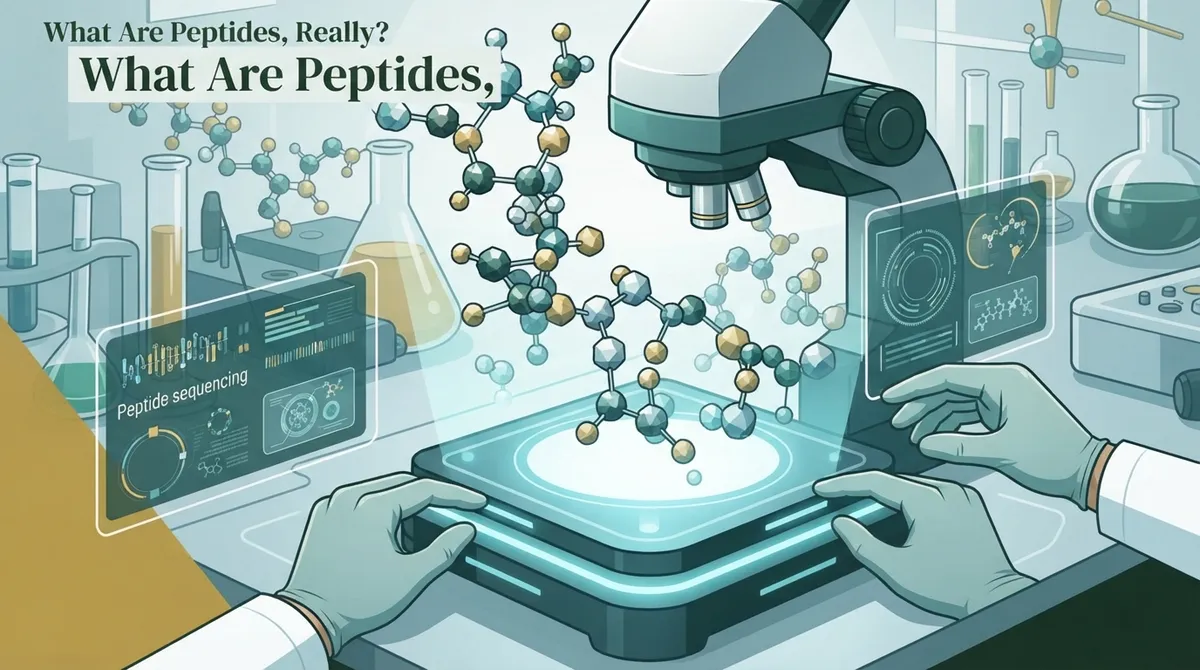
What Are Peptides, Really?
Peptides are short chains of amino acids, the building blocks of proteins. Your body makes them naturally, and they act like tiny messengers. Some tell your cells to heal. Others help control hormones, appetite, or blood sugar. If you want a deeper primer, check out 8 Facts That Explain What Are Peptides in 2026, or see this plain-language overview of what are peptides.
Here is the key point. “Peptide therapy” is not one thing. It covers very different products with very different levels of proof. A peptide medicine for diabetes and a research peptide sold for “anti-aging” are not in the same category, even though both get called peptides.

The Big Question: Do Longevity Peptides Really Work?
Let’s be direct. Right now, there is no convincing human evidence that peptides marketed specifically for longevity slow biological aging, extend lifespan, or reliably improve healthspan. Long-term randomized trials that measure those outcomes are mostly missing.
That does not mean peptides are useless. It means the strongest claims are ahead of the science. Many popular wellness peptides, such as BPC-157, TB-500, epitalon, MOTS-c, CJC-1295, and ipamorelin, have evidence that is mostly preclinical (animal or lab studies) or limited to small, narrow human studies.
Think of it like this: a promising result in mice is a great reason to keep studying something. It is not proof that it will help you live longer.
Comparing Two Worlds: Approved Peptide Medicines vs. Longevity-Marketed Peptides
The easiest way to understand the topic is to compare these two groups. Here is a quick side-by-side look.
| Feature | FDA-Approved Peptide Medicines | Longevity-Marketed Peptides |
|---|---|---|
| Examples | GLP-1 medicines, tesamorelin | Epitalon, MOTS-c, BPC-157, TB-500 |
| Main evidence | Human clinical trials for a defined condition | Mostly animal, lab, or small human studies |
| FDA approval | Yes, for specific uses | Not approved as anti-aging treatments |
| Proof of longer life | Not claimed or shown | Not shown in humans |
| Safety data | Established for the approved use | Often limited or uncertain |
Notice something important in that table. Even the approved medicines do not prove that peptides reverse aging. Approval for one condition does not mean a benefit for aging in healthy people.
What the Approved Peptides Actually Do
Some peptide medicines have strong human evidence, but only for what they were tested on.
- Tesamorelin: Approved for excess abdominal fat in some people with HIV. It does not prove broad anti-aging effects.
- GLP-1 medicines: Approved for uses such as diabetes and obesity. They can be powerful tools for metabolic health, but that is different from slowing aging. Learn more in How to Understand GLP-1 Peptide Therapy in 2026.
- Elamipretide: A good reminder that results do not always carry over. It is approved only for Barth syndrome, and phase 3 heart failure trials missed their main goals.
The lesson is simple. A peptide can work well for one job and still not be an anti-aging breakthrough.
What About the Popular Longevity Peptides?
Now let’s look at the peptides that show up most often in longevity conversations. We will keep it fair and factual.
Epitalon
Epitalon is often discussed for aging. Animal research has reported lifespan increases of roughly 12% to 24% in rodent models. That is interesting, but it is preclinical evidence. It cannot tell us that the same thing would happen in people.
MOTS-c and SS-31
These are studied for cellular energy and mitochondria. The ideas are exciting. The human proof that they extend healthy life is still not there.
BPC-157 and TB-500
These are best known for tissue repair and recovery talk. The research is largely preclinical or limited. For a closer look, read 9 BPC-157 Peptide Facts to Know Before You Start and 13 Facts About TB-500 Peptide You Need in 2026. An FDA advisory committee recommended BPC-157 for the 503A Bulks List by an 8 to 6 vote with one abstention. That is a regulatory step, not FDA approval of BPC-157 as a drug, and it is not proof it works. Rules can change, so always check current FDA records.
CJC-1295 and Ipamorelin
These are growth hormone secretagogues. Human studies of CJC-1295 have shown higher growth hormone and IGF-1 levels. But a higher number on a lab test is not the same as a longer or healthier life. Explore more in Ipamorelin Peptide Therapy: Benefits, Dosing & Safety.
Why a Biomarker Change Is Not the Same as Longevity
This one trips up even smart, data-driven people, so it is worth a little time. If a peptide raises a hormone or lowers a marker, it can feel like a win. But a biomarker is only a clue, not the finish line.
To prove longevity benefits, researchers would need to show that people:
- Live longer, or stay healthier for more years.
- Have fewer age-related diseases or hospital stays.
- Keep strength, thinking skills, and independence over time.
- Stay safe over many years of use.
Right now, those long-term human outcomes are missing for most longevity peptides. That is the gap between promise and proof.
What Peptide Therapy Can Realistically Offer
So are peptides pointless? Not at all. When used thoughtfully, under medical care, some people report real improvements in how they feel and function. Many clients are interested in energy, sleep, recovery, skin, body composition, and sexual wellness. Several peptides have at least some research behind those goals, and others are still being studied.
The key is setting honest expectations. A responsible plan treats peptides as one tool in a bigger picture, alongside sleep, strength training, nutrition, and regular lab work. If you are curious about timing, see How Long for Peptide Therapy Results? A Real Timeline.
Safety: The Part Nobody Should Skip
Safety is not settled for many experimental peptides. The FDA has raised concerns about certain substances, including possible immune reactions, impurities, limited human safety data, and reported serious adverse events for some compounds.
Here are the main risks to keep in mind:
- Research-chemical products: Items sold “for research use only” can vary in purity, strength, and quality.
- Unsupervised injections: Without medical guidance, dosing mistakes and contamination become real risks.
- Compounded drugs: They are not FDA-approved. A prescription or compounding eligibility does not mean the FDA has confirmed safety, effectiveness, or quality.
- Unknown long-term effects: For many peptides, nobody knows what years of use does.
For a deeper dive, read Is Peptide Therapy Safe? What You Really Need to Know and FDA-Approved vs. Compounded Peptides: What Wins?.
How to Tell If a Peptide Plan Is Evidence-Based
It can feel tricky to separate solid care from hype. Use this simple checklist before you start anything.
- Ask about the evidence. Is it from human trials, or mostly animal studies?
- Check the regulatory status. Is it FDA-approved for something, or compounded or experimental?
- Look for lab work first. Good care starts with blood work, not a one-size-fits-all pitch.
- Confirm a licensed provider. You want a real clinician who monitors you over time.
- Watch for big promises. Be wary of claims like “reverse aging” or “guaranteed years added.”
- Ask about follow-up. Ongoing monitoring and adjustments matter.
Our guide on How to Get Prescription Peptides Safely in 2026 walks through this in more detail, and 15 Peptide Consultation Questions to Ask in 2026 gives you a ready-made list.
Evidence Snapshot: What We Know and Don’t Know
| Question | Honest Answer in 2026 |
|---|---|
| Do longevity peptides extend human lifespan? | No convincing human evidence yet |
| Do some peptides have real medical uses? | Yes, for specific approved conditions |
| Is animal data enough to prove human benefit? | No, it only points to areas worth studying |
| Are popular longevity peptides FDA-approved for anti-aging? | No |
| Is long-term safety well established for most? | No, it is uncertain for many |
Where a Personalized Telehealth Approach Fits In
If you still feel curious about peptide therapy, the smartest path is a careful, personalized one. That means starting with your own data, not a trend. At Allura Longevity, clients begin with a virtual consultation and blood work through LabCorp. A licensed provider then builds a customized plan around your labs and goals, with ongoing monitoring and adjustments. Peptides are delivered right to your home, which suits busy professionals and anyone who wants convenient care.
That approach does not promise to stop aging. What it offers is thoughtful, medically supervised care that keeps your health data front and center. If you are looking at options, our guides on How to Start Peptide Therapy Safely and See Real Results and How to Pick the Best Peptides for Aging in 2026 are a great next step. You can also explore options for peptides for women and peptides for men.
The Bottom Line
So, do longevity peptides really work? Here is the balanced takeaway. Peptides are real biology, and some are proven medicines for specific conditions. But for the peptides marketed as longevity boosters, human proof that they slow aging or extend life is not there yet. Animal results and lab numbers are encouraging, not conclusive.
The good news is that you do not need hype to make good decisions. You need clear facts, honest expectations, and a licensed provider who tracks your progress. For more background, the National Library of Medicine is a helpful place to read the science yourself.
Ready to talk through your goals with a team that puts safety and your lab results first? Request a consultation with Allura Longevity today. Spots for new clients are limited each month, and you can also call (813) 510-6277. We are licensed in Florida, Georgia, Texas, Connecticut, Indiana, Maryland, New York, and California.
FAQs
Q: Do longevity peptides actually slow aging in humans?
A: Not that we can prove yet. There is no convincing human evidence that peptides marketed for longevity slow aging or extend lifespan, because long-term trials measuring those outcomes are mostly missing. Animal results are interesting, but they are only a starting point.
Q: Are BPC-157, epitalon, MOTS-c, or TB-500 FDA-approved?
A: No, they are not FDA-approved as anti-aging treatments. An FDA advisory committee did recommend BPC-157 for the 503A Bulks List by an 8 to 6 vote, but that is not drug approval or proof it works. Regulatory status can change, so it is smart to check current FDA records.
Q: Does raising growth hormone or IGF-1 with peptides help you live longer?
A: Not as far as we know. Peptides like CJC-1295 have been shown to raise growth hormone and IGF-1, but a higher lab number does not prove a longer or healthier life. Real longevity proof needs long-term human outcome studies.
Q: How can I tell if a peptide treatment is evidence-based?
A: Ask whether the proof comes from human trials or mostly animal studies, and check the product’s FDA status. Look for a licensed provider who starts with blood work and offers ongoing monitoring. Be cautious of any plan that promises to reverse aging.
Q: What are the risks of longevity peptides?
A: Risks can include impurities, dosing errors, possible immune reactions, and limited long-term safety data, especially with products sold as research chemicals or used without supervision. Working with a licensed provider helps lower these risks and keeps your care monitored.





