
Key Takeaways
-
Oral collagen peptides have the most human skin research and may modestly improve hydration, elasticity, and firmness, typically after about 8 to 12 weeks of consistent daily use.
-
Evidence varies by peptide type: oral collagen has clinical trial support, topical peptides mainly help the appearance of fine lines, and injectable peptides lack proven skin-rejuvenation benefits.
-
Conventional collagen peptides struggle to penetrate the skin's outer barrier, so topical peptide claims about rebuilding deeper structure often outpace the actual evidence.
-
Study quality and funding appear to influence results, with a 2025 meta-analysis finding no clear benefit in non-industry-funded or higher-quality trials, so expect modest rather than dramatic outcomes.
-
Daily broad-spectrum sunscreen, quality sleep, adequate protein, vitamin C, and not smoking protect existing collagen, and no peptide can outwork daily sun damage.
-
Before trying prescription or compounded peptides, verify FDA approval status and consult a licensed clinician who can review your health history, labs, and goals.
Ever pinch the back of your hand and notice the skin takes a little longer to settle back down? Or look in the mirror and think your face just doesn’t spring back like it used to? You’re not imagining it, and you’re definitely not alone. That youthful “bounce” is something nearly all of us start to miss as the years go by.
So how can peptides restore skin bounce? The honest answer is: it depends on the type of peptide, and the evidence is stronger for some than others. In this friendly guide, we’ll walk through what skin bounce really is, which peptide approaches have research behind them, and which claims deserve a healthy dose of skepticism. We’ll also cover how a licensed clinician can help you build a smart, personalized plan.
Whether you’re a busy professional, a data-loving biohacker, or simply someone who wants to age well, you’ll leave with clear, realistic steps. Let’s dive in!
What Is Skin Bounce, Anyway?
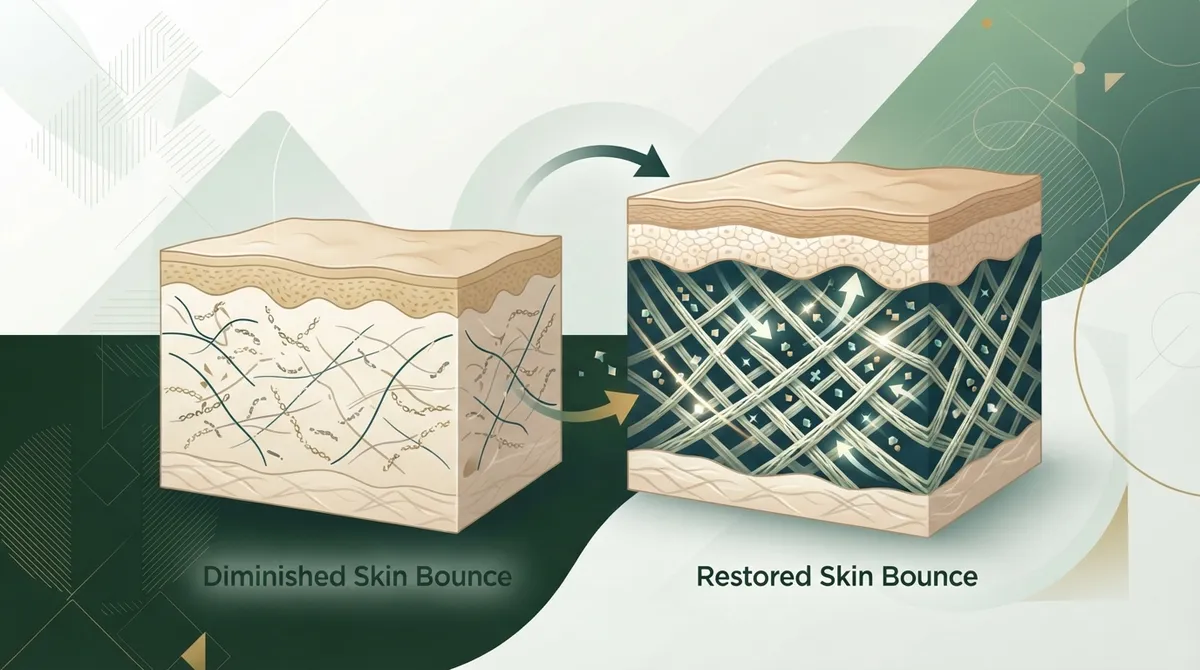
“Skin bounce” is an informal term. It describes how firm and elastic your skin feels, meaning how well it stretches and then returns to place. Think of a fresh memory foam pillow versus an old flat one.
Behind the scenes, bounce depends on a few key players:
- Collagen: the main structural protein that gives skin its firmness.
- Elastin: the stretchy fiber that lets skin snap back.
- Hydration: water held in the skin keeps it plump and supple.
- Skin barrier function: a healthy barrier locks in moisture.
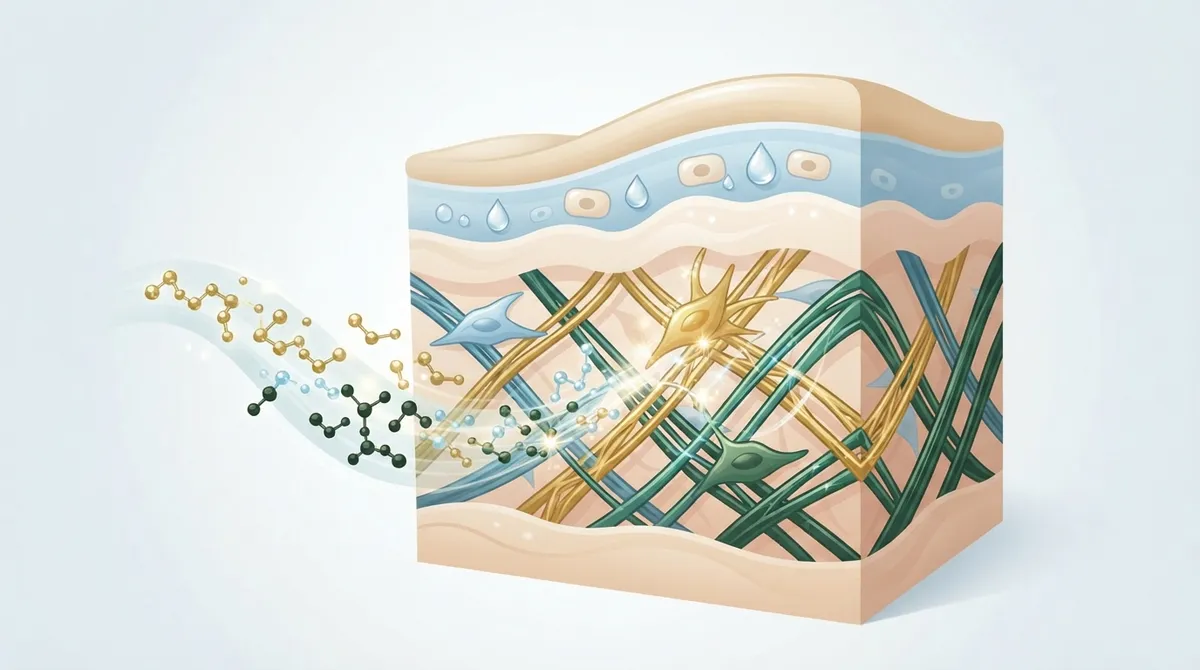
These parts live in the dermal extracellular matrix, which is the supportive “scaffolding” under your skin’s surface. Over time, sun exposure, stress, poor sleep, and hormone shifts can break this scaffolding down faster than your body rebuilds it. That’s why bounce fades.
What Are Peptides, and Why All the Buzz?
Peptides are short chains of amino acids, the building blocks of proteins. If you want the full basics, our guide to 8 facts that explain what are peptides in 2026 is a great place to start. You can also read a general overview on what are peptides.
Here’s the part that trips many people up. The word “peptide” covers very different products, and they are not interchangeable:
| Peptide Type | How It’s Used | Evidence for Skin |
|---|---|---|
| Oral collagen peptides | Powder or capsule taken by mouth | Some clinical trials show modest gains in hydration and elasticity |
| Topical cosmetic peptides | Creams and serums applied to skin | May improve the appearance of fine lines; evidence less established |
| Prescription or compounded peptides | Typically injected, directed by a clinician | Not proven or approved specifically for skin rejuvenation |
Why does this matter? Because research on a collagen powder you drink doesn’t prove anything about an injectable peptide, and vice versa. Keeping them separate is the key to making smart choices.
How Can Peptides Restore Skin Bounce? The Plausible Mechanisms
Let’s talk about what scientists think may be happening. These are proposed mechanisms, and some are better supported than others.
Signaling Your Skin Cells
Small peptide fragments from broken-down collagen may act like messages to your skin’s fibroblasts, the cells that make collagen and elastin. The idea is that these signals nudge fibroblasts to produce more of the structural proteins your skin needs.
Providing Building Blocks
Hydrolyzed collagen peptides are broken into smaller pieces and amino acids. Your body may use these as raw materials, and the fragments may also influence skin hydration.
Supporting Hydration
Better water retention makes skin look plumper and feel more elastic. Some studies of oral collagen report moisture improvements alongside elasticity changes.
These ideas are plausible. But “plausible” is not the same as “proven for everyone,” and we’ll keep that distinction clear as we go.
What the Research Actually Shows
Let’s look at the real numbers, because honesty builds trust.
- A 2024 randomized trial gave 85 healthy women aged 43 to 65 either 5 g per day of collagen peptides or a placebo for 84 days. At day 84, the collagen group showed better dermal density and moisture than placebo, with some elasticity and appearance measures improving earlier.
- A 2025 meta-analysis pooled 23 randomized controlled trials with 1,474 participants. Overall results favored collagen for hydration, elasticity, and wrinkles. However, subgroup analyses found no noticeable benefit in non-industry-funded or higher-quality studies.
- A 2024 review summarized 31 publications on oral collagen and skin aging. The studies varied a lot in design, formulation, and quality, so the size and durability of effects remain uncertain.
What does this mean for you? Oral collagen peptides may offer modest benefits for some people, often after roughly 8 to 12 weeks. But the findings are mixed, and funding and study quality seem to influence results. Anyone promising dramatic, guaranteed skin transformation is overselling. You can browse peer-reviewed literature through the National Library of Medicine to see how studies are designed.
How to Restore Skin Bounce With Peptides: A Step-by-Step Plan
Ready to put this into practice? Here’s a realistic, grounded roadmap.
- Get clear on your goal. Are you after firmer-feeling skin, better hydration, or fewer fine lines? Different goals call for different tools.
- Start with the basics. Daily sunscreen, good sleep, protein-rich meals, and hydration protect the collagen you already have. No peptide can outwork daily sun damage.
- Consider oral collagen peptides. They have the most skin-specific human research. Many studies use around 2.5 to 10 g daily, and the 2024 trial used 5 g. Give any product about 8 to 12 weeks before judging results.
- Add a topical routine. Look for serums with peptides alongside proven partners like moisturizers and sunscreen. Keep expectations modest, since topical evidence is less established than labels suggest.
- Check in with a licensed clinician. Before exploring prescription or compounded peptides, talk with a medical provider who can review your history, labs, and goals.
- Track your progress. Take well-lit photos every few weeks. Biohackers, this one’s for you: consistent lighting and angles make your data meaningful.
Oral vs. Topical vs. Injectable: Which Is Right for You?
Each route has its own pros, limits, and questions. Here’s a quick side-by-side to help you think it through.
| Route | Pros | Limits to Know |
|---|---|---|
| Oral collagen peptides | Easy daily habit; most human skin data | Results are modest and mixed; funding bias is a concern |
| Topical peptides | Low-effort; fits into a skincare routine | Conventional collagen peptides struggle to penetrate skin; claims often outpace evidence |
| Injectable or systemic peptides | Clinician-guided and individualized | Skin-rejuvenation benefit not established; regulatory status varies by product |
One very important point: evidence from supplements or cosmetics does not demonstrate the safety or effectiveness of prescription, compounded, or unapproved injectable peptides for skin rejuvenation. Always verify a product’s regulatory status. Our breakdown of FDA-approved vs. compounded peptides walks through this in plain English.
Why Topical Peptides Aren’t a Magic Wand
Topical peptides are everywhere, and the marketing can be dazzling. Here’s the friendly reality check.
Your skin’s outer layer is built to keep things out. Larger molecules, including conventional collagen peptides, have a hard time passing through. Some cosmetic peptides are designed to be smaller or more skin-friendly, and they may support claims like improving the appearance of fine lines. But “appearance” is the keyword. That’s different from rebuilding the deeper structure that gives skin real bounce.
If you enjoy topical peptides, wonderful! Just pair them with sunscreen and realistic expectations. For more on this, see our guide to what peptides do for skin.
Lifestyle Habits That Boost Your Peptide Results
Think of peptides as one teammate, not the whole squad. These habits help your skin hold onto its bounce:
- Daily broad-spectrum sunscreen: UV light is a top driver of collagen breakdown.
- Quality sleep: your body does a lot of repair overnight.
- Protein and vitamin C: both support your body’s own collagen production.
- Hydration and a gentle routine: a healthy barrier holds moisture in.
- Limiting smoking and excess sugar: both can speed up skin aging.
If you want more ideas, check out how to boost collagen naturally after 30.
Where Personalized Peptide Therapy Fits In
Here’s where things get interesting for those who want a more tailored path. Peptide therapy delivered through a medical provider is individualized, which means your plan starts with your own labs and goals rather than a one-size-fits-all product.
At Allura Longevity, licensed providers design customized plans based on blood work, and treatments are delivered to your home through convenient telehealth. Our care team is led by Ashley, a board-certified Family Nurse Practitioner, and care includes ongoing monitoring and adjustments. Allura is licensed in Florida, Georgia, Texas, Connecticut, Indiana, Maryland, New York, and California. Wondering what the process looks like? Our guide on how to start peptide therapy safely explains it well.
A quick, honest note: personalized peptide therapy supports whole-body goals like energy, recovery, sleep, and overall rejuvenation. Skin firmness-specific results from systemic peptide treatments are not guaranteed, and a good provider will tell you that upfront. That’s exactly the kind of transparency you deserve. For a deeper look at the skin side, see 12 peptide skin rejuvenation facts worth knowing.
Safety First: Smart Questions to Ask
Before starting any peptide product beyond a basic supplement, ask these questions:
- Is this product FDA-approved, compounded, or unapproved?
- What evidence exists for my specific goal, in humans?
- Who is supervising my care, and are they licensed?
- What labs will you run before and during treatment?
- What side effects should I watch for?
Being proactive protects you. Our article on whether peptide therapy is safe covers what to know, and 15 peptide consultation questions to ask gives you a ready-made list.
How Long Until You See a Difference?
Patience is your friend here. In oral collagen studies, benefits tended to show up after about 8 to 12 weeks, with some measures improving sooner. Skin renews itself slowly, so any real change takes time.
Not sure what a reasonable timeline looks like for broader peptide plans? See how long until peptides improve skin for a realistic view.
Your Next Step Toward Bouncier-Feeling Skin
So, how can peptides restore skin bounce? Oral collagen peptides may offer modest, gradual improvements in hydration and elasticity for some people. Topical peptides may help skin look smoother. And clinician-guided peptide therapy can support your broader wellness goals, though skin-specific results aren’t guaranteed. The smartest path combines sun protection, healthy habits, realistic expectations, and professional guidance.
If you’re curious about a personalized approach, you don’t have to figure it out alone. Allura Longevity offers a $50 virtual consultation, LabCorp blood work, and a customized six-month plan delivered to your door, with spots limited each month. Request a consultation or call (813) 510-6277 to talk with a licensed provider about your goals. Here’s to feeling confident in your skin at every age!
FAQs
Q: Can peptides improve skin elasticity and firmness?
A: Some research suggests oral collagen peptides may modestly improve skin elasticity, hydration, and firmness, often after about 8 to 12 weeks. But results are mixed, and higher-quality or independently funded studies show less benefit. Think gradual and modest, not dramatic!
Q: Are oral collagen peptides the same as peptide therapy injections?
A: Not at all! Oral collagen peptides are a dietary supplement, while peptide therapy injections are prescription or compounded treatments directed by a clinician. Evidence for one doesn’t prove anything about the other, so it’s smart to treat them as separate things.
Q: Do topical peptides penetrate the skin and boost collagen?
A: Conventional collagen peptides struggle to pass through the skin’s protective outer layer. Some cosmetic peptides may help improve the appearance of fine lines, but the evidence for real collagen rebuilding is less established than marketing often suggests.
Q: Are peptide injections approved or proven for skin rejuvenation?
A: Evidence from supplements or skincare products doesn’t show that prescription, compounded, or unapproved injectable peptides are safe or effective for skin rejuvenation. Always talk with a licensed clinician and verify a product’s regulatory status before starting.
Q: How long does it take to see skin changes from collagen peptides?
A: In clinical studies, benefits typically appeared after roughly 8 to 12 weeks of consistent daily use, with a few measures improving sooner. Skin renews slowly, so a little patience goes a long way.





