

Key Takeaways
-
No FDA-approved peptide exists specifically for anti-aging; approved peptide medicines like semaglutide and tirzepatide are approved for conditions such as diabetes and chronic weight management, not for slowing aging.
-
Compounded peptides are not FDA-approved and the FDA does not review them for safety, effectiveness, or quality before they reach the market, so ask where a product is made and how quality is verified.
-
Medical supervision adds safety through history review, medication checks, and monitoring, but it does not turn unproven peptides like BPC-157 or ipamorelin into proven treatments.
-
Start with blood work and ask any clinician what condition is being treated, what human evidence supports it, and what monitoring follow-up will be included.
If you have spent any time online lately, you have probably seen the buzz. Peptides for glowing skin, better sleep, faster recovery, even “reversing” age. It sounds exciting, and honestly, it is easy to get swept up. But here is the friendly truth: not every claim holds up, and that is exactly why doctor guided anti aging peptides is a phrase worth understanding before you spend a dime.
Whether you are a health optimizer tracking your labs, a busy professional short on time, or someone in midlife who simply wants to feel like yourself again, you deserve clear answers. In this guide, we walk through 14 honest facts about peptides, medical oversight, and what to ask before you start. We will keep it simple, warm, and real.
Quick note: this article is for education only and is not medical advice. Always talk with a licensed provider about your own health.
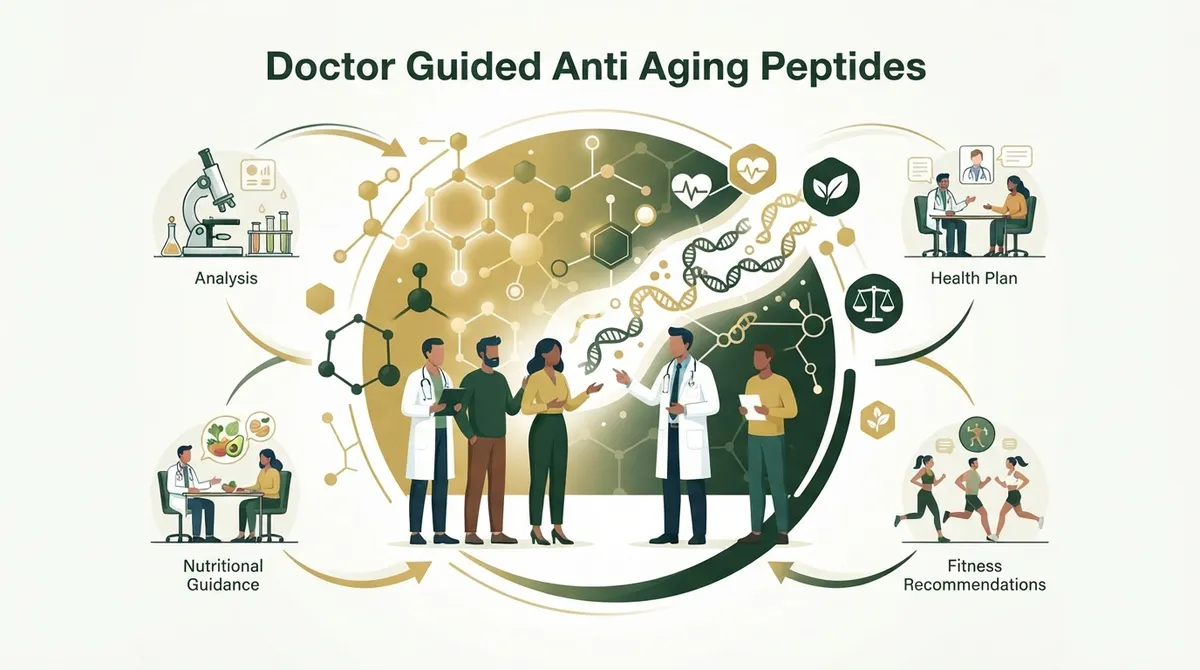
Fact 1: “Doctor Guided Anti Aging Peptides” Is a Phrase, Not a Single Treatment
Let’s start with the big one. Doctor guided anti aging peptides is a marketing phrase, not a standardized medical treatment. There is no single FDA-approved “anti-aging peptide.” Peptides are short chains of amino acids, and they play many roles in the body.
Some peptide medicines are approved for specific diseases. Many others that are promoted for longevity are still investigational or unapproved for those uses. If you want a plain-language refresher, check out 8 Facts That Explain What Are Peptides in 2026 or this overview of what are peptides.

Fact 2: Medical Guidance Adds Safety, Not Magic
Having a licensed provider involved is a real benefit. They can review your health history, check your medications, explain risks, and monitor how you feel over time. That is valuable.
But medical supervision does not turn an unproven peptide into a proven one. Think of a clinician as your seatbelt, not your engine. They help keep you safe on the road. They do not guarantee the destination.
Fact 3: Approved Peptide Medicines Exist, but for Specific Conditions
Some peptide-based medicines are FDA-approved. Semaglutide and tirzepatide are good examples. They are approved for particular uses, such as type 2 diabetes or chronic weight management.
Here is the key point. Approval for those conditions does not mean they slow aging or extend lifespan. Mixing those up is one of the most common mistakes people make. To learn more about this category, see How to Understand GLP-1 Peptide Therapy in 2026.
Fact 4: Many Popular Wellness Peptides Lack Strong Human Evidence
Peptides like BPC-157, TB-500, CJC-1295, and ipamorelin get a lot of attention. Yet there is not enough human research to show they slow aging, and they do not have FDA approval for anti-aging claims.
Much of the evidence people share comes from lab or animal studies. That is a starting point for science, not a finish line. If you are curious, you can read deeper dives on TB-500 and ipamorelin.
A Quick Evidence Snapshot
| Peptide Type | Typical Marketing Claim | Evidence Reality |
|---|---|---|
| BPC-157 | Healing and recovery | Mostly preclinical; limited human data |
| TB-500 | Tissue repair | Limited human evidence; not FDA-approved for this |
| CJC-1295 / Ipamorelin | Growth hormone support | Not proven to slow aging in people |
| Semaglutide / Tirzepatide | Weight and metabolic health | FDA-approved for specific conditions, not aging |
Fact 5: Compounded Does Not Mean FDA-Approved
Compounded drugs are made by pharmacies to meet individual needs. They are not FDA-approved, and the FDA does not review them for safety, effectiveness, or quality before they reach the market.
The FDA has also flagged concerns about certain bulk substances used in compounding, including possible immune reactions, impurities, and limited human safety information. Compounding is also legally restricted. It is not a doorway to every experimental peptide out there. For more on this, read FDA-Approved vs. Compounded Peptides: What Wins?
Fact 6: Injectable Peptides Carry Real Risks
Injectables are not like taking a vitamin. Possible concerns include dosing mistakes, contamination or sterility problems, injection-site reactions, and unknown long-term effects.
Peptides that influence growth hormone pathways may also affect blood sugar and fluid retention. These risks depend on the person and the product, which is exactly why individual assessment matters. Our guide on Is Peptide Therapy Safe? What You Really Need to Know covers this in more detail.
Fact 7: Real Stories Show Why Caution Matters
In 2025, ProPublica reported on two women who were hospitalized after peptide injections at an anti-aging event in Las Vegas. This is one reported incident. It does not tell us how often problems happen.
Still, it is a good reminder. Where you get peptides, who prepares them, and who oversees your care all matter. A glossy event or a flashy website is not a safety check.
Fact 8: Treating a Condition Is Different From Chasing “Anti-Aging”
A responsible conversation separates two ideas:
- Treating a diagnosed condition with an approved medicine for that purpose
- Experimental use marketed for general “anti-aging”
Both can come up in a wellness setting, but they are not the same. A good provider will be upfront about which one you are discussing.
Fact 9: Labs Come First
Smart peptide care starts with data, not guesses. Blood work helps a provider understand your hormones, metabolic markers, and overall health before suggesting anything.
This is a big win for biohackers and health optimizers who love numbers. It also helps busy professionals avoid wasting money on things that do not fit their bodies. Learn more in 5 Blood Work Analysis Steps Before Peptides in 2026.
Fact 10: Questions to Ask Any Clinician
Here is a friendly checklist you can bring to any consultation:
- What condition or goal is this treating?
- What human evidence supports it?
- Is the product FDA-approved for that use?
- Where is it made, and how is quality verified?
- What monitoring and follow-up will I have?
- What are safer or better-studied alternatives?
A trustworthy provider welcomes these questions. If you feel brushed off, that is a signal. Our list of 15 Peptide Consultation Questions to Ask in 2026 goes even deeper.
Fact 11: Legitimate Providers Look Different From Hype Sellers
Not sure how to tell the difference? Compare the two side by side.
| Green Flags | Red Flags |
|---|---|
| Licensed medical providers | No clear clinician or credentials |
| Lab work before treatment | One-size-fits-all packages |
| Honest talk about evidence limits | Promises to “reverse aging” |
| Ongoing monitoring | No follow-up plan |
| Clear sourcing and pharmacy info | Vague or “research use only” products |
For help vetting providers, see How to Find Legal Peptide Therapy You Can Trust.
Fact 12: Telehealth Can Make Good Care More Convenient
Busy schedule? Telehealth can help. A virtual visit lets you talk with a provider, complete lab work at a local draw site, and receive prescribed treatment at home, all without sitting in a waiting room.
Convenience is wonderful, but it only works when the care behind it is solid. Compare options in Local Clinic vs. Telehealth: Best Peptide Therapy Near You?
Fact 13: Results Take Time and Vary From Person to Person
Be wary of anyone promising overnight changes. Healthy aging is a long game. Sleep, nutrition, strength training, stress, and medical care all matter, and any peptide plan works best alongside them.
Your own response may differ from someone else’s, which is why check-ins and adjustments matter. Check out How Long for Peptide Therapy Results? A Real Timeline to set realistic expectations.
Fact 14: A Personalized Plan Beats a Trend
The best approach is built around you: your labs, your goals, your history. At Allura Longevity, licensed providers create personalized, medically supervised peptide plans delivered through telehealth, with ongoing monitoring along the way. Clients begin with a virtual consultation, complete LabCorp blood work, and receive a customized plan shipped to their home.
Allura Longevity is licensed in Florida, Georgia, Texas, Connecticut, Indiana, Maryland, New York, and California. You can explore options for peptides for women and peptides for men, or learn more in How to Start Peptide Therapy Safely and See Real Results. For a research-based look at the science, the National Library of Medicine is a helpful place to read further.
The Bottom Line on Doctor Guided Anti Aging Peptides
Doctor guided anti aging peptides can be a thoughtful part of a wellness plan when the oversight is real, the expectations are honest, and the choices are matched to your body. They are not a miracle, and they are not a shortcut around sleep, movement, and good nutrition.
Ask questions, expect evidence, and choose a team that treats you like a whole person instead of a sales target. You deserve that.
Ready to talk it through with a licensed provider? Request a consultation with Allura Longevity today. Spots for new clients are limited each month, and you can reach the team at (813) 510-6277.
FAQs
Q: Are anti-aging peptides FDA-approved?
A: Not for anti-aging. Some peptide medicines, like semaglutide and tirzepatide, are FDA-approved for specific conditions such as diabetes or chronic weight management. But there is no single FDA-approved peptide for slowing aging, so it is smart to ask any provider exactly what a product is approved to treat.
Q: Do peptides like BPC-157 or ipamorelin slow aging in humans?
A: There is not enough human evidence to say they do. Much of what you see online comes from lab or animal research, which is a helpful start but not proof. A good provider will be honest about those limits and help you weigh the risks.
Q: What does doctor guided peptide therapy actually involve?
A: Typically it starts with a consultation and blood work so a licensed provider can understand your health and goals. From there, they discuss options, review risks, and monitor how you are doing over time. It is about informed decisions and safety, not guaranteed results.
Q: How can I tell if a peptide clinic is legitimate?
A: Look for licensed medical providers, lab work before treatment, clear information about where products come from, and ongoing follow-up. Be cautious of big promises like “reversing aging” or one-size-fits-all packages. If a clinic dodges your questions, that is worth noticing.
Q: Are GLP-1 medicines anti-aging treatments?
A: No. GLP-1 medicines are approved to treat specific conditions like type 2 diabetes and chronic weight management. Their approval does not mean they slow aging or extend lifespan, so it helps to keep those two ideas separate.





