

Key Takeaways
-
BHRT and peptide therapy are different tools, not interchangeable: BHRT replaces declining estrogen and progesterone, while peptides are amino acid signaling chains that cannot substitute for hormones.
-
Hormone therapy is the best-evidenced option for hot flashes, night sweats, vaginal dryness, and bone loss, per The Menopause Society's 2022 position statement.
-
Timing matters: for healthy women under 60 or within 10 years of menopause onset with bothersome symptoms, the benefit-risk balance is generally favorable, so starting later carries higher risks.
-
"Bioidentical" describes molecular structure only, not safety; many compounded BHRT products are not FDA-approved, so ask whether a product is approved and how it is made.
If you have ever typed “bhrt peptide therapy for women” into a search bar, you are not alone. Lots of women in their 40s, 50s, and beyond are asking the same thing: Are bioidentical hormones and peptides the same? Can I use both? And which one is right for me?
Here is the friendly truth. BHRT and peptide therapy are two different tools. They are not interchangeable, and one does not replace the other. But in the hands of a careful, licensed provider, they can sit side by side as part of a thoughtful wellness plan.
In this guide, we will walk through nine clear facts, based on current menopause guidance from sources like the U.S. FDA and The Menopause Society. You will learn what BHRT really means, what peptides can and cannot do, and how to ask smart questions before you start. Grab a cup of tea, and let’s dig in.
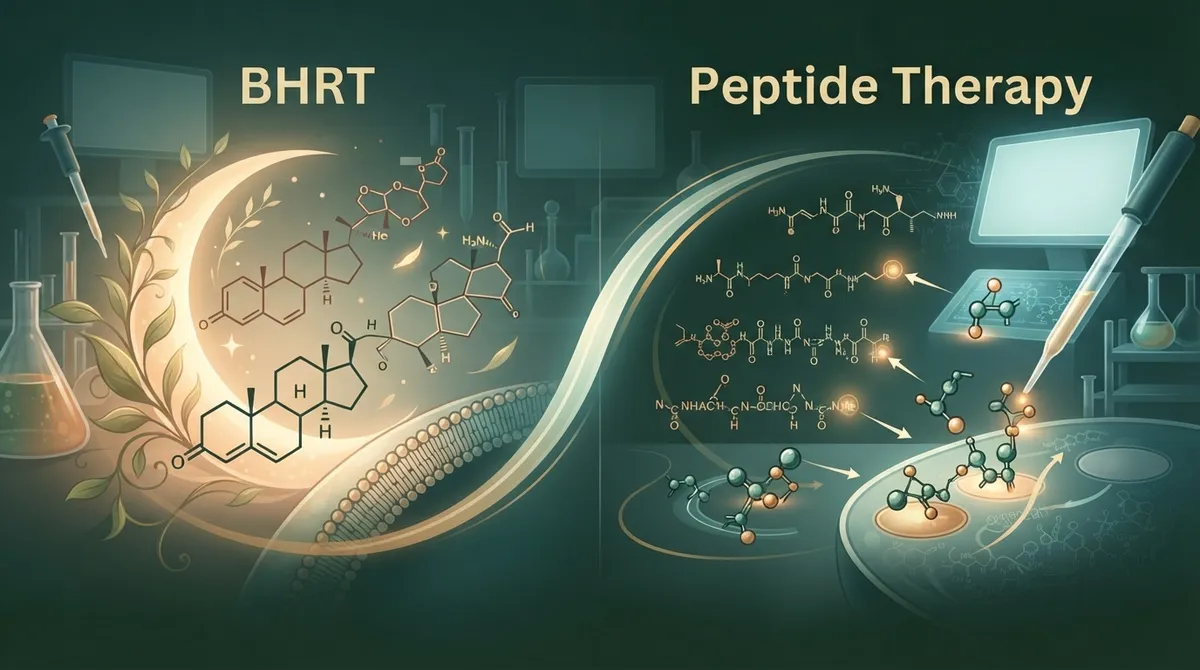
1. BHRT and Peptides Are Not the Same Thing
This is the most important fact, so let’s start here. BHRT stands for bioidentical hormone replacement therapy. It uses hormones that are chemically identical to the ones your body makes, most often estradiol and micronized progesterone.
Peptides are different. They are short chains of amino acids that act as signals in the body. They are not estrogen. They are not progesterone. They cannot be swapped in as a stand-in for either one.
If you want a simple primer, our guide on 8 Facts That Explain What Are Peptides in 2026 breaks it down in plain language. You can also read a general overview of what are peptides from WebMD.
| Feature | BHRT | Peptide Therapy |
|---|---|---|
| What it is | Hormones chemically identical to your own | Short amino acid chains that act as signals |
| Common examples | Estradiol, micronized progesterone | Sermorelin, ipamorelin, BPC-157 |
| Main role | Replaces declining hormones | Supports body signaling pathways |
| Proven for menopause symptoms? | Yes, for approved hormone products | Not established as a substitute |

2. “Bioidentical” Describes Structure, Not Safety
The word “bioidentical” sounds soft, natural, and safe. But it only describes the molecular shape of the hormone. It does not mean the treatment is safer or gentler than other hormone options.
Some FDA-approved medicines contain bioidentical hormones. Many products marketed as “customized” bioidentical blends, however, are compounded and are not FDA-approved. The FDA has said it lacks evidence that compounded BHRT is safer or more effective than approved hormone therapy.
That does not make hormone therapy a bad idea. It just means that the label alone should never be your deciding factor. Ask what is in the product, how it is made, and whether it is approved.
3. Hormone Therapy Is the Most Effective Option for Hot Flashes
According to The Menopause Society’s 2022 position statement, menopausal hormone therapy is the most effective treatment for hot flashes and night sweats. It also helps with genitourinary syndrome of menopause, which includes vaginal dryness and discomfort.
On top of that, hormone therapy helps prevent bone loss and fractures. That is a big deal for women who want to stay strong and active for decades to come.
Here is where peptides fit the picture. No cited guidance shows that peptide therapy is a proven replacement for hormone therapy for these symptoms. So if hot flashes are your main struggle, hormone therapy is the evidence-backed starting point to discuss with your provider.
4. Timing Matters for Hormone Therapy
The Menopause Society notes that for most healthy women with bothersome symptoms who are younger than 60 or within 10 years of menopause onset, the benefit-risk balance is generally favorable, as long as there are no contraindications.
Starting later may carry higher absolute risks, including coronary heart disease, stroke, blood clots, and dementia. That is why “when” you start is just as important as “what” you take.
If you are curious about the bigger picture, you may enjoy our article on 10 Facts on Postmenopausal Hormone Replacement (2026).
5. Your Treatment Should Be Built Around You
There is no one-size-fits-all plan. Safety and results depend on several choices, and a good provider will walk through each one with you.
- Formulation: Which hormone is used and whether it is an approved product.
- Dose: Lower doses may be right for many women.
- Route: Pills, patches, gels, or creams each carry different risk profiles.
- Duration: How long you stay on therapy should be reviewed regularly.
- Progestogen: A woman with a uterus generally needs progesterone to protect the uterine lining when using systemic estrogen.
The Menopause Society also notes that lower doses and transdermal (skin) routes may reduce blood clot and stroke risk compared with some alternatives. Still, route and dose do not erase the need for a personal medical review.
Curious about delivery methods? Take a look at Which Wins: Topical Hormone Therapy Versus Oral? for a friendly comparison.
6. Compounded BHRT Needs Extra Caution
Compounded hormones are mixed by a pharmacy for an individual patient. Some women find this appealing because it feels more personal. But The Menopause Society points out several concerns with compounded bioidentical therapy:
- Limited regulatory oversight
- Variable dosing from batch to batch
- Possible impurities or lack of sterility
- Not enough evidence for safety and effectiveness
- Risk labeling that may be incomplete
Compounding may make sense in limited cases, such as an allergy to an ingredient in an approved product or an unavailable dose. Otherwise, many experts suggest starting with approved options first.
Our post on How to Choose Safe Custom Compounded Hormone Therapy offers practical steps if compounding is on your radar.
7. Where Peptide Therapy Can Fit In
So if peptides are not a stand-in for estrogen, where do they belong? Think of them as possible add-ons for other wellness goals, not as a menopause cure.
Depending on your health history and lab work, a licensed provider may discuss peptides for goals like:
- Sleep quality and recovery
- Energy and daily vitality
- Body composition and metabolism
- Skin rejuvenation
- Sexual wellness
Evidence varies a lot from one peptide to the next. Some are FDA-approved medicines for specific conditions, while others are used in wellness settings with less research behind them. Always ask your provider what the evidence is for your exact goal.
For more detail, check out How to Choose Between Bioidentical Hormones and Peptides and 8 Best Hormone Therapy Peptides for Women in 2026. The National Library of Medicine also hosts helpful peptide research if you like to read the science yourself.
8. Labs and Check-Ins Are Not Optional
Whether you choose BHRT, peptides, or a thoughtful mix, good care starts with data. Blood work gives your provider a starting point, and follow-up visits show whether the plan is actually working.
Here is what a smart, safe process often looks like:
- Share your history. Include symptoms, family history, medications, and goals.
- Complete lab work. Baseline results help guide choices.
- Review options together. Talk through benefits, risks, and alternatives.
- Start low and go slow. Your provider adjusts as you respond.
- Reassess regularly. Hormone therapy should be reviewed periodically, not left on autopilot.
This is especially helpful for data-minded women and busy professionals who want a clear plan they can track. Our post on 9 Steps to Get Bloodwork Done for Hormone Therapy walks you through it.
9. Telehealth Makes Personalized Care More Convenient
Gone are the days of taking half a day off for a quick consult. Telehealth lets you meet with a licensed provider from home, review your labs, and get a plan that fits your calendar.
At Allura Longevity, new clients start with a $50 virtual consultation. From there, labs are completed through LabCorp, and a licensed provider designs a personalized six-month plan based on your results and goals. Treatments are delivered right to your door, with ongoing monitoring and adjustments along the way. The team is led by Ashley, a board-certified Family Nurse Practitioner.
Allura Longevity is licensed in Florida, Georgia, Texas, Connecticut, Indiana, Maryland, New York, and California. Wondering if telehealth is a good fit? Read Local Clinic vs. Telehealth: Best Peptide Therapy Near You? to compare your options.
Quick Reference: Questions to Ask Your Provider
| Topic | Smart Question to Ask |
|---|---|
| Product type | Is this FDA-approved or compounded? |
| Evidence | What research supports this for my goal? |
| Safety | Am I a good candidate based on my age and history? |
| Uterus | Do I need progesterone with estrogen? |
| Follow-up | How often will my plan be reviewed? |
The Bottom Line: Informed Choices Feel Better
BHRT peptide therapy for women is not a single treatment. It is a conversation about two different tools, hormones and peptides, and how a licensed provider might use each one wisely. Hormone therapy has strong evidence for hot flashes, night sweats, vaginal symptoms, and bone health. Peptides may support other wellness goals, but they should never be sold as a proven replacement for menopausal hormone therapy.
The best next step is a personal one. Start with your labs, ask honest questions, and choose a team that explains the evidence in plain English. If you are ready to explore a personalized plan, request a consultation with Allura Longevity today. New client spots are limited each month, and you can call (813) 510-6277 with any questions. Your future self will thank you.
FAQs
Q: What is BHRT for women, and what does “bioidentical” mean?
A: BHRT stands for bioidentical hormone replacement therapy. It uses hormones, like estradiol and micronized progesterone, that are chemically identical to the ones your body makes. “Bioidentical” describes molecular structure only, so it does not automatically mean safer.
Q: Is BHRT the same as peptide therapy?
A: Nope, they are two different things. BHRT replaces hormones such as estrogen and progesterone, while peptides are short amino acid chains that act as body signals. Current guidance does not show peptides to be a proven substitute for menopausal hormone therapy.
Q: Are bioidentical hormones FDA-approved?
A: Some are! Certain FDA-approved medicines contain bioidentical hormones. However, many products sold as customized or compounded BHRT are not FDA-approved, and the FDA says it lacks evidence that they are safer or more effective than approved options.
Q: Who may be a good candidate for menopausal hormone therapy?
A: For many healthy women with bothersome symptoms who are younger than 60 or within 10 years of menopause onset, the benefit-risk balance is generally favorable if there are no contraindications. A licensed provider will review your history and labs to decide what is right for you.
Q: Does a woman with a uterus need progesterone when taking estrogen?
A: Generally, yes. A woman with a uterus typically needs a progestogen to protect the uterine lining when using systemic estrogen. Your provider will tailor the plan to you and review it regularly.





