

Key Takeaways
-
Metabolic hormone peptide therapy is not one treatment; it usually refers to prescription incretin-based medicines like semaglutide (GLP-1) and tirzepatide (GIP/GLP-1) used under clinician care.
-
In the STEP 1 trial, semaglutide 2.4 mg plus lifestyle support led to about 14.9% average weight loss at 68 weeks, versus 2.4% with placebo.
-
Compounded GLP-1 versions are not FDA-approved generics and are not reviewed by the FDA for safety, effectiveness, or quality before marketing, so ask your provider what they prescribe.
-
Nausea, diarrhea, vomiting, and constipation are the most common side effects, often easing with slow dose increases; rarer risks like pancreatitis and gallbladder disease need medical supervision.
-
Weight regain is common after stopping treatment; in the STEP 1 extension, people regained about two-thirds of lost weight within a year, so plan long-term habits with your provider.
-
Eligibility depends on the specific product label and a clinician’s assessment, and treatment works best combined with nutrition, strength training, hydration, baseline labs, and regular follow-up.
If you have searched for answers about weight, appetite, and blood sugar lately, you have probably seen the phrase metabolic hormone peptide therapy pop up. It sounds fancy. It can also sound confusing. Is it one treatment? A group of treatments? Something you can buy online without a doctor?
Here is the friendly truth: it is not one single treatment. In real-world clinical care, the term usually points to prescription medicines that act like the body’s own gut hormones. These are peptides that help manage blood sugar, appetite, and body weight. Think of them as helpful messengers that tell your brain and body, “Hey, we are full and balanced.”
Whether you are a busy professional, a data-loving biohacker, or someone in midlife who wants to feel more like yourself, it helps to know what these therapies do, what they do not do, and how to approach them safely. In this guide, we will walk through the science, the results from major trials, the side effects, and the smart way to get started. Grab a cup of coffee, and let’s dig in together.

What Does Metabolic Hormone Peptide Therapy Mean?
Metabolic hormone peptide therapy is a loose, non-standardized phrase. It is not a single drug class or an official medical term. Most often, it describes clinician-prescribed incretin-based medicines. These are peptides that act on gut-hormone pathways tied to blood glucose, appetite, and weight.
The two main players are:
- GLP-1 receptor agonists, such as semaglutide, which mimic glucagon-like peptide-1.
- Dual GIP/GLP-1 agonists, such as tirzepatide, which activate two gut-hormone receptors at once.
If you want a refresher on the basics, our guide on what peptides are in 2026 is a great starting point. You can also read a general overview of what are peptides from a trusted health source.
One important note: not every peptide you hear about is an approved metabolic therapy. Some are popular online but lack strong human evidence. Always check what a product is approved for before you assume it fits your goals.
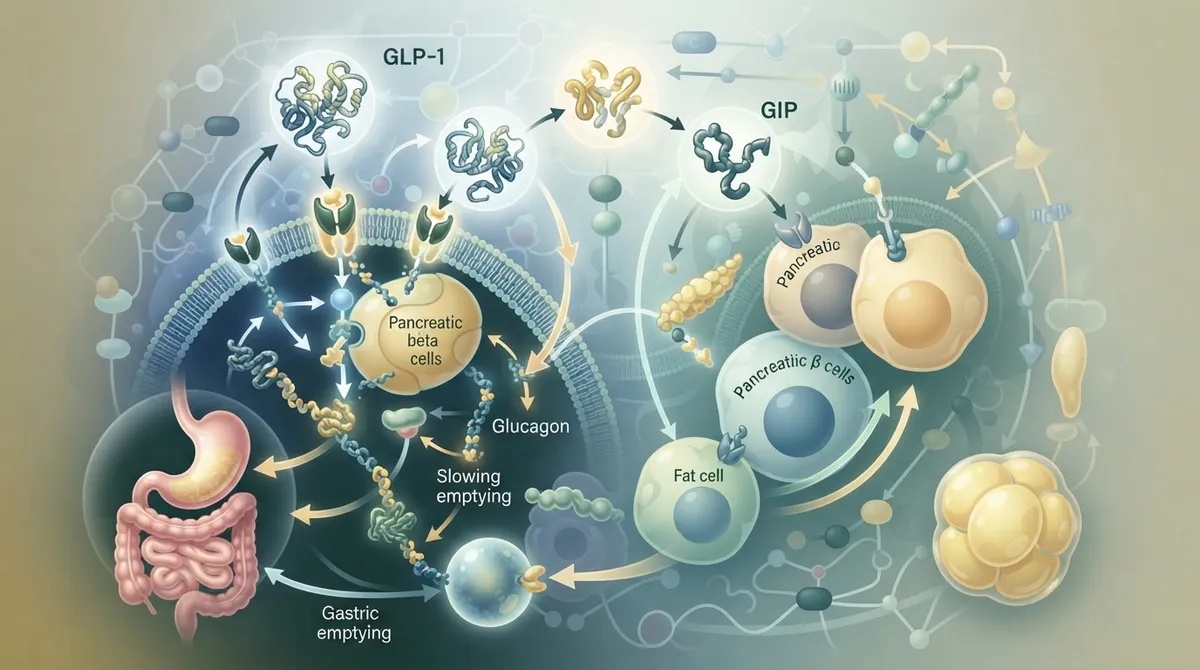
How Do GLP-1 and GIP Peptides Affect Metabolism?
Your gut releases hormones after you eat. These hormones talk to your pancreas, stomach, and brain. Incretin-based medicines copy and strengthen that conversation.
What GLP-1 Medicines Do
GLP-1 receptor agonists can help in several ways:
- They raise insulin release only when blood sugar is high (a “glucose-dependent” effect).
- They lower glucagon, a hormone that can push blood sugar up.
- They slow stomach emptying, so you feel full longer.
- They act on appetite and satiety signals in the brain.
What Tirzepatide Adds
Tirzepatide activates both GIP and GLP-1 receptors. That dual action is why it is often called a “dual agonist.” If you are curious how these two approaches stack up, see our breakdown of GLP-1 vs. dual-agonist peptides. For a deeper look at the mechanics, check out how GLP-1 works for weight loss.
Semaglutide vs. Tirzepatide: A Quick Comparison
These two medicines get compared a lot. Here is a simple side-by-side look to keep things clear.
| Feature | Semaglutide | Tirzepatide |
|---|---|---|
| Receptors targeted | GLP-1 | GIP and GLP-1 |
| Dosing schedule | Once weekly injection (for common weight and diabetes products) | Once weekly injection |
| FDA-approved uses | Type 2 diabetes; chronic weight management (specific products) | Type 2 diabetes; chronic weight management (specific products) |
| Key trial | STEP 1 | SURMOUNT-1 |
| Average weight change in trial | -14.9% at 68 weeks | Up to -20.9% at 72 weeks (15 mg) |
Remember that brand, indication, dose, and labeling all matter. A medicine approved for one use is not automatically approved for every metabolic goal. For a closer look at the head-to-head question, read GLP-1 semaglutide vs. tirzepatide: which loses more? and our primer on how tirzepatide therapy works.
What Do the Big Clinical Trials Show?
Numbers can help set realistic expectations. Here are the headline results from two landmark trials in adults without diabetes.
| Trial | Participants | Treatment | Mean weight change | At least 5% weight loss |
|---|---|---|---|---|
| STEP 1 (NEJM, 2021) | 1,961 adults with overweight or obesity | Semaglutide 2.4 mg weekly plus lifestyle support | -14.9% at 68 weeks (vs. -2.4% placebo) | 86.4% (vs. 31.5% placebo) |
| SURMOUNT-1 (NEJM, 2022) | 2,539 adults with obesity or overweight plus a weight-related complication | Tirzepatide 5, 10, or 15 mg weekly | -15.0%, -19.5%, -20.9% at 72 weeks (vs. -3.1% placebo) | 85.1%, 88.9%, 90.9% (vs. 34.5% placebo) |
These results are encouraging. Still, they are averages from selected study groups. They do not predict your personal outcome. Your response depends on your health history, your dose, your habits, and how your body reacts.
You can explore more on the research behind these medicines in this National Library of Medicine resource. If you want a plain-language walkthrough, try how to understand GLP-1 peptide therapy in 2026.
Who May Qualify for Prescription Metabolic Peptide Treatment?
Eligibility is not one-size-fits-all. It depends on the specific product label, your medical history, your goals, and a clinician’s assessment. In general, these medicines are considered for adults with:
- Type 2 diabetes, for products approved for blood sugar control.
- Obesity, or overweight with a weight-related health condition, for products approved for chronic weight management.
These treatments are usually paired with nutrition, movement, and regular follow-up. They work best as part of a bigger plan, not as a stand-alone shortcut.
Not sure whether you fit? Our article on how you qualify for GLP-1 medication in 2026 walks through what providers typically look at. It also helps to read who is a candidate for peptide therapy.
What Side Effects and Risks Should You Know About?
Good care means talking about the not-so-fun parts too. Most people who struggle with these medicines have stomach-related side effects, especially while the dose is being slowly raised.
Common Side Effects
- Nausea
- Diarrhea
- Vomiting
- Constipation
- Abdominal discomfort
Less Common but Important Risks
Prescribing information also covers precautions such as pancreatitis, gallbladder disease, dehydration that can strain the kidneys, and low blood sugar when used with certain diabetes medicines. Each product has its own contraindications and warnings, so a full conversation with your clinician is essential.
The good news is that many side effects can be managed with smart habits and gradual dosing. Learn more in what causes GLP-1 side effects and how to manage them, and see our tips on GLP-1 constipation.
Are Compounded Versions Safe and FDA-Approved?
This is one of the most important questions, so let’s be clear and kind about it. Compounded versions are not FDA-approved generic equivalents. The FDA does not review them for safety, effectiveness, or quality before they are marketed.
The FDA has warned about dosing errors and adverse events linked to compounded injectable semaglutide, including products supplied in multidose vials. It has also noted that salt forms, such as semaglutide sodium or acetate, are not the same active ingredient as the semaglutide in approved medicines.
Rules here keep changing. The FDA reported that the semaglutide injection shortage was resolved on February 21, 2025, and described time-limited enforcement-discretion periods for certain compounded products. Because policies and state rules can shift, always ask your provider what they are prescribing and why. Our guide on FDA-approved vs. compounded peptides explains the differences in plain language, and how to evaluate compounded GLP-1 medication safely gives you a checklist.
What Happens After You Stop Treatment?
Here is something many people wish they heard sooner. Obesity is often a long-term condition, and weight can return after treatment ends.
In the STEP 1 extension, people who had taken semaglutide regained about two-thirds of their prior weight loss on average during the year after stopping. That does not mean the effort was wasted. It means a plan for the long haul matters.
A smart plan often includes:
- Building steady habits around protein, fiber, sleep, and movement while on treatment.
- Working with your clinician on a realistic long-term strategy before you stop.
- Checking in regularly so changes can be made early if weight starts to creep back.
For ideas that last, see 8 GLP-1 weight loss maintenance tips that last.
How to Pair Peptide Treatment With Lifestyle and Monitoring
Medicine is the spark, but daily life is the fuel. Here is how health optimizers, busy professionals, and wellness seekers can set themselves up for success.
- Eat with intention. Prioritize protein and fiber, and eat smaller, slower meals as appetite shifts.
- Stay active. Strength training helps protect muscle while you lose weight.
- Hydrate well. This can ease side effects and protect your kidneys.
- Track your data. Biohackers love this one. Weight, waist size, sleep, and lab trends tell a useful story.
- Keep follow-ups. Regular check-ins let your provider adjust doses and spot concerns early.
Lab work is a big part of this. Learn why in one-time labs vs. ongoing metabolic health testing, and see how a full plan comes together in how to choose safe metabolic support peptide therapy.
A Simple Path to Getting Started Safely
Starting can feel like a lot. Breaking it into steps makes it friendlier. Here is a straightforward path:
- Define your goal. Is it blood sugar, weight, energy, or overall healthspan?
- Gather your history. List medications, past conditions, and family history.
- Get baseline labs. Blood work gives your provider a clear picture of your metabolic health.
- Talk with a licensed provider. Ask what product they recommend, whether it is FDA-approved, and why.
- Start low and go slow. Gradual dose changes can reduce side effects.
- Follow up often. Adjust your plan as your body responds.
Telehealth makes this easier for people with packed schedules. Compare your options in local clinic vs. telehealth, and see how prescriptions work in how to get prescription peptides safely in 2026.
How Allura Longevity Can Help
At Allura Longevity, we believe metabolic care should feel personal, not rushed. Our telehealth team starts with a $50 virtual consultation, followed by blood work through LabCorp. From there, licensed providers, led by Ashley, a board-certified Family Nurse Practitioner, build a customized six-month plan based on your labs and goals. Care includes ongoing monitoring and adjustments, and treatment is delivered right to your home.
We are licensed in Florida, Georgia, Texas, Connecticut, Indiana, Maryland, New York, and California. If you are exploring peptides for women or peptides for men, we would love to guide you. You can also explore how to lose weight with peptide therapy in 2026 for more ideas.
Final Thoughts: Your Metabolic Health Is Worth a Real Plan
Metabolic hormone peptide therapy is not magic, and it is not a single product. It is a group of prescription, clinician-guided options that can make a meaningful difference for the right person. The science is promising. The risks are real but manageable. And the best results come from a thoughtful plan with ongoing support.
You deserve care that listens, tests, and adapts to you. Spots for new clients are limited each month, so if you are ready to take the next step, request a consultation with Allura Longevity or call (813) 510-6277. We are cheering you on every step of the way.
FAQs
Q: What does metabolic hormone peptide therapy mean?
A: It is a loose, non-standardized phrase. Most often it describes prescription incretin-based medicines, like GLP-1 and GIP/GLP-1 peptides, that help manage blood sugar, appetite, and body weight under a clinician’s care.
Q: Is compounded semaglutide or tirzepatide FDA-approved?
A: No. Compounded versions are not FDA-approved generics, and the FDA does not review them for safety, effectiveness, or quality before marketing. Policies can change, so always ask your provider what they prescribe and check current FDA guidance.
Q: What happens to weight after stopping semaglutide or tirzepatide?
A: Weight regain is common. In the STEP 1 extension, people regained about two-thirds of their lost weight on average within a year of stopping semaglutide. That is why a long-term plan made with your provider is so helpful.
Q: What are the most common side effects of GLP-1 and GIP/GLP-1 therapy?
A: The most common are nausea, diarrhea, vomiting, constipation, and belly discomfort, especially while doses are being raised. Less common risks, such as pancreatitis or gallbladder issues, are why medical supervision matters.





