
Key Takeaways
-
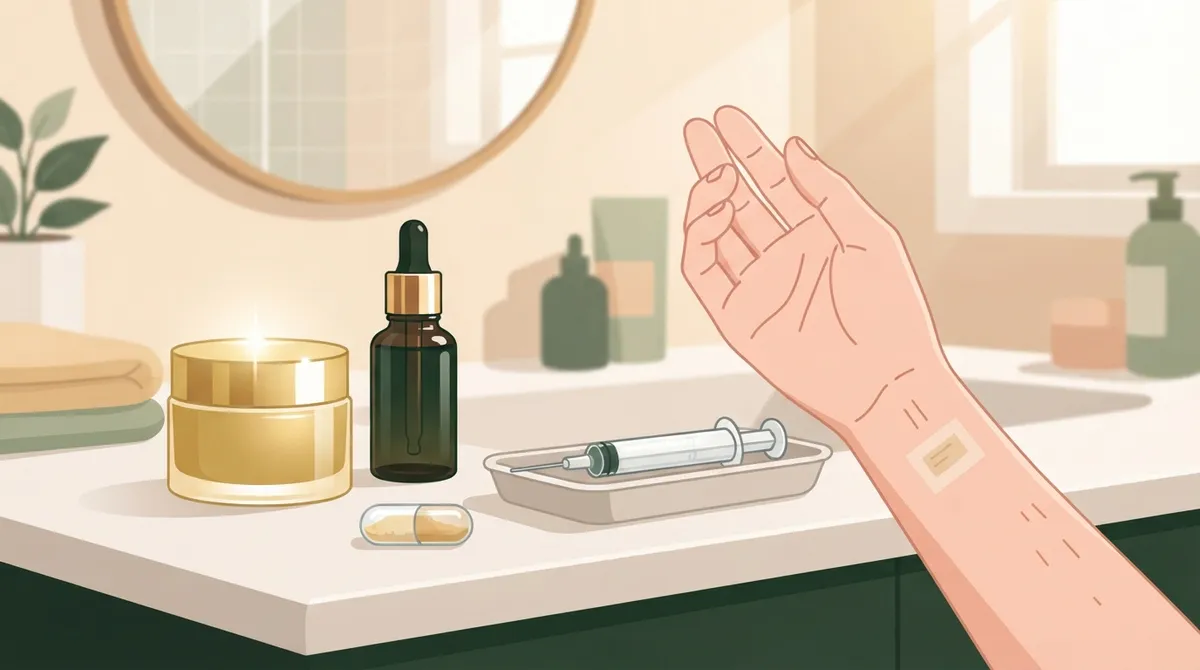
Yes, most midlife women can use topical cosmetic peptide creams and serums, but 'skin peptides' covers very different products: topical cosmetics, oral collagen supplements, and prescription or compounded injectables.
-
Oral collagen peptides may modestly improve skin hydration and elasticity for some women, but a 2022 trial of 56 postmenopausal women found no significant benefit over placebo at six months.
-
Injectable peptide therapies carry higher immune-response risk than oral use, according to FDA materials, so they should only be used for a medical reason under licensed clinical supervision.
-
Compounded peptides are not FDA-approved and are not reviewed by the FDA for safety, effectiveness, or quality, so be wary of any provider claiming otherwise.
-
To try peptide products safely, patch test on your inner forearm, add one product at a time, and allow 8 to 12 weeks before judging results.
-
Peptides cannot reverse menopause-related skin aging; daily sunscreen, sleep, nutrition, and hydration remain the most powerful tools alongside any peptide product.
If you’ve noticed your skin feeling drier, thinner, or less bouncy lately, you’re far from alone. Midlife brings real changes, and many women start asking one big question: can midlife women use skin peptides, and do they actually help?
The short answer is yes, most midlife women can use many peptide skin-care products. But “skin peptides” is not one single thing. It can mean a cosmetic serum, a collagen powder, or a prescription peptide therapy. Each one works differently, carries different risks, and has different evidence behind it.
In this friendly guide, we’ll sort through the confusion together. You’ll learn what each type does, what the research really says, and how to decide what fits your goals. Whether you’re a wellness seeker, a busy professional, or a data-driven health optimizer, you’ll walk away with clear, honest answers. For a quick refresher on the basics, see 8 Facts That Explain What Are Peptides in 2026.
Can Midlife Women Use Skin Peptides? The Short Answer
Yes, in most cases. Midlife women can generally use topical skin-care products that contain cosmetic peptides. Whether a product suits you depends on the specific ingredient, the formula, your skin sensitivity, and what you hope to achieve.
Here’s the key thing to remember: peptides are short chains of amino acids. Many different products use the word “peptide,” but they are not the same. As WebMD’s guide on what peptides are explains, peptides are small building blocks of proteins, and their roles in the body vary widely.
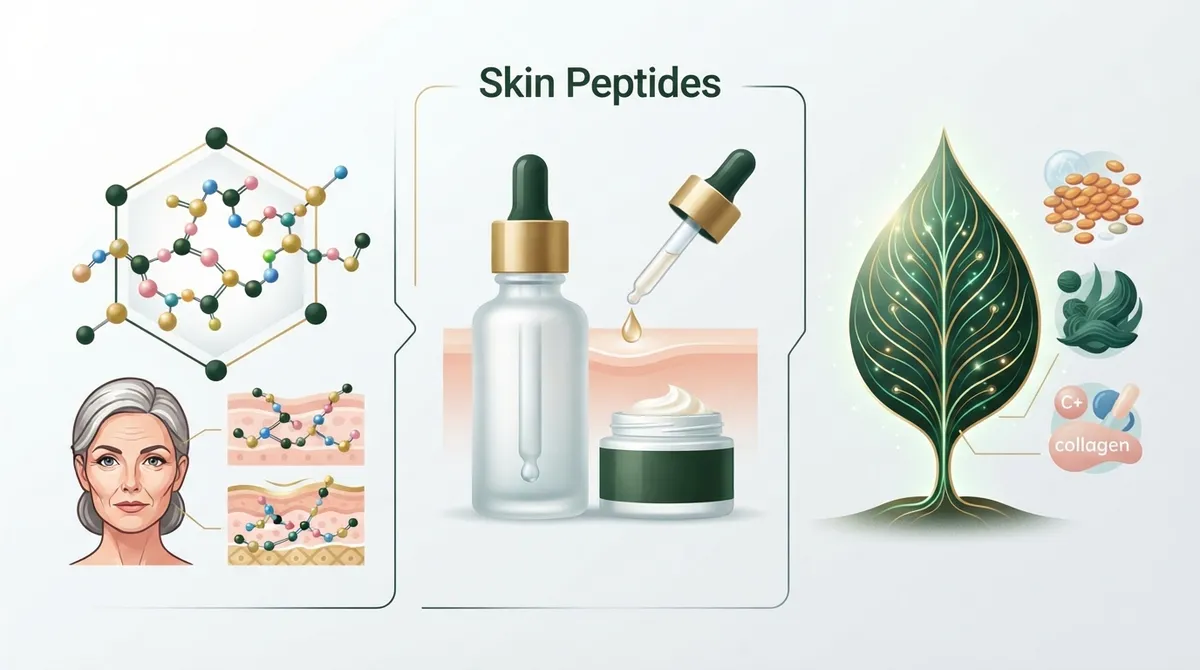
So when someone asks, “can midlife women use skin peptides,” the honest answer is: it depends on which kind. Let’s break down the three main categories.
Three Very Different Things Called “Skin Peptides”
This is where most of the confusion starts. Evidence and risks for one category should never be assumed to apply to another.
| Type | How You Use It | What It Is | Oversight Level |
|---|---|---|---|
| Topical cosmetic peptides | Cream or serum on skin | Skin-care ingredients | Sold over the counter |
| Oral collagen peptides | Powder, capsule, or drink | Dietary supplement | Sold over the counter |
| Prescription or compounded peptides | Usually injection | Drug-type therapy | Needs a licensed clinician |
Topical Cosmetic Peptides
These are the peptides in many serums, moisturizers, and eye creams. They are made for use on the skin’s surface. Most women can try them, as long as the formula agrees with their skin.
Oral Collagen Peptides
These are broken-down collagen proteins sold as powders or capsules. They are supplements, not medicine. Some studies show small benefits, but results are mixed.
Prescription and Compounded Peptides
This is true peptide therapy. It usually involves injections prescribed by a licensed provider after a health review. It is a very different category from a face cream.
Why Midlife Skin Changes in the First Place
Midlife skin changes for real reasons. During perimenopause and menopause, estrogen drops. Estrogen helps skin hold moisture, stay thick, and make collagen. When it falls, many women notice:
- More dryness and a tight feeling after washing
- Thinner, more delicate skin
- Less firmness and elasticity
- Fine lines that seem to appear overnight
- Slower healing and dull tone
None of this means you did anything wrong. It’s biology. The good news is that you have options, and some of them are simple and gentle.
What the Research Says About Skin Peptides
Let’s look at the evidence honestly. We love peptides, but we also love facts.
Oral Collagen: Some Promise, Mixed Results
Some studies suggest oral hydrolyzed collagen peptides may modestly improve measured skin hydration and elasticity in some people. A 2026 systematic review and meta-analysis that surfaced in recent research reported 35 randomized trials with 2,534 participants. It found statistically significant pooled improvements in skin hydration, elasticity, and transepidermal water loss. It also noted real uncertainty about visible wrinkle reduction and deeper structural changes in the skin. Since this is a newly dated result, it’s wise to verify the final publication details before leaning on it too heavily.
A Study That Found No Benefit
Not every study is positive. A 2022 randomized, double-blind, placebo-controlled trial followed 56 postmenopausal women aged 60 to 93. After six months, oral hydrolyzed collagen at 5 grams a day, topical 2.5% hydrolyzed collagen, and the combination did not significantly improve the measured outcomes compared with placebo (p > 0.1). The researchers looked at clinical scores, dermal elasticity, thickness, and tissue markers. The women in that study had early-stage dermatoporosis, so the results may not apply to every midlife woman. Still, it’s a good reminder to stay realistic.
| Finding | What It Suggests |
|---|---|
| Some trials show small gains in hydration and elasticity | Oral collagen may help some users modestly |
| 2022 study of 56 postmenopausal women showed no significant benefit | Results vary by person and skin condition |
| Visible wrinkle reduction remains uncertain | Avoid expecting dramatic changes |
Bottom line: peptides are not a magic eraser. They may offer modest support for some women, and that’s still worth knowing.
Topical vs. Injectable: Why the Difference Matters
This is the most important safety point in the whole article. A peptide cream and an injectable peptide therapy are not the same thing, even though both use the word “peptide.”
Injectable or other systemic peptide drugs should be considered only for a medically appropriate reason, with qualified clinical supervision. The U.S. Food and Drug Administration (FDA) has warned in its materials that peptide products can trigger unwanted immune responses. According to a 2024 FDA presentation on immunogenicity, routes like subcutaneous, intravenous, intramuscular, and intradermal carry a greater risk than oral use. Impurities or clumped particles may add to that risk, including rare but serious reactions such as anaphylaxis.
That doesn’t mean injectable peptides are always unsafe. It means quality, sourcing, and medical oversight matter a lot. If you want to dig deeper, read Is Peptide Therapy Safe? What You Really Need to Know.
A Quick Word on Compounded Peptides
Compounded drugs are made by a pharmacy to fit an individual prescription. They are not FDA-approved. The FDA does not review them for safety, effectiveness, or quality before they are sold.
That means you should be cautious about any claim that a compounded peptide is FDA-approved, a generic match for an approved drug, or proven to give the same results. A trustworthy provider will be upfront about this. To learn how the two paths differ, see FDA-Approved vs. Compounded Peptides: What Wins?
How to Try Skin Peptides Safely: A Simple Plan
Ready to give peptides a try? Here’s a gentle, step-by-step approach that works well for midlife skin.
- Start with your goal. Are you after hydration, firmness, or a smoother look? Knowing this helps you choose wisely.
- Check the ingredient list. Look for named peptides, plus supportive ingredients like hyaluronic acid and ceramides.
- Patch test first. Apply a small amount on your inner forearm for a few days to check for irritation.
- Add one product at a time. This makes it easier to spot what helps and what bothers your skin.
- Be patient. Give a new routine at least 8 to 12 weeks before judging results.
- Protect your skin daily. Sunscreen is still your top anti-aging tool.
- Talk to a clinician about anything beyond skin care. This is especially true for supplements with health claims or any injectable product.
Who Should Be Extra Careful?
Some women should check in with a licensed provider before starting any peptide product. Be especially thoughtful if you:
- Have known allergies, especially to fish, shellfish, or eggs (some collagen supplements come from these sources)
- Live with a chronic health condition
- Take daily prescription medications
- Are pregnant or breastfeeding
- Have very sensitive or reactive skin
Always read supplement labels closely. Ingredients and sources can differ a lot from one product to the next.
Where Medical Peptide Therapy Fits In
Skin care is only one piece of the midlife puzzle. Many women also deal with low energy, poor sleep, slower recovery, and body changes that creams can’t fix. That’s where medically supervised peptide therapy may enter the picture.
Allura Longevity is a telehealth wellness clinic that offers personalized, physician-guided peptide therapy. It begins with a $50 virtual consultation. Clients complete blood work through LabCorp, then receive a customized six-month plan delivered to their home. Licensed providers, led by Ashley, a board-certified Family Nurse Practitioner, monitor progress and adjust the plan as needed. Telehealth is available nationwide, and Allura is licensed in Florida, Georgia, Texas, Connecticut, Indiana, Maryland, New York, and California.
Curious how this works for women specifically? Explore peptides for women, or read What Peptides Do for Skin: A Real-World Guide for 2026 and How to Build a Women’s Wellness Peptide Plan.
Questions to Ask a Clinician Before You Start
If you’re thinking about prescription peptide therapy for skin or overall wellness, bring a list of questions. A good provider will welcome them. The research in the National Library of Medicine is a helpful starting point for understanding peptides in medicine, but your own health picture matters most. Consider asking:
- Is this peptide approved, or is it compounded?
- What is the exact reason I’m being offered this therapy?
- What blood work will guide my plan?
- What side effects should I watch for?
- How will you monitor my progress?
- What happens if I want to stop?
You can also review 15 Peptide Consultation Questions to Ask in 2026 to feel confident walking into your first visit.
Realistic Expectations: What Peptides Can and Can’t Do
Let’s keep this honest and encouraging. Peptide products may help your skin feel more hydrated and look a little smoother. They may support your overall routine. But they do not reverse menopause-related skin aging, and no responsible provider should promise that.
The best results usually come from a full approach. That means daily sunscreen, good sleep, balanced nutrition, steady hydration, and a skin-care routine you enjoy. Peptides can be one helpful layer, not the whole story. For more on this, check out How to Trigger Collagen Stimulation With Peptides.
Your Next Step
So, can midlife women use skin peptides? Yes, most can safely try topical peptide products and, with some care, oral collagen. The key is knowing which type you’re using, keeping expectations realistic, and getting medical guidance for anything injectable or prescription.
If you want a plan built around your own labs and goals, we’d love to help. Request a consultation with Allura Longevity to talk with a licensed provider about personalized peptide therapy. Spots for new clients are limited each month, so don’t wait. You can also call (813) 510-6277. Your skin, and the rest of you, deserve thoughtful care.
FAQs
Q: Can midlife women use peptide creams or serums on their skin?
A: Yes, most midlife women can use peptide creams and serums. Just patch test first and add one new product at a time. If your skin is very sensitive or you have allergies, check the ingredient list or ask a clinician.
Q: Do oral collagen peptides improve skin in postmenopausal women?
A: The research is mixed, friend. Some studies show small gains in hydration and elasticity, while a 2022 trial of 56 postmenopausal women found no significant benefit at six months. It’s worth trying with realistic expectations, but it’s not a guaranteed fix.
Q: Are topical peptides different from injectable peptide therapy?
A: Yes, they’re very different. Topical peptides are cosmetic skin-care ingredients, while injectable peptides are drug-type therapies that need a licensed clinician. The FDA notes that injection routes carry a higher immune-response risk than oral use.
Q: Are compounded peptide therapies FDA-approved?
A: No. Compounded drugs are not FDA-approved, and the FDA does not review them for safety, effectiveness, or quality before they are sold. A good provider will be open about this and explain exactly what you’re getting.
Q: What should women ask a clinician before starting peptide therapy for skin?
A: Ask whether the product is approved or compounded, why it’s recommended for you, and what blood work will guide your plan. Also ask about side effects, monitoring, and how to stop if needed. Asking these questions helps you feel safe and confident.





