

Key Takeaways
-
Work with a licensed clinician and get blood work before starting any peptide; labs reveal hormone, metabolic, and inflammation markers that should shape your plan.
-
Know the difference between FDA-approved uses (e.g., insulin, semaglutide) and unapproved wellness uses (e.g., BPC-157, CJC-1295), which have mostly lab or animal evidence.
-
Avoid 'research use only' peptides bought online; that label does not guarantee safety, purity, or legality for injection, and these products skip quality checks.
-
Understand compounding: compounded peptides are not FDA-approved and skip premarket review, so ask your provider about current FDA guidance before committing.
-
Define a specific goal, such as energy, sleep, or recovery, before choosing a peptide, and avoid stacking several peptides at once, which makes side effects harder to trace.
-
Ask providers about FDA status, human evidence, sourcing, side effects, monitoring, and how to stop, and expect realistic timelines with regular follow-ups.
If you are new to peptides, the options can feel overwhelming. One friend swears by a recovery injection. A podcast host raves about a longevity stack. Meanwhile, your social feed is full of bold claims. So where do you actually begin?
Here is the good news. You do not have to figure it out alone, and you do not have to rush. If you want to recommend peptide therapy for beginners in a way that is honest and safe, the best advice is simple: start slow, start with a licensed clinician, and start with facts.
That matters because “peptide therapy” is not one single treatment. It is a broad label. Some peptide medicines are FDA-approved for specific conditions. Many others sold for recovery or anti-aging have limited human research behind them. This guide walks you through 10 beginner-friendly steps that keep you informed, protected, and confident. Think of it as a friendly checklist you can come back to anytime.

1. Understand What Peptides Actually Are
Peptides are short chains of amino acids. Amino acids are the building blocks of proteins. Your body makes many peptides naturally, and they act like tiny messengers that tell cells what to do.
For a deeper primer, you can read 8 Facts That Explain What Are Peptides in 2026. You can also see this overview of what are peptides for a general look at how they work.
Here is the key beginner takeaway. Different peptides do different jobs. Insulin is a peptide. So are some weight management medicines. But each one has its own purpose, evidence, and risks. Lumping them together is the first mistake many beginners make.
2. Know the Difference Between Approved and Unapproved Uses
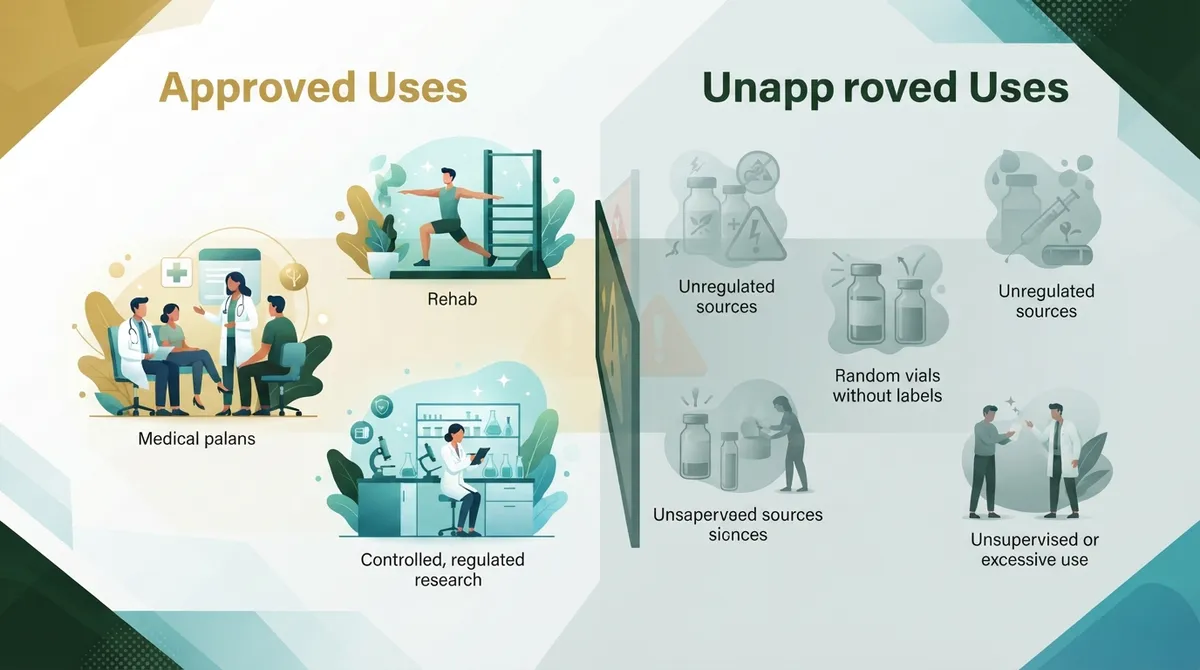
This is the most important step on the list. Some peptide medicines are FDA-approved for specific conditions. Others are marketed for wellness goals without that same level of review.
FDA approval applies to a particular product and a particular use. It looks at safety, effectiveness, and manufacturing quality. Approval for one use does not prove a peptide is safe or effective for something else.
| Peptide Type | Example | Typical Status |
|---|---|---|
| FDA-approved for specific conditions | Insulin, semaglutide, tirzepatide | Approved for defined diabetes or weight-management uses |
| Marketed for recovery or wellness | BPC-157, TB-500 | Not FDA-approved for those uses; evidence is mostly lab or animal research |
| Marketed for body composition or aging | CJC-1295, ipamorelin | Not FDA-approved for those purposes; limited human trials |
Want a deeper comparison? Check out FDA-Approved vs. Compounded Peptides: What Wins?
3. Get Clear on Your Goal Before Anything Else
Beginners often pick a peptide first and a goal second. Flip that order. Ask yourself what you actually want help with.
- More steady energy through the day
- Better sleep and recovery
- Support with weight management
- Help bouncing back from a tough workout or injury
- Skin that looks fresher and more rested
- Sexual wellness and confidence
A clear goal helps your provider match you with a sensible plan. It also keeps you from chasing trends. If energy is your main focus, you may enjoy How to Pick Peptides for Energy That Actually Work.
4. Start With Blood Work, Not Guesswork
Biohackers already know this one, but it helps everyone. Your labs show what is really happening inside your body. Hormones, metabolic markers, and inflammation levels can all shape what makes sense for you.
Without labs, you are guessing. And guessing with injectable products is not a great plan. A personalized approach starts with data, then builds a plan around you. Learn more in 5 Blood Work Analysis Steps Before Peptides in 2026.
5. Work With a Licensed Clinician
A licensed provider can review your history, your medications, and your health goals. They can also tell you when a peptide is not a good fit. That honesty is worth a lot.
Busy professionals love telehealth for this reason. You can have a real conversation with a qualified provider without sitting in a waiting room. Allura Longevity offers exactly this kind of personalized, medically supervised care, with plans built from your own blood work and goals. Our team is led by Ashley, a board-certified Family Nurse Practitioner.
Curious how this works? See How to Start Peptide Therapy Safely and See Real Results.
6. Be Careful With “Research Use Only” Products
You will see peptides online labeled “for research use only.” Please be careful here. That label does not mean a product is safe, pure, or legal to inject into your body.
These products may skip the quality checks that prescription medicines go through. Impurities, wrong doses, and unclear sourcing are real concerns. A peptide being found naturally in the body also does not make a product safe to use as a treatment.
Warning signs to watch for:
- No prescription or provider review required
- Claims that a peptide fixes everything
- No clear information about where it was made
- Pressure to buy fast with “limited stock” messaging
Our guide on How to Get Prescription Peptides Safely in 2026 covers the safe path in more detail.
7. Understand What Compounding Really Means
Compounded medicines are made by a pharmacy for an individual patient. This can be appropriate when it is legally permitted and a prescriber sees a clinical need.
But here is the honest part. Compounded products are not FDA-approved. They do not go through the same premarket review for safety, effectiveness, and quality. The FDA has also flagged safety concerns with certain bulk substances proposed for compounding, including limited human safety data and possible impurities. Rules can change, so it is smart to ask your provider about current FDA guidance rather than trust marketing.
| Feature | FDA-Approved Medicine | Compounded Medicine |
|---|---|---|
| Premarket FDA review | Yes | No |
| Made for | General patient population | An individual patient |
| Best used when | An approved option fits your need | A prescriber identifies a specific clinical need |
To go deeper, read 503A vs. 503B: Which Peptide Compounding Wins?
8. Ask Smart Questions Before You Commit
A good consultation goes both ways. You are interviewing the provider, too. Come prepared with questions so you feel confident about the plan.
- What is the FDA status of this peptide, and for which use?
- What human evidence supports it for my goal?
- Where is the product sourced and prepared?
- What side effects should I watch for?
- How will you monitor my progress and adjust my plan?
- What happens if I want to stop?
Want even more ideas? Our list of 15 Peptide Consultation Questions to Ask in 2026 gives you plenty to bring along.
9. Learn About Side Effects and Risks Up Front
Every medicine has risks, and peptides are no exception. Injection site redness, soreness, and bruising can happen. Some medicines have more serious warnings. For example, certain GLP-1 products carry a boxed warning about thyroid C-cell tumors on their prescribing information. Always read the current label and talk through your own risk factors.
Many people also ask how to use injectables safely at home. Preparation, clean technique, and proper storage matter. Walk through the basics in How to Prepare for Safe, Effective Peptide Injections. If you want a broader safety look, see Is Peptide Therapy Safe? What You Really Need to Know.
10. Set Realistic Expectations and Track Your Progress
Peptides are not magic. Results vary from person to person, and some goals take time. A steady, patient mindset helps you avoid disappointment and stay consistent.
Here is a simple way to track your journey:
- Write down your starting goals and baseline symptoms
- Check in on energy, sleep, and recovery weekly
- Repeat labs when your provider recommends
- Share changes, good or bad, at every follow-up
Not sure what a fair timeline looks like? Our real timeline for peptide therapy results sets honest expectations. Evidence also keeps evolving. The National Library of Medicine is a helpful place to read published research on peptide medicines.
Where Beginners Often Go Wrong
Let us save you some trouble. These are the most common beginner mistakes we see, and every one of them is avoidable.
- Buying online without a prescription. This skips safety checks entirely.
- Stacking several peptides at once. More is not better, and it makes side effects harder to trace.
- Trusting social media claims. A viral post is not human clinical evidence.
- Skipping follow-ups. Monitoring is how a plan gets smarter over time.
For more on this topic, see 12 Peptide Protocol Mistakes That Waste Your Money.
How a Telehealth Plan Can Make Starting Easier
Starting something new is easier when the steps are clear. With a telehealth model, you can move through the process from your couch.
- Book a virtual consultation with a licensed provider.
- Complete blood work through a local lab.
- Review your results and goals together.
- Receive a customized plan, with medication delivered to your door.
- Check in regularly so your plan can be adjusted as you go.
This is the approach Allura Longevity uses. Clients begin with a $50 virtual consultation, complete LabCorp blood work, and receive a personalized six-month plan with ongoing monitoring. We serve clients in Florida, Georgia, Texas, Connecticut, Indiana, Maryland, New York, and California. You can also compare options in Local Clinic vs. Telehealth: Best Peptide Therapy Near You?
Whether you are exploring peptides for women or peptides for men, the same rules apply: labs first, licensed care always.
Your Next Step
Starting peptide therapy does not need to be scary or confusing. Focus on your goal, get your labs, and work with licensed providers who will tell you the truth about the evidence. Skip the shortcuts, and give yourself time.
If you are ready for a personalized plan built around your body, request a consultation with Allura Longevity today. New client spots are limited each month, so reach out soon. You can also call us at (813) 510-6277. We would love to help you take that first step with confidence.
FAQs
Q: What is the best way for a beginner to start peptide therapy?
A: The safest way to start is by talking with a licensed clinician about a specific health goal. They can review your history, order blood work, and explain the evidence for each option. Skipping online “research use” products is a big part of staying safe.
Q: Are peptides like BPC-157 and CJC-1295 FDA-approved?
A: No, they are not FDA-approved for the recovery, anti-aging, or body composition uses they are often marketed for. Much of the evidence comes from lab or animal research rather than large human trials. Ask your provider about the current regulatory status before starting anything.
Q: Is compounded peptide therapy safe?
A: Compounded medicines can be appropriate for an individual patient when legally permitted and clinically needed. But they do not go through the same FDA premarket review as approved drugs. That is why working with a licensed provider and a reputable pharmacy really matters.
Q: What should I ask before starting peptide therapy?
A: Ask about the FDA status, the human evidence for your goal, where the product comes from, and what side effects to expect. Also ask how your progress will be monitored. A good provider will welcome these questions.
Q: Do I need blood work before starting peptides?
A: Blood work is strongly recommended because it shows what is happening inside your body. It helps your provider build a plan around your real numbers instead of guesses. Allura Longevity includes LabCorp blood work as part of its personalized process.





