

Key Takeaways
-
Expect an early check-in about 2 to 4 weeks after starting peptide therapy to review tolerability, side effects, and injection technique.
-
A fuller review around 6 to 12 weeks is when response, repeat labs, and dose or plan changes are typically evaluated.
-
Once stable, many clinics move to maintenance reviews every 3 to 6 months, though your prescriber sets the final schedule.
-
Get a baseline visit with history, current medicines, and labs before your first dose so later results have a clear starting point.
-
Contact your provider sooner for new or worsening symptoms, abnormal labs, dose changes, or new medicines; seek emergency care for trouble breathing.
-
Ask whether your peptide is FDA-approved or compounded, since compounded products are not FDA-approved for safety, effectiveness, or quality.
You started peptide therapy. The first vial arrived, the plan made sense, and you feel hopeful. Then a fair question pops up: how often are peptide therapy check ins supposed to happen? Do you chat with your provider every week? Every few months? Only when something feels off?
Here is the honest answer. There is no single schedule that fits every person or every peptide. The right timing depends on the peptide you take, your goals, your health history, and whether your plan changes. Still, many clinics follow a common rhythm, and knowing it helps you feel confident and prepared.
In this guide, we walk through four check-in timelines you can expect, what usually happens at each one, and when you should reach out sooner. We keep it simple, friendly, and practical, whether you are a data-loving biohacker, a busy professional, or someone just starting a wellness journey. Think of it as a roadmap so you always know what comes next.

Why Check-Ins Matter in Peptide Therapy
Peptide therapy is not a set-it-and-forget-it routine. Your body responds in its own way, and your plan should adjust as you do. Check-ins give your provider a chance to see how you feel, review your data, and make safe changes.
They also protect you. Some peptides are FDA-approved medicines. Others are compounded preparations, and the FDA has warned that compounded peptides can carry safety concerns, including immune reactions. A good follow-up schedule helps catch problems early and keeps your care on track.
If you are new to the topic, our guide on 8 Facts That Explain What Are Peptides in 2026 is a great place to start. For a general overview, what are peptides is also covered in plain language by trusted health publishers.
What Check-Ins Usually Help You Do
- Track how you feel, including energy, sleep, recovery, mood, and skin
- Review side effects and how well you tolerate the plan
- Double-check your injection technique and routine
- Look at lab results and decide if tests need repeating
- Adjust doses, timing, or the peptide itself when needed
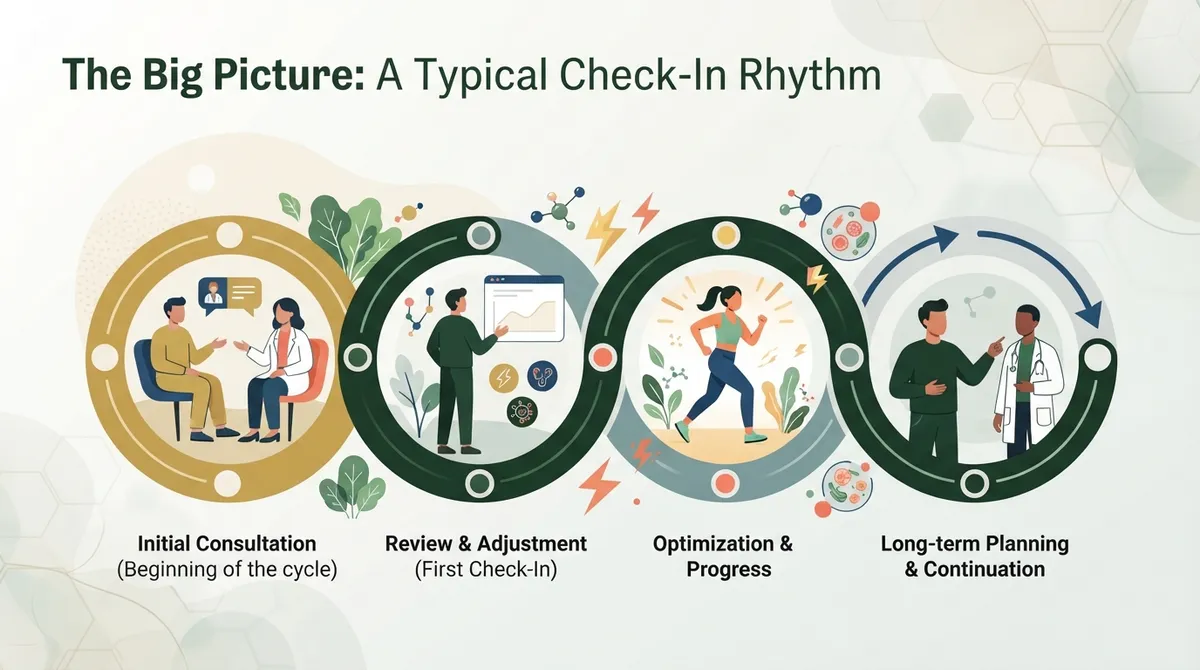
The Big Picture: A Typical Check-In Rhythm
Before we dive in, here is the pattern many clinics describe. Remember, these are common practice patterns, not a universal medical rule. Your prescriber sets the final schedule based on your needs.
| Stage | Typical Timing | Main Purpose |
|---|---|---|
| Baseline visit | Before starting | Review history, labs, goals, and risks |
| Early check-in | About 2 to 4 weeks | Tolerability, side effects, technique |
| Full review | About 6 to 12 weeks | Response, repeat labs, plan changes |
| Maintenance review | Every 3 to 6 months | Long-term safety and fine-tuning |
Now let’s look at each timeline more closely. We start with the visit before your first dose, because it sets the stage for everything that follows.
1. The Baseline Visit: Before You Start
This one is not a check-in, but it shapes every check-in after it. Before treatment begins, a qualified provider should look at your medical history, current medicines, risks, and goals. Baseline blood work gives everyone a clear starting point.
Without a baseline, it is hard to tell whether a peptide is helping. Think of it like a “before” photo. Later, your provider compares new results to this starting snapshot.
At Allura Longevity, this step starts with a $50 virtual consultation. You then complete blood work through LabCorp, and your licensed provider builds a customized plan around your results. If you want to know how to begin the right way, read How to Start Peptide Therapy Safely and See Real Results.
What to Bring to Your Baseline Visit
- A list of all medicines and supplements you take
- Any recent lab results you already have
- Your top three goals, such as better sleep or faster recovery
- Questions about the peptide, dosing, and storage
2. The Early Check-In: Weeks 2 to 4
The first check-in usually comes within a few weeks of starting. Many clinic sources describe this window as about two to four weeks. The goal is simple: make sure you are comfortable and safe.
Do not expect huge results yet. Most people are still settling in. This visit is more about how things are going than about big outcomes.
What Usually Happens
- Tolerability check: Are you handling the peptide well?
- Side effect review: Any redness, nausea, headaches, or sleep changes?
- Technique review: Is your injection routine smooth and clean?
- Early response: Any small changes in energy, appetite, or sleep?
If you feel nervous about injections, this is the perfect time to ask for tips. You can also read How to Prepare for Safe, Effective Peptide Injections to feel more at ease.
A Quick Note on Timing
If you take a GLP-1 medication for weight loss, early contact matters even more. Digestive side effects can show up fast. Our article on what causes GLP-1 side effects and how to manage them explains what to watch for.
3. The Full Review: Weeks 6 to 12
This is the big one. Many clinics schedule a more complete review around six to twelve weeks. By now, your body has had time to respond, so there is real information to look at.
Expect a deeper conversation. Your provider may review how you feel, compare it to your goals, and order repeat labs when it makes sense.
What Often Gets Reviewed
- Progress toward your original goals
- Repeat blood work, if your provider recommends it
- Dose changes or timing tweaks
- Whether to continue, pause, or switch your peptide
For growth-hormone-axis peptides, providers may check markers like IGF-1 and glucose-related measures. The exact tests and timing are up to your prescriber, because no universal guideline fits everyone. If you want to learn more about this group, see Growth Hormone Peptides: What They Are & How They Work.
Why Labs Matter Here
Biohackers and data-driven folks love this stage, and for good reason. Lab results turn a vague feeling into something measurable. They also help your provider spot anything that needs attention. To understand why testing matters, check out Why Does Hormone Level Testing Matter for Peptides?
Curious how long results take to show? Our guide 4 Timelines That Show When Peptide Therapy Works (2026) breaks it down by goal.
4. The Maintenance Review: Every 3 to 6 Months
Once your response is steady, many clinics space out routine reviews to every three to six months. This is a reported practice pattern, not a rule proven for every peptide or person.
Maintenance visits are lighter. They keep you safe and help your plan evolve as your life changes. Maybe your training ramps up, your sleep shifts, or your goals change. Your plan should keep up.
What a Maintenance Visit May Include
- A quick check on how you feel and what has changed
- A look at any new medicines, diagnoses, or life events
- Periodic lab review, based on your provider’s judgment
- A conversation about whether to keep going, adjust, or take a break
Allura Longevity builds a customized six-month plan with ongoing monitoring and adjustments by licensed providers. That structure means you are never guessing about what comes next. You can learn more in How to Build a Smart 6 Month Peptide Treatment Plan.
When You Should Check In Sooner
Routine visits are only part of the story. Some situations call for earlier contact. Do not wait for your next scheduled appointment if any of these apply.
| Situation | Why It Matters |
|---|---|
| Starting a new peptide | Your body needs a fresh safety and tolerance check |
| Changing your dose | Adjustments can change how you feel and respond |
| New or worsening symptoms | Early reports help your provider act quickly |
| Abnormal lab results | Results may need a plan change or a retest |
| New medicines or health changes | Other treatments can interact with your plan |
Signs to Contact Your Provider Right Away
- Swelling, rash, hives, or trouble breathing after a dose
- Strong or lasting pain, redness, or warmth at an injection site
- Severe or ongoing nausea, vomiting, or stomach pain
- Unusual changes in mood, sleep, or heart rate
For any serious reaction, such as trouble breathing, seek emergency care first. Safety always comes before scheduling.
For more on safety, read Is Peptide Therapy Safe? What You Really Need to Know.
How Telehealth Makes Check-Ins Easier
Let’s be real. Life is busy. Driving to a clinic every few weeks can feel like a chore, especially for busy professionals. Telehealth changes that.
With virtual visits, you can check in from your couch, your office, or your car (parked, please). Your medication arrives at your door, and your provider can review your progress without the commute. If you are weighing your options, Local Clinic vs. Telehealth: Best Peptide Therapy Near You? compares the two approaches.
Allura Longevity offers peptide therapy through telehealth in Florida, Georgia, Texas, Connecticut, Indiana, Maryland, New York, and California. Licensed providers, led by board-certified Family Nurse Practitioner Ashley, design and adjust each plan based on your blood work and goals. You can learn why this role matters in 8 Reasons a Family Nurse Practitioner Guides Peptides.
Tips to Get the Most From Each Check-In
- Keep a simple log of your energy, sleep, appetite, and mood
- Note any side effects, even small ones, with dates
- Write your questions down before the visit
- Be honest about missed doses or schedule changes
- Share any new medicines or supplements right away
If you want to avoid common slip-ups, see 14 Telehealth Check-In Mistakes That Slow Peptide Results.
Does Every Peptide Follow the Same Schedule?
No. This is a key point worth repeating. The right check-in rhythm changes based on the peptide and your reason for using it. A weight loss plan may need closer early contact than a skin-focused plan. A prescription medicine may follow its own labeled monitoring needs.
Your provider should also tell you whether your product is an FDA-approved medicine or a compounded preparation. Compounded products are not FDA-approved for safety, effectiveness, or quality. Ask questions, and make sure you understand what you are taking. Our article on FDA-Approved vs. Compounded Peptides: What Wins? can help you sort it out.
For deeper research on peptides in medicine, the National Library of Medicine offers helpful scientific background.
Quick Comparison: Questions to Ask Your Provider
- How soon should we talk after my first dose?
- Which labs will you track, and when?
- What would make you change my dose?
- How do I reach you if something feels wrong?
- Is my product approved or compounded?
Final Thoughts: Your Schedule, Built for You
So, how often are peptide therapy check ins? In short: expect an early check-in around two to four weeks, a fuller review around six to twelve weeks, and steady maintenance reviews every three to six months once you are stable. Add extra contact whenever your plan, symptoms, or health change.
The best schedule is the one your prescriber builds around you. You should never feel left in the dark, and you should always know your next step.
Ready for a plan that comes with real support? Request a consultation with Allura Longevity and meet a licensed provider who will build a personalized peptide plan around your labs and goals. New client spots are limited each month, and you can reach the team at (813) 510-6277. We would love to help you feel your best.
FAQs
Q: How soon after starting peptide therapy should I have a follow-up?
A: Many clinics schedule an early check-in about two to four weeks after you begin. This visit focuses on how you tolerate the peptide, any side effects, and your injection technique. Your provider may set a different timeline based on your specific plan.
Q: How often should labs be checked while on peptide therapy?
A: There is no one-size-fits-all answer. Many clinics repeat labs around six to twelve weeks and then every few months once you are stable. Your prescriber decides which tests you need and when, based on your peptide and health history.
Q: Do I need extra check-ins after a dose change?
A: Yes, it is a smart idea. A new dose, a new peptide, or new symptoms can all call for earlier contact instead of waiting for your next routine visit. Reaching out sooner helps your provider keep you safe and on track.
Q: How often should I be reviewed once my treatment is stable?
A: Many clinics move to reviews every three to six months after your response is steady. This is a common practice pattern, not a strict rule. Your provider will tailor the schedule to you.





