

Key Takeaways
-
Only FDA-approved peptide medicines have strong human clinical trial evidence; many popular peptides like BPC-157 rely mostly on animal studies with minimal human data, so claims about recovery or anti-aging lack scientific proof.
-
Peptide therapy is not one uniform treatment—the word covers FDA-approved medicines, investigational compounds, and unregulated wellness products, so approval and evidence for one peptide do not apply to another.
-
Products bought online labeled 'research use only' have uncertain purity, dose, sterility, and storage conditions; injectable peptides from unverified sources carry additional risks of infection and immune reactions.
-
Compounding is not the same as FDA approval—the FDA has raised safety concerns about certain bulk peptides including immunogenicity and impurities, so always verify current FDA and state requirements before use.
-
Responsible peptide care requires working with licensed clinicians who provide health history review, lab work, clear risk discussion, and ongoing monitoring rather than promising results based on online hype.
-
Animal studies are a starting point, not proof—a peptide may look promising in mice but still fail or cause harm in humans, which is why reliable conclusions require well-designed human trials with adequate participants and follow-up.
If you have scrolled social media lately, you have probably seen peptides everywhere. Some posts promise faster recovery. Others promise younger skin, better sleep, or more energy. It is easy to feel excited and confused at the same time. Good news: you are not alone, and the peptide therapy science is worth understanding before you try anything.
Here is the honest truth. Peptide therapy is not one single treatment. Some peptide medicines are FDA-approved and backed by strong human trials. Others are popular online but have very little human research behind them. Knowing the difference can protect your health and your wallet.
In this friendly guide, we break down seven key facts about peptide therapy science in plain English. Whether you are a busy professional, a data-loving biohacker, or simply someone who wants to feel great as you age, these facts will help you ask smarter questions and make safer choices in 2026.
1. Peptides Are Simple Building Blocks With Big Jobs
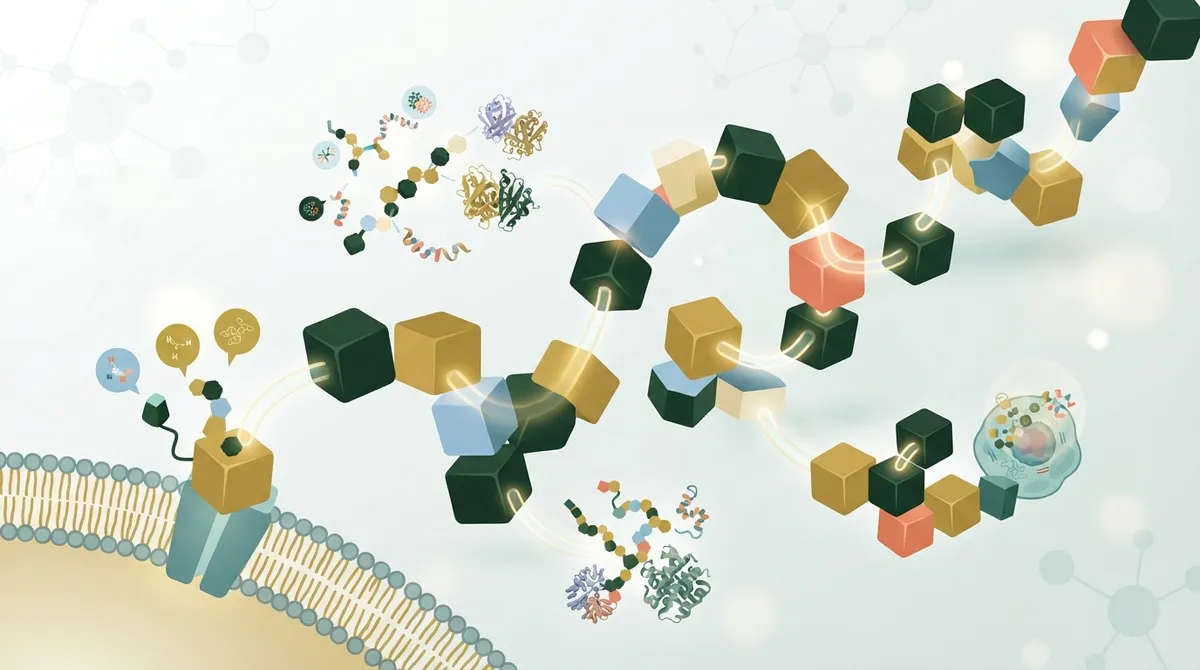
Let’s start at the very beginning. Peptides are short chains of amino acids. Think of amino acids as beads, and a peptide as a short string of those beads. Proteins are just much longer strings.
In your body, peptides act like tiny messengers. Some work as hormones. Others attach to receptors on your cells and tell them what to do. If you want a deeper starter guide, check out our post 8 Facts That Explain What Are Peptides in 2026. You can also read a general overview from what are peptides at WebMD.
In medicine, peptide drugs can work in a few ways:
- Hormone replacement or mimicry: copying signals your body already makes.
- Receptor agonists: switching a receptor on.
- Receptor antagonists: blocking a receptor.
- Other signaling roles: nudging communication between cells.
The effect depends on the exact molecule, the dose, the formulation, and the reason it is being used. That is why the science must be judged one peptide at a time.
2. Peptide Therapy Is Not One Uniform Treatment
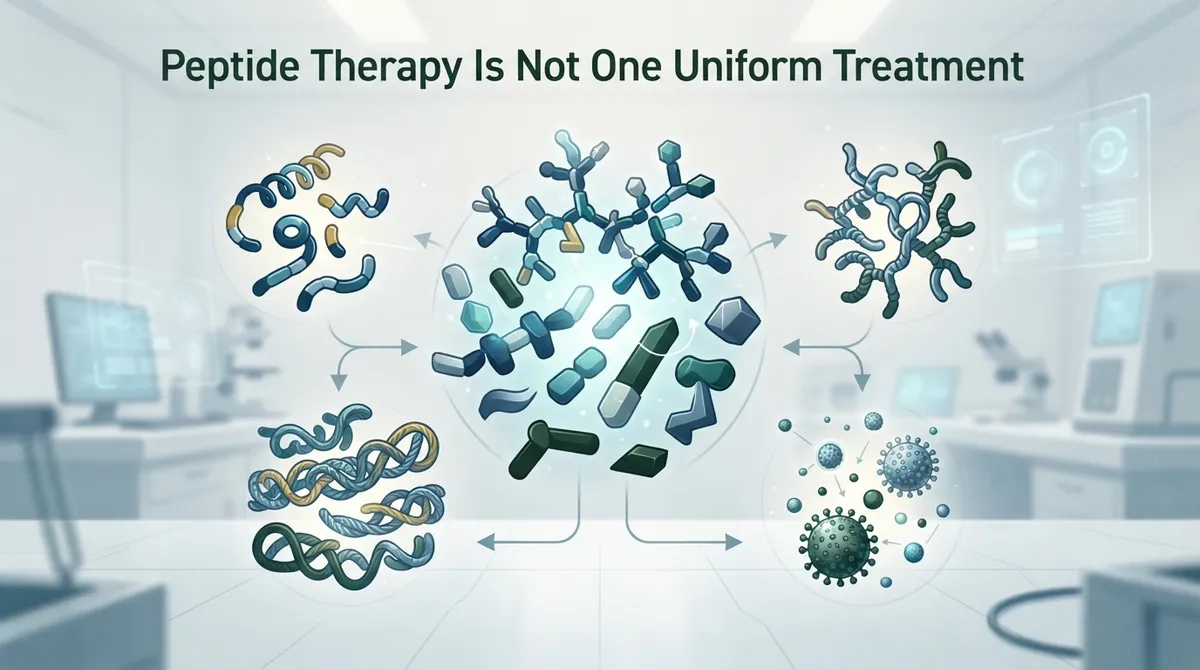
This is the biggest point in all of peptide therapy science. The word “peptide” covers a huge range of products. Approval and evidence for one peptide do not carry over to another.
Some peptide medicines are FDA-approved for conditions like diabetes, obesity, and endocrine disorders. Others are investigational. Others are sold as wellness products with little or no human data. Here is a simple way to see the difference:
| Category | Evidence Level | Regulatory Status | Example Uses |
|---|---|---|---|
| FDA-approved peptide medicines | Human clinical trials for specific conditions | Approved for defined uses | Diabetes, obesity, endocrine disorders |
| Investigational peptides | Early or mid-stage human studies | Not approved for general use | Varies by compound |
| Wellness or recovery peptides | Mostly animal or mechanistic data | Often unapproved | Recovery, anti-aging claims |
To put it in perspective, a 2024 FDA drug-approval review reported 50 novel drug approvals overall. Only four were peptide or oligonucleotide therapeutics combined, and just two of those were peptides. Real approval takes serious human evidence.
3. Animal Studies Are a Starting Point, Not a Finish Line
Here is where many online claims get bumpy. A peptide may look exciting in a lab dish or in mice. That is a great first step. But animals are not people.
Reliable conclusions usually need:
- Well-designed human trials with a control group.
- Enough participants to see real patterns.
- Long enough follow-up to catch side effects.
- Evidence for the specific condition and the specific route of delivery.
Why does this matter? A peptide can seem promising in theory and still fail, or cause harm, in people. That is normal in medicine, and it is why careful research exists.
4. What the Human Evidence Really Says About Popular Peptides
Let’s talk about the names you hear most. Many peptides promoted for recovery, muscle gain, or anti-aging do not yet have strong human clinical evidence for those uses.
BPC-157 is a great example. A recent review, summarized by Scientific American in 2026, found that the evidence is mostly from animal studies. Only three small human pilot studies were cited. You can learn more in our guide 9 BPC-157 Peptide Facts to Know Before You Start.
The same careful lens applies to growth hormone-related peptides. If you are curious, see our explainers on CJC-1295 and ipamorelin.
| Peptide | Commonly Marketed For | Human Evidence Snapshot |
|---|---|---|
| BPC-157 | Recovery, healing | Mostly animal studies; three small human pilot studies cited in a recent review |
| CJC-1295 | Wellness, body composition | Limited robust human evidence for wellness uses |
| Ipamorelin | Recovery, anti-aging | Limited robust human evidence for wellness uses |
This does not mean these peptides are useless or dangerous by default. It means the honest answer is “we do not know enough yet.” A trustworthy clinician will say exactly that.
5. Quality and Sourcing Matter More Than Most People Think
Here is a fact that surprises many people. A peptide product is only as good as how it is made. Products sold online, including those labeled “research use only,” are not the same as FDA-approved medicines.
With unapproved products, these things can be uncertain:
- Whether the vial contains what the label says.
- How pure it is.
- The true concentration.
- Whether it is sterile.
- How it was stored and shipped.
Injectable products add extra risks, such as infection and immune reactions. That is why we often say: the source matters as much as the molecule. Our guide on how to get prescription peptides safely in 2026 walks through the safe path step by step.
6. Compounding Is Not the Same as FDA Approval
You may hear that a peptide is “compounded.” That word gets tossed around a lot, so let’s make it clear. Compounding means a pharmacy prepares a customized medication. It is not the same as FDA approval of a drug.
The FDA has raised safety concerns about certain bulk peptides considered for compounding. These include worries about immunogenicity (when the body reacts to a product), aggregation (clumping), and peptide-related impurities. Rules depend on the specific substance and on federal and state law.
One interesting data point: FDA outsourcing-facility reporting from January 2017 through June 2025 showed no reported compounded products containing BPC-157 free base or BPC-157 acetate. That is a reporting observation. It is not proof of safety, and it is not proof that no one used it.
The takeaway is simple. Always verify current FDA and state requirements. To dig deeper, read FDA-Approved vs. Compounded Peptides: What Wins? and 503A vs. 503B: Which Peptide Compounding Wins?
7. Responsible Peptide Care Looks Different Than Online Hype
So what does good peptide care actually look like? It starts with honesty. A responsible clinician does not promise results. They explain what is proven, what is uncertain, and what the risks are.
Here is a friendly checklist of what a careful peptide conversation should include:
- Your health history: medications, conditions, and goals.
- Lab work: blood tests to guide decisions instead of guessing.
- Approved options first: reviewing evidence-based treatments for your condition.
- Clear risk talk: side effects, interactions, and unknowns.
- Ongoing monitoring: follow-up and adjustments over time.
This is the approach we believe in at Allura Longevity. Our telehealth model starts with a $50 virtual consultation, followed by blood work through LabCorp. From there, licensed providers, led by board-certified Family Nurse Practitioner Ashley, build a customized six-month plan that is delivered to your home. Care includes ongoing monitoring and adjustments. Our services support areas like energy, sleep, recovery, metabolism, GLP-1 weight loss, and testosterone replacement. You can explore options in our guides on peptides for women and peptides for men.
How Peptide Science Applies to Different Goals
Different readers come to peptides for different reasons. Here is a quick look at how the science tends to line up with common goals, so you can set realistic expectations.
| Goal | What Is Better Established | What Needs More Research |
|---|---|---|
| Weight management | Approved GLP-1 medicines have human trial data | Other peptides marketed for fat loss |
| Hormone support | Approved hormone therapies for specific conditions | Peptides claimed to boost hormones for wellness |
| Recovery and healing | Standard, evidence-based care | BPC-157 and similar peptides in humans |
| Skin and aging | Some topical and clinical options exist | Broad anti-aging claims for injectables |
If weight is your focus, our post on how to understand GLP-1 peptide therapy in 2026 is a great next read. For a wider view of safety, see Is Peptide Therapy Safe? What You Really Need to Know.
Smart Questions to Ask Before You Start
Feeling a little overwhelmed? That is okay. A few good questions can cut through the noise. Bring these to any peptide consultation:
- Is this specific peptide FDA-approved for my condition?
- What human studies support this use?
- Where is the product made, and how is it tested?
- What are the possible side effects and drug interactions?
- How will you monitor my progress and safety?
- What are the alternatives, including approved treatments?
You can find even more ideas in 15 Peptide Consultation Questions to Ask in 2026. For a plain look at getting started, try How to Start Peptide Therapy Safely and See Real Results. For a peer-reviewed look at the field, the National Library of Medicine is a helpful resource.
The Bottom Line on Peptide Therapy Science
Peptide therapy science is exciting, and it is also still growing. The best approach is curious but careful. Trust approved medicines where the evidence is strong. Stay cautious with products that rely mostly on animal studies or online buzz. And always work with a licensed clinician who is honest about what is known and unknown.
You deserve care that fits your body, your labs, and your goals, without hype. If you are ready to talk with a real provider, request a consultation with Allura Longevity. We are a telehealth peptide therapy clinic serving Florida, Georgia, Texas, Connecticut, Indiana, Maryland, New York, and California. Our providers build personalized plans backed by your blood work, and new-client spots are limited each month. Prefer to talk by phone? Call us at (813) 510-6277. We would love to help you take the next step with confidence.
FAQs
Q: What is peptide therapy, and how does it work?
A: Peptide therapy uses short chains of amino acids that act as signaling molecules in the body. Depending on the peptide, they can mimic hormones or switch receptors on or off. The effect depends on the specific peptide, dose, and reason for use, so each one must be judged on its own.
Q: Is peptide therapy scientifically proven to work?
A: It depends on the peptide. Some FDA-approved peptide medicines have strong human trial evidence for conditions like diabetes and obesity. Many peptides sold for recovery or anti-aging have mostly animal data, so they are not yet proven in people.
Q: What is the evidence for BPC-157 in humans?
A: A recent review described the evidence as mostly from animal studies, with only three small human pilot studies. That means we still need larger, well-designed human trials. A licensed clinician can help you weigh that uncertainty.
Q: Are compounded peptides FDA-approved or safe?
A: No, compounding is not the same as FDA approval. The FDA has raised concerns about certain bulk peptides, including immune reactions and impurities. Always ask your provider about sourcing and check current FDA and state rules.
Q: What are the risks of injectable peptides bought online?
A: Products labeled “research use only” may have uncertain purity, dose, sterility, and storage. Injectable use also adds risks like infection and immune reactions. A prescription from a licensed provider is a much safer route.





