
Key Takeaways
-
Most popular peptides like BPC-157 and TB-500 lack sufficient human evidence; 67% of research uses animal models, making efficacy for sports injuries unproven and investigational.
-
BPC-157 and TB-500 are banned under WADA rules as of 2026, which can result in failed drug tests for competitive athletes regardless of effectiveness claims.
-
Buying peptides online as 'research chemicals' poses serious risks including contamination, uncertain purity, and potential infections from non-sterile products from unregulated sellers.
-
Standard sports medicine care including diagnosis, physical therapy, strength training, sleep, and nutrition remains the evidence-based foundation; peptides should never replace these core treatments.
-
Working with a licensed provider and regulated pharmacy with baseline blood work is essential to avoid unknown drug interactions, improper dosing of investigational compounds, and unmonitored side effects.
-
Never stack multiple peptides simultaneously, as you cannot isolate which product causes benefits or adverse effects, and interactions between investigational compounds are poorly understood in humans.
You pushed hard in training, something tweaked, and now you are scrolling for a fast fix. Sooner or later, you land on peptides. Social media makes them look like a magic shortcut for tendons, joints, and sore muscles. It is easy to feel excited, and honestly, that curiosity is understandable.
Here is the friendly truth: peptide therapy in sports medicine is a real and fast-growing topic, but it is also full of hype. Many popular products are still investigational. Some are banned in competitive sport. And plenty of online sellers cut corners on quality.
This guide walks you through 13 common mistakes people make with peptide therapy in sports medicine. We will keep it simple, honest, and useful. You will learn what the research says, what the rules say, and how to make smarter choices with a licensed provider. Think of this as a chat with a friend who has read the studies so you do not have to.
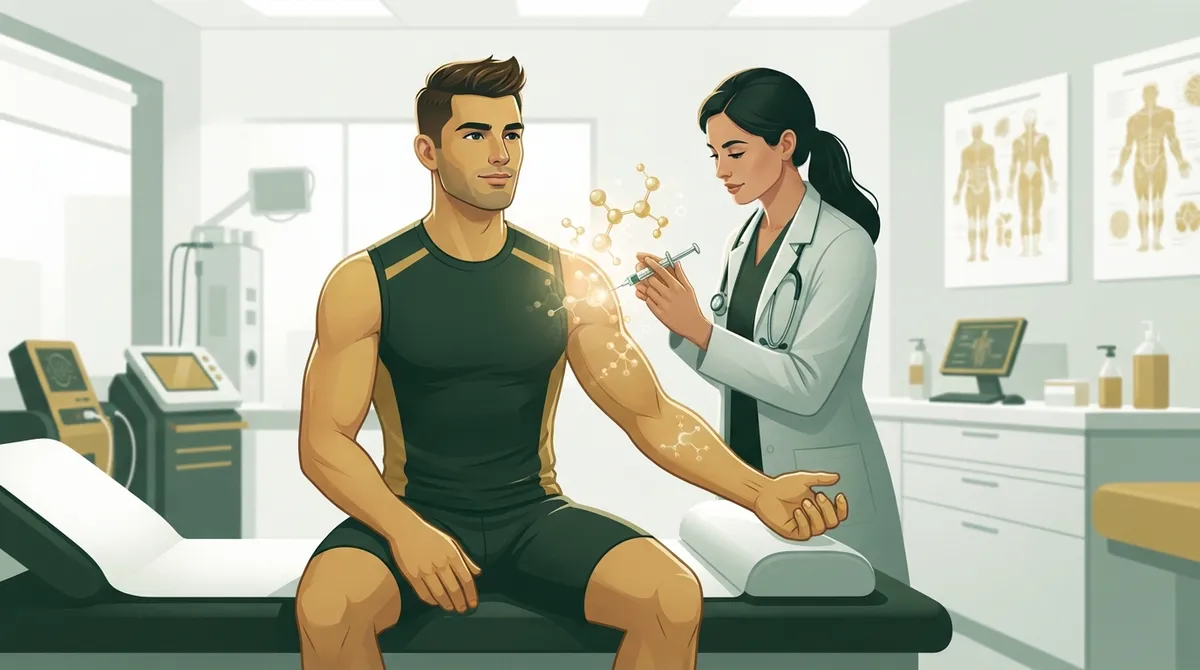
What Peptide Therapy in Sports Medicine Really Means
Peptides are short chains of amino acids. Your body makes many of them naturally. If you want a plain-language basics refresher, our guide on what peptides are in 2026 is a great place to start, and this overview of what are peptides is also helpful.
In sports medicine, peptide therapy is not one standard treatment. It is a loose label. It usually covers injectable or compounded products promoted for injury recovery, tissue repair, pain relief, or performance. Popular names include BPC-157, TB-500, CJC-1295, and ipamorelin.
That is the first thing to understand. These products are very different from each other. Some are approved medicines for other uses. Others are still experimental. Lumping them together is where trouble starts.
| Peptide | Common Sports Claim | Evidence Status | FDA Status for Injury Recovery |
|---|---|---|---|
| BPC-157 | Tendon, ligament, and muscle healing | Mostly animal and lab studies; very small human data | Not approved |
| TB-500 (thymosin beta-4 derivative) | Faster tissue repair | Mostly preclinical | Not approved |
| CJC-1295 | Recovery and body composition | Limited human evidence for sports use | Not approved for this use |
| Ipamorelin | Recovery and growth hormone support | Limited human evidence for sports use | Not approved for this use |

The Big Picture: What the Evidence Actually Shows
Let us be honest about the science. A recent review of emerging peptides for musculoskeletal recovery found that 67% of the included publications used preclinical animal models. Human studies were few and often limited in design.
A 2025 to 2026 review of injectable peptides in orthopaedics and sports medicine reached a similar view. Regenerative peptides such as BPC-157 and thymosin derivatives remain investigational. Safety is uncertain, and product quality is a concern.
There is one small human case series on BPC-157 knee injections that reported pain improvement. But it was uncontrolled and tiny, so it cannot prove the peptide works. A review cited in FDA-related materials described fewer than 36 human subjects across three BPC-157 studies. That is not enough to prove safety or effectiveness for sports injuries.
For a deeper look at the research, see our post on what the research really shows about BPC-157 safety. You can also browse peer-reviewed literature through the National Library of Medicine.
13 Peptide Therapy Sports Medicine Mistakes to Avoid
1. Believing Animal Results Automatically Apply to You
A rat tendon healing faster in a lab does not mean your Achilles will heal faster. Animal studies are a starting point. They are not proof for humans.
2. Treating All Peptides as the Same
Some peptides are approved medicines for specific conditions. Others are experimental. Never assume that because one peptide has strong human data, the rest do too.
3. Assuming FDA Approval Exists When It Does Not
The FDA has not approved BPC-157, TB-500, CJC-1295, or ipamorelin as drugs for sports-injury recovery. FDA materials have raised concerns about limited safety information, product characterization, immune reactions, and proof that they work for certain substances.
4. Ignoring Anti-Doping Rules
This one can end a season. The 2026 WADA Prohibited List took effect on January 1, 2026. It prohibits BPC-157 under S0, which covers non-approved substances. Thymosin-beta-4 and its derivatives, including TB-500, are prohibited at all times under S2. Growth hormone secretagogues and related agents may also be prohibited.
If you compete at any tested level, check with your sport’s anti-doping organization before you use anything. Our post on whether BPC-157 is safe and legal for athletes covers this in more detail.
| Substance | 2026 WADA Status | Category |
|---|---|---|
| BPC-157 | Prohibited | S0 (non-approved substances) |
| TB-500 / thymosin-beta-4 derivatives | Prohibited at all times | S2 |
| Growth hormone secretagogues and related agents | May be prohibited | Check current list |
5. Buying “Research Peptides” Online
Products sold as research peptides can have uncertain identity, purity, strength, sterility, and storage. You may not get what the label says. Because you inject peptides, contamination and infection are real risks. A safer path is a licensed clinician working with a properly regulated pharmacy. Learn more in our guide on how to get prescription peptides safely in 2026.
6. Skipping Blood Work and a Medical Review
Guessing your way into a protocol is risky. Labs help show what is going on in your body. A licensed provider can also check for medications and health conditions that do not mix well with a treatment.
7. Trusting Influencer Testimonials Over Evidence
Glowing personal stories are not clinical trials. Many people also change several things at once, like rest, rehab, and diet, so it is hard to know what helped. Healing often happens on its own with time and good rehab.
8. Using Peptides Instead of Proper Rehab
This is a big one. Standard sports medicine care still leads the way. That includes an accurate diagnosis, load management, physical therapy, strength work, sleep, and nutrition. No injection replaces that foundation.
| Approach | Evidence Base for Injuries | Role |
|---|---|---|
| Accurate diagnosis and imaging when needed | Strong | Foundation of care |
| Progressive rehab and strength training | Strong | Core treatment for most tendon and muscle injuries |
| Sleep, protein, and load management | Strong | Supports every recovery plan |
| BPC-157 and TB-500 | Limited human data | Investigational, not a replacement for rehab |
9. Confusing Approved Medicines With Unapproved Peptides
Some peptide-related medicines are approved for specific uses. GLP-1 receptor agonists, for example, are approved for certain metabolic conditions. That does not prove that regenerative peptides heal sports injuries. Do not let one approved drug lend false credibility to another product. To understand the difference, read FDA-approved vs. compounded peptides.
10. Not Understanding Compounded Drugs
Compounded drugs are not FDA-approved. The FDA does not review them for safety, effectiveness, or quality before they are sold. That does not make every compounded product bad. It does mean the quality of the pharmacy and the judgment of your prescriber matter a lot. Our explainer on 503A vs. 503B peptide compounding can help you ask better questions.
11. Guessing at Dose, Route, and Duration
For popular regenerative peptides, dosing, route, treatment length, and long-term safety are not well established in humans. Copying a stranger’s stack from a forum is a gamble. If a provider ever gives you a confident dose for an investigational peptide, ask what data supports it.
12. Stacking Multiple Peptides at Once
More is not better. When you combine products, you cannot tell what is helping and what is causing side effects. Interactions can also be poorly understood. Start simple and change one thing at a time under medical guidance. See single peptides vs. peptide stacks for more on this.
13. Ignoring Warning Signs After Starting
Redness, swelling, fever, unusual pain, rash, or anything that feels off after an injection deserves a call to your provider. Do not tough it out. Tell your clinician about every product you use, even the ones you bought on your own.
Why Injection Risks Deserve Real Respect
Injectable anything carries risk. Infection, contamination, and immune reactions are the main worries with poorly sourced products. Even with quality products, systemic effects can be hard to predict when human research is thin.
- Poor sterility can lead to skin or deeper infections.
- Unclear purity can mean the wrong amount of the active ingredient.
- Improper storage can break down the product.
- Unknown interactions can matter if you take other medicines.
If you decide to explore peptide therapy with a clinician, preparation matters. Our guide on how to prepare for safe, effective peptide injections walks through the basics.
A Smarter Path: How to Approach Peptides for Recovery
You do not have to be against peptides to be smart about them. You just need a careful process. Here is a simple approach many health optimizers and busy professionals find helpful.
- Get a proper diagnosis. Know exactly what is injured before you try anything.
- Start with proven care. Build your rehab, sleep, nutrition, and training load plan first.
- Check your sport’s rules. Look at the current WADA list and contact your anti-doping organization if you compete.
- Talk to a licensed provider. Ask about evidence, risks, and whether a peptide even makes sense for you.
- Get baseline labs. Data beats guesswork, especially for biohackers who love numbers.
- Use a reputable pharmacy source. Avoid unregulated online sellers.
- Track your results honestly. Note pain, function, sleep, and side effects, and review them with your provider.
For a broader plan, read how to start peptide therapy safely and see real results. If you are weighing options, our piece on the best peptides for athletes worth knowing in 2026 offers helpful context, and what regenerative medicine peptides are and whether they work goes deeper on the science.
Where Peptide Therapy Can Fit for Non-Tested Adults
Not everyone reading this is a drug-tested competitor. Many of you are weekend warriors, gym regulars, or active adults in midlife who want to keep moving well. For you, the WADA rules may not apply, but the evidence and safety points still do.
Peptide care can be part of a broader wellness plan when it is medically supervised and honest about what is known. Areas like sleep, energy, metabolism, and body composition may be reasonable topics to explore with a provider. Recovery-focused peptides such as BPC-157 remain investigational, so expectations should stay realistic.
At Allura Longevity, the approach is personalized and medically supervised. It starts with a $50 virtual consultation and blood work through LabCorp. Licensed providers, led by Ashley, a board-certified Family Nurse Practitioner, build a customized six-month plan and monitor your progress along the way. Treatments are delivered to your home, so it works well around a packed schedule. Allura serves clients through telehealth in Florida, Georgia, Texas, Connecticut, Indiana, Maryland, New York, and California, and it is a strong option if you want a thoughtful, evidence-aware partner.
Quick Checklist Before You Say Yes to Any Peptide
- Do I have a clear diagnosis for my injury?
- Am I already doing proven rehab and recovery basics?
- Is this product banned in my sport?
- Who makes it, and how is it tested and stored?
- What human evidence supports it, honestly?
- Does a licensed provider know my full health history?
- Do I have a plan for tracking results and side effects?
If you cannot answer these, pause. A short delay costs you far less than a failed drug test, an infection, or wasted money.
Final Thoughts and Your Next Step
Peptide therapy in sports medicine is exciting, but it is not magic. The strongest recovery plans still rest on good diagnosis, smart rehab, sleep, and nutrition. Popular regenerative peptides remain investigational, some are banned in competition, and quality varies wildly when you buy from unregulated sources.
The good news is that you do not have to figure this out alone. A licensed provider can help you weigh the evidence, check your labs, and build a plan that fits your goals and your rules. If you are ready to explore a safer, more personal path, request a consultation with Allura Longevity or call (813) 510-6277. Spots for new clients are limited each month, so reach out while there is room.
This article is for education only and is not medical advice. Talk with a licensed clinician before starting any treatment.
FAQs
Q: Do peptides like BPC-157 actually help sports injuries heal?
A: Nobody can say for sure yet. Most of the promising results come from lab and animal studies, and human evidence is very limited. So it is smart to treat BPC-157 as investigational and lean on proven care like rehab, sleep, and nutrition first.
Q: Is BPC-157 FDA-approved for tendon, ligament, or muscle injuries?
A: No, it is not. The FDA has not approved BPC-157 as a drug for sports-injury recovery, and compounded versions are not reviewed by the FDA for safety, effectiveness, or quality before they are sold. Always ask your provider where a product comes from.
Q: Are BPC-157 and TB-500 banned by WADA?
A: Yes. The 2026 WADA Prohibited List, effective January 1, 2026, prohibits BPC-157 under S0 and lists thymosin-beta-4 derivatives like TB-500 as prohibited at all times under S2. If you compete in a tested sport, check the current list and talk to your anti-doping organization first.
Q: What are the risks of injectable peptide therapy for athletes?
A: The main risks are infection, contamination, and products that do not match their label, especially when bought as research peptides online. There is also the chance of side effects and interactions that are not well studied. Working with a licensed provider and a regulated pharmacy helps lower those risks.
Q: How can athletes check whether a peptide or medication is prohibited in their sport?
A: Start with the current WADA Prohibited List, then confirm with your sport’s anti-doping organization. Do this before you start anything, because the rules can change each year and ignorance is not accepted as an excuse.