
Key Takeaways
-
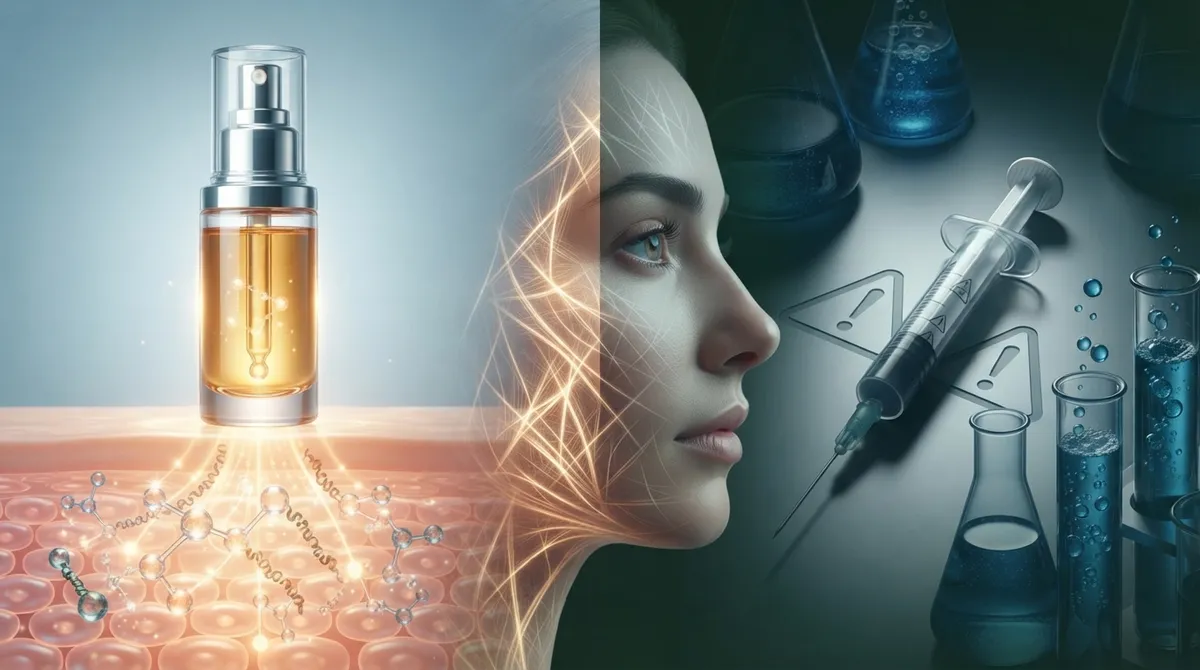
GHK-Cu (copper tripeptide-1) is the main peptide discussed for collagen, but human evidence exists only for topical creams in small studies (20-71 participants), not for injectable forms which lack published clinical trials.
-
Injectable GHK-Cu is not FDA-approved and has no published human safety or effectiveness data, yet people are injecting it based on lab and animal research that doesn't automatically translate to human results.
-
Topical GHK-Cu creams showed 70% improvement in collagen production versus 50% for vitamin C and 40% for retinoic acid in one small study, but results remain limited and may not apply universally to everyone.
-
Injectable and topical peptide delivery are fundamentally different in how your body absorbs and processes them, making marketing claims that blur this distinction misleading and potentially dangerous.
-
Work only with licensed providers who require blood work, distinguish between proven versus experimental evidence, and clearly explain risks—not with unregulated online products or clinics prioritizing sales over safety.
-
Other popular peptides like BPC-157 and TB-500 also lack established human evidence for collagen production, remaining in early clinical development stages with mostly animal model studies supporting them.
If you’ve spent any time scrolling wellness content lately, you’ve probably seen big claims about peptide therapy collagen production. Words like “reverse aging” and “instant collagen boost” get thrown around a lot. But what does the science actually say? Let’s slow down and look at the real evidence together, in plain, friendly terms.
This topic matters whether you’re a busy professional squeezing in wellness between meetings, an aging adult hoping to feel like yourself again, or a biohacker who wants real data before trying anything new. We’re going to walk through what peptide therapy collagen production actually means, what’s proven, what’s still just promising, and how to make smart choices for your body.
What Does “Peptide Therapy Collagen Production” Actually Mean?
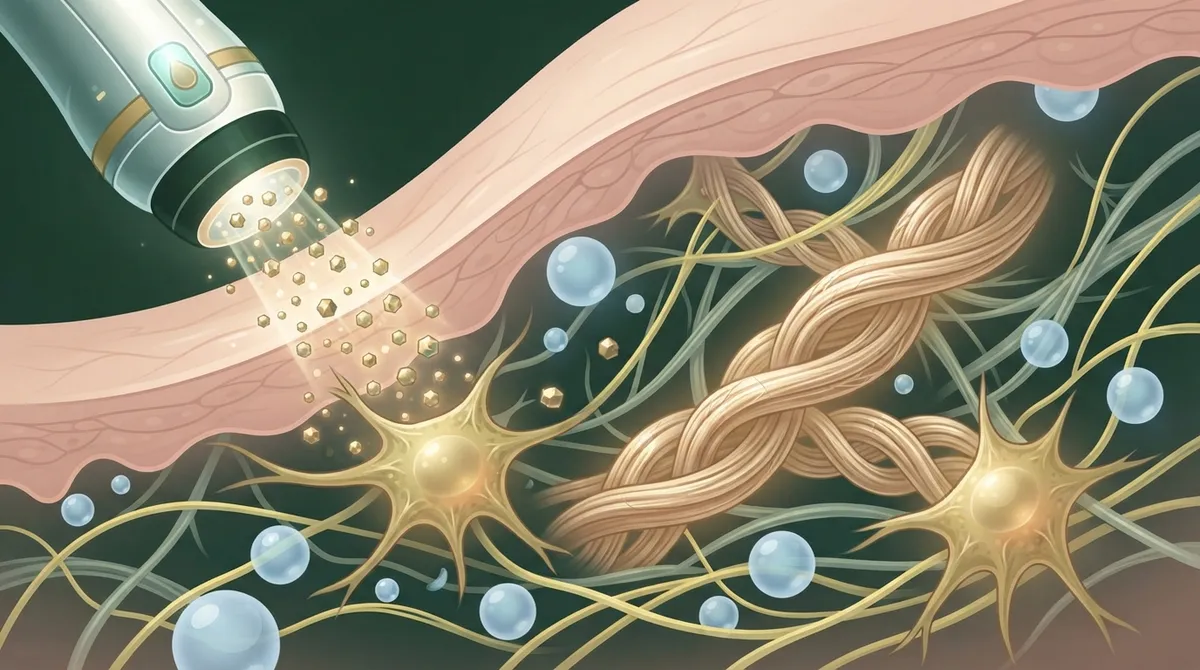
Here’s something important to understand right away: “peptide therapy” is not one single treatment. It’s a broad marketing term used for many different peptides, each with its own purpose. Some support fat loss. Some help with sleep. Others may support tissue repair. You can learn more about the basics in this guide on 8 Facts That Explain What Are Peptides in 2026.
When people talk about collagen specifically, they are almost always talking about one peptide: GHK-Cu, also called copper tripeptide-1. This little molecule has become the star of the collagen conversation, and for good reason. But the details matter a lot here.
Meet GHK-Cu, the Collagen Peptide Everyone’s Talking About
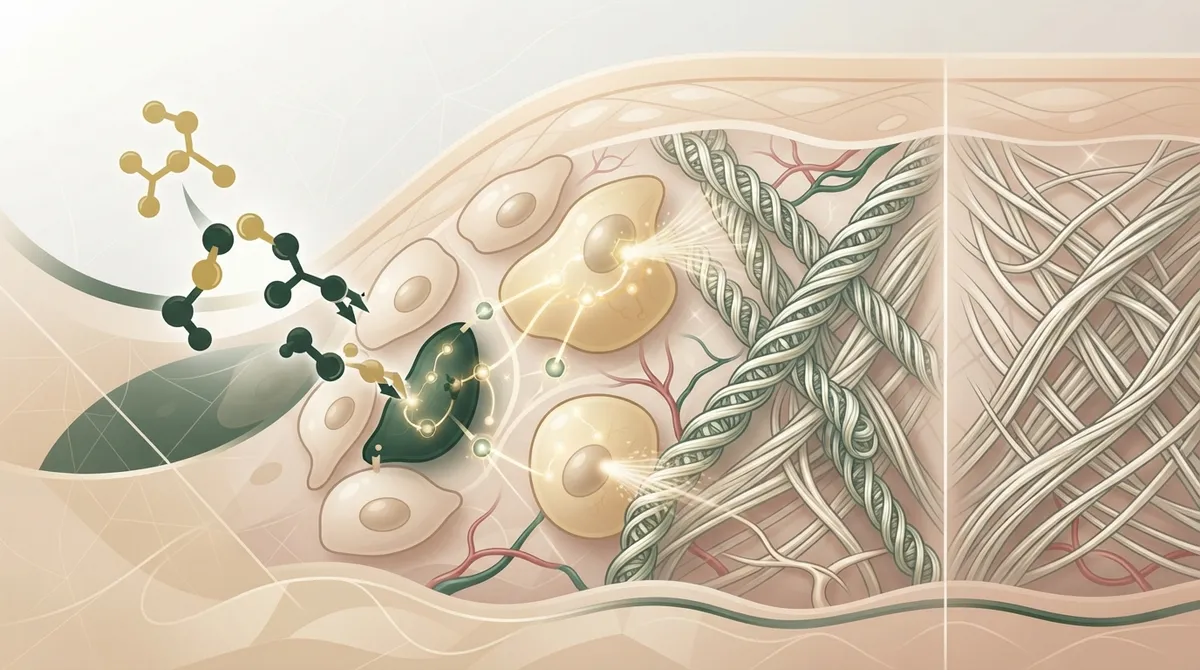
GHK-Cu is a copper-binding peptide that naturally occurs in the human body in small amounts. In lab studies, it has shown some interesting effects on skin cells called fibroblasts. These are the cells responsible for making collagen, the protein that keeps skin firm and wounds healing well.
According to the National Library of Medicine, GHK-Cu may influence collagen synthesis and extracellular-matrix remodeling in laboratory and animal research. That sounds exciting, right? But here’s the catch: lab results and animal studies do not automatically translate into real, measurable benefits for a human being.
What the Human Research Actually Shows
This is where we need to be honest and careful. Most of the human evidence for GHK-Cu comes from small studies using topical creams, not injections. That’s a big difference, and it’s one that often gets blurred in marketing.
One small study looked at 20 women around age 50. Researchers found that 70% saw increased collagen production using a GHK-Cu cream. Compare that to 50% using vitamin C cream and 40% using retinoic acid cream, after just one month. That’s a promising result, but it’s a small study with real limits.
Another topical study involved 71 women and reported improvements in skin density, thickness, and fine lines. Again, promising, but the available details don’t give us enough to call these results definitive or universally true for everyone.
- Both studies used topical creams applied to the skin, not injections
- Sample sizes were small, so results may not apply to everyone
- Neither study proves that injectable GHK-Cu works the same way in the body
- Results describe changes in skin appearance, not full-body collagen increases
Why Injectable and Topical Are Not the Same Thing
Here’s a simple way to think about it. Rubbing a cream on your skin is very different from injecting something into your bloodstream. Your body absorbs and processes these two things in completely different ways.
Right now, there are no published human clinical trials that establish the safety or effectiveness of injectable GHK-Cu. That’s a significant gap. A recent NPR investigation highlighted this exact concern, noting that people are injecting copper peptides ahead of what the science can actually support.
| Form of GHK-Cu | Human Evidence Available | What We Know |
|---|---|---|
| Topical Cream | Small human studies (20-71 participants) | Some improvement in skin appearance reported |
| Injectable | No published human clinical trials | Safety and efficacy remain unproven in humans |
| Compounded Products | Not FDA-approved for injection | Quality and dosing may vary between providers |
What About BPC-157 and TB-500?
You may have also heard about BPC-157 and TB-500 in the context of tissue repair and recovery. These peptides are popular in wellness and recovery circles, and you can read more in our post on 9 BPC-157 Peptide Facts to Know Before You Start.
A 2024 review of local and systemic peptide therapies for soft-tissue regeneration described BPC-157 as being in early clinical development, with most supporting studies done in small-animal models. TB-500 has a similar story. Both peptides show interesting activity in lab and animal research, but neither is an established, proven collagen-booster in humans. If you’re curious about the differences, check out BPC-157 vs. TB-500: Which Peptide Actually Wins?.
Regulatory Status You Should Know About
In the United States, GHK-Cu is not FDA-approved as an injectable drug for collagen production or any medical condition. It’s helpful to understand the difference between approved treatments and compounded products. Compounded medications are prepared by pharmacies but are not the same as FDA-approved drugs.
There was also recent news about the FDA changing the status of several peptides on a compounding list. According to reporting from the SSRP Institute, this kind of status change does not mean FDA approval or proof that a peptide works. It’s simply an administrative update, and it’s important not to confuse the two.
What Are the Real Risks of Injectable Copper Peptides?
Before trying anything new, it helps to understand the potential downsides. Injectable GHK-Cu carries some real uncertainties that deserve your attention.
- Uncertain dosing and quality: Without FDA oversight, product strength and purity can vary widely between suppliers.
- Contamination risks: Poorly made compounded products may contain impurities or unwanted particles.
- Immune reactions: Your body may react unpredictably to injected substances, especially ones not thoroughly studied.
- Copper exposure concerns: Since GHK-Cu binds copper, injecting it may raise systemic copper levels in ways that aren’t well understood.
- Self-injection dangers: Without professional guidance, injection technique and hygiene mistakes can lead to infection or injury.
Research from the University of New South Wales echoes these concerns, noting that injectable peptides have become a trendy anti-aging option well before the human safety evidence has caught up. That’s exactly why working with a licensed provider matters so much.
How to Evaluate a Peptide Clinic’s Collagen Claims
You deserve honest information, not hype. Here’s a simple checklist to use when researching any peptide provider:
- Do they clearly distinguish between topical and injectable evidence?
- Are they upfront about what is proven versus what is still being studied?
- Do they require blood work before recommending any treatment plan?
- Is your care overseen by a licensed medical provider, not just a salesperson?
- Do they explain risks as clearly as they explain potential benefits?
This is where working with a trusted, transparent telehealth provider makes a real difference. At Allura Longevity, every treatment plan starts with LabCorp blood work and a full review by a licensed provider, led by board-certified Family Nurse Practitioner Ashley. That means your plan is built around your actual health data, not guesswork.
What Peptide Therapy Can Realistically Support
While collagen claims deserve caution, peptide therapy as a whole has plenty of legitimate, well-supported uses. Many clients turn to personalized plans for energy, recovery, metabolism, and overall vitality.
If skin health is your goal, it’s worth exploring our detailed guide on What Peptides Do for Skin: A Real-World Guide for 2026. And if you’re interested in muscle recovery or injury support, our article on 6 Peptides for Wound Healing Worth Knowing in 2026 covers what current research really shows.
Talking to a Licensed Provider Matters
According to WebMD, peptides are short chains of amino acids that act as messengers in the body, and their effects depend heavily on which peptide, dose, and delivery method is used. This is exactly why self-treating with unverified products found online can be risky.
A licensed provider can review your blood work, talk through your goals, and help you understand what’s realistic. If you’re just getting started, our post on How to Start Peptide Therapy Safely and See Real Results walks through the process step by step.
| Common Question | Short Answer |
|---|---|
| Does GHK-Cu cream help skin? | Small studies suggest possible improvement, but evidence is limited |
| Is injectable GHK-Cu proven safe? | No published human trials confirm safety or effectiveness |
| Are BPC-157 and TB-500 proven collagen boosters? | Mostly preclinical evidence; not established in humans |
| Is GHK-Cu FDA-approved for injection? | No, it is not FDA-approved for this use |
Making a Smart, Informed Decision
We get it. When you’re trying to feel your best, it’s tempting to chase the newest trend. But the smartest wellness decisions come from understanding real evidence, not just exciting headlines.
Here’s a simple three-step approach to keep in mind:
- Separate topical evidence from injectable claims whenever you research a peptide.
- Ask any provider for the actual studies behind their recommendations.
- Choose licensed, blood-work-based care over unregulated products bought online.
This kind of careful, personalized approach is exactly what sets thoughtful telehealth care apart. If you want expert guidance grounded in your own health data, our team can walk you through what evidence-based peptide therapy really looks like for your goals, whether that’s energy, recovery, or skin support.
Your Next Step Toward Personalized, Evidence-Based Care
Peptide therapy collagen production is a fascinating area of research, but it’s still evolving. The most responsible path forward is working with licensed professionals who are honest about what’s proven and what’s still being studied. That’s the kind of care Allura Longevity is built on, personalized plans, real blood work, and licensed oversight every step of the way.
Ready to talk with a licensed provider about your health goals? Request a consultation today and get a treatment plan built around your actual lab results, not internet hype. Spots are limited each month, so don’t wait to start your personalized journey toward better energy, recovery, and vitality.
FAQs
Q: Does peptide therapy actually increase collagen production?
A: Some evidence suggests topical GHK-Cu creams may support collagen-related skin improvements in small studies. However, there’s no solid human proof yet that injectable peptides do the same, so it’s important to keep expectations realistic and grounded in real research.
Q: What is GHK-Cu, and how might it affect collagen?
A: GHK-Cu is a copper-binding peptide studied for its effects on fibroblasts, the cells that produce collagen. Lab and animal research show promising mechanisms, but this doesn’t guarantee the same results happen consistently in real people.
Q: Is injectable GHK-Cu FDA-approved or proven safe?
A: No, injectable GHK-Cu is not FDA-approved, and there are currently no published human clinical trials confirming its safety or effectiveness. That’s why it’s so important to talk with a licensed provider before considering it.
Q: Are BPC-157 or TB-500 proven to stimulate collagen in humans?
A: Not yet. Both peptides show interesting results in animal studies, but human research is still in early stages. Think of them as promising, not proven, until more clinical data becomes available.
Q: How can I evaluate a peptide clinic’s collagen-production claims?
A: Look for clinics that are upfront about the difference between topical and injectable evidence, require blood work, and involve licensed medical providers. If a claim sounds too good to be true without real studies backing it up, it’s worth asking more questions.





