

Key Takeaways
-
Male hypogonadism requires at least two separate early-morning blood tests to diagnose, not a single lab draw, since testosterone naturally peaks in the morning and varies throughout the day.
-
FDA-approved testosterone replacement therapy (TRT) is the established treatment with strongest evidence for diagnosed testosterone deficiency, while peptides like hCG have a narrow role mainly for preserving fertility in secondary hypogonadism.
-
Standard TRT can reduce sperm production to zero in 5.7-8.3% of men, so discuss family planning goals with your provider before starting treatment if future children are desired.
-
Testosterone naturally declines about 1% per year starting in men's 30s-40s, but obesity, poor sleep, chronic illness, and certain medications can significantly speed up this decline.
-
Safety monitoring including baseline and regular hematocrit tests, blood pressure tracking, and prostate health checks are essential when starting hormone therapy to prevent complications like blood thickening.
-
Lifestyle changes like losing belly fat, strength training, treating sleep apnea, and reducing alcohol can naturally boost testosterone and improve treatment results when combined with medical therapy.
Ever heard a friend joke about going through “male menopause”? You’re not alone if you’re curious what that actually means. The truth is, men don’t experience menopause the way women do. But many men do face a real drop in testosterone as they age, and it can leave them feeling foggy, tired, and just not like themselves. If you’ve been searching for answers, you’re in the right place.
This guide breaks down what’s really happening in your body, what treatments are backed by solid science, and where peptide therapy fits into the picture. We’ll keep things simple and honest, because you deserve real answers, not hype. Whether you’re a busy professional trying to keep your energy up or someone who loves tracking your labs and biomarkers, this article is built for you.

1. “Male Menopause” Isn’t a Real Medical Diagnosis
Let’s clear this up right away. Women go through menopause when their bodies stop making reproductive hormones fairly suddenly. Men don’t have that same abrupt stop. Instead, testosterone tends to decline slowly over many years.
Doctors don’t actually use the term “male menopause” in clinical practice. The more accurate terms are male hypogonadism, testosterone deficiency, or late-onset hypogonadism. These describe a gradual, uneven decline rather than a sudden shutdown. Knowing the right term matters because it changes how your provider tests you and what treatment options make sense.
2. Testosterone Naturally Drops With Age, But Slowly
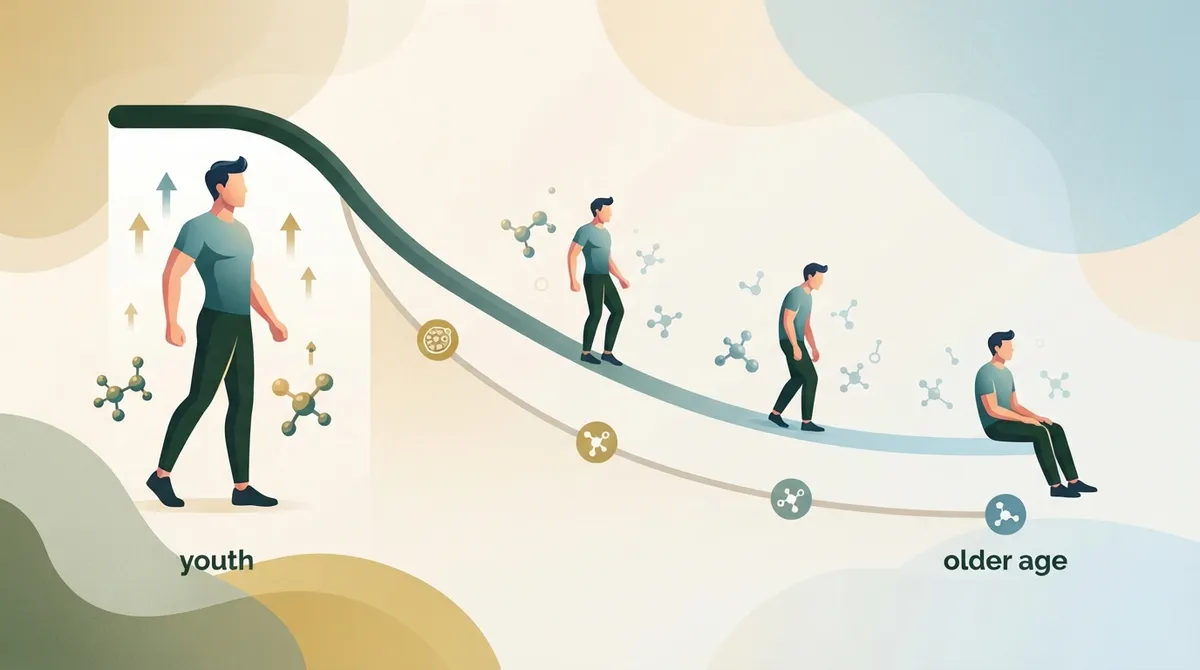
Here’s a stat worth remembering: testosterone levels often fall by about 1% per year starting in a man’s 30s or 40s. That might sound tiny, but it adds up over decades.
The pace varies a lot from person to person. Things like obesity, poor sleep, chronic illness, and certain medications can speed up the decline. This is why two 55-year-old men can have very different testosterone levels and very different symptoms.
3. Common Symptoms Can Overlap With Other Health Issues
Low testosterone symptoms are sneaky because they look like a dozen other things. That’s part of why so many men go undiagnosed for years.
- Reduced sex drive or fewer morning erections
- Ongoing fatigue that doesn’t improve with rest
- Low mood or irritability
- Loss of muscle mass despite regular workouts
- Increased belly fat
- Thinning bones or higher fracture risk
- Fertility struggles
The tricky part? Sleep apnea, depression, diabetes, and even certain medications can cause these same symptoms. That’s why guessing at home isn’t a good plan. A proper lab workup is the only way to know what’s really going on. If you want to understand your own symptoms better, our article on what low testosterone symptoms in men really look like goes deeper into this topic.
4. Diagnosis Requires More Than One Blood Test
You can’t diagnose low testosterone from a single lab draw taken at the wrong time of day. The Endocrine Society recommends confirming low levels with at least two separate early-morning blood tests, since testosterone naturally peaks in the morning and dips later.
Here’s a simple breakdown of what a thorough workup usually includes:
| Test or Step | Why It Matters |
|---|---|
| Repeat morning testosterone | Confirms the low reading wasn’t a fluke |
| Luteinizing hormone (LH) and FSH | Helps determine if the problem starts in the testes or the pituitary gland |
| Prolactin level (in select cases) | Rules out pituitary conditions that can suppress testosterone |
| Complete blood count | Checks for anemia, a common symptom of low testosterone |
| Prostate evaluation (when indicated) | Important safety check before starting therapy |
| Sleep apnea screening | Untreated apnea can lower testosterone and worsen fatigue |
This kind of careful testing is exactly what happens during a proper evaluation. According to the Endocrine Society’s testosterone therapy guideline, this step-by-step process protects patients from unnecessary or inappropriate treatment.
5. Testosterone Replacement Therapy Is the Established Treatment, Not Peptides
Let’s be upfront: if you’ve been diagnosed with true testosterone deficiency, FDA-approved testosterone replacement therapy (TRT) is the treatment with the strongest evidence behind it. Peptide therapy plays a different, more specialized role.
TRT comes in several forms, including gels, injections, patches, and pellets. It’s approved for men whose low testosterone is linked to a specific medical condition. It’s important to know that testosterone products are generally not approved just for normal age-related decline without an underlying condition, according to the FDA’s testosterone information page.
If you’re weighing your options, our guide on TRT vs. peptides and which hormone fix wins for men lays out the pros and cons in plain language.
6. Peptides Like hCG Have a Narrow, Specific Role
This is where peptide therapy gets interesting, but also where we need to be careful. Peptide hormones such as hCG (human chorionic gonadotropin), GnRH, and the newer investigational peptide kisspeptin can influence your body’s hormone-signaling system, known as the hypothalamic-pituitary-gonadal axis.
hCG is sometimes considered by specialists for men who have secondary hypogonadism and want to preserve fertility. It can stimulate the testicles to keep producing testosterone and sperm naturally. However, it’s not a stand-in replacement for TRT, and its use may be considered off-label depending on where you live.
As for kisspeptin and similar gonadotropin-axis peptides, the science is still young. Most of what we know comes from small studies, not large trials. There isn’t enough evidence yet to call these proven anti-aging treatments or reliable fixes for low energy or muscle loss. If a peptide provider makes big promises here, that’s a red flag. You can learn more about how gonadotropin peptides compare in our piece on kisspeptin vs. gonadorelin and which fertility peptide wins.
7. Fertility Changes Everything About Your Treatment Plan
Here’s something a lot of men don’t realize until it’s too late: standard TRT can shrink your testicles and shut down natural sperm production. One FDA-cited data point shows azoospermia, meaning zero sperm count, showed up in roughly 5.7% to 8.3% of men using certain testosterone products in clinical studies.
If you’re hoping to have kids in the near future, TRT alone might not be your best path. This is exactly the kind of scenario where specialists sometimes turn to hCG or other fertility-focused strategies instead. Talk through your family planning goals honestly with your provider before starting any hormone treatment.
8. Safety Monitoring Isn’t Optional, It’s Essential
Starting hormone therapy without a monitoring plan is like driving without a dashboard. You need to know what’s happening under the hood.
- Get a baseline hematocrit test before starting treatment (testosterone can thicken your blood)
- Recheck hematocrit again after starting or adjusting your dose
- Monitor blood pressure regularly
- Track prostate health if you’re in an appropriate age or risk group
- Watch for symptoms like severe headaches, chest pain, or swelling in your legs
Guidelines generally flag a hematocrit above 54% as a signal to pause or adjust treatment. There are also important precautions to know before starting: untreated prostate or breast cancer, severely high red blood cell counts, uncontrolled heart failure, and recent major cardiac events are all reasons to hold off or choose a different approach.
It’s also worth knowing about the large TRAVERSE trial, which followed 5,246 men aged 45 to 80 with hypogonadism and heart disease risk. Major cardiovascular events occurred in 7.0% of men on testosterone gel versus 7.3% on placebo, suggesting testosterone therapy did not significantly raise cardiovascular risk in this population, per FDA reporting. Still, ongoing monitoring remains important for every patient. For a deeper dive into safety, check out our article on TRT side effects and what to know before you start.
9. Lifestyle Changes Can Boost Results Alongside Any Treatment
Hormones don’t work in a vacuum. Your daily habits play a huge role in how your body produces and uses testosterone.
- Losing excess weight, especially belly fat, can naturally raise testosterone
- Strength training a few times a week supports muscle and hormone health
- Treating sleep apnea can significantly improve energy and hormone levels
- Cutting back on alcohol helps your body regulate hormones better
- Reviewing opioid or steroid medications with your doctor may reveal hidden causes of low testosterone
These changes won’t replace medical treatment when it’s truly needed, but they can make a real difference, especially in cases tied to obesity or poor sleep. Many wellness seekers find that combining lifestyle upgrades with a personalized plan gets the best results. Our guide on how you can raise testosterone naturally in 2026 offers more practical tips.
Why Working With Licensed Providers Matters So Much
Here’s the honest truth: not every clinic or online seller follows the science. Some compounded or online peptide products come with real uncertainty around purity, dosing, and safety, since they haven’t gone through the same rigorous testing as FDA-approved medications. Reviewing sources like the National Library of Medicine can help you understand what’s actually been studied versus what’s just marketing.
That’s why working with a licensed provider matters so much. A responsible clinic won’t promise that peptides reverse aging or permanently restore your youth. Instead, they’ll test your labs, explain your real options, and build a plan around your actual health needs. If you’re curious about the basics first, our resource on what peptides are and how they work is a great starting point, and you can also learn more from this overview of what are peptides from a trusted medical source.
How Allura Longevity Approaches This Differently
At Allura Longevity, we believe men deserve honest answers, not one-size-fits-all promises. Our process starts with a simple $50 virtual consultation, followed by real lab work through LabCorp. From there, our licensed providers, led by board-certified Family Nurse Practitioner Ashley, build a personalized six-month treatment plan based on your actual results.
We’re proud to offer telehealth care across Florida, Georgia, Texas, Connecticut, Indiana, Maryland, New York, and California. Everything ships right to your door, so you can manage your health without rearranging your whole schedule. If you’re exploring your options for testosterone support, our page on peptides for men walks through what personalized care can look like for you.
Your Next Step Starts With Real Answers
Feeling tired, foggy, or just off doesn’t have to be your new normal. The path forward starts with real testing, not guesswork or trendy peptide promises. Whether testosterone therapy, a fertility-focused approach, or lifestyle changes make the most sense for you, the right answer comes from your actual labs and health history.
Ready to get real answers about your hormones? Request a consultation with Allura Longevity today and take the first step toward feeling like yourself again. Spots are limited each month, so don’t wait to start your journey toward better energy and vitality.
FAQs
Q: Is there really such a thing as male menopause?
A: Not exactly! Men don’t have a sudden hormone shutdown like women do during menopause. Instead, testosterone drops gradually over many years, and doctors call this hypogonadism or testosterone deficiency rather than male menopause.
Q: Can peptide therapy increase testosterone in men?
A: Some peptides like hCG can stimulate your body’s natural testosterone production, especially for men focused on preserving fertility. But peptides aren’t an approved replacement for standard testosterone therapy, so it’s important to talk with a licensed provider about what fits your specific situation.
Q: What tests are needed before starting testosterone or peptide therapy?
A: You’ll want at least two early-morning testosterone tests to confirm low levels, plus additional labs like LH, FSH, and a complete blood count. Your provider may also check your prostate health and screen for sleep apnea, since these all affect your treatment plan.
Q: Are online or compounded peptide treatments safe?
A: It depends heavily on the provider. Some compounded products lack the strict quality testing that FDA-approved medications go through, so working with a licensed telehealth clinic that uses real lab work and monitoring makes a big difference in safety.
Q: How long does hormone therapy take to improve symptoms in men?
A: Many men start noticing changes in energy and mood within a few weeks, though full benefits like improved muscle mass or libido can take a few months. Everyone responds a little differently, which is why ongoing monitoring and lab checks matter so much.





