

Key Takeaways
-
Monitor hematocrit levels closely before starting TRT, at 3-6 months, and annually—elevated red blood cells above 54% require dose reduction or treatment pause to prevent blood clots.
-
TRT can suppress sperm production and reduce testicular size through the hypothalamic-pituitary-gonadal axis, so men planning to conceive should explore alternative treatments before starting testosterone therapy.
-
The TRAVERSE trial found no meaningful increase in major cardiovascular events with TRT (7.0% vs 7.3% on placebo), but the FDA strengthened warnings about blood pressure increases, requiring regular monitoring.
-
Common manageable side effects include acne, oily skin, breast tenderness, fluid retention, and hair thinning—most improve with dose adjustments under professional supervision.
-
Combining TRT with peptide therapy is possible but requires individualized assessment, full medication review, and consistent lab follow-up under licensed medical supervision.
-
Seek emergency care immediately for chest pain, sudden weakness, severe headache, leg swelling, or speech difficulty, as these may indicate stroke, heart attack, or blood clots despite overall safety data.
Thinking about testosterone replacement therapy? You’re probably excited about feeling stronger, sharper, and more like yourself again. But before you jump in, it’s smart to understand the full picture. TRT can be life-changing for men with true testosterone deficiency, but it also comes with real side effects you need to watch for. This guide breaks down what actually happens in your body, what to monitor, and how peptide therapy fits into the bigger wellness picture.
We’ll walk through the common side effects, the more serious risks, and the monitoring schedule doctors recommend. Whether you’re a busy professional exploring hormone options or a biohacker who loves tracking every lab number, this article gives you the facts without the scary headlines or the marketing fluff. Let’s get into it.

What Is TRT, and Who Actually Needs It
Testosterone replacement therapy is a medical treatment for men with clinically low testosterone, also called hypogonadism. It’s not meant for guys who just want a performance boost or a quick anti-aging fix. The American Urological Association typically uses a total testosterone level below 300 ng/dL, combined with real symptoms, as a reasonable threshold for diagnosis.
Symptoms of low testosterone include fatigue, low libido, mood changes, and loss of muscle mass. If you’re feeling off but your labs come back normal, TRT probably isn’t the answer. That’s actually one reason many people turn to testosterone replacement therapy education resources before starting, so they know what to expect and whether it’s the right fit.
How TRT Differs From Peptide Therapy
This is important: TRT is not peptide therapy. They work through different pathways in your body. Testosterone directly replaces a hormone that’s already low. Peptides, like growth-hormone secretagogues or GLP-1-related compounds, signal your body to produce its own hormones or trigger other biological processes. You can learn more about the basics in this guide to what peptides actually are.
- TRT replaces testosterone directly through injections, gels, patches, or pellets
- Peptides often stimulate your pituitary gland to release your own growth hormone
- TRT requires strict lab monitoring for blood cell counts and prostate health
- Peptides generally have a different, often milder, side effect profile
- Combining both should only happen under licensed medical supervision
Common TRT Side Effects You Should Know
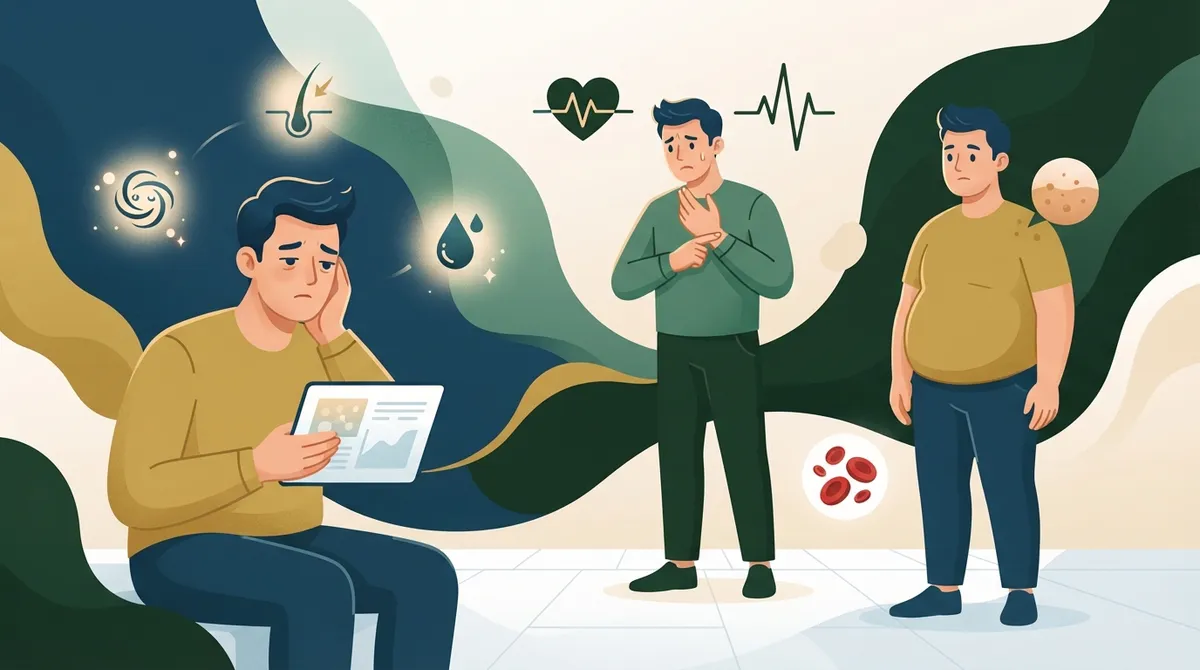
Most TRT side effects are manageable, especially with good monitoring. Still, it helps to know what’s normal and what needs a call to your provider. Here’s what shows up most often in clinical guidelines and real-world patient experience.
- Acne and oily skin: Testosterone can rev up oil production, especially early in treatment.
- Breast tenderness or enlargement: Hormonal shifts sometimes cause gynecomastia in sensitive individuals.
- Fluid retention: Some men notice mild swelling in the hands or ankles.
- Mood or libido changes: Testosterone affects brain chemistry, so mood swings can happen in either direction.
- Skin irritation: Gels and patches can cause redness or itching at the application site.
- Hair thinning: Men who are genetically prone to male-pattern baldness may see it accelerate.
These effects are usually mild and often improve with dose adjustments. That’s why working with a licensed provider matters so much. If you’re weighing your options, this comparison of TRT versus peptides for men can help clarify which path fits your goals.
The Side Effect That Matters Most: Elevated Red Blood Cells
Here’s the one lab number every TRT patient should track closely: hematocrit. Testosterone can stimulate your bone marrow to produce more red blood cells, a condition called erythrocytosis. Too many red blood cells thickens your blood, raising the risk of clots.
Guidelines from the Endocrine Society and the American Urological Association recommend checking hematocrit before starting treatment, again at 3 to 6 months, and then yearly. If your hematocrit climbs to 54% or higher, most providers will pause treatment or lower your dose until it comes back down.
| Monitoring Item | Baseline Check | Follow-Up Schedule | Action Threshold |
|---|---|---|---|
| Hematocrit | Before starting TRT | 3-6 months, then annually | Pause or reduce dose at 54% or higher |
| Testosterone level | Before starting TRT | 3-6 months after initiation | Adjust dose to reach target range |
| PSA (prostate marker) | Before starting, men over 40 | Annually or as advised | Urology referral if PSA rises sharply |
| Blood pressure | Before starting TRT | Every visit | Manage if consistently elevated |
Blood Pressure and Heart Health: What the Research Really Shows
For years, people worried that TRT might raise heart attack or stroke risk. The FDA reviewed a large study called the TRAVERSE trial, which followed thousands of men with low testosterone and heart risk factors. The results were reassuring: 7.0% of men on testosterone gel had a major cardiovascular event, compared to 7.3% on placebo. That’s not a meaningful difference.
Because of this data, the FDA actually removed the boxed warning about cardiovascular events from testosterone product labels in 2025. However, the agency did add stronger language about blood pressure increases, since ambulatory blood pressure studies showed testosterone can raise it in some patients. This is why regular blood pressure checks stay on the monitoring list, even though the bigger cardiovascular scare has eased.
Why Monitoring Still Matters
Just because the boxed warning is gone doesn’t mean you skip check-ins. Blood pressure changes can be subtle and easy to miss without regular readings. If you already have hypertension or heart disease, your provider will want to watch this closely throughout your treatment.
Fertility and Prostate Concerns With TRT
Two other areas deserve real attention: fertility and prostate health. Testosterone therapy can suppress your body’s natural hormone signaling, known as the hypothalamic-pituitary-gonadal axis. This often reduces sperm production and testicular size.
- Men trying to conceive should talk to their provider before starting TRT
- Exogenous testosterone is generally not used as a fertility treatment
- Alternative options may better support fertility goals
- Testicular shrinkage often reverses after stopping treatment, but not always quickly
On the prostate side, testosterone can raise PSA levels and stimulate prostate tissue growth. The AUA recommends checking PSA before starting TRT in men over 40. The Endocrine Society suggests a urology referral if PSA rises above 4 ng/mL, jumps more than 1.4 ng/mL in the first year, or if you notice new urinary symptoms. TRT is generally avoided in men with untreated prostate or breast cancer.
How Often Should You Get Monitored During TRT
Consistent lab work is the backbone of safe TRT. Here’s a simple monitoring sequence most licensed providers follow:
- Baseline labs before starting: testosterone, hematocrit, PSA, and blood pressure
- Follow-up labs at 3 to 6 months to check testosterone response and hematocrit
- Annual labs after the first year, assuming everything looks stable
- Extra checks anytime new symptoms appear, like swelling or urinary changes
- Dose adjustments based on lab trends, not just how you feel
This kind of structured, lab-driven approach is exactly what personalized peptide and hormone care should look like. If you want to see how blood work guides treatment decisions more broadly, check out this resource on blood work analysis before starting treatment.
Combining TRT With Peptide Therapy: Proceed With Care
Many people ask if TRT and peptides can work together. The honest answer is: sometimes, but only under professional guidance. Peptides like growth-hormone secretagogues, healing peptides such as BPC-157, or GLP-1 medications for weight loss have completely different mechanisms than testosterone. Combining them requires individualized assessment, a full medication review, and consistent lab follow-up.
This is where working with an experienced telehealth provider really pays off. According to the National Library of Medicine, peptide compounds vary widely in their safety data and regulatory status, so professional oversight is essential. You can read more about how these therapies compare in this article on comparing peptide therapy and testosterone replacement.
Why Personalized Plans Matter So Much
No two bodies respond to hormones the same way. That’s why cookie-cutter protocols often fall short. A good provider looks at your complete lab picture, your symptoms, and your goals before recommending anything. This is the philosophy behind personalized peptide therapy for women and customized peptide plans for men alike.
| Category | TRT Focus | Peptide Therapy Focus |
|---|---|---|
| Primary Goal | Restore low testosterone levels | Support energy, recovery, metabolism, skin |
| Mechanism | Direct hormone replacement | Signals body’s own hormone or repair pathways |
| Key Monitoring | Hematocrit, PSA, blood pressure | Varies by peptide, often milder profile |
| FDA Status | FDA-approved products available | Mix of approved and compounded options |
Red Flags That Need Immediate Medical Attention
Most TRT side effects are manageable, but some symptoms are true emergencies. Don’t wait these out. Call your provider or go to the ER right away if you experience any of the following.
- Chest pain or severe shortness of breath
- Sudden weakness on one side of your body
- A severe, sudden headache unlike any you’ve had before
- Significant swelling in one leg, which can signal a blood clot
- Difficulty speaking or slurred speech
These symptoms could point to a stroke, heart attack, or blood clot. While the TRAVERSE trial didn’t show increased cardiovascular risk overall, individual reactions still happen, and quick action always matters.
Choosing a Provider Who Monitors You Properly
The single biggest factor in safe TRT is proper monitoring. A provider who checks your labs regularly and adjusts your plan based on real data is worth far more than one who just hands you a prescription and disappears. When you’re researching options, look for these qualities.
- Comprehensive baseline blood work through a trusted lab like LabCorp
- Clear follow-up schedule at 3 to 6 months and annually
- Willingness to explain your lab results in plain language
- A licensed medical provider who reviews your full health history
- Ongoing support if side effects appear during treatment
At Allura Longevity, care starts with a $50 virtual consultation and complete blood work through LabCorp. Ashley, a board-certified Family Nurse Practitioner, and her team build a customized six-month plan based on your actual numbers, not guesswork. Everything ships straight to your door, and your plan gets adjusted along the way as your labs change. If you want to understand how this process works before diving in, this guide on starting peptide therapy safely is a great place to start.
Final Thoughts on TRT Side Effects
TRT can genuinely improve quality of life for men with confirmed low testosterone. But it’s not risk-free, and it’s definitely not something to DIY. Understanding the side effects, from mild skin changes to more serious concerns like elevated hematocrit or fertility impacts, helps you make an informed decision alongside your provider.
Whether you’re exploring TRT alone or wondering how it might fit alongside peptide therapy for energy, recovery, or weight management, the right move is always personalized care backed by real lab data. If you’re ready to get clear answers about your hormone health and explore options tailored to your body, request a consultation with Allura Longevity today and take the guesswork out of your wellness journey. Spots are limited each month, so don’t wait to get started.
FAQs
Q: What are the most common side effects of testosterone replacement therapy?
A: The most common ones include acne, oily skin, breast tenderness, mild fluid retention, and mood or libido changes. Most of these are manageable with dose adjustments and regular check-ins with your provider, so don’t panic if you notice one early on.
Q: Can TRT cause high blood pressure or heart problems?
A: TRT can raise blood pressure in some people, which is why the FDA strengthened labeling around this in 2025. Good news though, the large TRAVERSE trial found no increased risk of major cardiovascular events in appropriately selected men, so regular blood pressure checks are your best safety net.
Q: Does TRT increase hematocrit or blood clot risk?
A: Yes, testosterone can raise your red blood cell count, a condition called erythrocytosis. That’s why your provider checks hematocrit before starting and periodically afterward, pausing or adjusting treatment if it reaches 54% or higher.
Q: Can testosterone therapy affect fertility?
A: It can, since TRT often suppresses your body’s natural sperm production and testicular function. If you’re hoping to conceive, chat with your provider about alternatives before jumping into testosterone therapy.
Q: Is it safe to combine TRT with peptide therapy?
A: It can be safe, but only with careful, individualized guidance from a licensed provider who reviews your full health picture. Peptides and testosterone work through different pathways, so combining them means extra monitoring, not less.





