

Key Takeaways
-
Weight loss is one of the most evidence-backed strategies for improving testosterone, especially for men with excess body fat; studies show testosterone improvements correlate directly with weight loss amount.
-
Prioritize quality sleep and early-morning testing: most daily testosterone is released during deep sleep cycles, and afternoon testing gives misleading results due to testosterone's natural daily rhythm.
-
Resistance training provides short-term testosterone boosts and improves body composition, but overtraining or extreme endurance workouts can actually lower testosterone instead.
-
Low testosterone diagnosis requires both compatible symptoms and consistently low lab results from two early-morning tests (below 300 ng/dL), not symptoms or a single test alone.
-
Reduce alcohol consumption and manage chronic conditions like uncontrolled diabetes and obesity, as heavy drinking and metabolic issues are major hidden culprits behind low testosterone.
-
Peptide therapy from unregulated online sources carries real risks; any hormone support should only come from licensed providers who monitor your bloodwork and adjust treatment based on actual results.
Feeling tired, foggy, or just not like yourself lately? You’re not alone. So many of our clients come to us asking the same question: how can I raise my testosterone the natural way, before jumping to bigger interventions? The good news is there’s real science behind lifestyle changes that support healthy testosterone levels. And when lifestyle alone isn’t enough, personalized, medically supervised care can fill the gap safely.
This guide walks you through what actually works, what the research says, and how to know when it’s time to get your levels checked by a professional. Whether you’re a busy executive, a dedicated gym-goer, or simply someone who wants to feel like yourself again, this article is for you. Let’s dig into the facts, skip the hype, and find a path that fits your body and your goals.
Why Testosterone Matters More Than You Think
Testosterone isn’t just about muscle or sex drive. It affects your mood, sleep, focus, bone strength, and how your body handles fat and sugar. When levels dip too low, you might feel it in small ways at first, like lower motivation or slower recovery after workouts. Over time, low testosterone can affect quality of life in bigger ways.
The tricky part is that testosterone naturally changes with age, stress, and health conditions. That’s why guessing isn’t a good strategy. Understanding what are peptides and how they interact with your hormone system can help you make smarter, safer choices instead of relying on unverified online products.
Start With the Basics: Reversible Lifestyle Factors
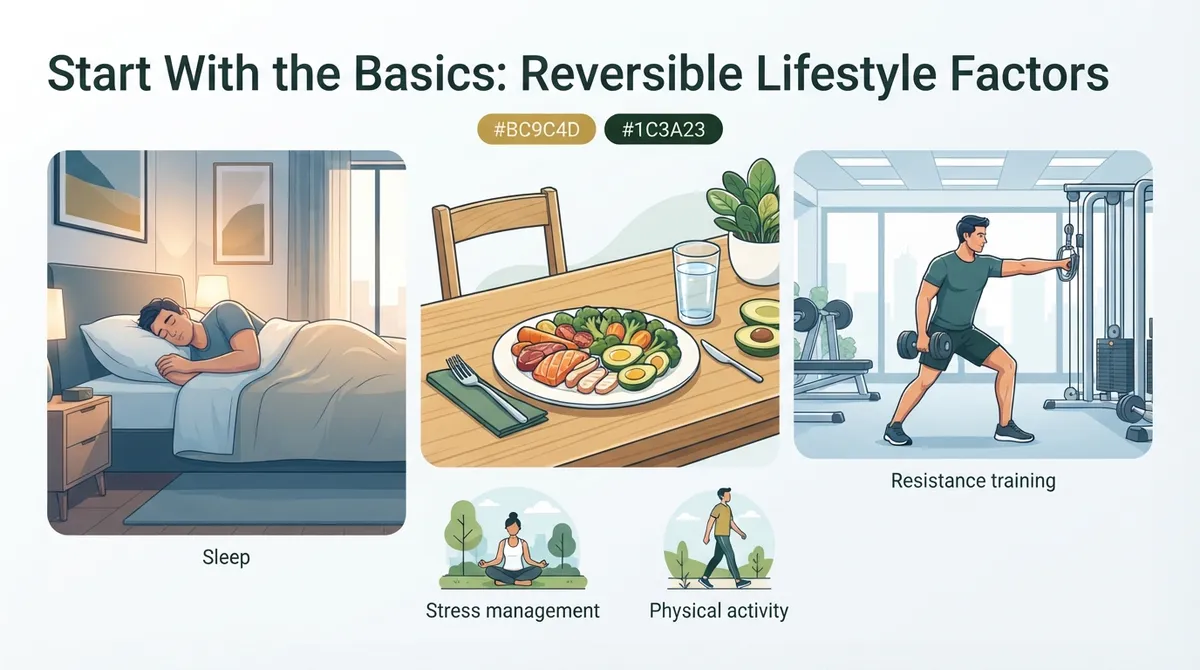
Before anyone jumps to advanced treatments, it’s smart to look at the everyday habits that quietly affect testosterone. The American Urological Association actually recommends counseling men with testosterone deficiency about weight management and physical activity first. This isn’t just good advice, it’s backed by clinical guidelines.
Common Reversible Causes of Low Testosterone
- Carrying excess body fat, especially around the midsection
- Not getting enough quality sleep on a regular basis
- Living a mostly sedentary lifestyle with little movement
- Drinking alcohol excessively or too frequently
- Eating a poor diet lacking key nutrients
- Having uncontrolled diabetes or untreated obesity
- Taking certain medications that suppress hormone production
If any of these sound familiar, you’re not doomed. These are exactly the kinds of things you can start improving today, and many of our clients see real changes once they address them with a structured plan.
Step-by-Step: Natural Ways to Support Testosterone
Here’s a simple roadmap many health-focused adults follow when they want to support their hormone health naturally.
1. Get Serious About Weight Management
Weight loss is one of the most well-supported natural strategies for improving testosterone, especially for men carrying extra body fat. Studies show that the more weight someone loses, the more their testosterone tends to improve. That said, lifestyle changes alone may not fully fix significant hormone deficiency, which is why some people benefit from combining smart weight loss strategies with peptides for fat loss that really work.
2. Build Muscle With Resistance Training
Lifting weights and doing regular resistance training may cause short-term boosts in testosterone. It also improves body composition and insulin sensitivity, both of which support hormone balance long-term. On the flip side, overtraining, extreme endurance workouts, or severe calorie restriction can actually work against you and lower testosterone instead.
3. Prioritize Sleep Like It’s Your Job
Testosterone production is closely tied to how well and how long you sleep. Most of your daily testosterone release happens during deep sleep cycles. If you snore loudly, wake up gasping, or feel exhausted no matter how many hours you sleep, it might be worth getting screened for sleep apnea.
4. Moderate Alcohol and Clean Up Your Diet
Heavy drinking is linked to lower testosterone over time. Cutting back, even a little, can make a noticeable difference. Pairing that with a nutrient-dense diet full of healthy fats, protein, and micronutrients gives your body the building blocks it needs to produce hormones properly.
5. Manage Chronic Conditions
Uncontrolled diabetes and untreated obesity are two of the biggest hidden culprits behind low testosterone. Working with a provider to manage blood sugar and metabolic health can have a ripple effect on your hormone levels too.
How Do You Know If Your Testosterone Is Actually Low?
This is where a lot of guesswork happens online, and it’s important to get this part right. According to the Endocrine Society, a diagnosis of low testosterone should never be based on symptoms alone or a single blood test. You need both compatible symptoms and consistently low lab results.
| Guideline Body | Key Testing Recommendation |
|---|---|
| American Urological Association | Total testosterone below 300 ng/dL, tested twice in the early morning |
| Endocrine Society | Symptoms plus unequivocally and consistently low levels |
| European Guidelines | Morning testing before 11 a.m., repeated on two occasions |
Testosterone naturally follows a daily rhythm, peaking in the morning and dropping later in the day. That’s why testing in the afternoon can give misleading results. If your levels come back borderline, your provider may also check free testosterone, sex hormone-binding globulin, luteinizing hormone, follicle-stimulating hormone, or prolactin to get the full picture.
Where Peptide Therapy Fits Into the Picture
Here’s the honest truth: there isn’t strong clinical evidence that popular wellness peptides reliably raise testosterone in healthy adults. That doesn’t mean peptide therapy has no role, it just means it should be approached carefully and only under medical supervision. Any peptide used for hormone or reproductive support should be prescribed by a licensed clinician who monitors things like fertility, blood counts, cardiovascular risk, and blood sugar.
This is exactly why working with a trusted provider matters so much. According to the National Library of Medicine, product purity, dosing accuracy, and quality control vary widely among unregulated peptide sources sold online. That’s a real risk you don’t want to take with your health.
What Sets Medically Supervised Care Apart
- Bloodwork-based treatment plans instead of guesswork
- Licensed providers monitoring your progress over time
- Products sourced with quality and safety standards in mind
- Adjustments made based on how your body actually responds
At Allura Longevity, every client starts with a virtual consultation and complete labs through LabCorp before any treatment begins. That means your plan is based on your actual numbers, not a one-size-fits-all approach. If you’re curious how the process works from start to finish, this guide on how to start peptide therapy safely and see real results breaks it down step by step.
Natural Methods vs. Medical Support: A Quick Comparison
| Approach | Best For | Considerations |
|---|---|---|
| Lifestyle changes alone | Mild symptoms, reversible causes like weight or sleep | May take months, results vary by individual |
| Peptide or hormone therapy under supervision | Confirmed low testosterone with lab evidence | Requires monitoring, prescription, and quality control |
| Unregulated online products | Not recommended | Unknown purity, dosing, and safety risks |
If you’re someone who tracks labs and wants a data-driven approach, you might also appreciate learning about men’s wellness peptides worth knowing before deciding on a treatment path.
When Should You See a Provider?
If you’ve tried improving sleep, exercise, weight, and diet for a few months and still feel off, it’s time to get tested properly. Some signs worth paying attention to include persistent fatigue, low libido, mood changes, or difficulty building muscle despite consistent effort.
A licensed provider can order the right labs, interpret your results correctly, and help you understand whether your symptoms point to something reversible or something that needs more targeted support. This is also the point where knowing if you need hormone therapy becomes a much clearer decision.
Building a Sustainable Plan That Actually Works
Here’s a simple framework to keep things realistic and manageable.
- Start with sleep, nutrition, and movement for at least 8 to 12 weeks
- Track your progress with journaling or an app, not just how you feel
- Get baseline labs done if symptoms persist despite lifestyle changes
- Discuss results with a licensed provider before starting any peptide or hormone therapy
- Follow up regularly to adjust your plan based on real data
Consistency matters more than intensity here. Small, steady changes tend to outperform extreme short-term efforts, especially when it comes to hormone health.
Why Working With Licensed Providers Matters
It’s tempting to search for shortcuts, but your hormone health deserves careful, individualized attention. Allura Longevity offers personalized peptide therapy through telehealth, with treatment plans built around your actual bloodwork and health goals. Led by Ashley, a board-certified Family Nurse Practitioner, the team designs six-month plans with ongoing monitoring, so nothing is left to guesswork.
Clients start with an affordable $50 virtual consultation, complete labs through LabCorp, and receive their personalized peptides delivered right to their door. This approach is currently available to residents of Florida, Georgia, Texas, Connecticut, Indiana, Maryland, New York, and California. If you want to explore whether peptides for men might fit your goals, this is a safe and structured way to start.
Frequently Overlooked Factors That Affect Testosterone
A few things people often forget when trying to raise testosterone naturally:
- Chronic stress raises cortisol, which can suppress testosterone over time
- Certain medications, including some pain relievers and steroids, can lower levels
- Extreme dieting or very low body fat can backfire and reduce testosterone
- Undiagnosed sleep apnea is a hidden but common contributor to low levels
Addressing these hidden factors alongside the basics gives you a much more complete picture of your hormone health.
Your Next Step Toward Feeling Like Yourself Again
Raising testosterone naturally starts with real, sustainable habits: better sleep, smart exercise, weight management, and reducing alcohol. But if you’ve already tried the basics and still feel low on energy, motivation, or drive, it might be time for a deeper look. Guessing isn’t a strategy, and neither is relying on unverified products sold online.
If you’re ready for a personalized, medically guided plan based on your own labs and goals, our team is here to help. Request a consultation today and take the next step toward feeling more energized, focused, and like the best version of yourself. Spots are limited each month, so don’t wait to get started.
FAQs
Q: How can I increase testosterone naturally without testosterone replacement therapy?
A: Focus on weight management, resistance training, quality sleep, and cutting back on alcohol first. These lifestyle changes are backed by real clinical guidelines and often make a noticeable difference within a few months.
Q: Can losing weight raise testosterone levels?
A: Yes, weight loss is one of the better-supported natural strategies, especially for men carrying extra body fat. Testosterone improvements often correlate with how much weight is lost, though severe deficiency may need additional support.
Q: Do resistance training and exercise increase testosterone?
A: Regular resistance training can produce modest, short-term boosts in testosterone and improves body composition too. Just be careful, because overtraining or extreme endurance workouts can actually have the opposite effect.
Q: Can peptides increase testosterone naturally or improve male hormones?
A: There isn’t strong clinical evidence that popular wellness peptides reliably raise testosterone in healthy adults. Any peptide used for hormone support should be prescribed and monitored by a licensed provider, not purchased from unregulated online sources.
Q: What testosterone level is considered low, and how should it be tested?
A: The American Urological Association uses total testosterone below 300 ng/dL as a reasonable cutoff, but diagnosis also requires symptoms and two separate early-morning tests. A single afternoon test isn’t reliable because testosterone naturally follows a daily rhythm.





