
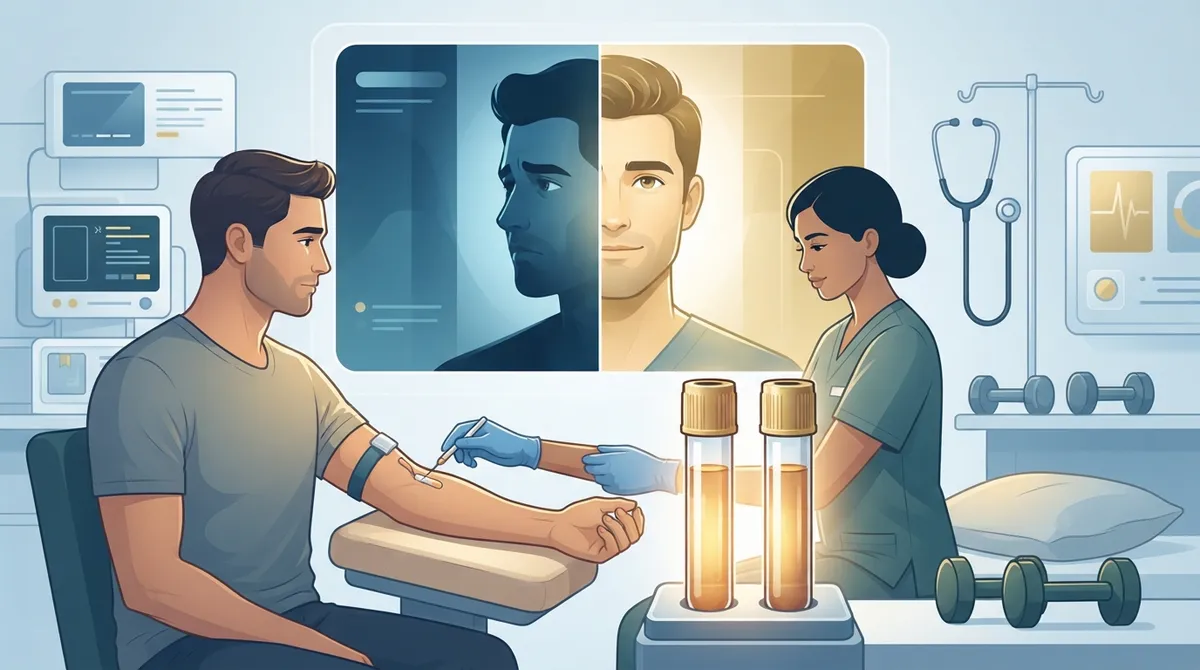
Key Takeaways
-
Confirm low testosterone with two separate early-morning blood tests before starting hormone therapy; symptoms alone are insufficient since mood changes overlap with depression, sleep apnea, thyroid issues, and stress.
-
Testosterone replacement therapy shows only modest mood improvements in older men and should never be used as a stand-alone treatment for clinical depression; combine it with mental health care and lifestyle changes.
-
Peptides like sermorelin and ipamorelin lack strong evidence for treating mood symptoms from low testosterone; they're better suited for supporting energy, sleep, and recovery as part of a broader wellness strategy.
-
Monitor hematocrit, PSA, blood pressure, and fertility goals before and during hormone therapy; 2025 FDA updates removed cardiovascular event warnings for appropriately selected men but added blood pressure cautions.
-
Rule out other causes of mood symptoms—including thyroid disease, sleep apnea, depression, medication side effects, and stress—before attributing them to low testosterone and starting treatment.
-
Work with a licensed provider for personalized, data-driven care rather than guessing; comprehensive blood work and customized treatment plans based on your actual labs offer better outcomes than one-size-fits-all approaches.
Feeling flat, irritable, or just “off” lately? You are not alone. Many men notice mood changes as they age, and it’s natural to wonder if low testosterone is the cause. Hormone therapy for mood in men is a hot topic right now, especially as more guys turn to telehealth for answers instead of waiting months for an in-person appointment.
Here’s the honest truth: mood struggles are complicated. Low motivation, irritability, and fatigue can stem from testosterone deficiency, but they can also come from poor sleep, stress, depression, or other health issues. The good news is that with the right testing and a personalized plan, you can figure out what’s really going on and build a path forward that fits your life. Let’s walk through what the science actually says, how peptide therapy fits into the picture, and what steps to take next.
Why Mood and Hormones Are Connected in Men
Testosterone does more than support muscle and libido. It plays a role in energy, motivation, and overall sense of well-being. When levels drop too low, some men notice their mood dips right along with it.
But mood is tricky. It’s shaped by dozens of factors working together. That’s why doctors don’t jump straight to hormone therapy just because someone feels down. According to the National Library of Medicine, mood symptoms tied to low testosterone are considered nonspecific. This means they overlap heavily with other common conditions.
Common Symptoms That May Overlap With Low Testosterone
- Low motivation or drive to get things done
- Increased irritability or short temper
- Persistent fatigue, even after rest
- A general sense of low mood or reduced well-being
- Trouble concentrating or feeling mentally sharp
The tricky part? These same symptoms show up with depression, sleep apnea, thyroid problems, certain medications, substance use, and even ongoing stress. This is why guessing at the cause rarely works. You need real answers, not assumptions.
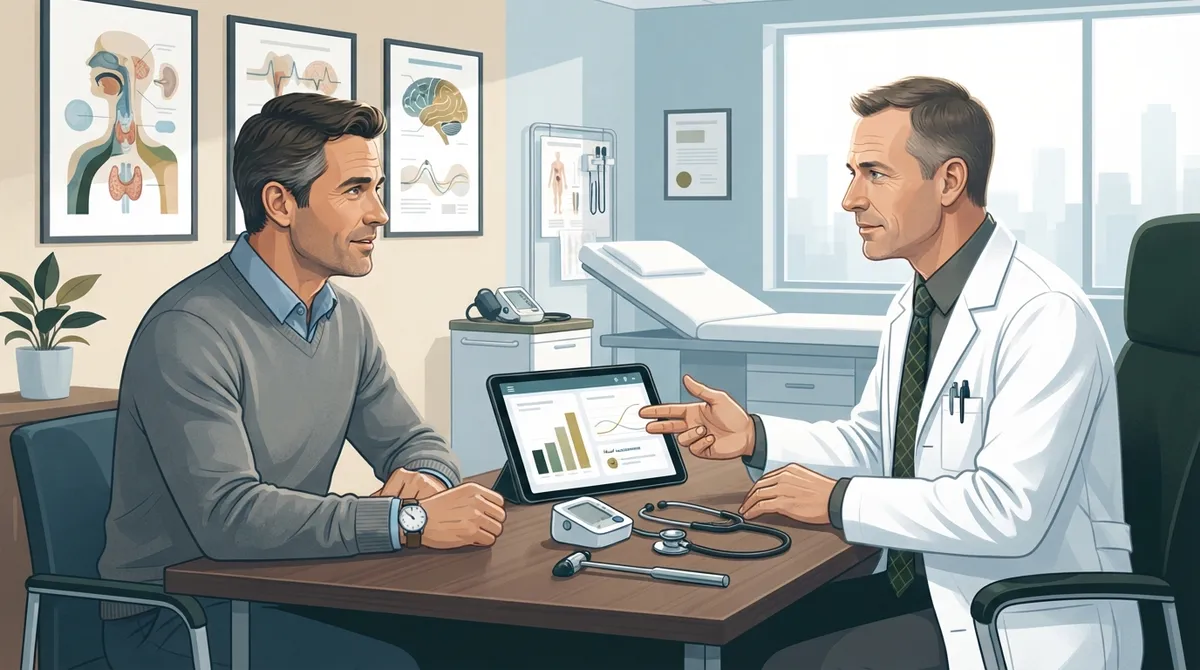
How Doctors Diagnose Low Testosterone Before Treating Mood
Guidelines from major medical groups are clear on this point. You should not start hormone therapy for mood in men based on symptoms alone. Testosterone levels need to be confirmed with lab testing, done the right way.
- Get two separate early-morning total testosterone blood tests, since levels naturally shift throughout the day.
- Check free testosterone if your total testosterone falls in a borderline range or if your provider suspects unusual sex-hormone-binding globulin levels.
- Match your lab results with your actual symptoms, since low numbers alone aren’t enough to diagnose hypogonadism.
- Rule out other causes like depression, thyroid disease, sleep apnea, or medication side effects before assuming testosterone is the culprit.
Many U.S. clinics use a threshold around 300 ng/dL as a reference point, though this can vary based on the lab and the specific guideline being followed. This step-by-step process protects you from starting a treatment you don’t actually need.
What the Research Really Shows About TRT and Mood
Testosterone replacement therapy (TRT) can genuinely help some men who have confirmed low testosterone. Studies show it may improve depressive symptoms, sexual function, and body composition. But it’s important to set realistic expectations.
The Endocrine Society’s 2018 guideline states the mood benefit from testosterone therapy is generally small in older men. It also notes that testosterone should never be used as a stand-alone treatment for clinical depression. If you’re dealing with a diagnosed mood disorder, hormone therapy is not a replacement for proper mental health care.
What the American Urological Association Says
The AUA rates the evidence for improved depressive symptoms with testosterone therapy as Grade B, which is a moderate level of confidence. However, evidence for improvements in cognition, energy, fatigue, and overall quality of life remains inconclusive. In plain terms: some men feel better, but it’s not guaranteed, and it’s not a cure-all.
| Outcome | Evidence Strength | What This Means |
|---|---|---|
| Depressive symptoms | Grade B (moderate) | Some men may see improvement |
| Cognitive function | Inconclusive | Not guaranteed to improve |
| Energy and fatigue | Inconclusive | Results vary by individual |
| Overall quality of life | Inconclusive | Depends on many other factors |
Where Peptide Therapy Fits Into the Conversation
If you’ve been researching hormone therapy for mood in men, you’ve probably come across peptides like sermorelin and ipamorelin. These are growth-hormone secretagogues, meaning they encourage your body to release more of its own growth hormone.
Here’s what you need to know: these peptides are not a substitute for testosterone replacement therapy. They don’t have strong guideline-level evidence for treating mood symptoms caused by low testosterone. That said, peptide therapy still plays a valuable role in a broader wellness strategy, especially for energy, recovery, sleep quality, and overall vitality.
Learn more about what peptides actually are and how they work before deciding what’s right for you. Many wellness seekers use peptides alongside hormone optimization, not as a replacement for it. If you want to understand how these two approaches differ, this guide on comparing peptide therapy vs testosterone replacement breaks it down clearly.
Peptides Commonly Discussed for Vitality and Wellness
- Sermorelin — supports natural growth hormone release, often linked to better sleep and recovery
- Ipamorelin — a gentler option that may support energy and body composition
- CJC-1295 — sometimes paired with other peptides for a combined effect
If you’re curious how these fit into a full wellness picture, check out this resource on picking peptides for energy that actually work.
Safety Considerations Before Starting Hormone Therapy
Before jumping into testosterone therapy, your provider needs to look at your full health picture. This isn’t just a box-checking exercise. It genuinely protects your long-term health.
- Fertility goals — testosterone can suppress sperm production, so this matters if you’re planning to have kids soon.
- Prostate health — baseline PSA testing helps track any changes during treatment.
- Hematocrit levels — testosterone can raise red blood cell counts, so monitoring is essential.
- Cardiovascular history — your provider will review your heart health before and during treatment.
- Sleep apnea — untreated sleep apnea can worsen with testosterone therapy.
- Current medications — some drugs interact with hormone therapy.
The FDA updated its labeling in 2025 after reviewing the TRAVERSE trial. This removed the older class-wide warning about major cardiovascular events for testosterone therapy in appropriately selected men. However, blood-pressure warnings were added or emphasized, and limitations remain for age-related testosterone deficiency. This is a good reminder that ongoing monitoring truly matters.
What Ongoing Monitoring Looks Like
- Regular blood work to track testosterone levels and hematocrit
- Blood pressure checks throughout treatment
- PSA monitoring, with urological evaluation if levels rise significantly
- Check-ins to assess how you’re feeling, not just what the labs say
Guidelines recommend a urology referral during year one of treatment if PSA rises more than 1.4 ng/mL above baseline, exceeds 4.0 ng/mL, or if any prostate abnormality shows up. This is why working with a licensed provider matters so much.
Comparing Approaches: TRT vs Peptide Therapy for Mood Support
| Factor | Testosterone Replacement Therapy | Peptide Therapy (e.g., Sermorelin, Ipamorelin) |
|---|---|---|
| Guideline support for mood | Some support, small effect size | Limited guideline-level evidence |
| Requires confirmed low testosterone | Yes | Not a diagnostic requirement |
| Typical monitoring needs | Hematocrit, PSA, blood pressure | Symptom response, general labs |
| Best used for | Confirmed hypogonadism symptoms | General energy, recovery, sleep support |
If you’re weighing your options, this article on TRT vs peptides for men offers a deeper side-by-side look.
How Allura Longevity Approaches Personalized Care
At Allura Longevity, the process starts with a simple, affordable $50 virtual consultation. From there, comprehensive blood work through LabCorp gives a clear picture of what’s actually happening in your body. No guessing, no generic protocols.
Ashley, a board-certified Family Nurse Practitioner, leads the development of a customized six-month treatment plan based on your specific labs and goals. Whether that means testosterone replacement, peptide therapy, or a combination approach, everything is tailored to you. Treatments ship directly to your door, and ongoing monitoring ensures your plan adjusts as your body responds.
This telehealth model works especially well for busy professionals who don’t have time for repeated in-person visits. It also suits health optimizers and biohackers who want data-driven, medically supervised care instead of one-size-fits-all solutions. If you want to understand the full process from start to finish, this guide on starting peptide therapy safely is a great next read.
Steps to Get Started With Personalized Hormone and Peptide Care
- Schedule your virtual consultation to discuss your symptoms and goals.
- Complete blood work through LabCorp to get accurate baseline numbers.
- Review your results with a licensed provider who explains what they mean.
- Receive a customized treatment plan built around your specific needs.
- Get your peptides or hormone therapy shipped straight to your home.
- Stay on track with ongoing check-ins and lab monitoring.
Since spots are limited each month for new clients, it’s worth reaching out sooner rather than later if you’re ready to feel like yourself again. You can explore options built specifically for men through peptides for men and see how a personalized plan might fit your life.
Setting Realistic Expectations for Better Mood
It’s tempting to hope for a quick fix, but real, lasting improvement usually comes from a combination of factors. Hormone therapy might be one piece of your puzzle, but sleep, stress management, nutrition, and mental health support all play a role too.
If your mood struggles feel severe or persistent, please don’t rely on hormone therapy alone. A conversation with a mental health professional is just as important as your hormone levels. The goal here is whole-person care, not a single silver bullet. For more on how professionals think about male hormone symptoms overall, the what are peptides resource is a helpful starting point for understanding how these therapies work in the body.
Ready to get real answers instead of guesswork? Request your consultation today and start building a plan based on your actual labs, not assumptions.
FAQs
Q: Can hormone therapy actually improve mood in men?
A: Yes, but only when low testosterone is confirmed through proper lab testing. The mood benefit is usually modest, and it works best alongside other healthy habits, not as a stand-alone fix.
Q: What testosterone level counts as low enough to treat mood symptoms?
A: Many U.S. providers use around 300 ng/dL as a reference point, but this depends on the lab, the assay used, and your specific symptoms. Two separate morning blood tests are typically required before any diagnosis is made.
Q: Are peptides like sermorelin or ipamorelin effective for male mood issues?
A: Not really, at least not with strong evidence yet. These peptides are better known for supporting energy, sleep, and recovery, not for treating mood symptoms tied to low testosterone.
Q: Can testosterone therapy make anxiety or irritability worse?
A: It’s possible for some men, especially if dosing isn’t monitored closely. This is exactly why ongoing check-ins and lab work matter so much throughout treatment.
Q: What tests are needed before starting hormone therapy for mood?
A: You’ll typically need two early-morning testosterone tests, a review of your symptoms, and screening for other causes like thyroid issues or sleep apnea. Your provider may also check hematocrit and PSA before starting treatment.





