
Key Takeaways
-
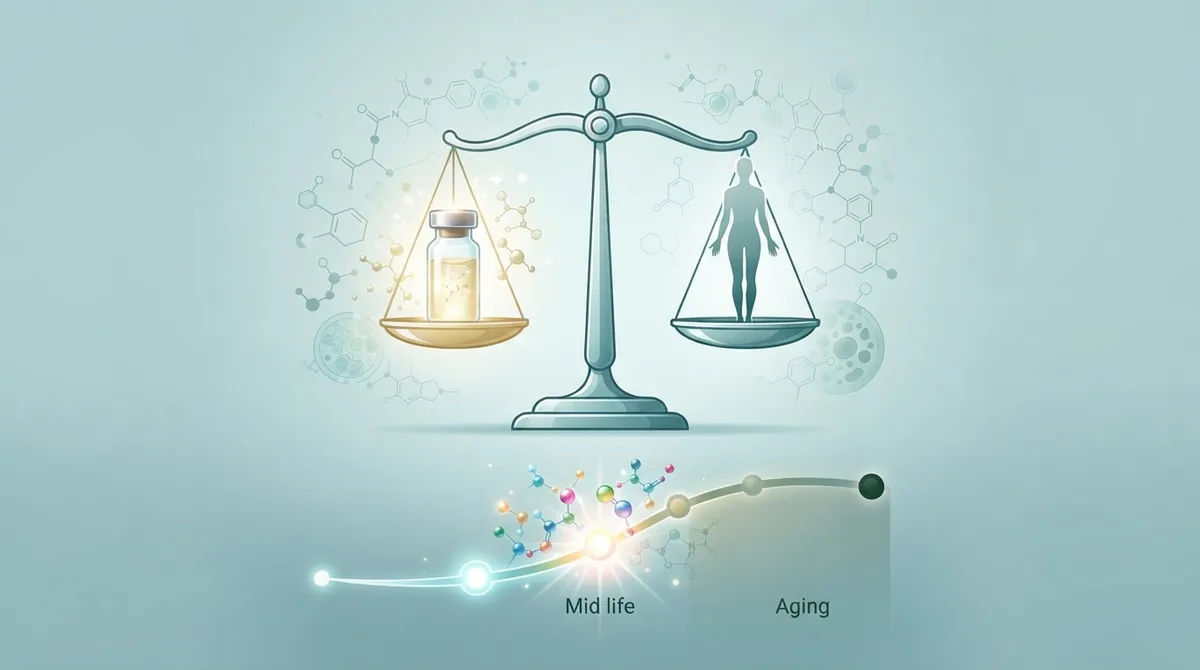
Hormone therapy for anti-aging includes three distinct categories—menopausal hormone therapy, hormone replacement for confirmed deficiencies, and growth-hormone-releasing peptides—each with different purposes, evidence levels, and risks.
-
Menopausal hormone therapy should start before age 60 or within 10 years of last period for optimal benefit-risk balance; starting at 65+ with combined estrogen-progestogen may increase dementia risk.
-
Growth-hormone peptides (sermorelin, tesamorelin, ipamorelin) encourage natural GH release but lack long-term safety and lifespan-extension evidence; a 2025 clinical review recommends against using them purely for anti-aging in healthy older adults.
-
Before starting any hormone or peptide therapy, require comprehensive lab work, get personalized plans tailored to your body, and work with providers who monitor progress and never promise to reverse aging.
-
Peptide therapy signals your body to produce hormones naturally or repair tissue, differing from hormone replacement which directly supplies deficient hormones; each approach requires different monitoring and has specific appropriate uses.
-
No hormone or peptide therapy will reverse aging completely or guarantee longer life; realistic benefits include better sleep, steady energy, improved recovery, and healthier skin and muscle tone when matched to the right person.
If you’ve searched for “hormone therapy anti-aging,” you’re probably tired of feeling less like yourself. Maybe your energy has dipped. Maybe your sleep isn’t what it used to be. Or maybe you’re just curious if science can help you feel vibrant again. We get it, and we’re glad you’re here.
Here’s the honest truth: hormone therapy for anti-aging isn’t one single treatment. It’s actually a whole category that includes menopause hormone therapy, treatment for real hormone deficiencies, and newer options like growth-hormone-releasing peptides. Each works differently. Each has its own evidence, risks, and rules. This guide will walk you through what’s real, what’s still being studied, and how to make smart choices with your health care provider by your side.
Whether you’re a busy professional squeezing self-care between meetings, a biohacker who loves tracking your labs, or simply someone who wants to age well, this article is for you. Let’s break it down together, in plain language, with zero fluff and zero scary jargon.

What Does “Hormone Therapy Anti-Aging” Actually Mean?
This phrase gets used a lot in wellness marketing. But it actually covers several different approaches. Understanding the differences helps you ask better questions and set realistic expectations.
Three Distinct Categories You Should Know
- Menopausal hormone therapy (MHT): Estrogen, often paired with progesterone, used for hot flashes, night sweats, and bone protection during and after menopause.
- Hormone replacement for confirmed deficiency: Treatment for people with lab-confirmed low testosterone or other hormone shortfalls, not just “feeling off.”
- Growth-hormone secretagogues: Peptides like sermorelin, tesamorelin, and ipamorelin that encourage your body to release more of its own growth hormone.
Each of these serves a different purpose. None of them are a magic switch that stops the clock. But when matched to the right person, for the right reason, they can genuinely support how you feel and function. If you want a deeper dive into how these peptides work, check out this guide on growth hormone peptides and how they work.

Growth-Hormone Peptides: Promising, But Not a Fountain of Youth
Let’s talk about the peptides everyone’s buzzing about. Sermorelin, tesamorelin, and ipamorelin are GH-releasing peptides. They don’t add growth hormone directly. Instead, they nudge your pituitary gland to make more of its own.
Some short-term studies show these peptides may support lean muscle, improve certain body composition markers, and help with sleep quality. That’s exciting. But here’s the catch: we don’t have strong long-term evidence that they slow biological aging or extend lifespan. A 2025 clinical review looked closely at this question and made an important point clear.
The review concluded that giving growth hormone to healthy older adults purely for anti-aging purposes is not recommended. Why? Because we still don’t know enough about long-term safety and effectiveness. Reported concerns include swelling, joint pain, carpal tunnel symptoms, insulin resistance, and even worsened sleep apnea. Some studies also flagged possible cardiovascular and cancer-related risks that need more research.
| Peptide | Primary Use | Regulatory Status |
|---|---|---|
| Sermorelin | Stimulates natural GH release | Historically used off-label; not broadly FDA-approved for anti-aging |
| Tesamorelin | Approved for specific fat redistribution condition | FDA-approved for a defined medical indication only |
| Ipamorelin | GH secretagogue, often compounded | Not FDA-approved for general anti-aging use |
This doesn’t mean these peptides have no place in a wellness plan. It means they need to be used carefully, under medical supervision, with clear goals and honest expectations. Learn more in this breakdown of sermorelin peptide therapy facts or this guide on using CJC-1295 peptide safely.
Menopausal Hormone Therapy: What the 2025 Guidelines Say
If you’re a woman navigating perimenopause or menopause, you’ve probably heard mixed messages about hormone therapy. Let’s clear things up using the latest guideline updates.
What MHT Is Proven to Help With
- Hot flashes and night sweats (vasomotor symptoms)
- Vaginal dryness and other genitourinary symptoms
- Prevention of bone loss in appropriately selected patients
What MHT Is Not Recommended For
According to the 2025 menopausal hormone therapy guideline review, MHT should not be started solely to prevent aging, heart disease, dementia, or to extend life. In fact, starting combined estrogen-progestogen therapy at age 65 or older may actually raise dementia risk. That’s a big deal, and it’s why timing matters so much.
International guideline summaries point to the best benefit-risk balance when MHT starts before age 60, or within 10 years of your last period, assuming there are no contraindications. This is sometimes called the “timing hypothesis,” and it’s a core part of modern menopause care.
- Systemic estrogen with an intact uterus generally needs a progestogen partner to protect the uterine lining.
- Transdermal (patch or gel) estrogen may be gentler on clotting risk for some patients.
- Every treatment decision should be personalized based on your health history and goals.
Want to explore your options further? This resource on safest hormone therapy options for women is a great next stop, along with this guide on navigating early menopause hormone therapy safely.
How Peptide Therapy Differs From Hormone Replacement
People often lump peptide therapy and hormone replacement together. They’re related, but not the same thing. Hormone replacement directly supplies a hormone your body isn’t making enough of. Peptide therapy, on the other hand, often works by signaling your body to do something on its own, like releasing more growth hormone or supporting tissue repair.
Peptides can also target very specific goals, like BPC-157 for injury recovery or GLP-1 peptides for weight management. According to the what are peptides overview from WebMD, these small protein chains act as messengers throughout the body, which is why they can be so targeted in their effects.
Key Differences at a Glance
| Feature | Hormone Replacement | Peptide Therapy |
|---|---|---|
| Mechanism | Directly replaces a deficient hormone | Signals the body to produce or repair naturally |
| Common Use | Menopause symptoms, low testosterone | Energy, recovery, metabolism, skin, sleep support |
| Monitoring Needed | Regular labs and symptom tracking | Labs, dosing adjustments, and reassessment |
If you’re trying to decide which path fits you best, this comparison of bioidentical hormones and peptides can help. You might also enjoy this piece on testosterone vs peptides for women.
How to Start Anti-Aging Hormone or Peptide Therapy the Right Way
Feeling ready to explore your options? Good. Let’s walk through the steps that make this process safe and effective, rather than confusing or risky.
- Get a real evaluation first. This means a full health history, a conversation about your goals, and lab work through a trusted provider like LabCorp.
- Review your blood work with a licensed provider. Hormone and peptide decisions should never be guesswork. Your labs tell the real story.
- Discuss your specific goals. Are you after better sleep? More energy? Faster injury recovery? Menopause symptom relief? Your goals shape your plan.
- Start with a personalized plan, not a one-size-fits-all package. Dosing, peptide choice, and monitoring should reflect your body, not a generic protocol.
- Schedule follow-ups. Ongoing monitoring lets your provider adjust your plan as your body responds.
This is exactly the process our team follows at Allura Longevity. It starts with a simple $50 virtual consultation, followed by comprehensive labs, and a custom six-month plan delivered right to your door. Ashley, our board-certified Family Nurse Practitioner, and her team provide ongoing monitoring so your treatment evolves with you. If you’d like guidance on getting started, this article on starting peptide therapy safely is a helpful companion read.
Safety First: Questions to Ask Before You Start
Before jumping into any anti-aging hormone or peptide protocol, arm yourself with good questions. A trustworthy provider will welcome them.
- What tests do I need before starting treatment?
- Is this peptide or hormone FDA-approved for my specific concern?
- What side effects should I watch for?
- How will my dose be adjusted over time?
- What happens if I have a preexisting condition like diabetes or a clotting disorder?
A 2025 gerontology peptide review found significant evidence gaps for non-approved peptides. This includes limited long-term human safety data and uncertain optimal dosing. That’s not a reason to avoid peptide therapy altogether. It’s a reason to work with providers who prioritize safety, quality sourcing, and real monitoring over flashy promises. For more on product quality, this piece on FDA-approved vs compounded peptides is worth a read. You can also learn more from the National Library of Medicine on peptide research standards.
Setting Realistic Expectations for Anti-Aging Results
We want to be your biggest cheerleader, but also your most honest friend. So here’s the deal: no hormone or peptide therapy will reverse aging completely or guarantee a longer life. What good therapy can do is help you feel more like yourself. Better sleep. More steady energy. Improved recovery after workouts. Support for healthy skin and muscle tone.
Think of it less like a time machine and more like giving your body better tools to do its job well. That mindset shift makes a huge difference in how satisfied you’ll feel with your results. For a grounded look at what’s realistic, this article on anti-aging peptide treatment that really works lays it out clearly.
Signs You’re Working With a Responsible Provider
- They require lab work before prescribing anything.
- They explain risks and benefits honestly, without overselling.
- They monitor your progress and adjust your plan.
- They never promise to “reverse aging” or “extend your lifespan.”
- They’re transparent about product sourcing and FDA status.
This is the kind of care we aim to deliver every single day. Whether you’re exploring options for peptides for women or peptides for men, our licensed providers take time to understand your unique story before recommending anything.
Bringing It All Together
Hormone therapy for anti-aging isn’t a single silver bullet. It’s a thoughtful, personalized process that blends real science with your individual health picture. Menopausal hormone therapy has strong evidence for symptom relief when started at the right time. Growth-hormone peptides show promise for certain goals but need careful, medically supervised use. And peptide therapy overall offers exciting, targeted support when guided by proper testing and monitoring.
You deserve a plan built around you, not a generic bottle of promises. That’s exactly what our team at Allura Longevity is here to provide, with licensed medical providers, real lab work, and ongoing support delivered straight to your door. We currently serve clients in Florida, Georgia, Texas, Connecticut, Indiana, Maryland, New York, and California, with spots limited each month for new clients.
Ready to feel more like yourself again? Request a consultation today and let’s build a plan that actually fits your body and your goals. You can also give us a call at (813) 510-6277 to speak with our team directly.
FAQs
Q: Can peptide therapy reverse or slow aging?
A: Not exactly, and we always want to be honest with you about that. Peptide therapy can support things like muscle recovery, sleep, and energy, but there’s no solid proof it slows biological aging or extends lifespan. Think of it as helping your body function better, not turning back the clock.
Q: Are growth-hormone-releasing peptides safe for older adults?
A: They can be helpful for some people, but they’re not risk-free, especially without medical supervision. A 2025 clinical review found that giving growth hormone to healthy older adults purely for anti-aging isn’t recommended due to uncertain long-term safety. That’s why working with a licensed provider who monitors your labs really matters.
Q: What is the difference between HGH, sermorelin, tesamorelin and ipamorelin?
A: Great question! HGH is growth hormone itself, while sermorelin, tesamorelin, and ipamorelin are peptides that encourage your own pituitary gland to release more growth hormone naturally. Tesamorelin actually has FDA approval for a specific medical condition, while the others are more commonly used off-label under provider guidance.
Q: Does menopausal hormone therapy prevent dementia or heart disease?
A: No, and current guidelines are clear on this point. MHT is excellent for hot flashes, night sweats, and bone protection, but it’s not recommended solely to prevent dementia or heart disease. In fact, starting combined therapy at 65 or older may raise dementia risk, so timing really matters.
Q: What tests are needed before starting peptide or hormone therapy?
A: You’ll typically need bloodwork to check hormone levels, metabolic markers, and overall health status before starting any treatment. At Allura Longevity, this happens through LabCorp after your initial consultation, so your plan is built around your actual numbers, not guesswork.





