
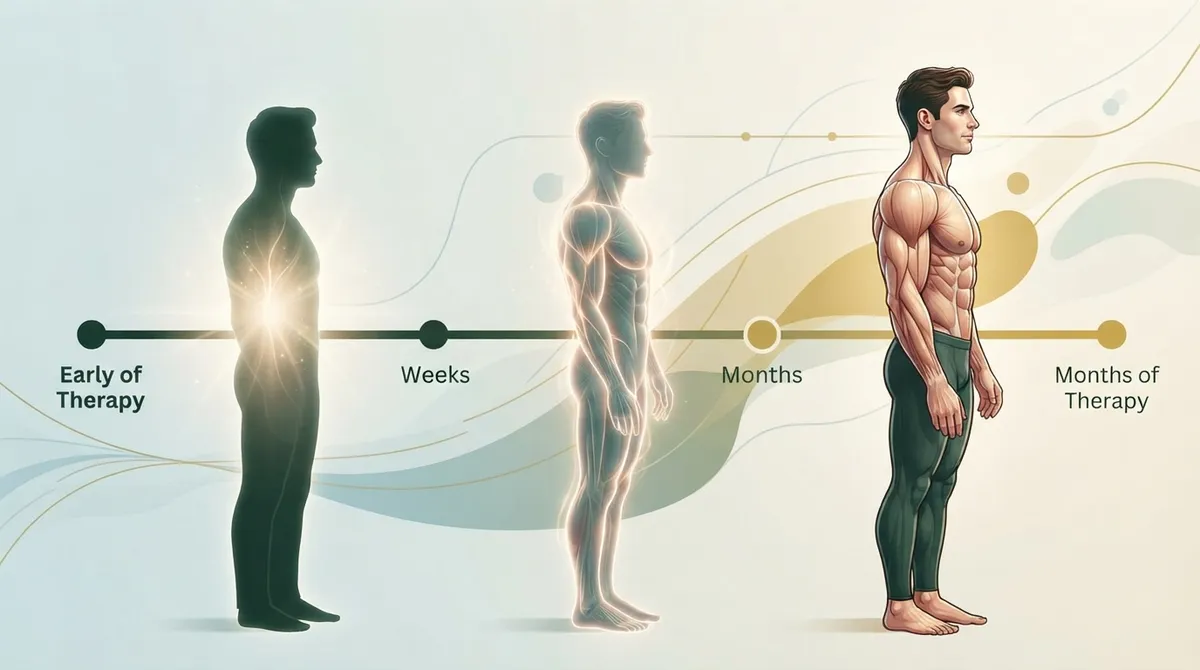
Key Takeaways
-
FDA-approved GLP-1 peptides like semaglutide show appetite changes within days to weeks, but clinically meaningful weight loss requires 3-12+ months of consistent treatment, as demonstrated in landmark trials where participants lost 14.9% body weight by week 68.
-
Distinguish between early subjective changes (better sleep, energy, reduced appetite within days/weeks) and measurable results (body composition changes, tissue repair), which typically take months to become visible or measurable on labs.
-
Peptide therapy timelines vary dramatically by compound and goal: bremelanotide works within hours, growth hormone peptides need 2-6 weeks for early signs but 3-6 months for body composition changes, while FDA-approved options have clearer evidence than non-FDA peptides like BPC-157 or TB-500.
-
Personal factors significantly influence response speed: baseline health status, consistent dosing, adherence to treatment, sleep quality, nutrition, and stress levels all affect how quickly you see results from peptide therapy.
-
Track progress using symptom journals, scheduled follow-up labs, and realistic checkpoints at 4 weeks, 12 weeks, and 6 months rather than daily monitoring; contact your provider if you see no improvement after the expected evaluation window for your specific peptide.
-
Work with a licensed provider who reviews baseline blood work and monitors progress with lab data throughout treatment, as personalized dosing and adjustments based on your actual biology are critical for achieving measurable results.
You just started peptide therapy, and you’re checking the mirror every morning. Sound familiar? We get it. When you invest in your health, you want to see results, and you want them now. But here’s the honest truth: peptide therapy timelines vary a lot depending on what you’re treating and which peptide you’re using.
The good news? Once you understand what to expect, waiting gets a lot easier. You’ll know the difference between normal progress and a sign that something needs adjusting. This guide breaks down real timelines backed by clinical research, not vague promises. Whether you’re using GLP-1 medications for weight loss, exploring BPC-157 for injury recovery, or trying growth-hormone peptides for better sleep and energy, we’ll walk you through what science actually says about how long does peptide therapy take to work.
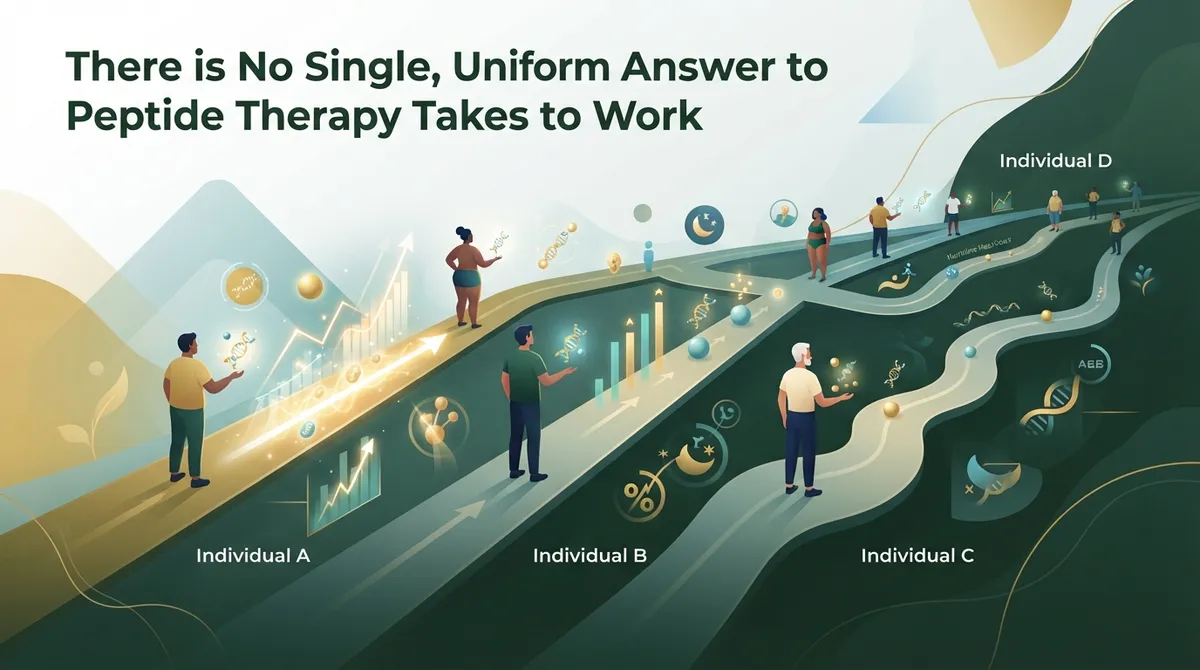
Why There’s No Single Answer to This Question
Here’s the thing about peptide therapy: it’s not one-size-fits-all. Onset time depends on several factors working together.
These factors include the specific peptide, your treatment goal, your dose, how you take it, and your baseline health. A peptide meant for quick symptom relief works differently than one meant to rebuild tissue over months.
Think of it like planting a garden. Some seeds sprout in days. Others need a full season before you see flowers. Your body’s response to peptides follows a similar pattern of biological timing.
The Difference Between Feeling Something and Seeing Results
This is one of the most important things to understand. Early subjective changes don’t always mean your treatment is fully working yet.
You might notice better sleep, more energy, or reduced appetite within days or weeks. But visible things like body composition changes, collagen rebuilding, or tissue repair often take much longer to show up on paper or in the mirror.
That’s why patience and proper monitoring matter so much. A good provider tracks lab markers alongside how you feel, so nothing gets missed.

Timelines for FDA-Approved Peptide Medications
Let’s start with the peptides that have gone through rigorous clinical trials. These have the clearest, most reliable timelines because researchers have studied them extensively.
GLP-1 Medications for Weight Loss
If you’re using semaglutide or a similar GLP-1 peptide, dose escalation is intentional and gradual. This isn’t a flaw. It’s designed to reduce side effects while your body adjusts.
Here’s what the research actually shows:
- Appetite changes and blood sugar improvements can begin within the first few days to weeks of starting treatment.
- Early weight loss may become noticeable within the first month, especially once you reach a therapeutic dose.
- Clinically meaningful weight loss typically develops over several months, not weeks.
- In the landmark STEP 1 trial, participants taking semaglutide 2.4 mg lost an average of 14.9% of their body weight by week 68, compared to just 2.4% with placebo (Wilding et al., New England Journal of Medicine, 2021).
Another study, the STEP 4 trial, found that people who kept taking semaglutide after a 20-week starting period continued losing weight through week 68. Those switched to placebo actually regained weight. This tells us something important: you need to evaluate GLP-1 results over months, not days. If you’re curious about how these medications work in your body, our guide on understanding GLP-1 peptide therapy breaks it down further.
Bremelanotide for Sexual Wellness
Not every peptide requires months of patience. Bremelanotide, an FDA-approved treatment for sexual wellness, works on an as-needed basis. Its effects are generally evaluated within hours of taking it.
The prescribing guidelines recommend taking it at least 45 minutes before anticipated activity, with no more than one dose in a 24-hour period. This is a great example of how peptide timelines truly depend on the compound and its intended purpose.
Growth Hormone-Related Peptides
Peptides like tesamorelin and medically supervised growth-hormone secretagogues follow a different pattern altogether.
Early changes in sleep quality, recovery, or lab markers may show up within a few weeks. But body-composition outcomes, like reduced visceral fat, typically need several months of consistent use before showing up on scans or measurements.
In fact, a phase 3 clinical trial found that tesamorelin reduced visceral fat by roughly 15% to 18% over 26 weeks in patients with HIV-associated lipodystrophy, compared to placebo. That’s a solid six months of treatment before the full effect became measurable.
| Peptide Type | Early Signs (Days to Weeks) | Full Results Timeline |
|---|---|---|
| GLP-1 (semaglutide) | Appetite changes, glucose improvement | 3 to 12+ months for full weight loss |
| Bremelanotide | Effect within hours | Same-day, on-demand use |
| Tesamorelin | Sleep, energy, lab markers (2-4 weeks) | 6 months for visceral fat reduction |
| Growth hormone secretagogues | Sleep and recovery changes (2-6 weeks) | 3 to 6 months for body composition |
What About BPC-157, TB-500, CJC-1295, and Ipamorelin?
Now let’s talk about peptides you’ve probably heard about online: BPC-157, TB-500, CJC-1295, and ipamorelin. These are popular in wellness and recovery circles, but it’s important to be honest about the evidence behind them.
Unlike FDA-approved medications, these compounds have limited or insufficient high-quality human research for many of the uses they’re commonly advertised for. Much of what we know comes from animal studies, small trials, or anecdotal reports from clinicians and users.
This doesn’t mean these peptides can’t be helpful. It means we should be cautious about promising exact timelines. Claims like “results in 1 to 2 weeks” or “improvements in 4 to 8 weeks” are commonly repeated online, but they shouldn’t be treated as established medical facts.
The FDA has also flagged safety concerns with certain compounded peptides, including potential immunogenicity issues and impurities. For ipamorelin specifically, FDA materials note a lack of adequate clinical safety and effectiveness data for some compounded subcutaneous uses. This is exactly why working with a licensed provider matters so much, someone who can help you weigh the available evidence and monitor your response carefully. Learn more about the science behind using CJC-1295 safely and what real results might look like.
What Users Commonly Report (With a Grain of Salt)
While large randomized trials are limited, many clinicians and patients report certain patterns with these peptides:
- BPC-157: Some users report reduced gut discomfort or joint pain within a couple weeks, though full tissue repair may take longer.
- TB-500: Often paired with BPC-157 for injury recovery, with anecdotal reports of improved mobility over several weeks.
- CJC-1295 and ipamorelin: Frequently used together for growth hormone support, with sleep and recovery changes noticed within weeks by some users.
Remember, these are patterns from clinical experience and smaller studies, not guarantees. Always discuss realistic expectations with your provider before starting.
Factors That Affect How Quickly Peptide Therapy Works
Your personal timeline depends on more than just the peptide itself. Several individual factors play a role in how fast you respond to treatment.
- Your starting health status. Someone with significant hormone imbalances or metabolic issues may see changes faster once treatment addresses the root cause.
- Dose and administration method. Higher, well-calibrated doses under medical supervision often produce more noticeable effects than low or inconsistent dosing.
- Consistency. Skipping doses or starting and stopping treatment can delay or blunt results significantly.
- Lifestyle factors. Sleep, nutrition, stress levels, and exercise all influence how well your body responds to peptide therapy.
- The specific outcome you’re measuring. Symptom relief often comes faster than lab-verified changes or visible body composition shifts.
This is why personalized treatment plans matter so much. At Allura Longevity, every plan starts with real blood work through LabCorp, so your provider can track your baseline and monitor real progress, not just guesswork. If you want to understand what a customized approach looks like, check out our guide on starting peptide therapy safely and seeing real results.
How to Track Your Progress the Right Way
Waiting for results shouldn’t feel like staring at a pot that never boils. Here’s a smarter way to track your progress during treatment.
Keep a Simple Symptom Journal
Write down changes in energy, sleep, mood, appetite, or pain levels each week. Small shifts often show up before big ones. This helps you and your provider spot trends early.
Schedule Follow-Up Labs
Lab work isn’t just for the beginning. Follow-up testing helps confirm whether your treatment is producing measurable changes, even before you can see or feel them clearly.
Set Realistic Checkpoints
Instead of checking daily, set checkpoints at 4 weeks, 12 weeks, and 6 months. This matches how most peptide therapies are actually evaluated in clinical research, according to the National Library of Medicine.
| Checkpoint | What to Expect | Action Step |
|---|---|---|
| Week 2-4 | Early symptom changes (sleep, energy, appetite) | Note changes in a journal |
| Week 8-12 | More consistent symptom improvement | Discuss progress with your provider |
| Month 3-6 | Measurable lab and body composition changes | Repeat lab work, adjust plan if needed |
When to Talk to Your Provider About Adjusting Treatment
Not every plan works perfectly right out of the gate, and that’s okay. Peptide therapy is meant to be personalized and adjusted along the way.
You should reach out to your provider if you notice any of the following:
- No improvement at all after the expected evaluation window for your specific peptide.
- Side effects that feel uncomfortable, unusual, or concerning.
- Symptoms that improve initially but then plateau or reverse.
- Uncertainty about whether your current dose is right for your body.
A qualified clinician should always define your target outcome, monitor how you respond, review lab data regularly, and adjust your plan if things aren’t progressing as expected. This is exactly the kind of ongoing support you get with a licensed provider guiding your treatment. Curious what red flags to watch for? Our article on mistakes that hide whether peptide therapy works is worth a read.
Why Personalized, Medically Supervised Care Makes the Difference
Peptide therapy isn’t something you should navigate alone or through guesswork. The science behind what are peptides shows they interact with very specific pathways in your body, and getting the dose, timing, and combination right truly matters.
At Allura Longevity, every client starts with a $50 virtual consultation and complete blood work through LabCorp. This isn’t just a formality. It’s how our licensed providers, led by board-certified Family Nurse Practitioner Ashley, design a six-month treatment plan tailored to your actual biology and goals.
Your peptides get shipped right to your door, so you can administer them at home on your own schedule. Throughout your six months, you get ongoing monitoring and adjustments, because your body’s needs can shift over time. We currently serve clients in Florida, Georgia, Texas, Connecticut, Indiana, Maryland, New York, and California through convenient nationwide telehealth. Whether your goals involve fat loss, energy support, or hormone balance for women, we build a plan around your labs and your life.
What Makes Telehealth Peptide Therapy Convenient
Busy professionals and health optimizers alike appreciate not having to sit in a waiting room. Here’s what a streamlined telehealth experience typically includes:
- A brief virtual consultation to discuss your health history and goals.
- Blood work completed locally through LabCorp, with results reviewed by your provider.
- A personalized six-month treatment plan based on your actual lab data.
- Peptides shipped directly to your home for easy, private administration.
- Regular check-ins so your provider can adjust your protocol as needed.
This kind of structured, supervised approach is a big reason why so many people trust telehealth over guessing on their own. For a deeper comparison, take a look at our piece on local clinics versus telehealth peptide therapy.
Setting Realistic Expectations From Day One
Here’s our best advice: don’t judge your treatment purely by how fast you feel something. Feeling a change is encouraging, but it’s not the whole story.
Give your body the time it actually needs based on the specific peptide and goal. Trust the process, track your progress with real data, and stay in close contact with your provider. That combination is what leads to results you can actually measure and feel good about.
Spots for new clients open up each month, and they tend to fill quickly. If you’re ready to get real answers about your own body and a plan built just for you, now’s a great time to request a consultation and start your personalized journey with a team that genuinely has your back.
FAQs
Q: How long does peptide therapy take to work for weight loss?
A: For GLP-1 peptides like semaglutide, you might notice appetite changes within the first few weeks, but clinically meaningful weight loss usually takes several months to build. Clinical trials show significant results around week 68, so patience really does pay off here.
Q: How long does BPC-157 take to work for injury recovery?
A: Honestly, we don’t have large clinical trials pinpointing an exact timeline for BPC-157. Some people report feeling improvement within a couple weeks, but the strongest evidence comes from smaller studies and clinical experience, so results can vary quite a bit person to person.
Q: When should I expect appetite suppression after starting peptide therapy?
A: Appetite changes from GLP-1 medications often start within the first few days to weeks after your initial doses. Keep in mind doses are increased gradually, so your appetite response may become more noticeable as your dose adjusts over the following weeks.
Q: How quickly do peptides improve sleep, energy, or recovery?
A: Many people notice sleep and energy improvements within two to six weeks of starting growth-hormone-related peptides. That said, deeper changes like better body composition or tissue repair typically take a few months of consistent use to show up clearly.
Q: When should peptide therapy be stopped if there are no results?
A: If you’ve hit the expected evaluation window for your specific peptide and still see zero improvement, it’s time for an honest conversation with your provider. A good clinician will review your labs, check your dosing, and adjust your plan rather than leaving you guessing on your own.





