

Key Takeaways
-
Most stem cell treatments marketed for arthritis, back pain, and anti-aging are still investigational and not FDA-approved for these uses; only specific cord-blood-derived products are FDA-approved for blood-related disorders.
-
Evaluate stem cell therapy claims by tracking six measurable outcomes: symptom improvement, tissue repair confirmed by imaging, functional recovery, biomarker changes, durability of results, and adverse events—not just testimonials.
-
Stem cells and peptides are fundamentally different: stem cells are living cells that may transform into other cell types, while peptides are short amino acid chains that signal the body's repair processes and shouldn't be marketed interchangeably.
-
Request published clinical trial data with sample sizes and follow-up periods before committing to treatment; ten patient testimonials don't equal evidence from randomized controlled trials with hundreds of participants.
-
Personalized, medically-supervised protocols using baseline blood work and licensed providers with ongoing monitoring offer more reliable results than one-size-fits-all clinics making broad promises without assessing individual biology.
-
The FDA warns specifically against exosome products marketed as cure-alls; no exosome products are currently FDA-approved, and risks include infection, immune reactions, tumor formation, and contamination during processing.
So you’ve been scrolling through clinic websites, and you keep seeing bold claims about stem cell therapy results. Maybe a friend swears their joint pain vanished. Maybe an ad promised you’d look ten years younger. We get it. When you’re dealing with aches, fatigue, or just wanting to feel like your best self again, those stories are tempting. But here’s the thing: understanding what stem cell therapy results actually mean takes a bit of homework, and we’re here to walk you through it, friend to friend.
This guide breaks down what real results look like, what’s still unproven, and how peptide therapy fits into the bigger picture of regenerative wellness. Whether you’re a busy professional squeezing in research between meetings or a biohacker who loves digging into the data, you’ll walk away knowing exactly what questions to ask before spending your hard-earned money.

What Do “Stem Cell Therapy Results” Actually Mean?
When people talk about stem cell therapy results, they usually mean one of several things. It could be symptom relief, like less knee pain. It could be tissue repair, seen on an MRI. It could be lab markers changing, or how long the benefits actually last.
Here’s the catch: results vary a lot depending on the type of cells used, where they came from, how they were delivered, and what condition is being treated. A treatment that shows promise for one condition may do nothing for another. That’s why it’s so important to look past the headline and dig into the details.
The Six Types of Results Worth Tracking
- Symptom improvement: Do you feel less pain or fatigue day to day?
- Tissue repair: Can imaging or biopsies confirm actual healing?
- Functional recovery: Can you move, walk, or perform daily tasks better?
- Biomarker changes: Do blood or lab tests show measurable shifts?
- Durability: Do the benefits last months or years, or fade quickly?
- Adverse events: What side effects or complications showed up?
A trustworthy clinic or provider should be able to speak to all six of these, not just the feel-good parts. If a website only shows glowing testimonials, that’s a signal to ask more questions.
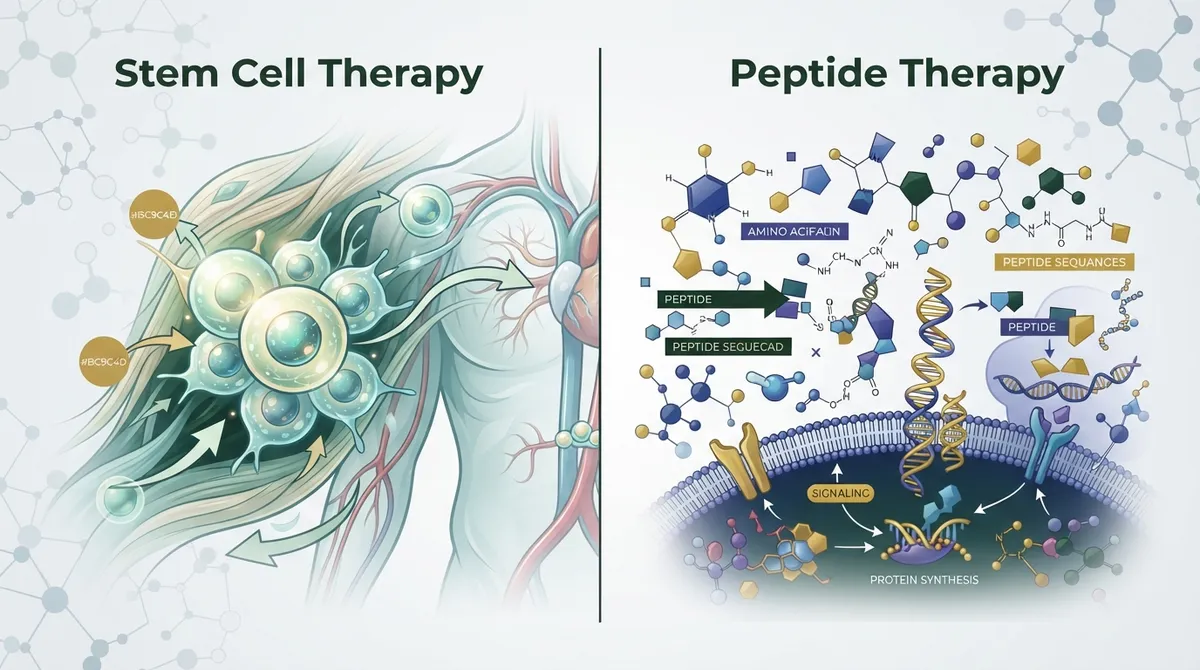
Stem Cell Therapy vs. Peptide Therapy: Know the Difference
Here’s where a lot of confusion happens. Stem cell therapy and peptide therapy are not the same thing, even though both fall under the regenerative medicine umbrella. Stem cells are living cells that can potentially become other cell types. Peptides, on the other hand, are short chains of amino acids that act more like signaling molecules in the body, according to what are peptides resources from trusted health sites.
Peptides may be studied for their potential to influence inflammation, support tissue remodeling, or encourage the body’s own repair signals. But a peptide is not a stem cell transplant, and it shouldn’t be marketed as one. If you want to really understand this distinction, our article on what are regenerative medicine peptides, and do they work breaks it down further.
| Feature | Stem Cell Therapy | Peptide Therapy |
|---|---|---|
| What it is | Living cells, often from bone marrow or cord blood | Short protein chains that signal cell activity |
| Regulatory status | Mostly investigational except specific FDA-approved uses | Some FDA-approved, many used off-label or compounded |
| Delivery | Often invasive (injection into joints, IV infusion) | Typically subcutaneous injection, at-home friendly |
| Evidence level | Varies widely; some conditions well-studied, others early-stage | Generally earlier-stage; some peptides have stronger data than others |
| Typical goal | Tissue regeneration, structural repair | Support recovery, energy, metabolism, and wellness |
What the FDA Actually Says About Stem Cell Approvals
This part is important, so let’s slow down. The FDA has been pretty clear that most stem cell treatments marketed for things like arthritis, back pain, anti-aging, or sexual wellness are still investigational. That means they haven’t gone through the rigorous testing needed to prove they’re safe and effective for those specific uses.
According to the FDA’s consumer alert on regenerative medicine, the agency has approved cord-blood-derived stem cell products, but only for disorders that affect blood formation. That approval doesn’t automatically extend to joint pain, hair loss, or general rejuvenation claims. In December 2024, Ryoncil became the first FDA-approved mesenchymal stromal-cell therapy, but again, its approval is specific to one indication. It doesn’t mean every mesenchymal stem cell product on the market is proven safe or effective.
The FDA also states clearly that there are currently no FDA-approved exosome products for treating diseases. If a clinic is selling exosome injections as a cure-all, that’s a red flag worth noting.
Risks the FDA Warns About
- Infection at the injection or infusion site
- Immune reactions to foreign cells
- Tumor formation in rare cases
- Inappropriate tissue growth in the wrong location
- Contamination during processing
- Complications from invasive procedures
None of this means stem cell research isn’t exciting. It absolutely is. But it means patients deserve honest information, not marketing hype. You can read more about the science behind cellular therapies in this National Library of Medicine review on regenerative treatments.
How Long Does It Take to See Results?
This depends heavily on what’s being treated and which therapy is used. Some peptide protocols, for example, show early changes in energy or sleep within a few weeks. Structural repair, if it happens at all, usually takes much longer, often months.
A recent preliminary phase 1 study on Alzheimer’s disease reported some encouraging biomarker shifts. About 83% of treated participants showed reductions in a marker called phosphorylated tau, and 66% showed improvement on amyloid PET scans. These are interesting early findings from 2025, but they came from a small study. Biomarker movement alone doesn’t prove lasting clinical benefit, and results like these need to be confirmed in larger, controlled trials before anyone should treat them as proof of a cure.
If you’re curious about realistic timelines for regenerative and peptide-based approaches, our guide on real timelines for how long peptides take to work offers a grounded, no-hype breakdown.
How Peptides Might Support Stem Cell Activity (Without Replacing It)
Some people ask us whether peptides can boost or improve stem cell therapy results. It’s a fair question, and the honest answer is: it depends on the specific peptide and the specific claim.
Certain peptides are being studied for their potential role in signaling processes related to inflammation, blood vessel formation, and tissue remodeling. These are the same pathways that matter for wound healing and recovery. That’s why peptides like BPC-157 get so much attention in recovery and injury circles. You can learn more in our article on 13 facts about TB-500 peptide you need in 2026 or our deep dive on 9 BPC-157 peptide facts to know before you start.
But here’s the important caveat: being investigated as a supportive signaling molecule is very different from being proven to enhance stem cell transplant outcomes. Right now, there isn’t strong human clinical trial evidence showing that combining peptides with stem cell therapy reliably improves results. Any provider claiming otherwise should be able to point you to a named clinical trial, not just anecdotes.
Questions to Ask Before Trying a Combination Protocol
- Is there a published clinical trial backing this specific combination?
- What was the sample size, and how long was the follow-up?
- What regulatory status does this product actually have?
- What are the known risks and side effects?
- Can the provider explain the mechanism in plain language?
How to Spot Legitimate Results vs. Marketing Hype
We know it’s overwhelming to sort through clinic websites, social media testimonials, and glossy before-and-after photos. Here’s a simple checklist to help you evaluate any regenerative medicine claim, whether it’s about stem cells, peptides, or a combination.
- Ask for the source: Is this from a peer-reviewed study or just a patient story?
- Check the sample size: Ten happy patients isn’t the same as a controlled trial with hundreds.
- Look at the follow-up length: Short-term results don’t tell you about durability.
- Verify regulatory status: Is this FDA-approved for your specific condition, or is it off-label?
- Ask about risks: A provider who only talks about benefits isn’t giving you the full picture.
Testimonials and uncontrolled case series can be encouraging, but they’re not the same as evidence from randomized controlled trials. That distinction matters a lot when you’re deciding where to invest your time, money, and hope.
Why Personalized, Medically Supervised Peptide Therapy Matters
This is where a thoughtful, transparent approach makes all the difference. At Allura Longevity, treatment plans start with real blood work through LabCorp, not guesswork. A licensed provider reviews your labs and health goals, then builds a custom six-month plan just for you.
This kind of personalized care is a world away from one-size-fits-all clinics making big promises without checking your individual biology first. Our approach focuses on realistic, evidence-informed goals like better energy, improved sleep, faster recovery, and healthy aging support, not miracle cures. If you want to see how this process works from the very first step, check out our guide on how to start peptide therapy safely and see real results.
Led by Ashley, a board-certified Family Nurse Practitioner, our team monitors your progress and adjusts your plan as needed. This isn’t a set-it-and-forget-it program. It’s ongoing, responsive care delivered right to your door.
What Makes a Peptide Program Trustworthy
| Trust Signal | Why It Matters |
|---|---|
| Required lab work before treatment | Ensures the plan is based on your actual biology, not assumptions |
| Licensed medical providers | Adds accountability and clinical oversight |
| Ongoing monitoring | Catches issues early and adjusts dosing as needed |
| Transparent regulatory claims | Avoids overselling unproven or off-label uses |
| Clear side effect disclosure | Respects your right to informed consent |
Getting Started the Smart Way
If you’re exploring regenerative wellness options, start with clarity, not hype. Ask your provider what specific evidence supports your treatment plan. Request details on the mechanism, the expected timeline, and the risks involved.
For anyone curious about the broader world of peptides beyond just recovery, our resource on 8 facts that explain what are peptides in 2026 is a great starting point. And if weight management or metabolic health is part of your goals too, take a look at which weight loss peptides actually work in 2026.
Bringing It All Together
Here’s the honest truth, friend: stem cell therapy results depend on so many moving parts, from the type of cells used to the condition being treated to how long you wait to check in on progress. Big promises without solid evidence should always raise a gentle eyebrow. The good news is that you don’t have to navigate this alone or make guesses about what’s right for your body.
Peptide therapy, when it’s personalized and medically supervised, offers a thoughtful, evidence-informed path toward feeling better, recovering faster, and supporting healthy aging. It’s not a magic replacement for stem cell transplantation, but it can be a meaningful piece of your wellness puzzle when guided by real lab work and licensed care.
Ready to build a plan that’s actually made for you? Request a consultation with Allura Longevity today and take the first step toward personalized, telehealth-delivered peptide therapy backed by real science and real support. With limited spots available each month, now’s a great time to reach out and start your journey with a team that puts your health goals first.
FAQs
Q: What results can patients realistically expect from stem cell therapy?
A: It really depends on the condition, the cell type, and how it’s delivered. Some studies show promising early biomarker changes, but many stem cell treatments for things like arthritis or anti-aging are still investigational. We always encourage folks to ask for real clinical evidence, not just success stories.
Q: How long does it take to see results from stem cell therapy?
A: Timelines vary a lot, and honestly, some effects may take months to show up, if they show up at all. Structural repair takes longer than symptom relief. Patience and realistic expectations go a long way here, friend.
Q: Is stem cell therapy FDA approved for arthritis, back pain, or joint pain?
A: Not currently for those specific uses. The FDA has approved certain stem cell products, like cord-blood-derived cells, but only for blood-related disorders. Treatments marketed for joint pain or arthritis are generally still considered investigational.
Q: What is the difference between peptide therapy and stem cell therapy?
A: Great question! Stem cells are living cells that can potentially transform into other cell types, while peptides are small protein chains that act more like messengers in the body. They’re related but definitely not the same thing, and peptides shouldn’t be marketed as a stem cell replacement.
Q: How can patients verify whether a regenerative medicine clinic’s results are legitimate?
A: Ask for published clinical trial data, not just testimonials. Check the sample size, follow-up length, and regulatory status of the treatment. A trustworthy provider will happily walk you through the evidence instead of just showing you glowing reviews.





