
Key Takeaways
-
Most men notice initial changes within the first month of TRT, but timeline varies by symptom: sexual function improves earliest (3-6 weeks), while muscle, fat distribution, and bone density changes take 3-12 months or longer.
-
Blood testosterone levels rise quickly within days to weeks, but your body needs additional time to respond to those elevated levels—lab improvements don't automatically translate to symptom relief immediately.
-
Treatment success depends on multiple factors including formulation type (injections vs. gels vs. patches), baseline testosterone level, dose consistency, age, health status, and whether low testosterone actually causes your symptoms.
-
Structured lab monitoring is essential: check testosterone at baseline, 2-4 weeks (for faster formulations), 3 months, and every 6-12 months after—watch hematocrit levels as they can exceed safe thresholds above 54%.
-
Combine TRT with resistance training, consistent sleep, and lifestyle changes for optimal results; if testosterone normalizes but symptoms persist after 3-6 months, other underlying causes may need investigation.
-
Peptide therapy works differently than traditional TRT and doesn't follow predictable timelines—be cautious of anyone promising fixed results within set timeframes, as outcomes vary significantly by compound and individual response.
If you just started testosterone replacement therapy, or you’re thinking about it, you probably want a straight answer to one question: when will I actually feel better? We get it. Waiting for results can feel like watching water boil. The good news is that TRT does work for most men with confirmed low testosterone, but the timeline isn’t the same for every symptom. Some changes happen in weeks. Others take months. A few take a year or more to fully show up.
This guide breaks down what happens week by week, what your labs should look like along the way, and how peptide therapy fits into the bigger picture of hormone health. Whether you’re a busy professional squeezing in telehealth visits between meetings, or a biohacker who tracks every lab value, this article gives you the real timeline, not the marketing hype.

How Long Before TRT Works: The Short Answer
There’s no single magic number. Your timeline depends on your starting testosterone level, the type of treatment you use, your dose, your overall health, and whether low testosterone is actually the root cause of your symptoms. That said, most men notice some changes within the first month, with bigger, more lasting improvements building over three to twelve months.
Blood testosterone levels can rise fairly quickly after starting injections or topical treatments. But feeling better is a different story. Your body needs time to respond to those higher levels. Think of it like refilling a nearly empty gas tank. The gauge moves right away, but your engine still needs a minute to catch up.
What Affects Your Personal Timeline
- The formulation you use (injections, gels, patches, or pellets each work at different speeds)
- Your baseline testosterone level before starting treatment
- The underlying cause of your low testosterone
- Your dose and how consistently you take it
- Your age, weight, and general health
- Whether your symptoms are truly caused by low testosterone, or something else entirely
This is exactly why working with a licensed provider matters so much. A good clinician doesn’t just hand you a prescription. They check your blood work, ask about your symptoms, and adjust your plan as your body responds. If you’re exploring whether hormone therapy is right for you, our guide on how to know if you need hormone therapy in 2026 is a great place to start.
A Week-by-Week Look at TRT Symptom Improvement
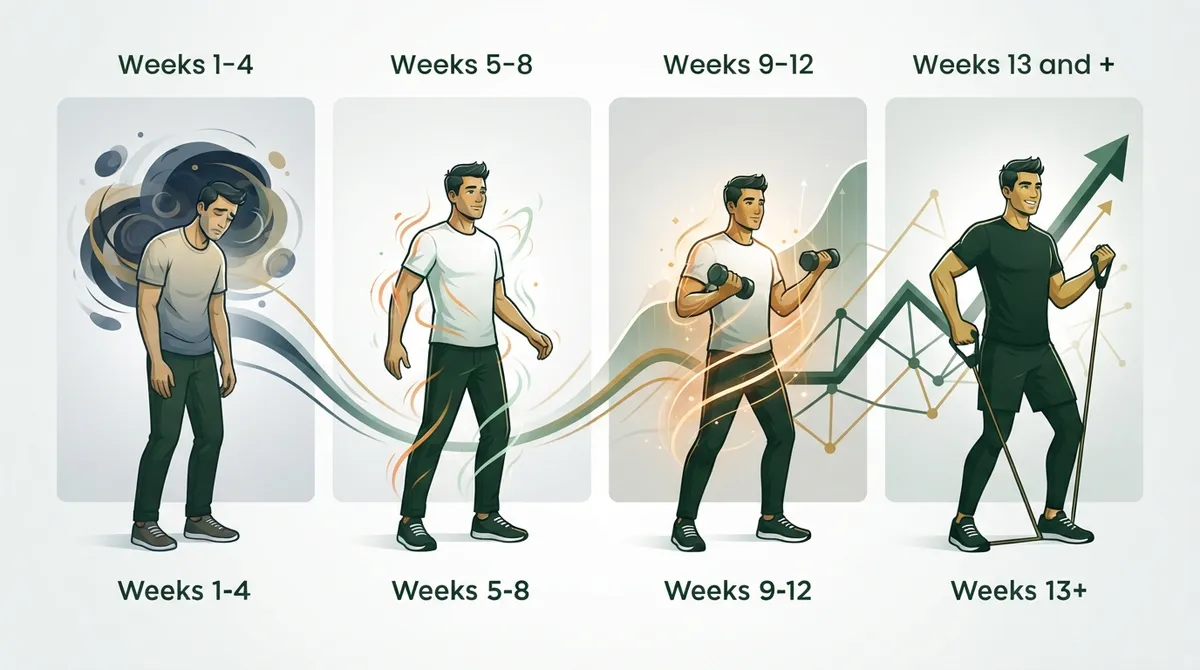
Let’s get specific. Here’s a general timeline based on current clinical guidance. Keep in mind every body is different, so treat this as a roadmap, not a guarantee.
| Timeframe | What Typically Improves | What to Expect |
|---|---|---|
| 1-3 weeks | Blood testosterone levels | Levels begin rising, but symptoms may not have caught up yet |
| 3-6 weeks | Libido and sexual interest | Often the first noticeable symptom improvement |
| 4-8 weeks | Mood and mental clarity | Many men report feeling less irritable and foggy |
| 6-12 weeks | Energy levels | Gradual improvement, more noticeable with consistent dosing |
| 12-16 weeks | Muscle mass and strength | Requires combining treatment with resistance training |
| 3-6 months | Fat distribution changes | Slow but steady, continues improving over time |
| 6-12 months | Full body composition changes | Best results seen with consistent treatment plus lifestyle habits |
| 1-2 years | Bone density improvements | Typically evaluated for men with osteoporosis or fracture history |
Notice a pattern here? Sexual symptoms usually respond first. Body composition and bone health take the longest. That’s normal. Don’t panic if you don’t have six-pack abs by week four.
Why Erectile Function Sometimes Takes Longer to Improve
Erectile function is a bit more complicated than libido. Low testosterone can play a role, but so can blood flow issues, diabetes, certain medications, stress, and relationship dynamics. If your erectile function doesn’t improve alongside your testosterone levels, your provider may need to look at other contributing factors. This is one more reason why ongoing monitoring, not a one-time prescription, makes such a big difference.
What Your Labs Should Show Along the Way
Feeling better matters, but your provider also needs to confirm your labs are actually improving. According to the American Urological Association’s 2025 Testosterone Deficiency Guideline, clinicians should reassess your symptoms within about three months of starting therapy. If your testosterone has normalized but you still don’t feel better after three to six months, it may be time to discuss stopping treatment or exploring other causes.
The Endocrine Society’s Clinical Practice Guideline recommends checking testosterone levels 3 to 6 months after starting treatment, aiming for a level in the mid-normal range. They also recommend checking hematocrit (a measure of red blood cell concentration) at baseline, again at 3 to 6 months, and then yearly. A hematocrit above 54% usually means your provider needs to pause treatment and figure out why.
A Simple Monitoring Schedule
- Before starting treatment: Baseline blood work, including testosterone, hematocrit, and PSA
- 2-4 weeks in (for gels, patches, or nasal formulations): Check testosterone levels to confirm proper dosing
- 3 months in: Reassess symptoms and check testosterone again
- 3-6 months in: Recheck hematocrit and other safety labs
- Every 6-12 months after that: Ongoing testosterone monitoring once levels are stable
This kind of structured follow-up is exactly why working with a telehealth provider who takes lab work seriously matters so much. At Allura Longevity, every treatment plan starts with blood work through LabCorp, so your provider knows exactly where you’re starting from and can track your progress accurately.
Where Peptide Therapy Fits Into the Picture
Here’s something important to clear up. Peptide therapy and traditional TRT are not the same thing. Some peptides, like growth-hormone secretagogues or GnRH-related compounds, may influence your body’s own hormone signaling rather than directly replacing testosterone. Learn more about what are peptides and how they interact with your body’s natural systems.
Because peptides work differently than direct testosterone replacement, their timelines and expected results vary a lot depending on the specific compound and your individual goals. There isn’t a single guideline-backed number of days that guarantees results with peptides the way there is with FDA-approved testosterone products. Be cautious of anyone promising a fixed result within a set number of weeks.
That said, many people combine hormone optimization with targeted peptide protocols to support energy, recovery, and overall vitality. If you want to understand how these two approaches compare, check out our detailed breakdown on how to compare peptide therapy vs testosterone replacement, or explore TRT vs. peptides: which hormone fix wins for men.
Common Peptides Used Alongside Hormone Support
- CJC-1295 and Ipamorelin for growth hormone support and recovery
- Sermorelin for energy and sleep quality
- BPC-157 for injury recovery and gut healing
- PT-141 for sexual wellness support
Each of these compounds has its own evidence base, dosing considerations, and expected timeline. According to research published by the National Library of Medicine, peptide therapies are an active area of research with variable outcomes depending on the specific compound and patient population. This is why personalized care, not a one-size-fits-all protocol, produces the best results.
Tips to Get the Most Out of Your Treatment Timeline
Waiting for results is hard, but there are things you can do to support your body along the way. Here are some practical steps:
- Stick to your dosing schedule. Skipping doses or inconsistent timing can slow your progress and mess with your lab results.
- Combine treatment with resistance training. Muscle and body composition changes respond much better when you pair TRT with strength training and good nutrition.
- Prioritize sleep. Poor sleep can blunt hormone therapy benefits and worsen fatigue, even while your levels improve.
- Track your symptoms, not just your labs. Keep a simple journal of energy, mood, and libido changes so you and your provider can spot patterns.
- Don’t judge results too early. Give your body at least three months before deciding whether treatment is working.
- Attend your follow-up appointments. Regular check-ins let your provider fine-tune your dose based on real data, not guesswork.
If you’re curious about broader timelines across different peptide protocols, our article on 4 timelines that show when peptide therapy works offers more detail on what to expect across various treatments.
Signs Your Treatment Plan May Need Adjusting
Sometimes treatment doesn’t go as smoothly as hoped. Here’s when it might be time to talk with your provider about changes:
| Situation | What It Might Mean |
|---|---|
| Testosterone normalized, but no symptom relief after 3-6 months | Symptoms may be caused by something other than low testosterone |
| Hematocrit above 54% | Dose may need adjusting, or treatment paused temporarily |
| No improvement in energy after 12 weeks | Dose, formulation, or underlying health issue may need review |
| Erectile function unchanged despite normal testosterone | Other factors like vascular health may need evaluation |
This is precisely why ongoing, licensed medical supervision matters so much more than a one-time prescription. Your body changes over time, and your treatment plan should change with it.
Why Personalized, Telehealth-Based Care Makes a Difference
Hormone therapy isn’t something you should figure out alone or guess your way through. At Allura Longevity, every client starts with a simple $50 virtual consultation and comprehensive blood work through LabCorp. From there, our licensed providers, led by board-certified Family Nurse Practitioner Ashley, build a customized six-month treatment plan based on your actual lab results and goals.
We ship everything directly to your home, so you can manage your treatment on your own schedule, whether you’re a busy professional, a parent juggling a packed calendar, or someone who just prefers the privacy and convenience of at-home care. We’re currently licensed to serve clients in Florida, Georgia, Texas, Connecticut, Indiana, Maryland, New York, and California.
If you want to understand more about getting started safely, take a look at our guide on how to start peptide therapy safely and see real results, or explore peptides for men to see how personalized protocols support long-term vitality.
Bringing It All Together
So, how long before TRT works? Blood levels can rise within weeks, libido often improves within a month or two, and full body composition changes can take six months to a year. Peptide therapy adds another layer of options, but it works differently and doesn’t follow the same predictable timeline as testosterone replacement.
The best thing you can do is get proper lab testing, work with a licensed provider who monitors your progress, and give your body the time it needs to respond. Patience paired with good medical guidance is truly the winning combination here.
Ready to find out where your hormone levels actually stand? Our team at Allura Longevity is here to help you build a personalized plan backed by real lab data and ongoing support. Request a consultation today and take the first step toward feeling like yourself again. You can also reach us directly at (813) 510-6277. Spots fill up each month, so don’t wait too long to get started.
FAQs
Q: How long does TRT take to increase testosterone levels?
A: Great question! Blood testosterone levels can start rising within days to a few weeks, depending on your formulation. But remember, feeling better takes longer than your labs improving, so give your body some grace during those first few weeks.
Q: When should I expect more energy after starting testosterone replacement therapy?
A: Most people notice gradual energy improvements somewhere between six and twelve weeks in. It’s not usually an overnight switch, but a slow climb, so keep tracking how you feel week by week.
Q: How long before TRT improves libido or erectile function?
A: Libido tends to improve fairly early, often within three to six weeks. Erectile function can take a bit longer to catch up, especially if other factors like blood flow or stress are involved, so don’t hesitate to loop your provider in if things aren’t budging.
Q: How long does TRT take to build muscle and reduce body fat?
A: This one takes patience, friend. Expect noticeable muscle and fat distribution changes around twelve to sixteen weeks, with continued improvement over six to twelve months, especially when you pair treatment with resistance training and solid nutrition.
Q: Are peptide therapies faster or safer than traditional testosterone replacement therapy?
A: Peptides work differently than TRT, so it’s not really an apples-to-apples comparison. They may support your body’s natural hormone signaling rather than replacing testosterone directly, and timelines vary quite a bit depending on the specific compound, so a personalized consult really is the best way to know what fits your goals.





