

Key Takeaways
-
BPC-157 has no confirmed human timeline for any condition—most evidence comes from animal studies or anecdotal reports, so setting expectations based on a specific number of days is unrealistic and potentially misleading.
-
Recovery speed depends far more on injury type, tissue damage severity, sleep quality, nutrition, and rehab consistency than on any peptide alone; a licensed provider's personalized plan matters more than the peptide itself.
-
The only human data point shows 14 of 16 knee pain patients reported relief, but without a control group, making placebo effect and natural healing impossible to rule out as factors.
-
BPC-157 is not FDA-approved for human use and should never replace proven treatments like physical therapy or surgery—it can only function as a supplemental support tool within a comprehensive medical plan.
If you’ve been Googling “how long does BPC-157 take to work” late at night, hoping for a magic number, we get it. You want to know when that nagging shoulder or cranky gut will finally feel better. But here’s the honest truth: nobody can give you an exact day or week, and anyone who promises otherwise is guessing. This article breaks down what the research actually shows, what recovery realistically looks like, and how to think about timelines without setting yourself up for disappointment.
We’ll walk through four realistic timeframes people commonly ask about, explain why the science is still catching up, and share how a personalized, medically guided approach can help you set expectations that actually make sense for your body. Whether you’re a busy professional squeezing in recovery time, a biohacker who tracks everything, or someone simply trying to feel like themselves again, this guide is for you.
What Is BPC-157, Really?
BPC-157 is a lab-made peptide made of 15 amino acids. It was studied first in animals, mostly for gut healing, tissue repair, and inflammation control. You can learn more about the basics of what are peptides and how they function in the body before diving deeper into BPC-157 specifically.
Right now, BPC-157 is not FDA-approved for any human use. That means it hasn’t gone through the large, controlled human trials that prove a medicine works and is safe. Most of what we know comes from lab animals, test tubes, and small, informal human reports.
4 Timeframes People Ask About (And What the Evidence Actually Says)
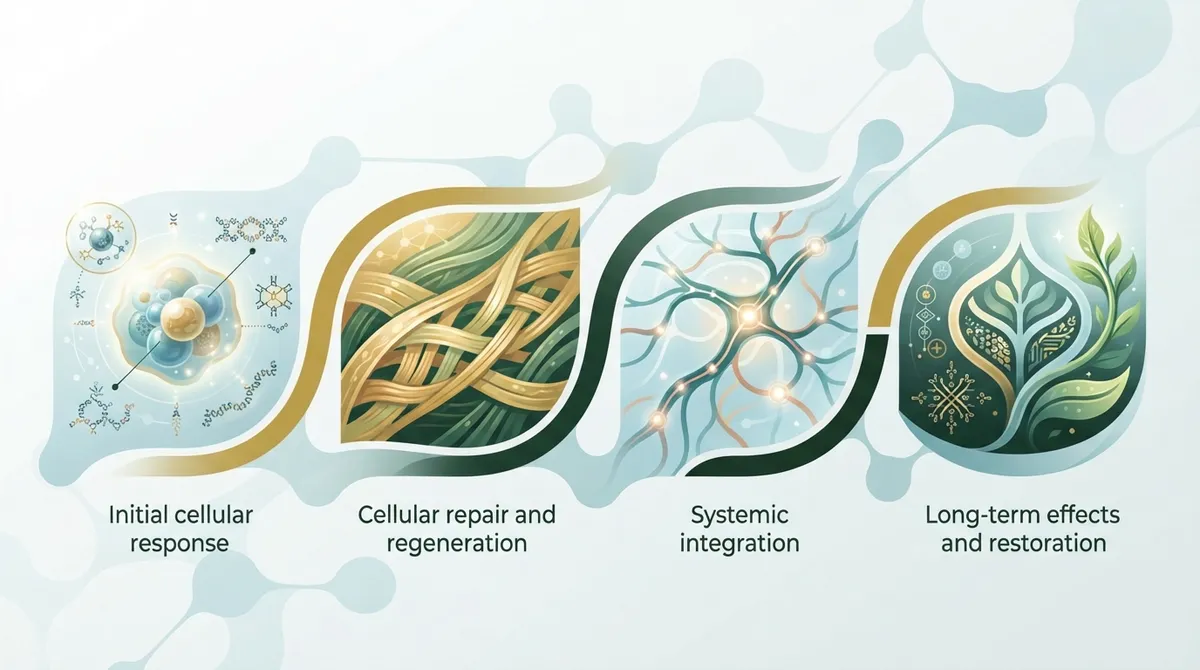
Let’s go through the most common timeline questions one by one. We’ll keep things straightforward and honest, because you deserve real answers, not hype.
1. Tendon and Ligament Injuries
Many people hope BPC-157 will speed up healing for things like tennis elbow, rotator cuff strain, or ankle sprains. Animal studies have shown promising tissue changes in weeks. But there is no confirmed human timeline for tendon or ligament repair. A 2025 systematic review published in HSS Journal looked at 36 studies through June 2024. Thirty-five were animal studies. Only one was a human report, and it had no control group.
Tendons naturally heal slowly because they have limited blood flow. Realistic recovery, with or without a peptide, often takes weeks to months depending on severity, age, and rehab consistency.
2. Muscle Recovery After Exercise or Strain
Athletes and gym-goers often wonder if BPC-157 shortens muscle soreness or strain recovery. Again, most supporting data comes from animal muscle-injury models, not humans. Preclinical research suggests the peptide clears from the bloodstream fast, with an estimated half-life under 30 minutes. Fast clearance doesn’t mean fast tissue repair. It just means the compound doesn’t stick around long in your blood.
Muscle recovery timelines depend heavily on the type of strain, your training history, sleep quality, and nutrition. If you’re curious about other options, our guide on 8 Things Peptides Really Do for Muscle Recovery offers helpful context.
3. Gastrointestinal Comfort
BPC-157 was originally studied for stomach and gut protection in animals. Some people report feeling gut relief within days to weeks, but these are anecdotal reports, not clinical proof. There’s no confirmed onset time for GI symptoms in humans. If digestive issues are ongoing, it’s worth exploring options with real evidence behind them, like those covered in Which Peptides for Gut Health Actually Have Evidence?
4. Knee Pain and Joint Discomfort
This is where we actually have a small human data point, though it’s far from perfect. A chart review summarized in the 2025 literature found that 11 of 12 patients receiving BPC-157 alone reported subjective knee pain relief. Across the full group of 16 patients, 14 reported relief. Sounds promising, right? Here’s the catch: there was no control group, and reports were collected through phone surveys. That means we can’t rule out the placebo effect, natural healing, or other treatments happening at the same time.
| Condition | Commonly Claimed Timeframe | What Research Actually Confirms |
|---|---|---|
| Tendon/Ligament Injury | 2-6 weeks (anecdotal) | No controlled human trials exist |
| Muscle Recovery | Several days to weeks (anecdotal) | Based mainly on animal studies |
| GI Comfort | Days to weeks (anecdotal) | No established human onset time |
| Knee Pain | Unclear, self-reported relief | Small uncontrolled report only |
Why There’s No Official Human Timeline Yet
It’s frustrating not to have a clear answer, we know. But here’s why the science hasn’t caught up yet:
- Almost all available studies are animal-based, not human clinical trials.
- The one human chart review had no control group and relied on self-reports.
- A 2025 report on intravenous BPC-157 included only two adults, far too small to draw conclusions.
- Results in animals don’t automatically translate to the same dose, timeline, or effect in people.
The National Library of Medicine has published research summarizing these limitations, and the takeaway is consistent: we simply don’t have enough controlled human data yet to state a reliable onset of action.
What Actually Affects Your Recovery Speed
Instead of fixating on a specific number of days, it helps to think about the many factors that influence healing, peptide or not:
- Type and severity of injury — a mild strain heals faster than a full tear.
- Tissue type — muscle generally heals faster than tendon or ligament tissue.
- Age and overall health — recovery tends to slow with age and chronic conditions.
- Sleep quality — deep sleep is when your body does most of its repair work.
- Nutrition — protein and micronutrient intake support tissue rebuilding.
- Rehab consistency — physical therapy and movement matter as much as any supplement.
- Underlying medical causes — some pain has a root cause a peptide alone won’t fix.
This is exactly why working with a licensed provider matters. A good plan looks at your full picture, not just one peptide in isolation. Our resource on 9 BPC-157 Peptide Facts to Know Before You Start dives deeper into what to consider before beginning.
Safety and Regulatory Status You Should Know
Before starting any peptide protocol, it helps to understand where things stand legally and medically:
| Fact | Details |
|---|---|
| FDA Approval | Not approved for any human indication |
| Available Human Trials | Zero completed controlled efficacy trials as of the 2025 review |
| Sports Regulation | Prohibited by WADA under the S0 non-approved substances category |
| Product Quality | Varies widely across compounded and research-use sources |
Because formulations differ so much between sources, sterility, dosing accuracy, and quality can vary. That’s one reason so many people choose a supervised approach rather than sourcing peptides on their own. If you’re weighing your options, our comparison guide on Local Clinic vs. Telehealth: Best Peptide Therapy Near You? can help you decide what fits your lifestyle.
How Allura Longevity Approaches Peptide Therapy
At Allura Longevity, we believe in setting expectations based on real evidence, not hype. Our process starts with a $50 virtual consultation and complete blood work through LabCorp. From there, our licensed providers, led by board-certified Family Nurse Practitioner Ashley, build a personalized six-month plan based on your actual health data and goals.
We monitor your progress along the way and adjust your plan as needed, because everyone’s body responds differently. Peptides are shipped straight to your door, so you can manage your care from home, whether you’re in Florida, Texas, New York, or one of our other licensed states. If you want to understand the bigger picture of how peptide protocols work before jumping in, check out How to Start Peptide Therapy Safely and See Real Results.
Setting Realistic Expectations
Here’s a simple way to think about your recovery journey:
- Give any protocol enough time before judging results, typically several weeks at minimum.
- Track your symptoms honestly, not just how you feel on your best day.
- Keep up with rehab, sleep, and nutrition alongside any peptide use.
- Never skip a proper diagnosis for ongoing or worsening pain.
- Talk with your provider before changing dose or stopping treatment early.
A peptide should support your recovery plan, not replace physical therapy, surgery, or other standard medical care your doctor recommends. If something feels off or pain persists, please get evaluated properly instead of waiting on a supplement to fix it.
The Bottom Line on BPC-157 Timelines
So, how long does BPC-157 take to work? Honestly, nobody can give you a guaranteed number. The current evidence is mostly animal-based, with only tiny, uncontrolled human reports to lean on. Some people report feeling better within a few weeks, others don’t notice much difference at all, and that variability is completely normal given how limited the research still is.
What we can promise is this: working with a licensed provider who reviews your labs, listens to your goals, and adjusts your plan over time gives you the best shot at real, lasting results. That’s exactly what we do at Allura Longevity, and we’d love to help you figure out what’s right for your body. Ready to get personalized guidance instead of guesswork? Request a consultation today and let’s build a plan that actually fits you.
FAQs
Q: How long does BPC-157 take to work for tendon or ligament injuries?
A: There’s no confirmed human timeline for this yet. Most claims come from animal studies or anecdotal reports, so it’s smart to focus on your overall recovery plan rather than a specific date.
Q: How long does BPC-157 take to work for muscle recovery?
A: We honestly don’t know for sure. Human data is extremely limited, and muscle healing depends heavily on your training history, sleep, and nutrition just as much as any peptide.
Q: Can BPC-157 help with gastrointestinal problems, and how quickly?
A: Some people report feeling relief within a few weeks, but this is based on anecdotal experiences, not solid clinical proof. If gut issues persist, it’s worth getting a proper evaluation alongside any peptide protocol.
Q: Is BPC-157 FDA-approved or safe for human use?
A: No, BPC-157 is not FDA-approved for any human condition. That doesn’t mean it’s automatically unsafe, but it does mean the dosing, safety, and effectiveness haven’t been proven through large controlled trials yet.
Q: Can BPC-157 replace physical therapy, surgery, or other standard treatments?
A: No, it shouldn’t replace proven treatments like physical therapy or surgery when those are recommended by your doctor. Think of it as a potential support tool within a bigger, well-rounded recovery plan.





