
Key Takeaways
-
Require blood work before prescribing and confirm a licensed provider personally reviews your medical history, not automated systems, to ensure individualized treatment rather than one-size-fits-all recommendations.
-
Distinguish between FDA-approved peptides (semaglutide, tirzepatide) with proven safety data and compounded peptides (BPC-157, CJC-1295) lacking FDA review; reputable clinics disclose this difference clearly instead of making false claims.
-
Verify the clinic is licensed in your state, uses a licensed U.S. pharmacy, and provides transparent sourcing information before committing, as telehealth laws vary significantly by location.
-
Expect ongoing follow-up visits and dose adjustments over time, not one-time transactions; legitimate longevity care includes continuous monitoring and relationship with your provider.
-
Avoid red flags like guaranteed results, promised biological age reversal, quick online quizzes without real provider conversations, or aggressive subscription pressure that indicate marketing-driven rather than medicine-driven clinics.
-
Understand that many longevity peptides lack large human trials; reputable clinics explain what's proven versus experimental rather than overselling benefits beyond current scientific evidence.
Searching for the best online longevity clinic can feel a little overwhelming. There are so many websites promising to help you feel younger, sleep better, and bounce back faster. Some of them are legit. Some of them, honestly, are just selling you a dream with a fancy label on it. If you’re a busy professional, a dedicated biohacker, or simply someone who wants to age well without wasting money on hype, you deserve a clear roadmap.
This guide breaks down exactly what separates a trustworthy online longevity clinic from a risky one. We’ll talk about licensed medical oversight, lab testing, FDA rules, and the red flags you should never ignore. By the end, you’ll know exactly what questions to ask before you hand over your credit card or your health history.

What Makes a Longevity Clinic Legitimate?
A real longevity clinic is built around clinical care, not just product sales. It should feel more like a doctor’s visit and less like an online shopping cart. Before anything gets prescribed, a licensed provider should review your medical history, current medications, and health goals.
This matters because peptides are not one-size-fits-all. What works for one person’s sleep issues might be wrong for someone with a thyroid condition. A trustworthy clinic treats you as an individual, not a checkout number.
Signs You’re Dealing With a Reputable Provider
- They require blood work before prescribing anything
- A licensed medical provider reviews your case personally
- They explain which peptides are FDA-approved versus compounded
- They use a licensed pharmacy and disclose where your medication comes from
- They offer follow-up visits and ongoing monitoring, not just a one-time sale
If you want to understand the basics before diving deeper, this article on 8 Facts That Explain What Are Peptides in 2026 is a great starting point.
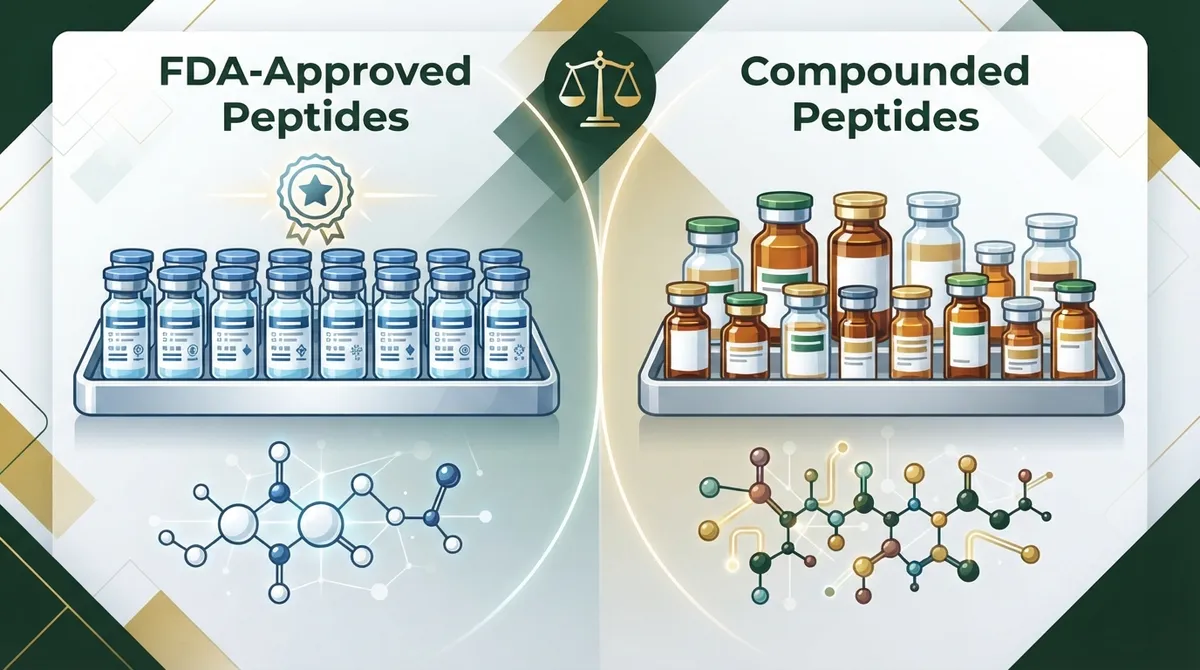
FDA-Approved Peptides vs. Compounded Peptides
This is probably the single most important thing to understand before choosing a clinic. Not all peptides are treated equally by the law, and that difference matters for your safety.
Some peptides, like semaglutide and tirzepatide, are FDA-approved for specific uses such as weight management or type 2 diabetes. Tesamorelin is approved for HIV-associated lipodystrophy. Bremelanotide is approved for hypoactive sexual desire disorder. These approvals apply to specific doses and specific conditions. They do not mean the drug is approved to “reverse aging” or extend your lifespan.
Other peptides, like BPC-157, CJC-1295, ipamorelin, TB-500, AOD-9604, epitalon, and MOTS-c, fall into a different category. According to the FDA, compounded drugs are not reviewed for safety, effectiveness, or quality before they reach patients. That doesn’t automatically mean they’re unsafe. It means the burden of quality control shifts to the pharmacy and the prescribing clinic.
| Category | Examples | FDA Status | What This Means for You |
|---|---|---|---|
| FDA-Approved Peptide Medicines | Semaglutide, Tirzepatide, Tesamorelin, Bremelanotide | Approved for specific indications | Reviewed for safety and effectiveness for that specific use only |
| Compounded Peptides | BPC-157, CJC-1295, Ipamorelin, TB-500 | Not FDA-reviewed before marketing | Quality depends on the pharmacy; ask for transparency |
| Research-Only Peptides | Various sold online as “research chemicals” | Not intended for human use | Should be avoided entirely for personal health use |
A clinic worth trusting will never call a compounded peptide “FDA-approved” or claim it’s a generic equivalent of an approved drug. They’ll be upfront about what category your treatment falls into and why it’s medically appropriate for you specifically. You can read more about this distinction in our article on FDA-Approved vs. Compounded Peptides: What Wins?
How to Choose the Best Online Longevity Clinic
Picking the right clinic doesn’t have to feel like guesswork. Here’s a simple process you can follow.
- Check licensing in your state. Telehealth laws vary. A provider must be legally allowed to treat patients where you live.
- Ask about lab work. A responsible clinic orders blood tests before prescribing, not after.
- Review the pharmacy relationship. Ask if they use a 503A or 503B pharmacy and whether it’s licensed in your state.
- Look for realistic claims. If a clinic promises to “reverse aging” or guarantees results, that’s a red flag.
- Confirm ongoing monitoring. Longevity care isn’t a one-and-done transaction. You need follow-ups and dose adjustments over time.
This process protects you from wasting money and, more importantly, protects your health. For a deeper dive into starting safely, check out How to Start Peptide Therapy Safely and See Real Results.
Questions to Ask Before You Commit
- Will a licensed provider review my labs personally, or is this automated?
- What happens if I have side effects?
- Is my state on your list of licensed states?
- How often will I have follow-up visits?
- What’s included in the total cost, and are there hidden fees?
What Does the Research Actually Say About Longevity Peptides?
Let’s be honest with each other here. Many peptides marketed for longevity, like BPC-157, TB-500, and epitalon, don’t have large, long-term human trials backing up broad anti-aging claims. That doesn’t mean they’re useless. It means the science is still catching up to the marketing.
According to the National Library of Medicine, evidence for many peptide compounds remains limited, especially for indications outside their original research context. This is why a good clinic won’t oversell you. They’ll explain what’s proven, what’s promising, and what’s still experimental.
Even FDA-approved metabolic peptides like semaglutide and tirzepatide, which have solid clinical trial data, were studied for weight management and blood sugar control. That data doesn’t automatically prove they extend lifespan. Understanding what are peptides and how they function in the body helps you separate legitimate science from marketing spin.
Popular Peptides and Their Evidence Level
| Peptide | Common Use | Evidence Strength |
|---|---|---|
| Semaglutide/Tirzepatide | Weight management, blood sugar control | Strong (large randomized trials) |
| Sermorelin/CJC-1295 | Growth hormone support | Moderate, limited long-term data |
| BPC-157 | Tissue and gut healing | Limited human trials, mostly animal studies |
| Epitalon | Marketed for anti-aging | Very limited human evidence |
If you’re curious about specific compounds, our guide 9 BPC-157 Peptide Facts to Know Before You Start breaks it down in plain language.
Why Telehealth Doesn’t Mean Lower Standards
Some people worry that online care means cutting corners. It shouldn’t. A legitimate telehealth longevity clinic follows the same standards as an in-person visit. That includes a real conversation with a provider, informed consent, documented reasoning for your treatment plan, and a way to reach urgent care if needed.
The convenience of telehealth is a genuine benefit for busy professionals and anyone juggling a packed schedule. But convenience should never replace careful medical judgment. If you’re weighing your options, our comparison article Local Clinic vs. Telehealth: Best Peptide Therapy Near You? walks through the pros and cons of each approach.
Red Flags to Watch For
- Guaranteed results or promises to reverse your biological age
- A quick online quiz with no real provider conversation
- Subscription pressure or aggressive upselling
- No mention of which pharmacy fills your prescription
- Peptides labeled “for research use only” being sold for personal use
- Overseas suppliers with no U.S. licensing information
These warning signs apply whether you’re shopping for weight loss support, energy boosts, or skin rejuvenation. If something feels rushed or too good to be true, trust that instinct.
What a Complete Longevity Program Should Include
The best online longevity clinics build a full circle of care around you. It’s not just about getting a prescription. It’s about understanding your body and adjusting your plan as your results come in.
Core Components of a Trustworthy Program
- Initial consultation with a licensed provider who reviews your health history and goals
- Comprehensive blood work through an accredited lab to establish your baseline
- A personalized treatment plan based on your specific labs and goals, not a generic template
- Home delivery of your medication, with clear instructions for safe administration
- Ongoing monitoring with follow-up labs and dose adjustments over time
This is exactly the model that Allura Longevity follows. Clients start with an affordable $50 virtual consultation, complete blood work through LabCorp, and receive a customized six-month treatment plan. Everything is delivered to your door, and a board-certified Family Nurse Practitioner oversees your care from start to finish. That kind of structure gives you both convenience and real medical accountability.
If energy and vitality are your main goals, take a look at How to Pick Peptides for Energy That Actually Work for more specifics on what to expect.
Cost Expectations for Online Peptide Therapy
Cost is often the first question people ask, and it’s a fair one. Prices vary depending on your specific peptides, lab work, and monitoring schedule. Here’s a general breakdown to help you plan.
| Service | Typical Range | Notes |
|---|---|---|
| Initial Consultation | $50–$200 | Covers provider review and intake |
| Lab Work | $100–$400 | Depends on panel size and lab used |
| Monthly Medication | $150–$500+ | Varies widely by peptide type and dose |
| Follow-Up Visits | Often included | Check if bundled into your plan |
For a more detailed cost breakdown, our article 8 Real Numbers on How Much Peptide Therapy Costs covers real pricing scenarios.
Is an Online Longevity Clinic Right for You?
If you’re the kind of person who tracks your sleep, checks your labs, and wants a science-based approach to feeling your best, an online longevity clinic can be a fantastic fit. It’s also ideal if you’re juggling a demanding career and simply don’t have time for repeated in-person visits.
That said, it only works well when the clinic behind it takes medicine seriously. Look for licensed providers, transparent pharmacy practices, and a genuine commitment to your long-term health, not just a quick sale.
Allura Longevity was built with exactly this philosophy in mind. Personalized plans, licensed oversight in Florida, Georgia, Texas, Connecticut, Indiana, Maryland, New York, and California, and a team led by an experienced Family Nurse Practitioner make this a place where you can feel confident about your care. Spots for new clients are limited each month, so if you’ve been considering it, now’s a good time to explore your options.
Ready to take the next step toward feeling like yourself again? Request a consultation today and start your personalized journey with a clinic that puts your safety and results first.
FAQs
Q: How do I choose the best online longevity clinic for peptide therapy?
A: Start by checking that the clinic uses licensed providers who review your medical history and lab work before prescribing anything. You’ll also want to confirm they’re legally licensed in your state and transparent about their pharmacy sourcing. A little research upfront saves you from a lot of headaches later, we promise!
Q: Are peptide therapies from online longevity clinics FDA-approved?
A: It depends on the specific peptide. Some, like semaglutide and tesamorelin, are FDA-approved for particular conditions. Others, like BPC-157 or CJC-1295, are compounded and haven’t gone through the same FDA review process, so a good clinic will always be upfront about which category your treatment falls into.
Q: Is compounded peptide therapy safe, and how is quality verified?
A: Compounded peptides can be safe when prepared by a licensed pharmacy following strict quality standards, but they haven’t been reviewed by the FDA the way approved drugs have. That’s exactly why it matters to work with a clinic that discloses its pharmacy relationships and explains why compounding is the right medical choice for you.
Q: What medical tests should an online longevity clinic require before prescribing peptides?
A: A trustworthy clinic will typically require comprehensive blood work, often through a trusted lab like LabCorp, before creating your treatment plan. This helps your provider understand your hormone levels, metabolic markers, and overall health, so your plan is truly personalized rather than a generic template.
Q: Can an online clinic legally prescribe peptides in my state?
A: Not always; it depends on where both the clinic and prescriber are licensed to practice. Always ask directly whether the clinic serves your specific state before signing up, since telehealth laws and prescribing rules can vary quite a bit across the country.