

Key Takeaways
-
Fatigue is a symptom, not a diagnosis—identify the underlying cause (sleep disorders, anemia, thyroid issues, nutritional deficiencies) through blood work before considering peptide therapy.
-
No peptide is FDA-approved specifically for chronic fatigue syndrome or general low energy; most peptide fatigue claims rely on preclinical research, animal studies, or borrowed evidence from other conditions.
-
Traditional fatigue treatment (medical history, blood work, sleep screening, mental health assessment) should always come first to rule out treatable conditions like thyroid problems or vitamin deficiencies.
-
Peptide therapy works best as a complement to, not replacement for, traditional care—use it only after serious causes are ruled out and under medical supervision with ongoing lab monitoring.
-
Avoid unregulated peptide sources; work with licensed providers who require blood work before treatment and offer ongoing monitoring to minimize risks like contamination, allergic reactions, and unknown long-term effects.
-
People with ME/CFS or long COVID require special caution with peptides because post-exertional malaise can worsen with increased activity; peptides should support careful pacing, not replace it.
Feeling tired all the time is exhausting to even think about, right? If you have been dragging yourself through the day on coffee and willpower, you are not alone. Many people are now asking whether peptide therapy could be a smarter fatigue treatment than the usual round of pills, supplements, and “just sleep more” advice. It is a great question, and we want to walk through it with you in a warm, no-pressure way.
Here is the honest truth: fatigue is a symptom, not a diagnosis. That means the real fix depends on what is actually causing your tiredness. In this article, we will compare peptide-based approaches with traditional fatigue treatments, look at what the science actually says, and help you figure out which path might make sense for you. Grab your favorite warm drink, and let’s dig in together.
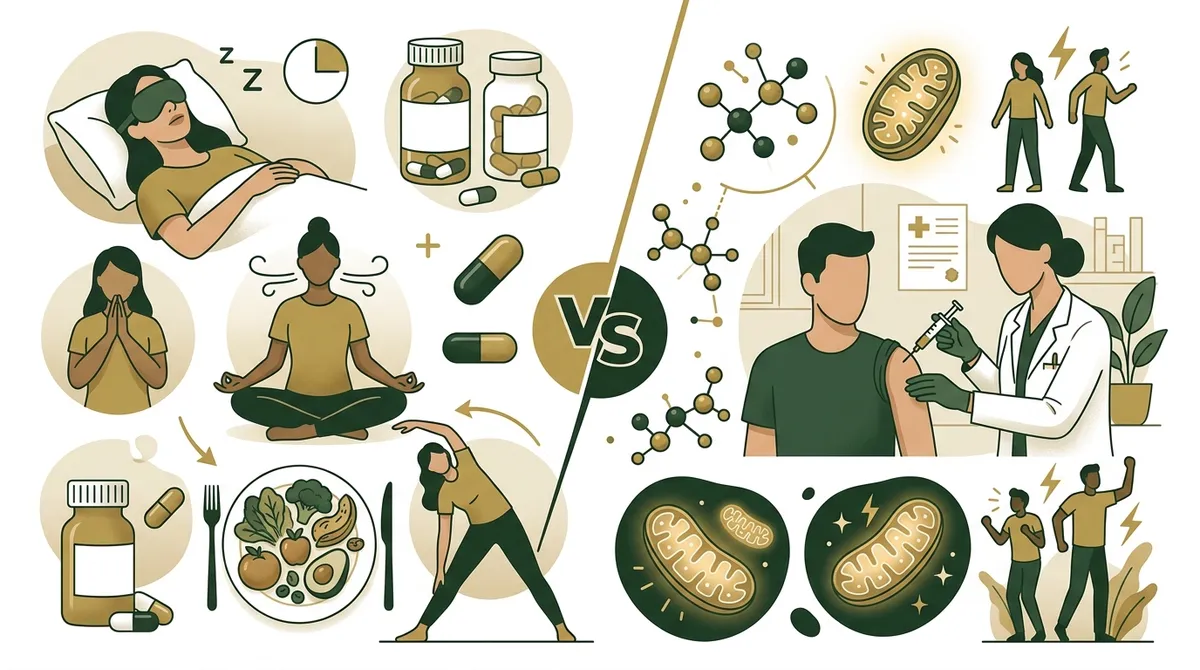
What Counts as Fatigue Treatment Today
Traditional fatigue treatment usually starts with your primary care doctor. They check for common, fixable causes before anything else. This is smart, because so many of these causes have simple solutions once identified.
Peptide therapy, on the other hand, is a newer and more investigational approach. It involves using specific peptides—small chains of amino acids—that may support energy, sleep, immune function, or cellular repair. According to what are peptides, these compounds act like messengers in the body, and some are being studied for their role in metabolism and recovery.
Common Causes of Fatigue Doctors Check First
- Sleep disorders like insomnia or sleep apnea
- Anemia or low iron levels
- Thyroid problems, especially an underactive thyroid
- Side effects from medications you already take
- Depression or anxiety
- Ongoing infections
- Diabetes or blood sugar swings
- Nutritional deficiencies, like low vitamin D or B12
- Heart or lung conditions that limit oxygen delivery
If any of these show up in your blood work, treating them directly often solves the fatigue. That is why a proper evaluation always comes before peptide therapy, not instead of it.

Traditional Fatigue Treatment: The Tried-and-True Path
Traditional treatment for fatigue has decades of research behind it. It is not flashy, but it works for many people when the root cause is identified correctly.
Steps in a Typical Traditional Approach
- Get a full medical history and physical exam
- Complete blood work to check thyroid, iron, blood sugar, and vitamin levels
- Screen for sleep disorders, often with a sleep study
- Address any mental health concerns like depression or chronic stress
- Adjust medications that might be causing tiredness
- Start targeted treatment for the identified cause
- Follow up regularly to track improvement
This method is thorough and grounded in solid evidence. The downside? It can feel slow, and sometimes tests come back “normal” even though you still feel exhausted. That is often when people start looking into newer options like peptide therapy.
Peptide Therapy for Fatigue: What the Research Actually Shows
Let’s be real with each other here. Peptide therapy for fatigue is exciting, but it is still mostly investigational. No peptide is FDA-approved specifically to treat chronic fatigue syndrome, ME/CFS, or general low energy. That is an important fact to keep front and center.
That said, there are peptides being studied for mechanisms that could theoretically support energy. Here is a quick breakdown of the most talked-about options.
| Peptide | Proposed Mechanism | Strength of Fatigue-Specific Evidence |
|---|---|---|
| CJC-1295 / Ipamorelin | Boosts growth hormone and IGF-1 signaling | Evidence supports hormone changes, not direct fatigue improvement |
| MOTS-c | Supports mitochondrial energy production | Limited human evidence; no validated fatigue dose |
| BPC-157 | Tissue repair and inflammation control | Mostly animal and lab research, no direct fatigue trials |
| Thymosin Alpha-1 | Immune modulation | Indirect and observational evidence only |
| SS-31 / Elamipretide | Targets mitochondrial function | Studied in other diseases, not general fatigue |
| VIP, Semax, Selank | Neuroprotection, sleep, stress regulation | Preclinical or small studies, not fatigue-specific trials |
According to the National Library of Medicine, dedicated randomized controlled trials of peptide therapy in ME/CFS are largely absent. Most of what we know comes from studies done for other conditions, plus lab research and patient anecdotes. That does not mean these peptides are useless, but it does mean marketing claims should be taken with a healthy dose of skepticism.
What the 2024 Collagen Peptide Study Actually Found
You may have heard about a promising peptide fatigue study. Here is the real story: a 2024 randomized, placebo-controlled trial gave healthy, easily fatigued adults 10 grams of dietary collagen peptides daily for eight weeks. The collagen group had lower fatigue-inertia scores (47.0 versus 51.5) and higher vigor-activity scores (53.9 versus 47.3) compared to placebo.
This is a nutritional collagen supplement study, not evidence for injectable peptide therapy or a cure for chronic fatigue syndrome. It is a good example of why we always separate the type of peptide, the population studied, and the actual outcome measured before drawing conclusions.
Peptides vs. Traditional Care: A Side-by-Side Look
| Factor | Traditional Fatigue Treatment | Peptide Therapy |
|---|---|---|
| Regulatory status | FDA-approved treatments for identified causes | Mostly investigational or off-label for fatigue |
| Evidence base | Decades of clinical trials | Mechanistic, preclinical, or borrowed from other conditions |
| Personalization | Based on labs and diagnosis | Can be tailored based on labs and goals |
| Delivery | Pills, in-office visits | Often at-home injections via telehealth |
| Best used for | Diagnosed medical conditions causing fatigue | Supporting energy, recovery, and wellness goals alongside medical care |
Notice that these two approaches are not really rivals. They work best as teammates. Traditional care finds and fixes the root problem. Peptide therapy, when used thoughtfully under medical supervision, may support your broader wellness goals once serious causes are ruled out.
Who Might Consider Peptide Therapy for Energy Support
Peptide therapy tends to appeal to a few specific types of people, and maybe you see yourself in one of these groups.
- Health optimizers who already eat well and exercise but want extra support for recovery and energy
- Aging adults noticing a natural dip in vitality and looking for personalized options
- Biohackers who track their labs closely and want data-driven, customized protocols
- Busy professionals who need convenient, at-home care that fits a packed schedule
- Wellness seekers already investing in supplements and preventive health who want to go further
If any of these describe you, it is worth learning more about what peptides actually are and how they work before jumping in.
Why ME/CFS and Long COVID Fatigue Need Extra Care
If your fatigue is tied to myalgic encephalomyelitis, chronic fatigue syndrome, or long COVID, please slow down here. These conditions often involve something called post-exertional malaise, where pushing too hard actually makes symptoms worse. Fixed exercise programs can backfire badly.
Fundamentals That Should Never Be Skipped
- Careful activity pacing, not one-size-fits-all exercise plans
- Treating pain and sleep problems directly
- Nutritional support based on actual deficiencies
- Checking for coexisting conditions like autoimmune issues
- Working with a provider who understands post-exertional malaise
Peptide therapy should support these fundamentals, never replace them. Anyone offering peptides as a stand-alone cure for ME/CFS is skipping important safety steps.
Safety and Quality: What to Watch For
Not all peptide products are created equal, and this matters a lot. Many wellness peptides are sold through compounded or nontraditional channels. That can mean inconsistent manufacturing, unclear dosing, and missing long-term safety data.
- Injection or nasal-site reactions
- Allergic responses
- Contamination risk from poorly regulated sources
- Changes in blood sugar or blood pressure
- Unpredictable hormone signaling effects
- Unknown long-term safety outcomes
This is exactly why working with a licensed medical provider matters so much. A trustworthy peptide program should always start with real blood work and ongoing monitoring, similar to how you’d approach starting peptide therapy safely.
How a Personalized Telehealth Plan Actually Works
At Allura Longevity, the process is designed to be simple, safe, and genuinely personalized. It starts with a virtual consultation, followed by complete blood work through LabCorp. From there, licensed providers build a customized six-month plan just for you.
What a Typical Journey Looks Like
- Book a $50 virtual consultation to discuss your energy concerns and goals
- Complete blood work to check hormones, thyroid, and nutrient levels
- Review results with a licensed provider, led by board-certified Family Nurse Practitioner Ashley
- Receive a customized six-month treatment plan
- Get peptides delivered directly to your home
- Continue ongoing monitoring and dose adjustments as needed
This kind of medically supervised approach is a world away from ordering unregulated peptides online. If you want to compare your options further, this guide on local clinic versus telehealth peptide therapy breaks down the pros and cons nicely.
Beyond Fatigue: Related Goals Peptide Plans Can Support
Many people exploring fatigue treatment also have overlapping goals. Peptide plans are often customized to address several concerns at once.
- Better sleep quality and consistency
- Mental clarity and reduced brain fog
- Muscle recovery after workouts or injury
- Support for healthy metabolism and weight management
- Skin rejuvenation and visible signs of aging
- Immune system support
If mental fog is part of your fatigue story, you might find value in reading about why brain fog can lift with peptide therapy. For those recovering from an injury alongside low energy, BPC-157 facts worth knowing is a helpful next stop.
Making the Right Choice for Your Body
So, which wins: peptides or traditional fatigue treatment? Honestly, the best answer is usually both, applied in the right order. Traditional evaluation identifies what is actually wrong. Peptide therapy, when appropriate and medically supervised, can then support your broader energy and vitality goals.
The most important thing is working with providers who take your labs seriously and design a plan around your actual biology, not a generic template. That is the difference between chasing a trend and building real, lasting results. Learning how to pick peptides for energy that actually work can help you ask smarter questions during your consultation.
Ready to Take the Next Step?
You deserve to feel like yourself again, and you do not have to figure this out alone. Allura Longevity offers personalized, medically supervised peptide therapy through convenient telehealth, with treatment plans built around your own blood work and goals. Licensed providers guide you every step of the way, and spots are limited each month for new clients. If you are ready to explore whether a customized plan is right for you, request a consultation today and take the first step toward feeling more like yourself again.
FAQs
Q: Can peptide therapy actually treat chronic fatigue syndrome or ME/CFS?
A: Right now, no peptide is FDA-approved to treat ME/CFS or its core symptoms. Peptide use for this condition is considered investigational, so it should always be paired with proper diagnosis and pacing strategies, not used as a stand-alone fix.
Q: Are any peptides FDA-approved specifically for fatigue or low energy?
A: Not currently. Some peptides are FDA-approved for other specific conditions, but that approval does not extend to treating general tiredness or chronic fatigue. It’s an important distinction to keep in mind when you see bold marketing claims.
Q: Can CJC-1295 or ipamorelin really improve my energy and sleep?
A: These peptides have solid evidence for raising growth hormone and IGF-1 levels, which is genuinely interesting. However, there is not strong clinical proof yet that this translates into reliably better energy or sleep for everyone.
Q: What tests should I get done before starting peptide therapy for fatigue?
A: A good starting point includes thyroid panels, iron and vitamin levels, blood sugar, and a general metabolic workup. This helps rule out treatable causes first, so any peptide plan you build afterward is based on real data, not guesswork.
Q: How does peptide therapy compare with traditional fatigue care like sleep treatment or pacing?
A: Traditional care tackles the root cause, while peptide therapy may offer extra support for energy and recovery once serious issues are ruled out. They work best together, not as competing options, so think of peptides as a complement to solid fundamentals.





