

Key Takeaways
-
Get comprehensive blood work to identify root causes like thyroid disease, anemia, blood sugar issues, or hormonal imbalances before trying any supplement or peptide for brain fog.
-
Prioritize sleep optimization (7-8 hours consistently) and stress management, as poor sleep is one of the biggest and most fixable causes of cognitive fog that no peptide will fully resolve.
-
No peptide is FDA-approved specifically for brain fog in healthy adults; Semax and BPC-157 lack strong clinical evidence for general cognitive improvement despite marketing claims.
-
Correct nutritional deficiencies (B12, iron, vitamin D) and dehydration through tested protocols rather than trial-and-error supplementing, as these are common overlooked causes of brain fog.
-
Only consider peptide therapy through licensed medical providers using regulated pharmacy channels, as compounded or unregulated peptides carry real risks including contamination, incorrect dosing, and unpredictable reactions.
-
Implement evidence-based daily habits like single-tasking, regular movement, consistent sleep schedules, and hydration as a foundation for mental clarity before exploring any experimental treatments.
Ever walk into a room and forget why you’re there? Or stare at your screen, unable to find the right word? You’re not alone. Brain fog is one of the most common complaints we hear from clients who are otherwise healthy, motivated, and doing everything “right.” The good news is that a real brain fog solution starts with understanding what’s actually going on in your body, not just masking symptoms.
At Allura Longevity, we work with busy professionals, biohackers, and midlife adults who want their sharp minds back. Some ask about peptides like Semax or BPC-157 after reading about them online. Others just want practical steps that actually work. This guide covers both: what the research really shows about peptide therapy for cognitive clarity, and the foundational steps every brain fog solution should include.

What Is Brain Fog, Really?
Brain fog isn’t an official medical diagnosis. It’s a symptom cluster that includes forgetfulness, trouble focusing, slow thinking, and difficulty finding words. It can also come with mental fatigue that makes even simple tasks feel exhausting.
According to the Cleveland Clinic, brain fog can interfere with work, relationships, and daily life. It’s frustrating precisely because it’s vague. You know something feels off, but it’s hard to describe to a doctor or even to yourself.
Common Symptoms People Describe
- Forgetting names, appointments, or where you put things
- Struggling to concentrate during meetings or reading
- Feeling mentally slow or “stuck in molasses”
- Losing your train of thought mid-sentence
- Needing extra time to process simple information
- Feeling mentally drained even after adequate rest
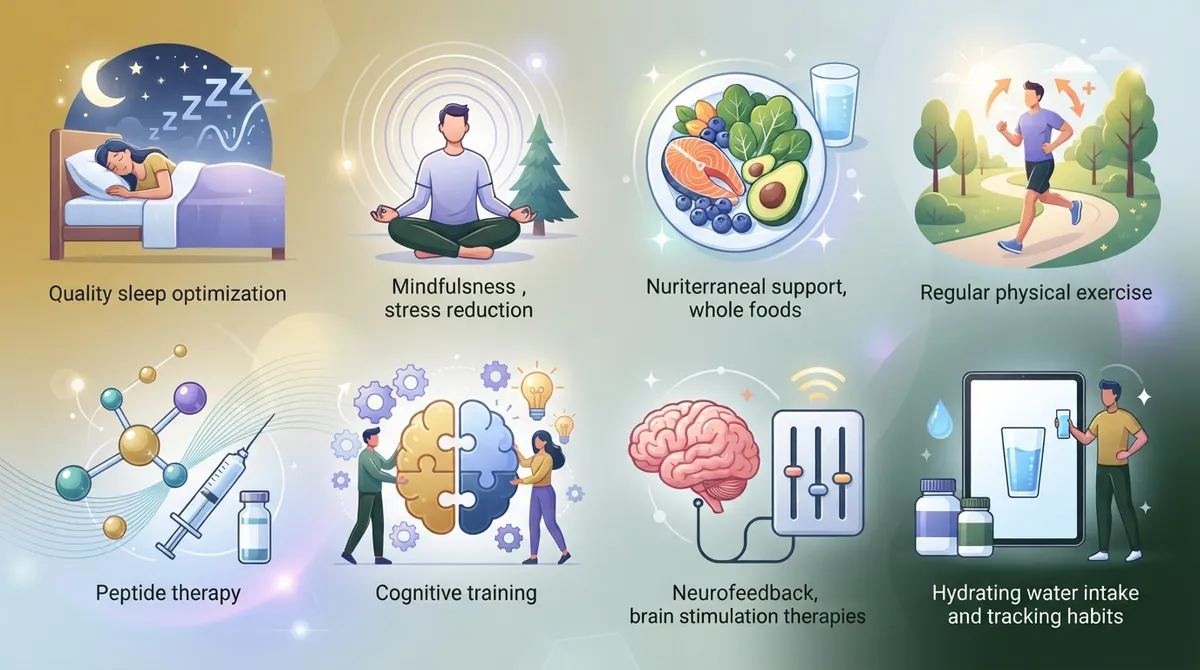
8 Brain Fog Solutions Worth Understanding in 2026
Below is a practical rundown, starting with the most important first step and moving through supportive strategies and peptide-related options.
1. Get a Real Medical Evaluation First
Before trying any supplement or peptide, get your root cause identified. Brain fog has many potential drivers, including thyroid disease, anemia, blood sugar issues, and hormonal shifts like menopause or pregnancy. A 2025 review of the medical literature notes that brain fog is especially persistent in people with long COVID, autoimmune conditions, fibromyalgia, and certain psychological conditions.
This is why Allura Longevity starts every client with blood work through LabCorp. Our licensed providers review your results and build a plan around your actual biology, not guesswork. If you’re curious about how personalized plans work, our guide on how to start peptide therapy safely and see real results walks through the process step by step.
2. Rule Out Sleep and Stress First
Poor sleep is one of the biggest and most fixable causes of brain fog. Chronic stress and untreated anxiety or depression also play a huge role. If you’re not sleeping seven to eight hours consistently, no peptide or supplement will fully fix your focus.
Simple, evidence-based sleep improvements include:
- Keeping a consistent sleep and wake schedule, even on weekends
- Limiting screens for at least 30 minutes before bed
- Avoiding caffeine after early afternoon
- Creating a cool, dark, quiet bedroom environment
- Managing stress with short daily walks or breathing exercises
3. Check Nutrition and Hydration
Nutritional deficiencies, especially in B12, iron, and vitamin D, are common and often overlooked causes of cognitive symptoms. Dehydration alone can cause noticeable slowdowns in thinking and mood. Blood work can catch these gaps quickly, which is why testing matters more than trial-and-error supplementing.
4. Understand What Peptides Can (and Can’t) Do
This is where things get interesting, and where honesty matters most. Some peptides are marketed heavily for “mental clarity” or “cognitive enhancement.” But it’s important to know that no peptide is FDA-approved specifically to treat brain fog or improve cognition in healthy adults. Any use for this purpose is considered investigational or off-label.
That doesn’t mean the research is worthless. It means expectations need to be realistic, and any peptide use should happen under medical supervision. If you want to understand the basics before going further, start with our overview of what peptides actually are.
5. Learn the Evidence Behind Semax
Semax has real human research behind it, mostly from Russian studies on stroke recovery and traumatic brain injury. These studies looked at neurological recovery, not everyday brain fog in healthy people. Large, high-quality Western trials haven’t confirmed benefits for general mental clarity.
This is a case where mechanism and marketing have outpaced solid clinical proof for the average person. According to the National Library of Medicine, more rigorous studies are needed before conclusions can be drawn for broader cognitive use.
6. Understand the Limits of BPC-157 for Cognition
BPC-157 has become popular in wellness circles for its proposed anti-inflammatory and tissue-repair properties. Laboratory and animal studies suggest possible neuroprotective mechanisms, but there are no established human randomized trials proving it treats brain fog or boosts memory. If you’re interested in what BPC-157 is actually studied for, our article on BPC-157 peptide facts covers proven uses versus unproven claims.
7. Be Cautious With Other “Wellness” Peptides
Compounds like Selank, MOTS-c, and various growth-hormone-releasing peptides get marketed for focus and energy. Mechanistic theories and glowing testimonials are not the same as clinical proof. Independent safety organizations have raised real concerns here.
ECRI and the Institute for Safe Medication Practices have warned that people using wellness peptides often have no reliable information about whether these products are safe or effective. That’s a serious red flag worth taking seriously before spending your money or risking your health.
8. Know the Real Risks of Compounded Peptides
Compounded or unapproved peptide products can carry real risks. These include incorrect dosing, contamination, impurities, and unpredictable immune reactions. The FDA has specifically flagged concerns about certain bulk peptide substances used in compounding, citing insufficient human safety data for several of them.
This is exactly why sourcing matters so much. Research-only vials sold online, with no medical oversight, are a major safety concern. Peptide therapy should only happen through licensed providers and regulated pharmacy channels. For a deeper look at this issue, see our breakdown of FDA-approved versus compounded peptides.
Comparing Common Brain Fog Approaches
| Approach | Evidence Level | Best For | Key Consideration |
|---|---|---|---|
| Sleep optimization | Strong | Almost everyone | Foundation for all other strategies |
| Blood work and lab testing | Strong | Identifying root causes | Should happen before any treatment plan |
| Nutritional correction | Strong | Deficiency-related fog | Requires testing, not guessing |
| Semax | Limited (mostly neuro-injury studies) | Investigational use only | Not proven for general brain fog |
| BPC-157 | Preliminary, mostly animal studies | Investigational use only | No human trials for cognition |
| Unregulated wellness peptides | Very limited | Not recommended without supervision | Safety and purity concerns |
Steps to Take Before Trying Any Peptide for Cognitive Symptoms
- Schedule a medical consultation to review your symptoms and history
- Request comprehensive blood work to check thyroid, glucose, and nutrient levels
- Discuss your sleep quality, stress levels, and mental health openly
- Review current medications for side effects that mimic brain fog
- Ask about evidence-based lifestyle changes before adding any peptide
- If considering peptide therapy, confirm it comes from a licensed provider
- Set realistic expectations based on actual research, not marketing claims
- Track your symptoms over time to measure real progress
Why Personalized Plans Matter More Than One-Size-Fits-All Peptides
Brain fog looks different for everyone. For a busy professional, it might be caffeine dependence and chronic sleep debt. For someone in perimenopause, it might be hormonal shifts. For a biohacker already tracking labs, it might be a subtle nutrient deficiency hiding in plain sight.
This is exactly why Allura Longevity builds every plan around your own blood work rather than a generic protocol. Our process starts with a $50 virtual consultation, followed by lab testing through LabCorp. From there, our licensed providers, led by board-certified Family Nurse Practitioner Ashley, create a six-month plan tailored to your goals. Everything ships straight to your home, with ongoing monitoring and adjustments along the way.
If your fog is tied to broader hormonal changes, it may help to read about how to know if you need hormone therapy, since hormone imbalances are a well-documented contributor to cognitive symptoms in both men and women.
Safer, Evidence-Based Habits That Support Mental Clarity
While you’re sorting out the medical side of things, these daily habits genuinely help most people feel sharper:
- Take short breaks every 60-90 minutes during focused work
- Use written reminders and calendars instead of relying on memory alone
- Move your body daily, even a 20-minute walk counts
- Stay hydrated throughout the day, not just when thirsty
- Limit alcohol, which disrupts sleep quality and next-day focus
- Practice single-tasking instead of juggling multiple screens at once
These strategies won’t replace medical treatment for an underlying condition. But they build a strong foundation that makes any additional treatment, including peptide therapy, more effective.
What a Responsible Peptide Consultation Should Look Like
If you decide to explore peptide therapy after ruling out other causes, the process should feel thorough, not rushed. A responsible provider will:
- Review your complete medical history and current medications
- Order or review recent blood work before recommending anything
- Explain which peptides have real human evidence versus theoretical benefits
- Be upfront about the fact that no peptide is FDA-approved for brain fog specifically
- Source products through legitimate, regulated pharmacy channels
- Schedule follow-ups to monitor your progress and adjust your plan
This kind of careful, transparent approach is the difference between a real medical partnership and a risky shortcut. To understand the full onboarding process, check out our guide on how to get prescription peptides safely.
Bringing It All Together
A true brain fog solution isn’t a single pill or injection. It’s a process: rule out medical causes, fix the fixable lifestyle factors, and only then consider targeted, medically supervised options. Peptides like Semax and BPC-157 have interesting research behind them, but that research doesn’t yet support them as proven brain fog treatments for the average healthy adult.
What does help is working with a provider who takes your symptoms seriously, orders real lab work, and builds a plan around your actual biology. That’s the approach we take at Allura Longevity, and it’s why so many of our clients tell us they finally feel like themselves again. You can also learn more about general wellness approaches from trusted sources like what are peptides before starting any new treatment.
Ready to get real answers instead of guesswork? Request a consultation today and let our licensed providers build a personalized plan based on your own blood work. Spots are limited each month, so don’t wait to start feeling clear-headed again.
FAQs
Q: Can peptide therapy help with brain fog?
A: Peptide therapy may support overall wellness, but no peptide is FDA-approved specifically for brain fog. It’s best used as one part of a bigger plan that starts with proper testing and medical evaluation.
Q: Is Semax effective for brain fog and mental clarity?
A: Semax has some human research, but it mostly focuses on stroke recovery and brain injury, not everyday brain fog. We just don’t have strong studies yet showing it helps healthy adults feel sharper.
Q: Does BPC-157 improve memory or concentration?
A: There’s some promising lab and animal research on BPC-157, but no human trials confirm it helps with memory or focus. Think of it as an interesting area of study, not a proven fix yet.
Q: What tests should be done to find the cause of brain fog?
A: A good starting point includes thyroid function, blood sugar, vitamin levels, and a hormone panel. Your provider may also review your medications and sleep habits to spot other clues.
Q: What are safer alternatives to peptide therapy for improving focus?
A: Better sleep, regular movement, proper hydration, and stress management go a long way. Pair those habits with real lab testing, and you’ll often see clearer thinking without needing anything experimental.





