
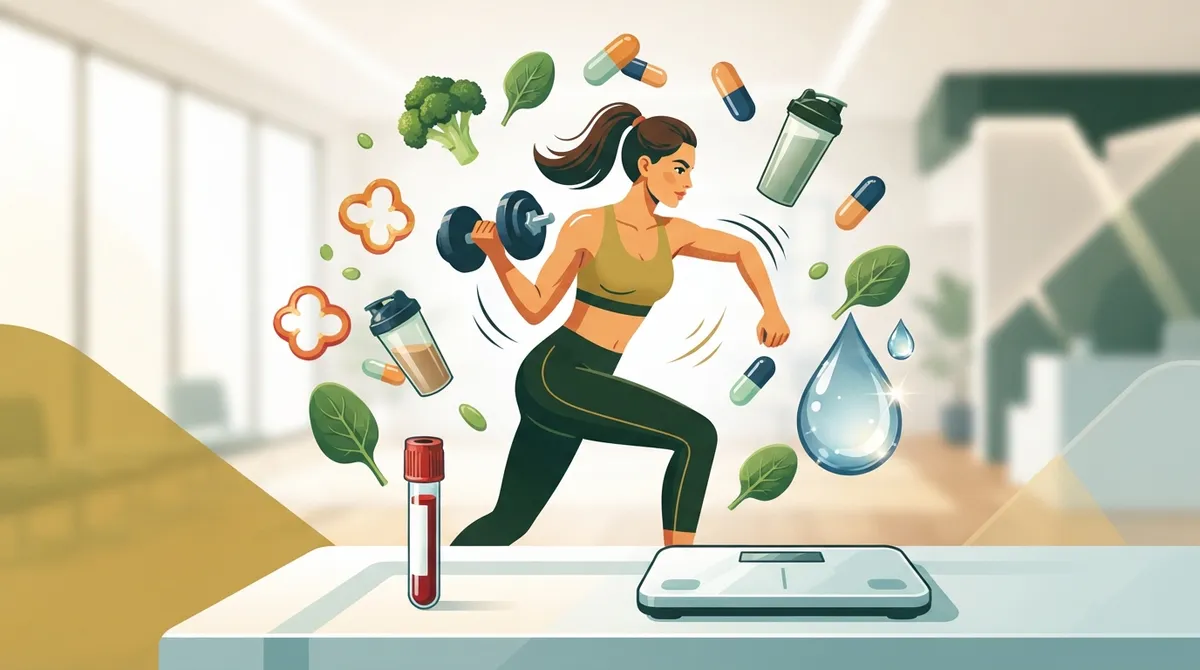
Key Takeaways
-
Prioritize protein intake above 0.8g per kilogram of body weight daily and combine it with 2-3 times weekly resistance training to preserve muscle mass, as up to 40% of weight lost during GLP-1 therapy can come from muscle.
-
Monitor key micronutrients (B12, vitamin D, iron, calcium, potassium) through regular blood work with personalized supplementation, since reduced food intake on GLP-1 medications makes nutrient deficiencies more likely.
-
Manage fiber and hydration carefully by choosing gentle sources (cooked vegetables, soft grains) and maintaining consistent fluid intake with electrolytes, as appetite suppression increases dehydration and nausea risks.
-
Avoid unapproved or compounded peptide products sold online due to contamination, unclear dosing, and lack of safety data; only use FDA-approved peptide medicines like regulated GLP-1 drugs with clinical evidence.
-
Work with licensed providers for personalized nutrient therapy plans based on blood work and individual factors like age, activity level, and kidney function rather than following generic supplement trends.
-
Debunk myths about nutrient therapy: vitamin injections aren't universally needed, more peptides don't mean faster results, and medication cannot replace real food as foundational nutrition support.
If you’re using a GLP-1 peptide like semaglutide or tirzepatide, you already know it can change your appetite fast. One day you’re eating normally, and the next, you barely want breakfast. That’s where nutrient therapy comes in. It’s not about injecting extra vitamins or chasing trendy “peptide cocktails.” It’s about giving your body the real fuel it needs while your peptide therapy does its job.
At Allura Longevity, we believe good nutrition and smart peptide therapy go hand in hand. Whether you’re a busy professional squeezing in telehealth visits between meetings, or a biohacker who tracks every lab result, this guide will help you understand what nutrient therapy actually means in 2026. We’ll break down the science, bust some myths, and give you practical steps you can start today.

1. Understand What Nutrient Therapy Really Means
In the peptide therapy world, nutrient therapy is not about injecting amino acids or mystery vitamin blends. It’s about nutrition support that helps your body handle the changes that come with peptide medicines, especially GLP-1 receptor agonists. This means paying close attention to protein, calories, fiber, fluids, and key vitamins and minerals.
Peptides themselves are short chains of amino acids that act like messengers in your body. According to what are peptides, these tiny molecules can influence everything from blood sugar to muscle repair. But not every peptide sold online is FDA-approved or backed by solid research. That’s an important distinction we’ll cover more below.

2. Know Why Nutrition Matters More During Peptide Therapy
GLP-1 medications slow down digestion and reduce hunger signals. That’s great for weight loss, but it also means you might eat less overall. Less food can mean fewer nutrients, unless you plan ahead.
Common side effects that can affect nutrition include:
- Nausea or upset stomach
- Early fullness after just a few bites
- Constipation or diarrhea
- Reduced interest in food
- Fatigue from lower calorie intake
A 2025 review found that up to 40% of total weight lost during GLP-1 therapy in some studies came from fat-free mass, which includes muscle. This doesn’t mean 40% muscle loss exactly, but it’s a strong reminder that nutrition support matters. Learn more about how these medicines work in our guide on GLP-1 peptide therapy.
3. Prioritize Protein Intake
Protein is the star player when it comes to preserving muscle during weight loss. The general adult reference is 0.8 grams per kilogram of body weight per day. But if you’re losing weight quickly with a peptide medication, you may need more.
Here are three simple steps to boost your protein intake:
- Add a protein source to every meal, like eggs, chicken, fish, tofu, or Greek yogurt.
- Spread protein evenly across the day instead of loading it all at dinner.
- Pair protein with light resistance training two to three times a week.
Research summarized in the National Library of Medicine supports combining protein intake with strength training to protect lean tissue during medication-assisted weight loss. If you’re curious about how peptides fit into muscle preservation, check out our article on peptides for muscle gain.
4. Stay Ahead of Hydration Needs
Dehydration sneaks up fast when your appetite drops. Many people on GLP-1 therapy forget to drink enough water because they’re simply not as thirsty.
Try these hydration habits:
- Keep a water bottle within sight all day
- Add electrolytes if you’re having stomach upset
- Sip fluids slowly instead of chugging large amounts
- Watch for signs like dark urine or headaches
5. Manage Fiber Carefully
Fiber helps with digestion, but too much too fast can make nausea worse. The key is balance.
Good fiber sources that are gentler on the stomach include:
- Cooked vegetables instead of raw
- Oatmeal or soft whole grains
- Bananas and cooked fruits
- Small servings of beans or lentils
If constipation becomes a bigger issue, our article on managing GLP-1 side effects offers more detailed strategies.
6. Monitor Key Vitamins and Minerals
When you eat less, it’s easier to fall short on important nutrients. This is where working with a provider really pays off. Regular blood work can catch problems early, before they become bigger issues.
| Nutrient | Why It Matters | Common Food Sources |
|---|---|---|
| Vitamin B12 | Supports energy and nerve health | Eggs, fish, fortified cereals |
| Vitamin D | Supports bone and immune health | Sunlight, fatty fish, fortified milk |
| Iron | Prevents fatigue and low energy | Red meat, spinach, beans |
| Calcium | Protects bone density | Dairy, leafy greens, tofu |
| Potassium | Balances fluids and muscle function | Bananas, potatoes, avocado |
A 2025 nutrition guidance review recommends assessing macronutrients, micronutrients, fluids, and gastrointestinal symptoms together, ideally with input from both a clinician and a dietitian. This kind of personalized care is exactly what we focus on at Allura Longevity.
7. Understand the Difference Between Approved Medicines and Gray-Market Products
This is one of the most important things to know. FDA-approved peptide medicines, like certain GLP-1 drugs, go through strict testing for safety, dosing, and manufacturing quality. The FDA even published specific guidance in 2023 on how peptide drugs should be evaluated for safety and quality.
Unapproved or compounded peptide blends sold online are a different story. Common concerns include:
- Contamination or poor sterility
- Unclear or inconsistent dosing
- Counterfeit ingredients
- Unknown interactions with other medications
- Little to no long-term safety data
Products like BPC-157, CJC-1295, ipamorelin, and MOTS-c are popular in wellness circles, but they still lack the large human trials needed to prove routine safety and effectiveness for everyone. To learn how to tell the difference, read our guide on FDA-approved vs. compounded peptides.
8. Avoid Common Nutrient Therapy Myths
There’s a lot of noise online about vitamin injections and peptide “stacks” that promise instant energy or fat loss. Let’s clear up a few myths.
- Myth: Everyone needs vitamin injections. Supplements are most useful when there’s a proven deficiency, not as a blanket solution.
- Myth: More peptides equal faster results. Combining unproven compounds can increase risk without adding benefit.
- Myth: Nutrient therapy can reverse aging on its own. Good nutrition supports your body, but it isn’t a magic fix.
- Myth: Food doesn’t matter if you’re on medication. Peptide medicines work best alongside real nutritional support, not instead of it.
A 2025 review looking at peptides in nutrition found only eight randomized clinical trials that met strict quality standards for metabolic, behavioral, and muscle health outcomes. That’s still an early evidence base. It shouldn’t be mistaken for proof that every peptide sold at a wellness clinic works as advertised.
9. Build a Personalized Nutrient Therapy Plan With Expert Support
The best nutrient therapy plans are never one-size-fits-all. Your age, activity level, kidney function, and lab results all play a role in what you actually need. This is exactly why working with licensed providers matters so much.
At Allura Longevity, our process starts with a simple virtual consultation, followed by blood work through LabCorp. From there, our team, led by board-certified Family Nurse Practitioner Ashley, builds a custom six-month plan just for you. This includes ongoing monitoring, so your plan can adjust as your body changes.
Steps to get started with a personalized plan:
- Complete an initial consultation to discuss your health goals.
- Get blood work done to check key nutrient and hormone levels.
- Receive a tailored peptide and nutrition plan based on your results.
- Start treatment with peptides delivered right to your door.
- Check in regularly with your provider to fine-tune your plan.
If you want to see how this works for weight loss specifically, take a look at our article on losing weight with peptide therapy. For those exploring options tailored to their gender, we also offer dedicated resources on peptides for women and peptides for men.
Comparing Nutrient Therapy Approaches
| Approach | What It Involves | Safety Profile |
|---|---|---|
| Dietitian-Guided Nutrition Support | Personalized protein, fiber, and micronutrient planning | High, evidence-based |
| FDA-Approved Peptide Medicines | Clinically tested drugs like GLP-1 receptor agonists | High, regulated manufacturing |
| Compounded or Gray-Market Peptides | Unapproved blends sold online | Uncertain, limited oversight |
Why Choose Telehealth for Nutrient and Peptide Therapy
Busy schedules make in-person visits hard to fit in. Telehealth solves that problem by bringing expert care straight to your phone or laptop. You get the same quality guidance, without the waiting room.
Benefits of telehealth peptide therapy include:
- Convenient virtual consultations that fit your schedule
- At-home delivery of your personalized peptide plan
- Ongoing support from licensed medical providers
- Lab work coordination without extra hassle
- Privacy and comfort of care from home
To understand how telehealth compares to traditional clinics, check out Local Clinic vs. Telehealth: Best Peptide Therapy Near You. And if you’re new to this whole process, our guide on starting peptide therapy safely walks you through every step.
Ready to Build Your Personalized Nutrient Therapy Plan?
Nutrient therapy isn’t about chasing quick fixes or mystery injections. It’s about giving your body real support while you use peptide medicines the safe, smart way. With the right guidance, you can protect your muscle, energy, and long-term health while reaching your goals.
Allura Longevity makes this process simple, personal, and convenient. Our licensed providers create custom plans based on your actual blood work, not guesswork. Spots fill up quickly each month, so don’t wait too long to get started. Request a consultation today and let our team help you build a nutrient and peptide plan built just for you. You can also reach us directly at (813) 510-6277 to learn more.
FAQs
Q: What does nutrient therapy mean when used with peptide therapy?
A: It means giving your body proper nutrition support, like protein, fluids, and key vitamins, while you use peptide medicines such as GLP-1 drugs. It’s not about injecting random vitamin blends. Think of it as backup support that helps your peptide treatment work its best.
Q: What should I eat while taking semaglutide or tirzepatide?
A: Focus on protein-rich foods, gentle fiber sources, and plenty of fluids. Since appetite drops fast, smaller, nutrient-dense meals work better than trying to eat large portions. Your provider can help tailor this to your specific needs.
Q: How much protein is recommended during GLP-1 weight-loss therapy?
A: The general guideline is 0.8 grams per kilogram of body weight daily, but many people benefit from more during weight loss. It really depends on your age, activity level, and kidney health, so personalized guidance matters here.
Q: Can nutrient therapy prevent muscle loss from GLP-1 medications?
A: It can definitely help. Combining adequate protein intake with resistance training is one of the best strategies we know of right now. Research is still evolving, but this approach shows real promise for protecting lean muscle.
Q: Are injectable amino acids, vitamins, or peptide blends safe?
A: Many of these products aren’t FDA-approved and can carry real risks, like contamination or unclear dosing. We always recommend sticking with regulated, provider-guided treatments instead of gray-market options. Your safety is worth more than a quick trend.





