Key Takeaways
-
Low testosterone diagnosis requires two separate early-morning blood tests (7-10 a.m.) showing levels below 300 ng/dL combined with matching symptoms—not symptoms alone or a single test.
-
Testosterone replacement therapy has the strongest evidence for improving sexual symptoms like libido and erectile dysfunction, but improvements in energy and mood are less predictable and vary significantly between individuals.
-
Testosterone therapy can suppress sperm production by disrupting brain-to-testes signaling, so men planning to conceive should discuss fertility-preserving alternatives like certain peptides before starting treatment.
-
Common overlooked low testosterone symptoms include constant fatigue, brain fog, loss of muscle mass, increased belly fat, and low bone density—not just sexual dysfunction.
-
Peptide therapy is not equivalent to testosterone replacement and works by stimulating the body's own hormone signaling rather than directly replacing testosterone, making it useful for specific situations like fertility concerns.
-
Quality testosterone treatment requires ongoing monitoring: labs at 3-6 months, hematocrit checks, and annual reassessment—not a 'set it and forget it' approach.
Feeling tired all the time? Noticing your motivation and drive just aren’t what they used to be? You’re not imagining it, and you’re definitely not alone. Millions of men experience these changes every year, and for many, the root cause traces back to low testosterone. The tricky part is that these symptoms overlap with so many other health issues, which makes self-diagnosis a real gamble. This guide breaks down exactly what to look for, how doctors actually confirm low testosterone, and where peptide therapy fits into the bigger picture of men’s hormone health.
At Allura Longevity, we talk to men every week who suspect their hormones are off but aren’t sure what to do next. Our goal here is simple: give you clear, honest information so you can have a smarter conversation with your provider, whether that’s us or someone else.

What Low Testosterone Actually Means
Low testosterone, also called male hypogonadism, isn’t just about feeling sluggish. It’s a medical condition where your body doesn’t produce enough of this key hormone. But here’s something important: doctors don’t diagnose it from symptoms alone, and they don’t diagnose it from a single blood test either.
According to the Endocrine Society and the American Urological Association (AUA), low testosterone is only confirmed when specific symptoms show up alongside consistently low blood levels. That combination matters. Plenty of things can cause fatigue or low mood, so testosterone has to be checked properly before jumping to conclusions.
Sexual Symptoms to Watch For
These are often the most noticeable signs, and they tend to prompt men to seek help sooner rather than later.
- Reduced interest in sex or lower libido
- Fewer spontaneous or morning erections
- Difficulty getting or keeping an erection
- Trouble reaching orgasm
- Lower sperm count or reduced fertility
Nonsexual Symptoms That Often Get Overlooked
Not every low testosterone symptom involves sex drive. Many men notice changes in how their body and mind function day to day.
- Constant fatigue or low energy
- Depressed or irritable mood
- Trouble focusing or brain fog
- Loss of muscle mass or strength
- Increased body fat, especially around the belly
- Low bone density over time
- Anemia in some cases
- Hot flashes in more severe situations
If several of these sound familiar, it’s worth getting checked. But remember, none of these symptoms alone proves you have low testosterone. That’s why proper testing matters so much.
How Doctors Confirm Low Testosterone
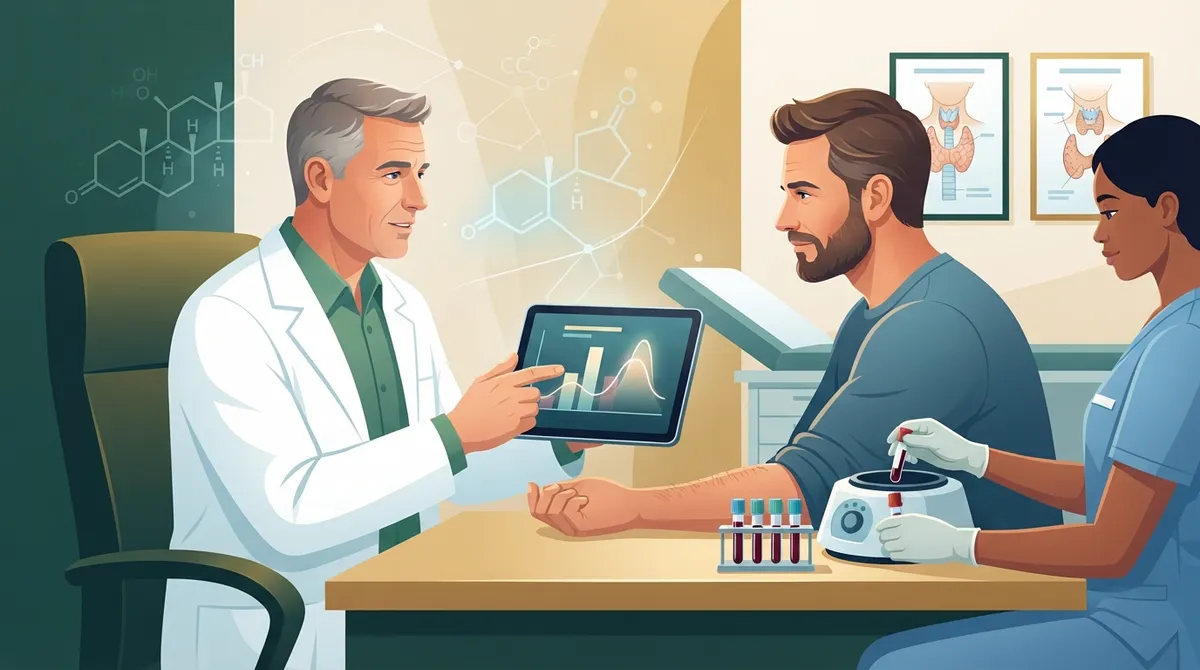
This is where a lot of men get confused. Testosterone levels naturally shift throughout the day, so testing has to follow a specific process to be accurate.
Step-by-Step: The Diagnostic Process
- Schedule an early-morning blood draw, ideally between 7 a.m. and 10 a.m., when testosterone is highest
- Repeat the test on a separate day to confirm the result, since one test isn’t enough
- Check free testosterone if your total testosterone is borderline or if sex hormone-binding globulin levels seem off
- Review your symptoms alongside the lab results, not in isolation
- Investigate the underlying cause, whether it’s related to the testes, pituitary gland, or lifestyle factors
The Endocrine Society specifically recommends two separate early-morning total testosterone tests using an accurate lab method before making a diagnosis. The AUA points to a level below 300 ng/dL as a reasonable cutoff, but only when combined with matching symptoms.
What Counts as Low?
| Measurement | General Reference | Notes |
|---|---|---|
| Total Testosterone | Below 300 ng/dL | AUA’s reasonable diagnostic cutoff |
| Testing Timing | 7 a.m. to 10 a.m. | Levels are highest in the morning |
| Number of Tests | Two separate tests | Required before diagnosis is confirmed |
| Free Testosterone | Checked when needed | Useful if total levels are borderline |
What Causes Low Testosterone in the First Place?
Low testosterone doesn’t come from nowhere. Doctors typically separate causes into two categories: primary and secondary hypogonadism.
- Primary hypogonadism starts in the testes themselves
- Secondary hypogonadism involves the hypothalamus or pituitary gland, the parts of your brain that signal hormone production
- Obesity and excess body fat can lower testosterone production
- Sleep disorders, especially untreated sleep apnea, play a big role
- Chronic illness or long-term medication use, including opioids and corticosteroids, can suppress levels
- Natural aging contributes to gradual decline over time
This is why a good provider doesn’t just hand you a prescription. They dig into what’s actually driving the problem first. If you’re curious about the science behind hormone health, our article on what peptides are and how they work is a great starting point.
Where Peptide Therapy Fits In
Here’s something we want to be really clear about: peptide therapy is not the same thing as testosterone replacement therapy, and it’s not a magic swap-in for men who don’t want to go the traditional route. That said, certain prescription peptides can play a supportive role, especially for men who want to protect fertility or who have specific pituitary-related concerns.
Peptides work differently than testosterone itself. Some may help stimulate your body’s own hormone signaling pathways rather than directly replacing testosterone. This distinction matters a lot, especially for men who are planning to have children, since exogenous testosterone can suppress natural sperm production by shutting down signals from the brain to the testes.
Why This Distinction Matters for Fertility
If you’re hoping to conceive now or in the near future, starting testosterone therapy could work against that goal. It suppresses the hypothalamic-pituitary-gonadal axis, which can reduce sperm production significantly. Men in this situation should talk to a specialist about fertility-preserving alternatives before starting any hormone treatment.
This is exactly why working with an experienced team matters. At Allura Longevity, our licensed providers, led by board-certified Family Nurse Practitioner Ashley, review your full health picture, not just a symptom checklist, before recommending any path forward. You can learn more about our approach on our men’s peptide therapy page.
Testosterone Therapy vs. Peptide Therapy: A Quick Comparison
| Factor | Testosterone Replacement Therapy | Peptide Therapy (Selected Cases) |
|---|---|---|
| Best For | Confirmed hypogonadism with matching symptoms | Select reproductive or pituitary-related support |
| Fertility Impact | Can reduce sperm production | May be considered for fertility-preserving goals |
| Evidence Strength | Strong for sexual symptoms | Varies; some products are not well studied |
| Monitoring Needed | Yes, ongoing labs and check-ins | Yes, always under medical supervision |
It’s important to understand that not every peptide marketed online is safe or approved for treating low testosterone. Many products sold through wellness clinics or websites are compounded or simply haven’t been studied enough for this specific use. Treatment decisions should always come from a documented diagnosis, not guesswork. Our guide on how to start peptide therapy safely covers this in more depth.
What Actually Happens During Treatment
If testosterone replacement therapy is the right fit after proper testing, here’s generally what to expect.
- Your provider starts you at a dose designed to bring levels into the mid-normal range, not sky-high
- Testosterone levels get rechecked around 3 to 6 months after starting
- Hematocrit (a measure of red blood cells) is checked at baseline, then again at 3 to 6 months, then yearly
- Symptoms and side effects are reviewed at each follow-up
- Long-term reassessment continues annually to make sure the treatment is still working well
This kind of ongoing monitoring is a hallmark of quality care. It’s not a “set it and forget it” treatment. To learn more about how personalized six-month plans work, take a look at how to start testosterone cypionate therapy safely.
Setting Realistic Expectations
We want to be upfront with you here. Testosterone therapy has the strongest evidence for improving sexual symptoms, like libido and erectile function, in men who are properly diagnosed. But improvements in energy, mood, and overall vitality are less predictable and shouldn’t be promised as guaranteed results.
That doesn’t mean those benefits never happen. Many men do report feeling sharper and more energetic. It just means results vary from person to person, and honest providers will tell you that instead of overselling outcomes.
Who Should Be Cautious
- Men who are actively trying to conceive
- Men over 65 without clear symptoms alongside low levels
- Anyone considering unapproved or compounded peptide products without medical guidance
- Men with untreated sleep apnea or significant weight-related hormone issues
Working through these factors with a knowledgeable provider makes a real difference. For more on how peptides and testosterone therapy can work together in a complementary way, check out why testosterone injection therapy gets paired with peptides.
Why Telehealth Makes This Easier
Let’s be honest: juggling work, family, and life doesn’t leave much room for multiple in-person doctor visits. That’s exactly the problem telehealth solves. With a service like Allura Longevity, you start with an affordable $50 virtual consultation, complete your blood work through LabCorp near home, and receive a customized six-month treatment plan shipped right to your door.
No waiting rooms. No juggling schedules around a clinic’s hours. Just convenient, medically supervised care that fits into a busy professional’s life. We’re licensed to serve clients in Florida, Georgia, Texas, Connecticut, Indiana, Maryland, New York, and California, with ongoing monitoring from our licensed provider team throughout your treatment.
Simple Steps to Take Right Now
If you suspect low testosterone might be affecting you, here’s a clear path forward.
- Track your symptoms honestly for a few weeks, noting energy, mood, and sexual function changes
- Schedule a consultation with a licensed provider who understands hormone health
- Complete proper morning blood testing, ideally twice, before assuming anything
- Discuss your fertility goals openly if that’s relevant to you
- Ask questions about monitoring, follow-up labs, and what results are realistic
Being proactive here really pays off. The sooner you get accurate answers, the sooner you can start feeling like yourself again. Curious how peptides support energy levels more broadly? Our piece on picking peptides for energy that actually work is worth a read too.
The Bottom Line
Low testosterone symptoms in men are real, common, and worth taking seriously. But jumping straight to treatment without proper testing isn’t the answer. The combination of symptoms plus confirmed lab results is what leads to an accurate diagnosis and a treatment plan that actually works for your body.
Peptide therapy has an important, though more targeted, role in men’s hormone health, particularly for fertility-conscious men or those with specific pituitary concerns. It’s not a blanket replacement for testosterone therapy, and any responsible provider will tell you that upfront. According to what are peptides, these compounds work in highly specific ways within the body, which is exactly why personalized, medically guided care matters so much. Research published through the National Library of Medicine reinforces just how nuanced hormone treatment decisions really are.
Ready to get real answers instead of guesswork? Our team at Allura Longevity is here to walk you through blood work, symptoms, and a treatment plan built specifically for you. Spots are limited each month, so don’t wait to take the first step. Request a consultation today and let’s figure out what’s really going on with your hormones together.
FAQs
Q: What are the most common low testosterone symptoms in men?
A: The big ones are reduced sex drive, fewer morning erections, fatigue, low mood, and losing muscle while gaining body fat. Everyone’s experience is a little different, so don’t worry if your symptoms don’t match a checklist perfectly.
Q: Can low testosterone cause erectile dysfunction or low sex drive?
A: Yes, it absolutely can. Sexual symptoms are actually where testosterone therapy shows the strongest, most consistent results in men who are properly diagnosed. If this sounds familiar, it’s worth getting your levels checked.
Q: How is low testosterone diagnosed, and do I need two blood tests?
A: You really do need two separate early-morning blood tests to confirm it, that’s not just an extra hoop to jump through. Testosterone naturally fluctuates, so one test alone can’t tell the full story.
Q: Can peptide therapy increase testosterone naturally?
A: Some prescription peptides may support your body’s own hormone signaling in specific situations, but they aren’t a proven substitute for testosterone therapy. It really depends on your individual diagnosis, which is why working with a licensed provider matters so much.
Q: Can testosterone replacement therapy affect fertility and sperm count?
A: Yes, it can lower sperm production because it affects the natural signals between your brain and testes. If you’re planning to have kids soon, definitely bring this up with your provider before starting treatment.