

Key Takeaways
-
Human clinical evidence for BPC-157 is extremely limited—only three small pilot studies exist as of 2025, while most promising data comes from animal models that don't always translate to humans.
-
BPC-157 is not FDA-approved for any use and lacks standardized dosing, quality controls, and long-term safety data; unregulated products may contain inaccurate concentrations or contaminants.
-
BPC-157 is prohibited by the World Anti-Doping Agency (WADA) under the S0 non-approved substances category, making it illegal for competitive athletes regardless of injury type.
-
BPC-157 should never replace proper medical diagnosis, imaging, physical therapy, or surgery—real injury recovery depends on evidence-based rehabilitation and professional medical evaluation.
-
Animal studies show promising mechanisms for BPC-157 including improved blood vessel formation, better collagen organization, and reduced inflammation, but these effects remain unproven in human bodies.
-
Before considering BPC-157, work exclusively with licensed medical providers who conduct comprehensive blood work and create personalized treatment plans, rather than purchasing unregulated products online.
If you’ve ever pulled a hamstring, tweaked your shoulder, or dealt with a nagging tendon injury that just won’t quit, you know how frustrating recovery can be. It’s no wonder BPC-157 keeps popping up in wellness circles as a buzzy option for injury recovery. But before you get swept up in the hype, let’s slow down and look at what the science actually says. We promise to keep things friendly, honest, and easy to understand, because you deserve real answers, not just trendy claims.
At Allura Longevity, we believe in helping you make informed decisions about your health. Whether you’re a weekend warrior nursing a sore knee or a biohacker tracking every recovery metric, this guide breaks down what BPC-157 is, what the research shows, and what you need to know before considering it. Let’s dig in together.
1. What Exactly Is BPC-157?
BPC-157, short for body protection compound-157, is a synthetic peptide made of 15 amino acids. It’s based on a protective protein found naturally in human gastric juice. That’s why you’ll sometimes hear it called the “stable gastric pentadecapeptide.”
In peptide therapy settings, BPC-157 is often marketed for soft-tissue healing and musculoskeletal recovery. It sounds promising, but here’s the honest truth: it has no FDA-approved indication for treating injuries. If you want to understand more about how peptides work in general, check out this helpful breakdown of what peptides are and how they function in the body.
2. The Animal Research Looks Promising, But It’s Not the Whole Story
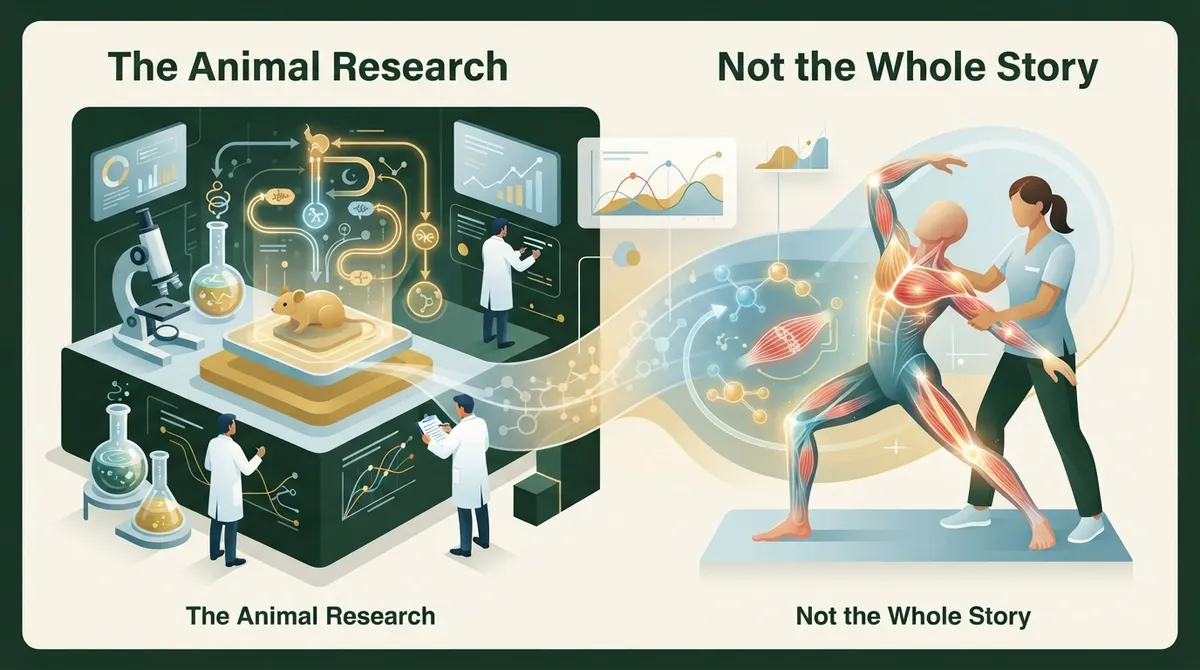
Here’s where things get interesting. Most of the exciting data on BPC-157 injury recovery comes from animal and lab studies, not humans. These studies have looked at tendon, ligament, muscle, bone, fracture, and combined osteotendinous injuries.
The results in rodents and other animal models are often impressive. Researchers have reported faster tissue repair, better collagen organization, improved blood vessel growth, and stronger functional outcomes compared to untreated animals. Sounds great, right? The catch is that animal biology doesn’t always translate directly to human results.
What the Preclinical Studies Suggest
- Faster healing timelines in tendon and ligament injury models
- Improved collagen fiber alignment during tissue repair
- Increased blood vessel formation near injury sites
- Better functional recovery scores in animal mobility tests
- Positive effects across multiple injury types, including bone fractures
A 2019 review found that most of the available BPC-157 injury literature relied heavily on small rodent models. The reviewers were clear that efficacy in humans simply hasn’t been confirmed yet. That’s an important distinction to keep in mind.
3. The Proposed Mechanisms Behind BPC-157
Scientists have some interesting theories about how BPC-157 might work. These are still largely hypotheses based on preclinical research, not proven human effects.
The leading ideas involve a few key biological pathways:
- Modulation of angiogenesis (new blood vessel formation) through VEGF-related pathways
- Effects on nitric-oxide signaling, which relates to blood flow
- Reduced inflammatory activity at injury sites
- Improved circulation to damaged tissue
- General cytoprotective, or cell-protecting, effects
These mechanisms sound scientific and legitimate, and they are worth studying further. But right now, they remain theories built mostly on animal data. We can’t say for certain these same effects happen the same way in the human body.
4. What Does Human Research Actually Show?
This is the part that matters most. Human evidence on BPC-157 is extremely limited, and it’s important to be upfront about that.
A 2025 narrative review found only three published human pilot studies involving BPC-157. That’s a tiny number when you consider how popular this peptide has become in wellness conversations. Let’s look at what those studies actually found.
The Three Known Human Pilot Studies
- Intra-articular knee-pain study: Twelve patients received an intra-articular BPC-157 preparation for knee pain. Seven reported subjective pain improvement lasting more than six months. However, this wasn’t a randomized controlled trial, and it didn’t establish efficacy for a specific diagnosed injury.
- Interstitial cystitis study: This research looked at a different condition entirely, offering limited insight into injury recovery specifically.
- 2025 intravenous safety pilot: Two healthy adults received doses up to 20 mg. Researchers reported no adverse events or major changes in vital signs, EKGs, or lab biomarkers. But with only two participants, this study is far too small to establish safety.
See the pattern here? Small sample sizes, no control groups, and no long-term follow-up. This is why a 2025 systematic review on BPC-157 in orthopedic sports medicine concluded that available evidence was mostly level IV and V, meaning it’s considered lower-quality evidence in medical research terms, or purely preclinical.
5. Comparing Animal Data vs Human Evidence
To make this crystal clear, here’s a simple table comparing what we know from animal studies versus what we actually know from human research.
| Research Area | Animal Studies | Human Studies |
|---|---|---|
| Tendon Healing | Multiple positive rodent studies | No confirmed clinical trials |
| Ligament Repair | Improved outcomes reported | No large-scale human data |
| Muscle Injury | Faster recovery in lab models | Not established in humans |
| Bone Fracture Healing | Positive preclinical results | No validated human trials |
| Safety Data | Generally well-tolerated in animals | Only tested in 2 healthy adults for IV safety |
| FDA Approval Status | Not applicable | Not FDA-approved for any use |
This table really drives home the point: promising lab results don’t automatically mean something works safely in people. That gap is exactly why medical providers emphasize caution.
6. Safety, Regulation, and What You Need to Know
Let’s talk safety, because this matters more than anything else. Short-term tolerability in small studies isn’t the same as established long-term safety. There’s a big difference, and it’s one worth understanding.
Potential Concerns to Be Aware Of
- Immune reactions or injection-site irritation
- Contamination or inaccurate concentrations in unregulated products
- Unknown interactions with other medications
- Unclear long-term effects, especially related to blood vessel growth
- Lack of standardized dosing guidelines
According to FDA materials cited in recent regulatory reviews, there’s insufficient clinical safety information for both BPC-157 free base and BPC-157 acetate. No FDA-approved drug contains BPC-157, and it doesn’t have an applicable USP/NF drug-substance monograph. This means products sold online as “research chemicals” may not meet standards for identity, sterility, potency, or purity.
This is exactly why working with licensed medical providers matters so much. If you’re curious about safe protocols, this article on how to start peptide therapy safely offers helpful guidance.
7. What About Athletes and Anti-Doping Rules?
If you’re a competitive athlete, this section is especially important. BPC-157 has been identified by the World Anti-Doping Agency as a prohibited substance under the S0 non-approved substances category.
This classification means using BPC-157 could affect drug testing and eligibility for competition. If you’re an athlete considering peptide therapy for performance or recovery, it’s worth learning more about whether BPC-157 is safe and legal for athletes before making any decisions. Always check current rules with your sport’s governing body first.
8. Why BPC-157 Shouldn’t Replace Proven Medical Care
Here’s the bottom line, and it’s an important one. BPC-157 should never replace proper diagnosis, imaging when needed, surgery when necessary, or evidence-based rehabilitation.
Claims that it can repair a torn tendon, eliminate the need for surgery, or guarantee faster recovery simply aren’t supported by strong clinical evidence yet. Real injury recovery still depends on things like physical therapy, progressive rehab, and proper medical evaluation.
Steps for a Smart, Balanced Approach to Injury Recovery
- Get a proper diagnosis from a licensed medical provider
- Complete relevant imaging if your provider recommends it
- Follow evidence-based rehabilitation and physical therapy
- Discuss all treatment options, including peptide therapy, with a qualified provider
- Review your blood work and health history before starting any new protocol
- Choose products only through licensed, regulated sources
- Monitor progress with regular follow-ups and adjustments
This is where personalized, medically supervised care really shines. Instead of guessing your way through injury recovery, working with a licensed provider means your plan is based on your actual health data and goals. You can learn more about building a thoughtful recovery approach through resources like these essential BPC-157 facts to know before you start.
Quick Reference: Common Questions Answered
| Question | Short Answer |
|---|---|
| Is BPC-157 FDA-approved? | No, it has no FDA-approved indication |
| How much human research exists? | Only three known human pilot studies as of 2025 |
| Is it safe for athletes? | Prohibited by WADA under S0 category |
| Can it replace surgery? | No, evidence doesn’t support this claim |
| Where does the strongest evidence come from? | Animal and preclinical laboratory studies |
Understanding these facts helps you approach injury recovery with realistic expectations. According to the National Library of Medicine, rigorous large-scale human trials remain necessary before BPC-157 can be considered a validated treatment option.
Making Informed Choices About Your Recovery Journey
We get it. When you’re dealing with a nagging injury, you want solutions that work. But the most responsible path forward is one built on transparency, not hype. That means understanding the difference between promising lab results and proven human outcomes.
If you’re exploring peptide therapy as part of a broader wellness or recovery plan, it helps to work with providers who prioritize your safety and give you real, honest information. Learning about what peptides are and how they interact with your body is a great first step toward making confident decisions.
At Allura Longevity, our approach starts with understanding you. Every treatment plan begins with a virtual consultation and comprehensive blood work through LabCorp, so recommendations are based on your actual health profile, not guesswork. Our licensed providers, led by board-certified Family Nurse Practitioner Ashley, design six-month personalized plans and monitor your progress every step of the way. If you’re curious whether peptide therapy fits into your recovery or wellness goals, we’d love to talk with you about it. Request a consultation today and let’s build a plan that’s right for you. Spots are limited each month, so don’t wait too long to reach out.
FAQs
Q: Does BPC-157 actually speed up injury recovery in humans?
A: Honestly, we just don’t have strong human evidence to say yes for sure. Most of the exciting results come from animal studies, and only a handful of tiny human pilot studies exist. We’d love to give you a clear yes or no, but the science simply isn’t there yet.
Q: Can BPC-157 help tendon, ligament, muscle, or bone injuries?
A: Animal research looks promising for these injury types, showing faster healing and better tissue organization. But human studies haven’t confirmed these same benefits, so it’s best to think of this as an area of ongoing research rather than a proven fix.
Q: Is BPC-157 FDA approved or legal to use for injury recovery?
A: No, BPC-157 doesn’t have FDA approval for any use, including injury recovery. There’s also no official drug-substance monograph for it, so quality and regulation vary quite a bit depending on where a product comes from.
Q: What are the risks and side effects of BPC-157 injections?
A: Since long-term human safety data is limited, potential risks include injection-site reactions, unknown drug interactions, and quality concerns with unregulated products. We always recommend working with licensed providers who can guide you through informed decisions.
Q: Can athletes use BPC-157 without violating anti-doping rules?
A: Unfortunately, no. The World Anti-Doping Agency lists BPC-157 as a prohibited substance under its S0 category. If you’re a competitive athlete, this is definitely something to check with your sport’s governing body before considering it.





