

Key Takeaways
-
Peptide therapy works by signaling your body's own hormone pathways rather than directly replacing hormones like TRT does, taking 4-8 weeks to show results compared to TRT's 2-3 weeks.
-
Many clinics now use peptides alongside TRT as a complementary strategy for recovery, sleep, and body composition goals rather than as a replacement for confirmed testosterone deficiency.
-
Common peptides fall into three categories: growth hormone support (ipamorelin, CJC-1295), recovery and repair (BPC-157, TB-500), and sexual health (PT-141, kisspeptin), each addressing different goals.
-
Most peptides remain off-label or investigational for men's health, making it critical to work with a licensed provider who reviews blood work, uses certified pharmacies, and provides ongoing monitoring.
-
Peptide therapy costs $200-$1,500 monthly depending on peptides and doses, while TRT ranges $150-$400 monthly; always request full cost breakdowns for consultations, labs, and medication upfront.
-
A trustworthy provider should start with comprehensive blood work and consultations before recommending any treatment, then include regular monitoring and adjustments—not just one-time shipments.
If you have been searching for the top rated hormone therapy for men, you have probably noticed the options can feel confusing fast. Some clinics push straight testosterone. Others talk about peptides. Some blend both. You just want to feel like yourself again: more energy, better sleep, faster recovery, and a body that responds the way it used to. That is exactly why we put together this friendly, no-fluff guide.
In 2026, men’s hormone health has grown far beyond one-size-fits-all testosterone shots. Peptide therapy has become a major part of the conversation, especially for guys who want to support their body’s own hormone signals instead of just replacing hormones directly. We will walk through what peptide therapy actually is, how it compares to traditional testosterone replacement therapy (TRT), which peptides show up most often in men’s protocols, and how to think about cost and safety. Grab a coffee, and let’s get into it together.

What Does “Top Rated Hormone Therapy for Men” Really Mean in 2026?
When people search for top rated hormone therapy for men today, they are usually looking at one of two paths, or a combination of both. The first is traditional TRT, which directly replaces testosterone in the body. The second is peptide therapy, which works differently by signaling your body’s own systems to produce and use hormones more effectively.
According to current clinic guides, men’s peptide therapy is typically organized into three main areas. Understanding these categories makes it much easier to figure out what actually fits your goals.
- Growth hormone support, using peptides that encourage your pituitary gland to release more natural growth hormone
- Recovery and repair, using peptides that support tissue healing, joints, and muscle recovery
- Sexual health and hormone signaling, using peptides that support libido and hormone pathways
It helps to understand the basics of what are peptides before diving deeper, since peptides are simply small chains of amino acids that act as messengers in your body. If you want a broader foundation first, our article on 8 Facts That Explain What Are Peptides in 2026 is a great starting point.
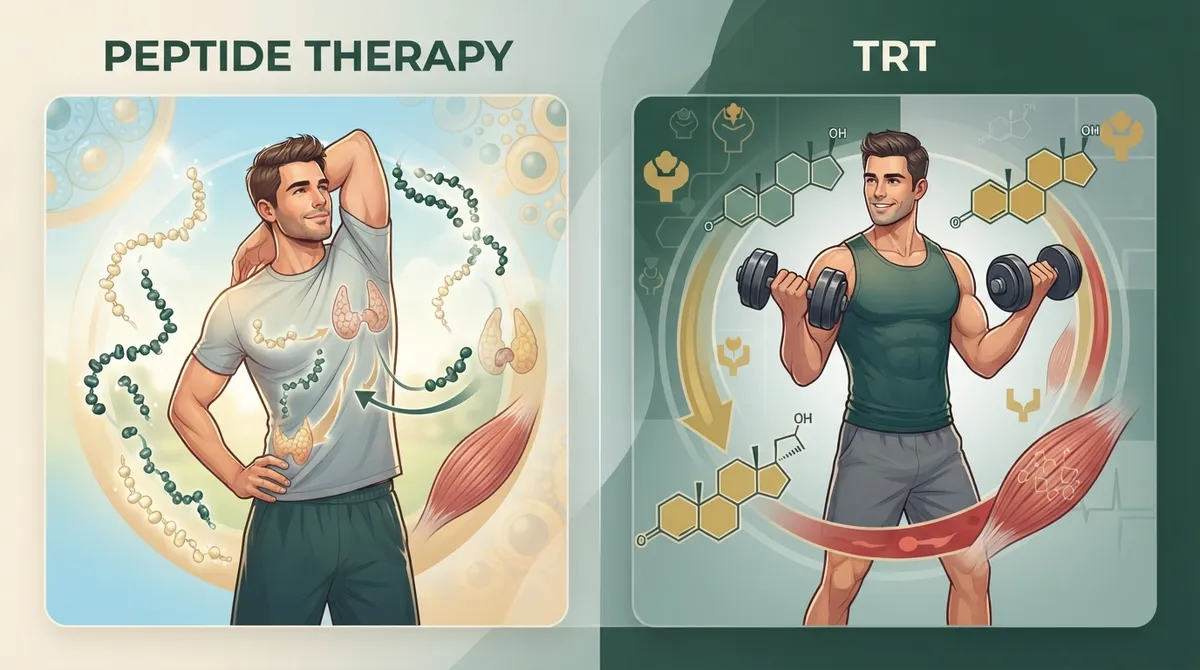
Peptide Therapy vs TRT: What Is the Real Difference?
This is probably the question we hear most often. Peptide therapy and TRT are not the same thing, even though people often lump them together. TRT replaces testosterone directly. Peptide therapy nudges your body to work with the hormone systems you already have.
Here is the honest truth: if you have documented low testosterone confirmed by blood work, peptide therapy is not presented as a replacement for TRT. Instead, many clinics use peptides alongside TRT as a complementary strategy, especially for recovery, sleep, and body composition goals.
Key Differences at a Glance
| Factor | TRT | Peptide Therapy |
|---|---|---|
| How it works | Directly replaces testosterone | Signals body’s natural hormone pathways |
| Time to notice changes | About 2-3 weeks | About 4-8 weeks |
| Typical monthly cost | $150-$400 | $200-$1,500 |
| FDA status | FDA-approved forms available | Largely off-label or investigational for men’s health |
| Best for | Confirmed testosterone deficiency | Recovery, sleep, growth hormone support, sexual wellness |
For a deeper side-by-side breakdown, our guide on TRT vs. Peptides: Which Hormone Fix Wins for Men? covers even more detail if you want to compare your options carefully.
Popular Peptides Used in Men’s Hormone Optimization
Not every peptide does the same job. Some focus on growth hormone. Others focus on repair. Knowing the difference helps you have a smarter conversation with your provider.
1. Growth Hormone Peptides
These peptides encourage your pituitary gland to release more of your own growth hormone. Common names include ipamorelin, CJC-1295, and sermorelin. Many men use these to support better sleep, leaner body composition, and steady energy.
2. Recovery and Repair Peptides
BPC-157 and TB-500 are the most talked-about peptides in this category. They are commonly discussed for supporting muscle and joint recovery after workouts or injuries. If you want the full picture, check out 9 BPC-157 Peptide Facts to Know Before You Start and 13 Facts About TB-500 Peptide You Need in 2026.
3. Sexual Health and Hormone Signaling Peptides
PT-141 and kisspeptin fall into this category. These are often discussed for supporting libido and hormone signaling pathways, working differently than testosterone itself.
Here is a quick numbered breakdown of how these peptides are commonly grouped by goal:
- Ipamorelin and CJC-1295 for growth hormone support and sleep quality
- Sermorelin for a gentler, more gradual growth hormone signal
- BPC-157 and TB-500 for recovery and tissue repair support
- PT-141 for sexual wellness and libido support
- Kisspeptin for hormone signaling pathways tied to reproductive health
It is worth noting that no peptide is currently FDA-approved for general men’s health optimization. Most adult men’s health use is considered off-label or investigational, which is why working with a licensed provider matters so much. The National Library of Medicine has published research discussing peptide mechanisms and safety considerations worth reviewing if you like to dig into the science yourself.
Why Regulatory Status Matters More Than Ever
Here is something a lot of men do not know. On April 15, 2026, twelve peptides were removed from FDA Category 2, with the change taking effect April 23, 2026. This list includes BPC-157, LL-37, DSIP, Epitalon, injectable GHK-Cu, KPV, PEG-MGF, Melanotan II, MOTS-c, Semax, and TB-500.
That said, removal from a restrictive category does not mean these peptides are suddenly FDA-approved for compounding or general use. It simply changes how they are classified. This distinction matters because it affects which peptides a licensed provider can legally prescribe and compound for you.
- Always ask your provider about the current regulatory status of any peptide
- Understand that off-label use requires closer medical supervision
- Choose providers who stay current on FDA guidance and compounding rules
- Avoid sourcing peptides outside of a licensed medical relationship
How to Choose a Provider for Men’s Hormone Therapy
Finding the right clinic is honestly half the battle. A great provider does not just hand you a peptide and wish you luck. They look at your actual blood work first.
Steps to Finding a Trustworthy Provider
- Start with a consultation and comprehensive blood panel, not a guess
- Confirm the provider is licensed in your state and uses a certified pharmacy
- Ask which peptides they recommend and why, based on your specific labs
- Review the treatment timeline and expected check-ins for adjustments
- Make sure ongoing monitoring is included, not just a one-time shipment
Allura Longevity follows exactly this kind of process. Clients start with an affordable $50 virtual consultation, complete blood work through LabCorp, and receive a personalized six-month treatment plan. Everything ships directly to your door, and licensed providers, led by board-certified Family Nurse Practitioner Ashley, monitor your progress and adjust your plan as needed.
If you are still deciding between getting care locally or online, our comparison guide on Local Clinic vs. Telehealth: Best Peptide Therapy Near You? breaks down the pros of each approach.
What Results Can You Realistically Expect?
Patience matters here. Peptide therapy usually takes longer to show results than TRT, since it works by encouraging your body’s own systems rather than adding hormones directly.
| Goal | Common Peptides Used | Typical Timeline |
|---|---|---|
| Better sleep and energy | Ipamorelin, CJC-1295, Sermorelin | 4-8 weeks |
| Faster injury recovery | BPC-157, TB-500 | 4-8 weeks |
| Sexual wellness support | PT-141, Kisspeptin | Varies by individual |
| Muscle recovery after training | BPC-157, growth hormone peptides | 4-6 weeks |
For a realistic look at what to expect week by week, our article 4 Timelines That Show When Peptide Therapy Works (2026) lays it all out clearly.
Peptides That Complement TRT
A growing number of men use peptides alongside TRT rather than instead of it. This combined approach can address sleep, recovery, and body composition in ways that testosterone alone may not fully cover.
- BPC-157 for supporting recovery from training-related strain
- Ipamorelin and CJC-1295 for growth hormone support alongside testosterone therapy
- PT-141 for men who want extra support with libido on top of TRT
- Sermorelin as a gentler growth hormone option for maintenance phases
Our guide on Why Does Testosterone Injection Therapy Get Paired With Peptides? explains this stacking strategy in more depth if you are already on TRT and curious about adding peptides.
Understanding the Cost of Men’s Hormone Therapy
Budget is a real concern, and it is smart to plan ahead. TRT typically runs about $150 to $400 per month, while peptide therapy can range from $200 to $1,500 per month depending on which peptides and doses are involved.
- Ask for a full breakdown of consultation, lab work, and medication costs upfront
- Compare pricing across licensed telehealth providers, not just local clinics
- Watch for hidden fees tied to shipping, follow-up visits, or dose adjustments
- Consider whether a bundled six-month plan saves money over paying monthly
If you want to avoid common budget pitfalls, take a look at 6 Hormone Therapy Cost Mistakes That Drain Your Wallet before signing up anywhere.
Is Peptide Therapy Safe for Men?
Safety always comes down to proper medical supervision. Working with a licensed provider who reviews your blood work, adjusts your protocol, and monitors your progress is the safest way to approach any hormone-related therapy.
Because most peptides remain off-label or investigational for adult men’s health, self-sourcing peptides online without medical guidance is genuinely risky. A trustworthy provider will always start with labs, explain the plan clearly, and stay in touch as your treatment progresses. For more on getting started the right way, see How to Start Peptide Therapy Safely and See Real Results.
Ready to Explore Personalized Hormone Support?
Finding the top rated hormone therapy for men really comes down to working with a provider who takes time to understand your body, your labs, and your goals. Whether you are drawn to TRT, peptide therapy, or a thoughtful combination of both, the right plan should feel personalized, not generic.
Allura Longevity offers exactly that kind of personalized care, with licensed providers, convenient at-home delivery, and ongoing monitoring built into every six-month plan. Spots are limited each month, so if you are ready to feel like yourself again, request a consultation today and take the first step toward better energy, recovery, and vitality.
FAQs
Q: What is the best peptide therapy for men?
A: It really depends on your goals. Guys focused on energy and sleep often do well with growth hormone peptides like ipamorelin or CJC-1295, while those recovering from injury lean toward BPC-157 or TB-500. The best approach is always the one built around your own blood work, not a generic one-size-fits-all pick.
Q: Is peptide therapy better than TRT for men?
A: Neither is universally “better,” they just serve different purposes. TRT directly replaces testosterone and works faster, while peptide therapy supports your body’s natural hormone pathways and takes a bit longer to show results. Many men actually benefit from combining both under proper medical guidance.
Q: Does peptide therapy increase testosterone in men?
A: Peptide therapy does not directly add testosterone the way TRT does. Instead, some peptides support the signaling pathways connected to hormone production, but they are not considered a direct replacement for testosterone when true deficiency is present.
Q: Is peptide therapy safe for men?
A: When guided by a licensed provider who reviews your labs and monitors your progress, peptide therapy can be a safe part of a personalized wellness plan. The key is avoiding self-sourced products and always working with a qualified medical team, since most peptides remain off-label for men’s health.
Q: How much does peptide therapy for men cost?
A: Current pricing typically ranges from about $200 to $1,500 per month, depending on which peptides and doses your plan includes. It is smart to ask for a full cost breakdown upfront so you know exactly what is covered before you commit.





