

Key Takeaways
-
Thymosin alpha-1 has the strongest research backing among immune peptides, but results are mixed and vary by condition—it is not a universal immune fix and lacks broad FDA approval in the U.S.
-
Most popular immune peptides like BPC-157, TB-500, KPV, and LL-37 lack significant human trial data; most evidence comes from animal or lab studies, making their effectiveness unproven.
-
Quality and sourcing are critical—unregulated peptide sources carry risks including incorrect dosing, contamination, and unknown purity, making oversight from a licensed provider essential.
-
Immune modulation requires balance, not maximum activation; overactivating immune responses can cause harm, especially for people with autoimmune conditions, so consult a provider before use.
Feeling run down more than usual? You are not alone. Many of us are searching for ways to feel stronger, recover faster, and stay well all year long. That search has led a lot of health-minded people straight to the world of immune boosting peptides. But here is the truth: this term gets thrown around a lot, and not all of it is accurate.
Whether you are a biohacker who loves data, a busy professional who barely has time to catch a cold (let alone recover from one), or someone simply trying to age well, you deserve real answers. In this friendly guide, we will break down what immune-boosting peptides actually are, what science really says, and how to think about safety before you try anything new. Let’s get into it together.
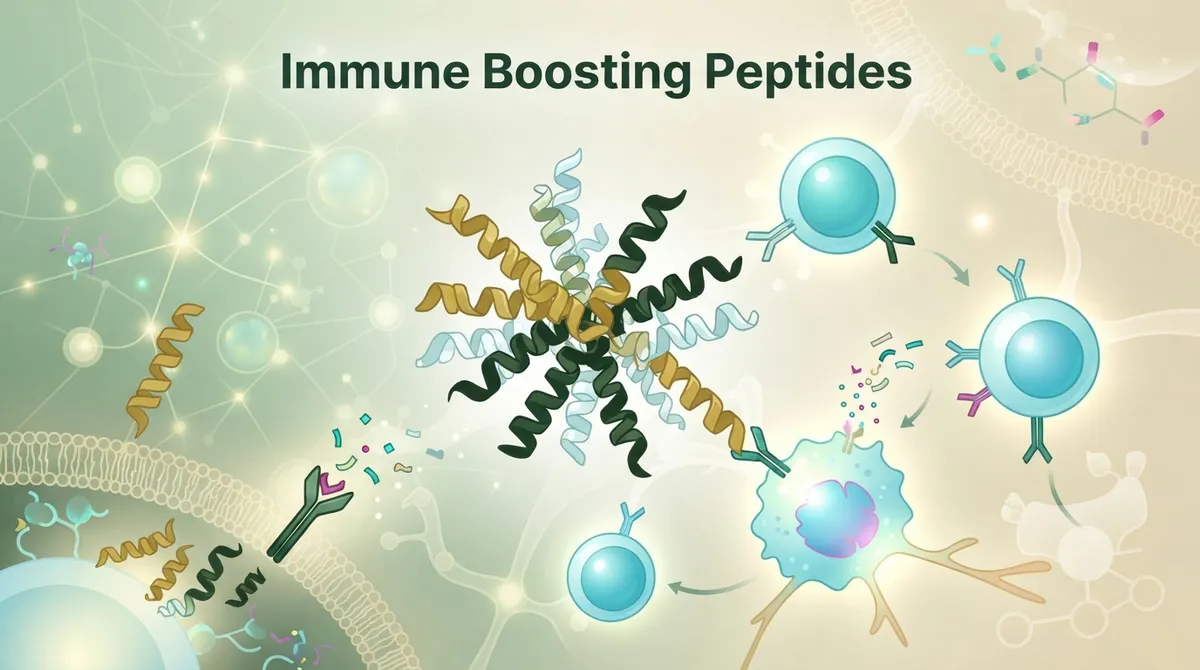
What Are Immune Boosting Peptides, Really?
Here is something important to understand right away: “immune boosting peptides” is not an official medical category. It is more of a marketing phrase used across the peptide therapy world. In general, it refers to peptides that may influence how your immune system talks to itself, how inflammation behaves, or how your body responds to infection and stress.
Peptides are small chains of amino acids, basically tiny messengers that tell your cells what to do. According to what are peptides, they play roles in everything from hormone regulation to tissue repair. Some peptides appear to interact with immune cells, but “interacting with” is very different from “boosting” your entire immune system on command.
Why the Word “Boosting” Can Be Misleading
Your immune system is not a light switch. It does not simply turn up or down. It is a finely tuned network that needs balance, not just more activity. Overactivating immune responses can sometimes cause more harm than good, especially for people with autoimmune conditions.
- Immune modulation means adjusting immune activity, not simply increasing it
- Some peptides may calm inflammation rather than ramp it up
- True immune health depends on balance, not maximum activation
- Marketing language often oversimplifies complex biology
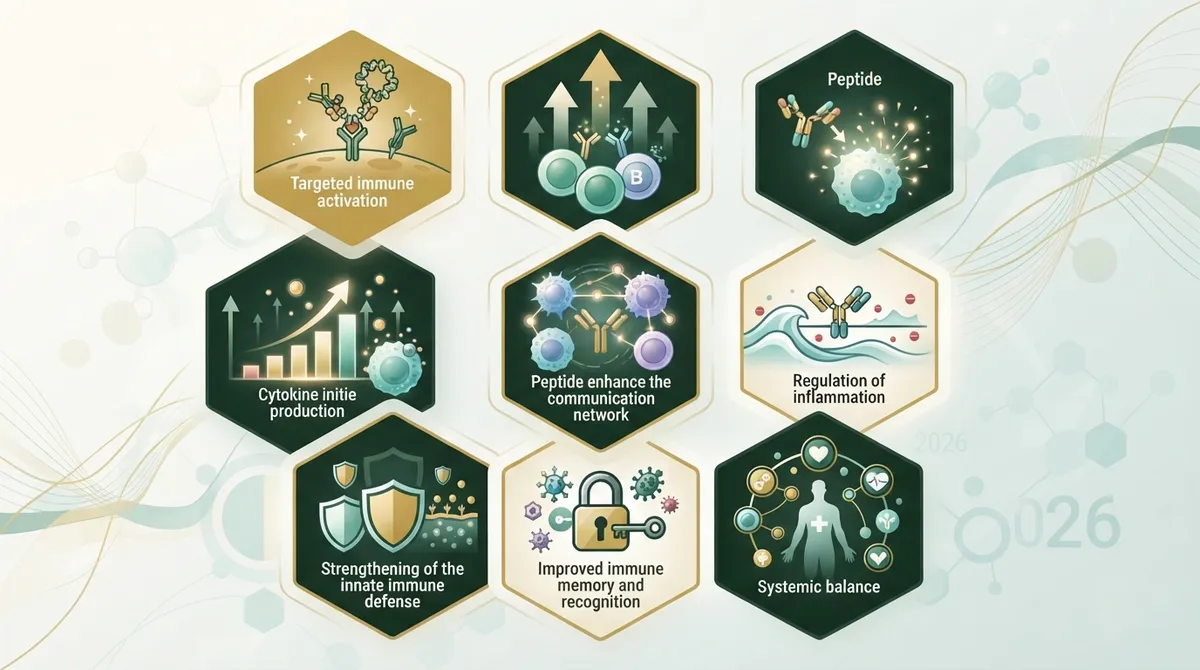
9 Key Facts About Immune Boosting Peptides in 2026
Let’s walk through the most important facts you need before considering any immune-related peptide. Think of this as your friendly cheat sheet.
1. Thymosin Alpha-1 Has the Strongest Research Backing
Among peptides discussed for immune support, thymosin alpha-1 (also called Tα1 or thymalfasin) has the most human research behind it. Studies have looked at its effects on dendritic cells, T cells, natural killer cells, and cytokine signaling, according to research published on National Library of Medicine.
That said, results vary a lot depending on the condition being studied, the dose used, and the patient group. It is not a one-size-fits-all immune fix.
2. It Is Not Broadly FDA-Approved as a General Immune Booster
Thymosin alpha-1 is approved in some countries for specific uses, but it does not have broad FDA approval in the United States as a catch-all immune enhancer. Some research has explored its use alongside standard treatment for severe infections or immune dysfunction, but this is not the same as routine prevention of colds or flu.
3. Research Findings Are Mixed, Not Definitive
Clinical trials on Tα1 have looked at sepsis, viral infections, and immune-related conditions. The outcomes have been inconsistent. This means you should not assume it will work the same way for cancer prevention, COVID-19, or autoimmune disease as it might for the specific conditions studied.
4. Other Popular Peptides Lack Strong Human Data
Peptides like thymosin beta-4 (TB-500), BPC-157, KPV, and LL-37 get a lot of attention online. However, most of the supporting evidence comes from lab studies or animal research, not large human trials.
- Thymosin beta-4 (TB-500): One small safety study included just 10 healthy volunteers and found no serious side effects at the doses tested, but it was not designed to prove effectiveness
- BPC-157: Extensive animal research exists, but there is a lack of completed, well-powered human trials
- KPV: Mostly studied in laboratory settings for anti-inflammatory potential
- LL-37: A naturally occurring host-defense peptide with early-stage research only
If you want to dig deeper into one of these compounds specifically, our guide on BPC-157 peptide facts is a great next stop.
5. Regulatory Status Can Shift Quickly
In 2026, ongoing FDA discussions have continued to evaluate compounds like BPC-157 and TB-500 for compounding use. According to a 2026 FDA briefing summary, regulators have flagged these substances due to limited human evidence and product-quality concerns. This status can change, so always check current rules with a licensed provider.
6. Quality and Sourcing Matter More Than People Realize
Not all peptide products are created equal. Nonstandard or unregulated sources can carry real risks.
- Incorrect dosing or concentration
- Contamination during manufacturing
- Unknown purity levels
- No medical oversight to catch problems early
This is exactly why working with a licensed telehealth provider matters so much. It is the difference between guessing and knowing.
7. Immune Peptides Are Not a Substitute for Basic Health Habits
No peptide, no matter how promising, replaces sleep, nutrition, movement, and stress management. Peptides may support your body’s systems, but they work best as part of a bigger picture.
- Prioritize consistent, quality sleep
- Eat a nutrient-dense, balanced diet
- Manage chronic stress through daily habits
- Stay active with regular movement
- Consider peptide therapy as an added layer, not a shortcut
8. Certain People Should Be Extra Cautious
Immune-modulating peptides are not right for everyone. Caution is especially important for people with autoimmune disease, active cancer, pregnancy, severe infections, or those on immunosuppressive therapy.
This is why a proper evaluation, including blood work analysis before starting peptides, is so important. A licensed provider can flag red flags before they become real problems.
9. Personalized, Supervised Care Beats Guesswork
The safest way to explore any peptide, immune-related or otherwise, is through a licensed provider who reviews your labs and health history. This is where peptides for women and peptides for men programs built around personalized data really shine compared to buying products online with no oversight.
Comparing Commonly Discussed Immune-Related Peptides
Here is a simple side-by-side look to help you understand where the evidence currently stands.
| Peptide | Human Evidence Level | Common Claims | Current Status |
|---|---|---|---|
| Thymosin Alpha-1 | Moderate, mixed by condition | Immune modulation, infection support | Approved in some countries; not broadly FDA-approved as general booster |
| Thymosin Beta-4 (TB-500) | Very limited (small safety study only) | Tissue repair, immune support | Not FDA-approved for human use |
| BPC-157 | Mostly preclinical/animal | Healing, anti-inflammatory | Regulatory caution flagged in 2026 |
| KPV | Early lab-stage research | Anti-inflammatory activity | Investigational only |
| LL-37 | Early-stage human data | Host-defense support | Investigational only |
Potential Risks You Should Know About
Every therapy carries some level of risk, and immune-modulating peptides are no exception. Being informed helps you make smart, confident choices.
- Allergic or unexpected immune reactions
- Injection-site irritation or infection
- Contaminated or mislabeled products from unverified sources
- Possible interactions with existing medications
- Unknown long-term effects, since research is still developing
If you are new to injections in general, our guide on how to prepare for safe, effective peptide injections walks through best practices step by step.
How Allura Longevity Approaches Immune Health Support
At Allura Longevity, we believe real wellness starts with real data, not guesswork. Our process begins with a simple $50 virtual consultation, followed by comprehensive blood work through LabCorp. From there, our licensed providers, led by board-certified Family Nurse Practitioner Ashley, build a personalized six-month plan based on your actual health picture.
We proudly serve clients across Florida, Georgia, Texas, Connecticut, Indiana, Maryland, New York, and California, all through convenient telehealth visits. Your treatment plan arrives right at your door, and our team stays with you through ongoing monitoring and adjustments. If you want to explore how personalized peptide therapy could support your immune health goals, we would love to help you get started the right way.
Questions to Ask Before Trying Any Immune Peptide
Before jumping into any new peptide protocol, run through this quick checklist. It could save you time, money, and unnecessary risk.
- Is this peptide backed by real human clinical research, or mostly animal studies?
- What is the current FDA and regulatory status?
- Has a licensed provider reviewed my bloodwork and health history?
- Where is this product sourced, and is it third-party tested?
- Are there any conditions I have that make this risky for me?
Taking a few extra minutes to ask these questions puts you back in the driver’s seat of your own health journey.
The Bottom Line on Immune Boosting Peptides
Immune-boosting peptides are a fascinating and fast-moving area of wellness science. Thymosin alpha-1 stands out as the most researched option, but even it comes with limits and mixed evidence. Compounds like BPC-157, TB-500, KPV, and LL-37 remain promising but investigational, meaning they need more human research before we can call them proven immune therapies.
The smartest path forward is not chasing trends. It is partnering with a licensed provider who looks at your labs, your goals, and your full health picture. That is exactly what personalized, telehealth-based peptide therapy is designed to do.
Ready to feel supported instead of confused? Our team at Allura Longevity is here to guide you with real science, real monitoring, and real care. Spots fill up each month, so if you are ready to take the next step, request a consultation today and let’s build your personalized plan together.
FAQs
Q: What are immune boosting peptides?
A: Immune boosting peptides is a marketing term for peptides thought to influence immune signaling, inflammation, or infection response. It is not an official medical category, so it is important to look at each specific peptide’s actual research before drawing conclusions.
Q: Does thymosin alpha-1 strengthen the immune system?
A: Thymosin alpha-1 has been studied for its effects on immune cells like T cells and natural killer cells, and it shows promise in specific situations. However, results are mixed depending on the condition, so it should not be viewed as a universal immune strengthener.
Q: Is thymosin alpha-1 FDA approved in the United States?
A: Thymosin alpha-1 is approved in some countries for select uses, but it does not have broad FDA approval in the U.S. as a general immune-boosting treatment. Always check current status with a licensed provider before considering it.
Q: Are BPC-157, TB-500, KPV, or LL-37 approved for human use?
A: No, none of these peptides currently have FDA approval for general human use. Most evidence for them comes from animal or lab studies, and regulatory reviews have flagged some for safety and quality concerns.
Q: Can immune-modulating peptides prevent colds, flu, or COVID-19?
A: There is no strong human evidence that these peptides prevent common illnesses like colds, flu, or COVID-19. It is best to rely on proven prevention methods and speak with a licensed provider about realistic expectations for peptide therapy.





