
Key Takeaways
-
TRT requires confirmed diagnosis through two early-morning testosterone tests showing levels below 300 ng/dL plus matching symptoms; it’s not for general fatigue or anti-aging without clinical hypogonadism.
-
TRT can suppress sperm production and testicular volume, so men planning fertility should discuss alternatives like hCG or SERMs with their provider before starting treatment.
-
Multiple FDA-approved delivery methods exist (gels, injections, patches, oral, pellets); choosing the right one depends on lifestyle, budget, and individual response with provider guidance.
-
Ongoing monitoring of testosterone levels, hematocrit, blood pressure, and prostate markers is essential for safety; the 2023 TRAVERSE trial showed testosterone wasn’t worse than placebo for cardiovascular events in monitored patients.
Feeling tired, foggy, or just not like yourself lately? You’re definitely not alone. So many of our clients come to us wondering if low testosterone might be the missing piece of their wellness puzzle. Here’s the good news: testosterone replacement therapy (TRT) is a well-studied, medically supervised treatment that can genuinely help men who have confirmed testosterone deficiency feel like themselves again.
But here’s the thing we want you to know before you go any further: TRT isn’t a one-size-fits-all anti-aging shortcut, and it’s not the same as peptide therapy. Both can play a role in a longevity plan, but they work differently and serve different purposes. In this friendly guide, we’ll break down five essential facts about testosterone replacement therapy so you can make informed, confident decisions about your health. We’ll also show you how peptide therapy fits into the bigger picture, and how Allura Longevity helps you sort through it all with real lab data and a licensed provider by your side.

Fact 1: TRT Requires a Real Diagnosis, Not Just a Feeling
Let’s clear up a common myth right away. Testosterone replacement therapy is not something you start just because you’re feeling sluggish or want to build more muscle. It’s a prescription treatment reserved for men with confirmed hypogonadism, meaning low testosterone paired with matching symptoms.
A proper diagnosis typically includes two separate early-morning total testosterone tests. Testing in the morning matters because testosterone levels naturally dip later in the day. The American Urological Association generally uses a total testosterone level below 300 ng/dL, combined with compatible symptoms, as a reasonable threshold for diagnosis.
A thorough evaluation usually looks at more than just one number. Your provider may also check:
- Free testosterone, when clinically indicated
- Luteinizing hormone (LH) and follicle-stimulating hormone (FSH)
- Prolactin levels
- Your full medication and health history
- Reversible causes like obesity, poor sleep, chronic illness, or opioid use
This step-by-step approach protects you from starting a treatment you don’t actually need. It also helps your provider figure out whether something else, like untreated sleep apnea or a health condition, might be the real culprit behind your symptoms.
Fact 2: TRT Comes in Several FDA-Approved Forms
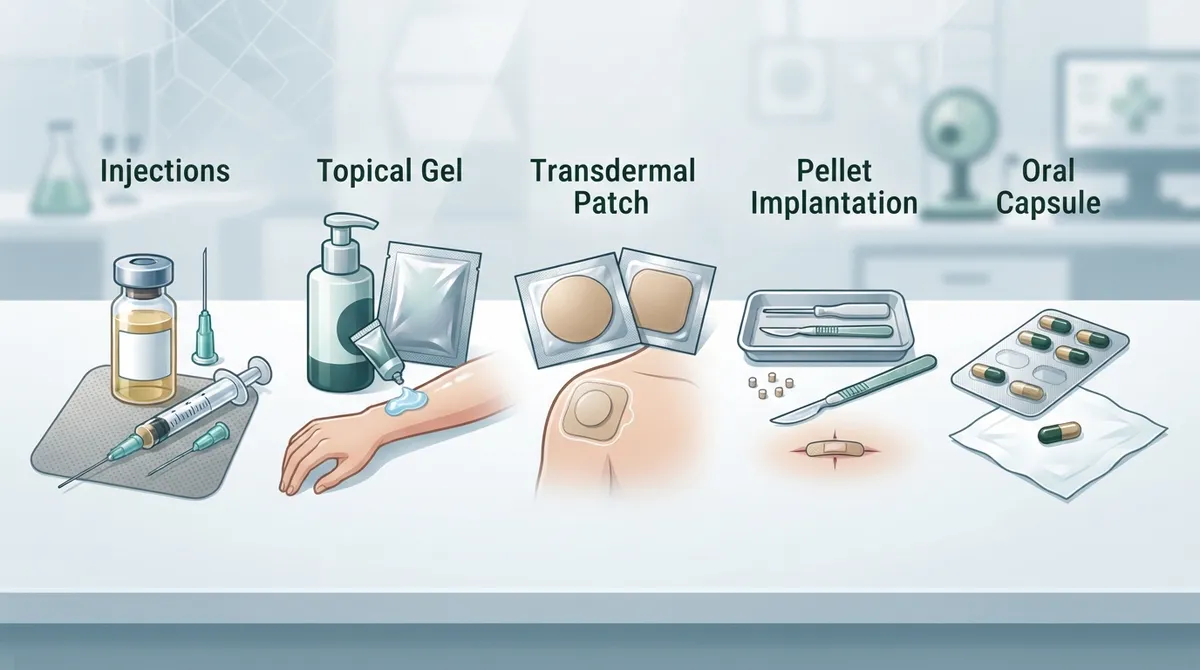
One thing we love telling new clients is that testosterone replacement therapy isn’t a one-size-fits-all injection. There are multiple FDA-approved delivery methods, and the right one depends on your lifestyle, budget, and how your body responds.
| Delivery Method | How It’s Used | Good For |
|---|---|---|
| Topical Gels/Solutions | Applied daily to skin | Steady dosing, no needles |
| Injections | Given weekly or biweekly | Cost-effective, flexible dosing |
| Transdermal Patches | Worn daily on skin | Consistent absorption |
| Oral Formulations | Taken by mouth | Needle-free preference |
| Implantable Pellets | Inserted every few months | Low daily maintenance |
Every option has trade-offs around convenience, absorption, and potential side effects. That’s exactly why working with a knowledgeable provider matters so much. If you’re weighing TRT against other hormone-support strategies, our guide on TRT vs. peptides for men breaks down the differences in plain language.
Fact 3: Peptides and Testosterone Are Not the Same Thing
This is one of the most important distinctions we want every reader to understand. Testosterone is a steroid hormone. Peptides are short chains of amino acids that signal your body to do specific things, like release growth hormone or support tissue repair. They are chemically and functionally different.
You may have heard about peptides like CJC-1295, ipamorelin, or sermorelin being marketed for muscle gain, fat loss, or anti-aging benefits. These are interesting compounds with growing research behind them, but they are not FDA-approved substitutes for testosterone replacement in men with true hypogonadism. If you want to understand what peptides actually are and how they work, this helpful breakdown on what are peptides is a great place to start. You can also learn more from this general overview on what are peptides from a trusted medical resource.
That said, peptide therapy and TRT can sometimes work together as part of a broader wellness plan, especially for people focused on recovery, energy, or metabolic support alongside hormone optimization. Curious how these approaches complement each other? Check out our comparison on peptide therapy vs testosterone replacement for a deeper dive.
Fact 4: TRT Can Affect Fertility, So Plan Ahead
Here’s something many men don’t realize until it’s already an issue: exogenous testosterone can suppress your body’s natural hormone signaling. This process, known as suppression of the hypothalamic-pituitary-gonadal axis, can reduce sperm production and shrink testicular volume over time.
If preserving fertility is important to you right now or in the near future, TRT may not be the right first step. Instead, your provider might discuss alternatives like:
- Human chorionic gonadotropin (hCG) to help maintain natural testosterone production
- Selective estrogen receptor modulators (SERMs)
- Specialist-directed fertility treatment options
The Endocrine Society’s clinical guidelines are clear on this point: men who want children soon should generally avoid starting testosterone therapy without first discussing fertility preservation with their provider. This is exactly the kind of nuanced conversation a good telehealth consultation should cover before anything gets prescribed.
Fact 5: Monitoring Matters Just as Much as the Prescription
Starting testosterone replacement therapy isn’t a “set it and forget it” situation. Ongoing monitoring is what keeps treatment safe and effective over time. Your provider should regularly track:
- Testosterone levels to confirm you’re in a healthy range
- Hematocrit and hemoglobin to watch for thickened blood
- Blood pressure, since testosterone products can raise it
- Symptom improvement and any new side effects
- Prostate health markers when clinically appropriate
A hematocrit level above 54% is generally a red flag that requires your provider to pause or adjust treatment. This condition, called erythrocytosis, increases the risk of blood clots if left unmanaged.
Good news on the cardiovascular front: the landmark TRAVERSE trial, published in the New England Journal of Medicine in 2023, studied over 5,000 men with hypogonadism who had existing or high cardiovascular risk. Major cardiovascular events occurred in about 7.0% of men on testosterone versus 7.3% on placebo, showing testosterone was not worse than placebo for heart risk in this carefully monitored group. Based partly on these results, the FDA announced in February 2025 that it was removing the class-wide boxed warning about cardiovascular risk from testosterone product labels. However, the agency also reinforced warnings that testosterone can raise blood pressure, so regular check-ins with your provider still matter a great deal. You can read more details directly from the National Library of Medicine on hormone therapy safety research.
Who Should Be Cautious or Avoid TRT
TRT isn’t right for everyone, and a responsible provider will screen carefully before prescribing anything. Situations that typically call for extra caution or avoidance include:
- Known or suspected prostate or breast cancer
- Significantly elevated hematocrit
- Untreated, severe obstructive sleep apnea
- Uncontrolled heart failure
- A recent major cardiovascular event
This is why blood work and a thorough health history review always come before any prescription. If you’re not sure whether TRT or a different hormone approach fits your situation, our article on how to tell when men need hormone therapy can help you think through your symptoms and next steps.
How Allura Longevity Approaches Hormone and Peptide Care
At Allura Longevity, we believe you deserve clear answers, not guesswork. Every client starts with an affordable $50 virtual consultation and comprehensive blood work through LabCorp. From there, our licensed providers, led by board-certified Family Nurse Practitioner Ashley, build a personalized six-month treatment plan based on your actual lab results and goals.
We’re proud to offer nationwide telehealth care and are currently licensed in Florida, Georgia, Texas, Connecticut, Indiana, Maryland, New York, and California. Whether your path involves testosterone support, targeted peptides, or a combination approach for energy, recovery, and metabolic health, our team monitors your progress every step of the way. If you want to explore what a customized plan might look like, take a look at our resource on how to start peptide therapy safely and see real results.
Quick Comparison: TRT vs. Peptide Therapy
| Feature | Testosterone Replacement Therapy | Peptide Therapy |
|---|---|---|
| What it is | Steroid hormone replacement | Amino acid chain signaling molecules |
| FDA Status | Multiple FDA-approved products | Some approved; many compounded/investigational |
| Best For | Confirmed hypogonadism | Recovery, energy, metabolic support, skin health |
| Fertility Impact | Can suppress sperm production | Generally minimal direct impact |
| Monitoring Needs | Hematocrit, blood pressure, prostate markers | Varies by peptide, generally lighter monitoring |
Interested in learning more about specific peptides that support energy and recovery alongside a hormone plan? Our guide on how to pick peptides for energy that actually work is a great next read.
Your Next Step Toward Feeling Like Yourself Again
Testosterone replacement therapy can be genuinely life-changing when it’s the right fit, backed by real diagnostics and careful monitoring. But it’s just one piece of a much bigger picture that includes lifestyle, sleep, metabolic health, and sometimes peptide support too. The most important thing is working with a provider who takes the time to look at your whole health picture, not just one number on a lab report.
We know spots fill up quickly each month, so if you’re ready to get real answers backed by real lab work, now’s a great time to reach out. Request a consultation with our licensed team today, and let’s build a personalized plan that actually fits your body and your goals. You can also call us directly at (813) 510-6277 to ask questions before you get started. Your journey toward more energy, better sleep, and renewed vitality can begin with one simple conversation.
FAQs
Q: What is testosterone replacement therapy and who qualifies for it?
A: Testosterone replacement therapy is a prescription treatment for men with confirmed low testosterone plus matching symptoms, like fatigue or low libido. It’s not meant for general anti-aging or performance goals, so a real diagnosis with blood work always comes first.
Q: Do I need two testosterone tests before starting TRT?
A: Yes, most guidelines recommend two separate early-morning total testosterone tests before diagnosis. This helps confirm the low level isn’t just a one-time fluke, giving you and your provider more confidence in the treatment plan.
Q: Can peptide therapy replace testosterone replacement therapy?
A: Not exactly. Peptides and testosterone work differently in the body, and peptides are not FDA-approved substitutes for true testosterone deficiency. That said, some peptides can complement a hormone plan by supporting energy, recovery, and overall wellness.
Q: Is testosterone replacement therapy safe for men with heart disease?
A: The TRAVERSE trial found testosterone wasn’t worse than placebo for major cardiovascular events in men with existing heart risk. Still, testosterone can raise blood pressure, so ongoing monitoring with your provider is essential, especially if you have heart-related concerns.
Q: How long does testosterone replacement therapy take to improve symptoms?
A: Many men notice improvements in energy and mood within a few weeks, while changes in body composition and other markers can take a few months. Everyone’s timeline looks a little different, which is why regular check-ins and lab monitoring matter so much.





