
Key Takeaways
-
Skin health peptide therapy is an umbrella term covering oral collagen peptides, topical peptides like GHK-Cu, and compounded or injectable peptides, each with different evidence, risks, and regulatory status.
-
A 2026 review of 35 randomized trials (2,534 participants) found oral collagen peptides produced measurable gains in skin hydration, elasticity, and reduced transepidermal water loss, though wrinkle benefits were not robust.
-
GHK-Cu shows promise in lab and animal research, but human skin studies are small and limited, so it should be treated as promising rather than proven.
-
Compounded and injectable peptides require clinician oversight, and the FDA has raised safety and evidence concerns, so verify current FDA status before considering them.
Let’s be honest: the world of skin care can feel like a maze. One shelf says peptides will turn back the clock. Another says collagen powder is the secret. Then someone mentions injections, and suddenly you are not sure what is real and what is marketing.
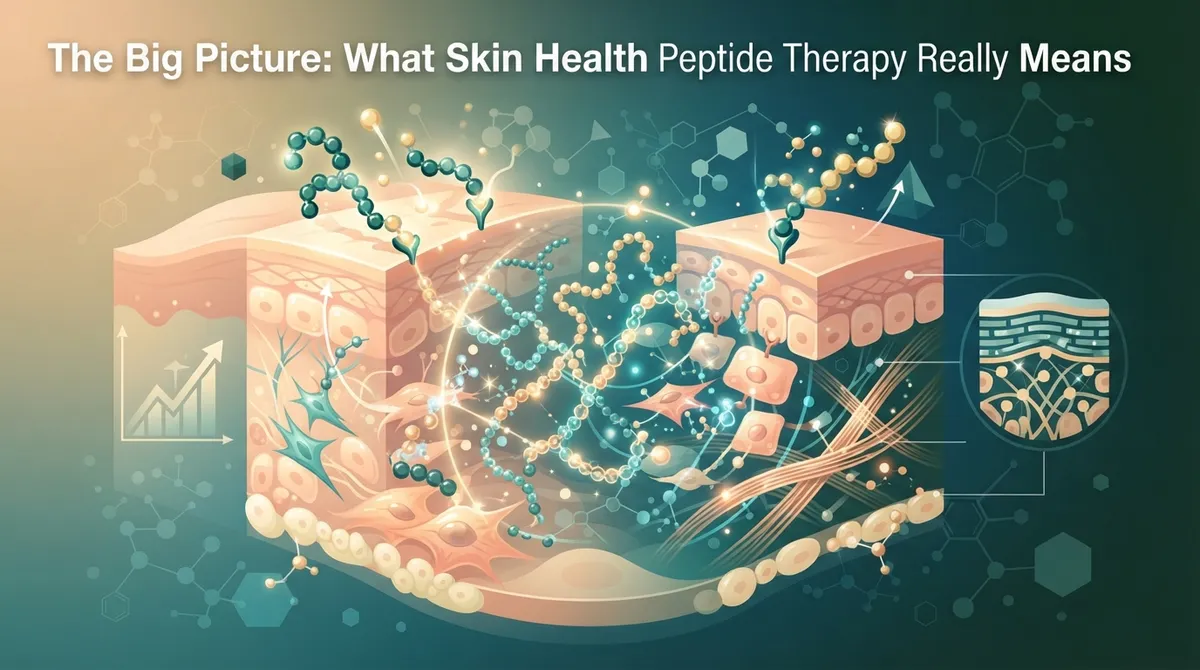
Here is the friendly truth. Skin health peptide therapy is not one single treatment. It is a big umbrella. Under it sit oral collagen peptides, topical cosmetic peptides like GHK-Cu, and compounded or injectable peptides. Each one has different evidence, different risks, and different rules.
In this guide, we walk through 13 clear facts so you can sort the science from the hype. Whether you are a health optimizer, a busy professional, or simply someone who wants glowing, healthy skin as the years go by, you will leave with a smarter plan. We will keep it warm, simple, and honest, because you deserve real answers. If you are new to the basics, our guide to 8 Facts That Explain What Are Peptides in 2026 is a great starting point.
The Big Picture: What Skin Health Peptide Therapy Really Means
1. It Is an Umbrella Term, Not a Single Treatment
When people say skin health peptide therapy, they may mean very different things. A collagen powder in your morning smoothie is not the same as a serum on your face. Neither is the same as a prescription peptide from a licensed provider.
Knowing which type you are talking about is step one. Each has its own evidence base, safety profile, and regulatory status. For a broader look at the field, see What Peptides Do for Skin: A Real-World Guide for 2026.
2. Peptides Are Short Chains of Amino Acids
Peptides are small building blocks that your body already uses as signals. Some tell cells to make more structural proteins. Others help with repair. The idea behind peptide skin care is to borrow those signals and support healthier-looking skin. For a plain-language definition, what are peptides is a handy reference.
3. The Three Main Types Work Differently
Here is a quick side-by-side so you can see how the main approaches compare.
| Approach | How It Is Used | Evidence Level | Key Consideration |
|---|---|---|---|
| Oral collagen peptides | Powder, capsule, or drink | Strongest human research of the three | Results vary by product, dose, and duration |
| Topical peptides (e.g., GHK-Cu) | Serums and creams | Mostly lab and animal data; few small human studies | Skin barrier may limit penetration |
| Compounded or injectable peptides | Prescribed and administered under clinician oversight | Limited for skin-specific outcomes | Regulatory and safety concerns apply |

Oral Collagen Peptides: The Best-Studied Option
4. A 2026 Review Looked at 35 Trials
A 2026 systematic review pulled together 35 randomized controlled trials with 2,534 participants. It focused on oral collagen supplements and skin outcomes. That is a big pool of data, and it gives us a clearer view than any single small study could.
5. Hydration and Elasticity Showed Measured Gains
The review reported improvements in measured skin hydration, elasticity, and transepidermal water loss (how much water escapes through your skin). Here are the pooled numbers, which are research measures and not promises for any one person.
| Skin Measure | Standardized Mean Difference | 95% Confidence Interval |
|---|---|---|
| Skin hydration | 0.44 | 0.15 to 0.73 |
| Elasticity | 0.62 | 0.15 to 1.10 |
| Transepidermal water loss | -0.39 | -0.62 to -0.16 |
In plain English, the average person in these studies saw modest, measurable improvements in how hydrated and bouncy their skin was.
6. Wrinkle Claims Are Less Solid
Here is where we keep it real. The same review found that apparent benefits for wrinkles, roughness, and dermal density were not robust once the researchers accounted for outlier studies and big differences between trials. So if a label promises deep wrinkle erasing, take a deep breath and a healthy pinch of skepticism.
7. Results Depend on the Product and Patience
Studies differ in dose, brand, and length. Many trials run for several weeks to a few months. That means collagen peptides are better seen as a steady, long-game habit than a quick fix. You can read more about timing in How Long Until Peptides Improve Skin? A 2026 Timeline.
- Choose a product from a brand that shares testing and ingredient details.
- Stick with it consistently for at least a couple of months before judging results.
- Pair it with sunscreen, sleep, and a protein-rich diet.
Topical Peptides and GHK-Cu: Promising but Early
8. GHK-Cu Is Popular, but Human Data Is Small
GHK-Cu, also called copper tripeptide-1, gets a lot of buzz. It is linked in lab and animal research to tissue remodeling and repair. That is exciting, but it is not the same as proven results in people. The human skin studies so far are few and generally small.
For example, a 2026 review noted a 13-participant study after CO2 laser treatment that did not show an objective advantage. Another small split-face study with 18 healthy participants looked at eyebrow hair over 12 weeks and reported cosmetic improvements, but the small size and unclear description of the active ingredient limit what we can conclude. If you want to dig deeper, try How to Evaluate GHK-Cu Peptide Safely in 2026.
9. Delivery Matters More Than You Think
Your skin barrier is designed to keep things out. That is great for protection, but it means a peptide in a jar may not reach the deeper layers where it could make a difference. Results from lab models or enhanced-delivery methods do not prove that a store-bought serum improves outcomes for you.
That does not make topical peptides useless. Many people enjoy them as part of a gentle routine. Just keep expectations realistic and look for formulas from transparent brands.
Compounded and Injectable Peptides: Handle With Care
10. They Are Not Interchangeable With Cosmetics
A face serum, a collagen supplement, and a prescription peptide are three different categories. Compounded or injectable peptides involve medical judgment, product quality checks, and regulatory considerations. To understand the difference, check out FDA-Approved vs. Compounded Peptides: What Wins?
11. FDA Concerns Are Real, So Verify Current Status
FDA materials describe safety and evidence concerns for certain compounded peptides. For BPC-157, the agency has pointed to insufficient clinical safety information and concerns about immunogenicity and impurities. The FDA has also considered restrictions on injectable compounding of GHK-Cu. These are regulatory safety concerns, not evidence that these peptides treat skin conditions.
Regulations change, so always verify the current FDA status before relying on any specific claim. Our post on How to Verify FDA Approval Before Peptide Therapy walks you through it.
Staying Safe and Smart
12. A Safety Checklist Goes a Long Way
Short, small studies cannot prove long-term safety. So a little caution is your best friend. Before starting anything, run through these steps.
- Name the product type. Is it a supplement, a cosmetic, or a prescription?
- Share your medical history. Mention allergies, medications, and health conditions.
- Check product quality. Look for third-party testing and clear labeling.
- Avoid big promises. Be wary of anyone who claims to reverse aging or heal disease.
- Involve a licensed clinician. Oversight matters, especially for anything prescription or injectable.
You can also review Is Peptide Therapy Safe? What You Really Need to Know for a deeper dive into risks and side effects.
13. Personalization Beats One-Size-Fits-All
Your skin is shaped by genetics, hormones, stress, sleep, sun exposure, and nutrition. A smart plan looks at the whole picture. Many people start with lab work to understand what is happening inside before choosing any therapy. That is where a personalized, clinician-guided approach shines.
At Allura Longevity, licensed providers design customized plans based on your blood work and goals. The process starts with a virtual consultation, then lab work through LabCorp, then a tailored six-month plan delivered to your home. Telehealth makes it easy for busy schedules. If you are curious how peptides fit into broader rejuvenation, see Skin Rejuvenation Treatment for Women: Peptide Guide 2026.
Your Simple Game Plan for Healthier Skin
Want a quick way to put all this together? Here is a friendly, practical approach.
- Start with the basics: daily sunscreen, gentle cleansing, good sleep, and hydration.
- Consider collagen peptides if you want the option with the strongest human research, and give them time.
- Treat topical peptides as a bonus, not a miracle.
- Talk to a licensed provider before considering anything compounded or injectable.
- Track your progress with photos and notes so you can see real changes.
And if you are building a longer-term wellness routine, you may enjoy our guide on How to Pick the Best Peptides for Aging in 2026. Both peptides for women and peptides for men are available through personalized plans.
For extra reading, the National Library of Medicine hosts a wealth of peer-reviewed research you can explore at your own pace.
Final Thoughts: Glow With Confidence, Not Confusion
Skin health peptide therapy is exciting, and it is also easy to oversell. The honest summary is this: oral collagen peptides have the strongest human evidence, mostly for hydration and elasticity. Topical GHK-Cu is promising but early. Injectable and compounded options need careful, clinician-led decisions and a close eye on FDA guidance.
The best move is a personalized one. Allura Longevity offers telehealth peptide therapy guided by licensed providers, led by Ashley, a board-certified Family Nurse Practitioner, with care available nationwide where licensed. Spots for new clients are limited each month, so if you are ready to talk, request a consultation or call (813) 510-6277. Your skin story is yours to write, and we would love to help you start it with confidence.
FAQs
Q: What is peptide therapy for skin health?
A: It is an umbrella term, not one single treatment. It can mean oral collagen peptides, topical cosmetic peptides like GHK-Cu, or prescription compounded and injectable peptides. Each type has its own evidence, risks, and rules, so it helps to know which one you are considering.
Q: Do collagen peptides really improve skin hydration and elasticity?
A: Research is encouraging. A 2026 review of 35 randomized trials found measured improvements in hydration, elasticity, and water loss through the skin. Results vary by product, dose, and time, and evidence for visible wrinkle reduction is much less consistent.
Q: Does GHK-Cu work for wrinkles or skin repair?
A: GHK-Cu looks interesting in lab and animal studies, but human skin research is still small and limited. That means we cannot yet say it reliably smooths wrinkles or repairs skin in people. Think of it as promising, not proven.
Q: Are injectable peptides safe or FDA-approved for skin health?
A: Certain compounded peptides have drawn FDA safety and evidence concerns, so they are not a casual choice. Regulations change, so always verify current FDA status and work with a licensed clinician who can review your medical history and product quality.
Q: How long might it take to see results from collagen peptides?
A: Many studies run for several weeks to a few months, so patience is key. Think of collagen peptides as a steady daily habit rather than an overnight fix. Tracking photos and notes can help you spot real, gradual changes.





