
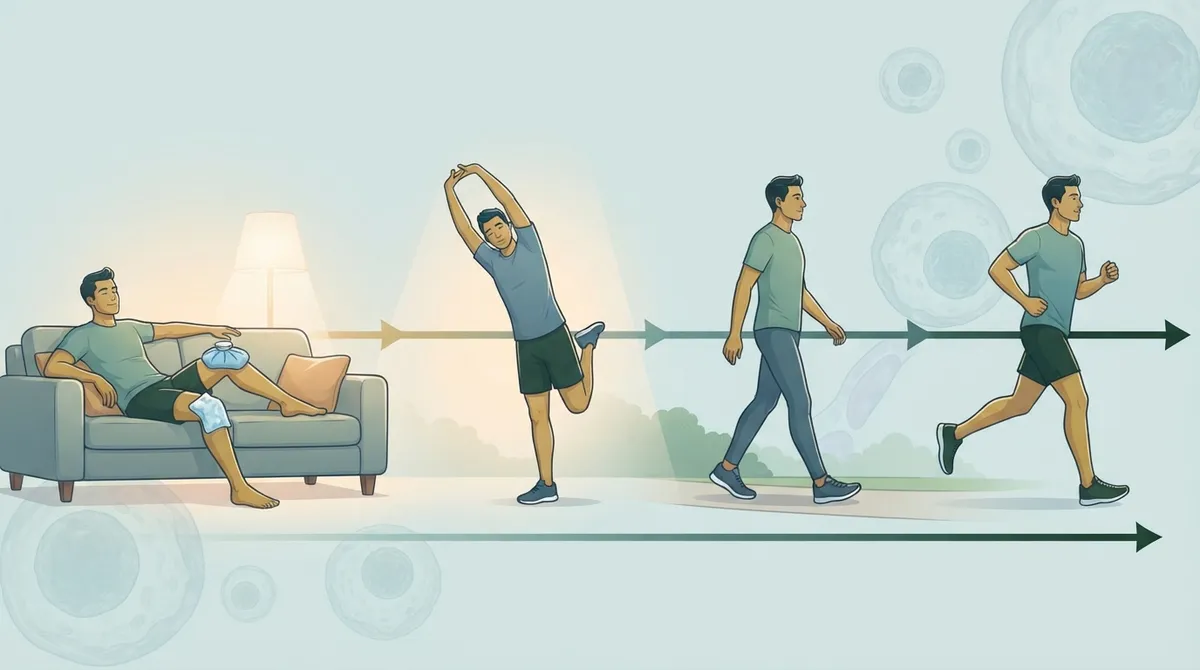
Key Takeaways
-
Recovery timelines vary significantly by procedure type; outpatient orthopedic injections typically allow same-day discharge with 24-48 hours of relative rest, while surgical options require longer downtime.
-
True healing takes 6-12 weeks or longer for functional improvement and tissue remodeling, not just days—feeling better initially is different from being fully healed at the cellular level.
-
Gradual activity progression is critical: restrict high-impact exercise for several weeks, follow physical therapy protocols, and only resume strenuous activity after clinician approval to avoid undoing progress.
-
Peptides like BPC-157 and TB-500 lack proven evidence for accelerating stem cell recovery and should only be used as supervised adjunctive support, not as guaranteed recovery shortcuts.
-
Many regenerative products marketed for orthopedic conditions are not FDA-approved; verify legitimacy by checking for FDA approval status, provider licensing, transparent sourcing, and personalized protocols based on your labs.
-
Watch for red flag symptoms including worsening pain, fever, spreading redness, drainage, numbness, or sudden loss of function—contact your provider immediately if these appear, as they differ from normal post-procedure soreness.
If you’re thinking about stem cell therapy for a stubborn knee, shoulder, or back issue, you probably have one big question: how long until I feel normal again? It’s a fair thing to ask, and honestly, the answer isn’t as simple as a single number. Recovery depends on your body, your treatment site, and the specific procedure you had done. In this guide, we’ll walk through what real recovery timelines look like, what warning signs to watch for, and where peptide therapy fits into the bigger picture of healing and recovery support. Whether you’re a busy professional squeezing in a procedure between meetings, or a wellness seeker who tracks every detail of your health, this article will give you clear, honest answers you can actually use.
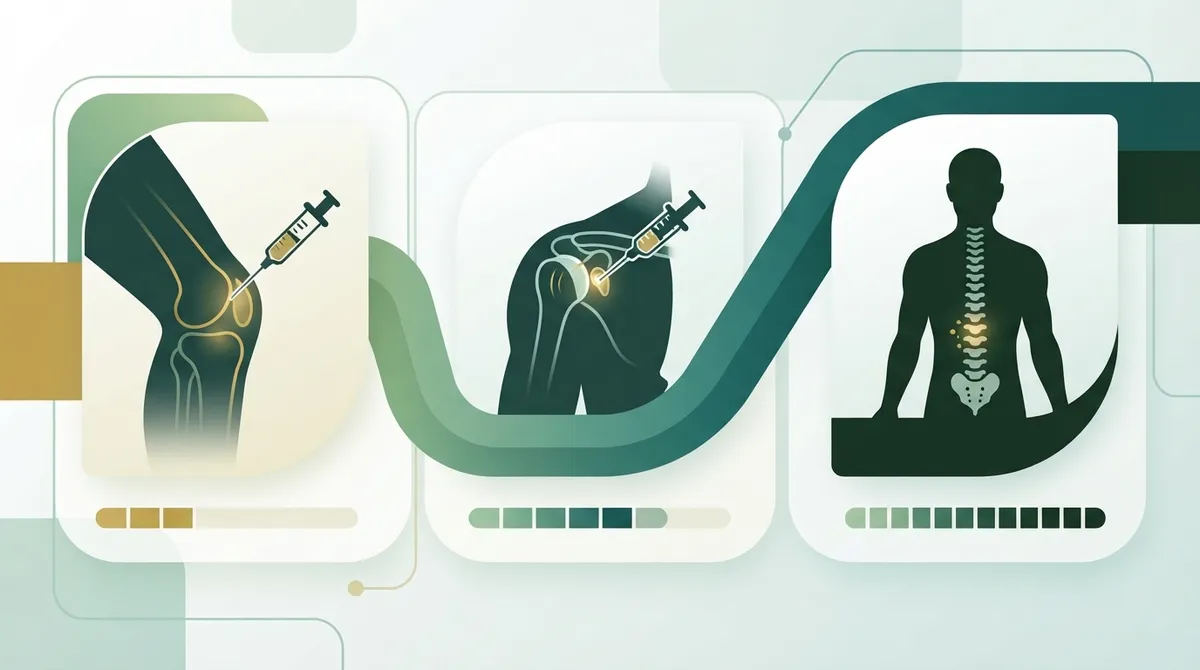
1. Recovery Time Varies Widely by Procedure Type
The first thing to understand is that stem cell therapy recovery time is not one-size-fits-all. An outpatient orthopedic injection into a knee or shoulder heals very differently than surgical implantation or a bone-marrow transplant. The delivery method, the treated area, your underlying condition, and your rehab plan all play a role.
Generally speaking, injection-based procedures come with shorter downtime than surgical options. That said, “shorter” doesn’t mean instant. Even a simple injection needs time for your body to respond and settle.

2. Most People Go Home the Same Day
Here’s some good news: after an outpatient orthopedic stem-cell injection, most patients walk out of the clinic the same day. There’s typically no overnight stay required, which makes it much easier to fit into a packed schedule.
Clinicians usually recommend relative rest or protecting the treated area for about 24 to 48 hours afterward. After that window, you can slowly reintroduce daily movement as your body allows.
What “Relative Rest” Actually Means
- Avoiding heavy lifting or strenuous activity on the treated joint
- Skipping high-impact exercise like running or jumping
- Keeping normal, gentle movement rather than staying completely still
- Following your provider’s specific instructions for your situation
3. Soreness Is Normal, But Should Be Watched
It’s common to feel some soreness, swelling, or mild bruising for several days, and sometimes a few weeks, after your injection. This is your body’s natural response to the procedure, not necessarily a sign something went wrong.
However, there’s a difference between expected soreness and a red flag. Pay attention to how your body responds over time.
Signs That Warrant a Call to Your Doctor
- Pain that gets worse instead of better after a few days
- Fever or chills
- Spreading redness around the injection site
- Drainage or fluid leaking from the area
- New numbness, tingling, or weakness
- Sudden loss of function in the treated limb or joint
If you notice any of these, don’t wait it out. Reach out to your treating clinician right away for an evaluation.
4. The Real Healing Timeline Takes Longer Than You Think
This is where a lot of people get surprised. Feeling better isn’t the same as being fully healed. Some patients notice symptom changes within days or weeks, but true functional improvement and tissue remodeling can take much longer.
A commonly cited window for assessing progress is roughly 6 to 12 weeks after the procedure. Some providers continue monitoring outcomes for 3 to 12 months, since healing at the cellular level is a slow, gradual process.
| Recovery Stage | Typical Timeframe | What to Expect |
|---|---|---|
| Immediate Post-Procedure | 0–48 hours | Relative rest, mild soreness, protect the area |
| Early Recovery | Several days to 2 weeks | Gradual return to daily activity, gentle movement |
| Rehabilitation Phase | 2–8 weeks | Physical therapy, increasing activity as tolerated |
| Functional Assessment | 6–12 weeks | Clinician evaluates symptom and function changes |
| Long-Term Monitoring | 3–12 months | Ongoing tracking of outcomes and tissue response |
5. Returning to Exercise Should Be Gradual, Not Rushed
If you’re an active person, or a biohacker who loves pushing your limits, this part is important. Jumping back into running, heavy lifting, or contact sports too soon can undo your progress.
Many orthopedic protocols restrict high-impact or heavily loaded activity for several weeks. Physical therapy often plays a key role in safely progressing your activity level.
A Typical Activity Progression
- Days 1–3: Gentle daily movement, avoiding strain
- Week 1–2: Light range-of-motion exercises, walking
- Weeks 2–3: Introduction of guided physical therapy work
- Weeks 4–8: Gradual increase in resistance and activity, based on how you feel
- Beyond week 8: Return to sport or strenuous exercise, only with clinician approval
Your treating provider’s specific instructions should always take priority over generic timelines like this one. Every body heals at its own pace.
6. Peptides Are Not a Proven Shortcut for Stem Cell Recovery
This is an important point of honesty. You may have heard that peptides like BPC-157 or TB-500 can speed up stem cell recovery. Right now, the evidence doesn’t support that claim.
Peptides remain investigational for many proposed regenerative uses. Laboratory and animal studies don’t automatically translate into proven human benefits. A 2025 review in PubMed looked at regenerative therapies for orthopedic conditions and found peptide-based therapies showed more limited evidence compared to other regenerative approaches, calling for larger, standardized clinical trials.
That doesn’t mean peptides have no place in a wellness routine. It just means they should be viewed as an adjunctive, well-monitored part of your overall health plan, not a guaranteed stem-cell recovery accelerator. If you’re curious about what peptides actually are and how they work in the body, this guide on what are peptides in 2026 is a great place to start.
7. Verify Before You Trust Any Regenerative Product
Here’s something every health optimizer and wellness seeker should know. Not every product marketed as “stem cell” or “regenerative” therapy is actually approved for the conditions it claims to treat.
The FDA has issued consumer guidance stating that many regenerative products marketed for orthopedic conditions, like osteoarthritis, tendonitis, disc disease, or joint pain, are not FDA-approved. This applies to products for knee pain, hip pain, shoulder pain, neck pain, and back pain.
How to Check If a Treatment Is Legitimate
- Ask if the product is FDA-approved or part of an official clinical trial
- Request information on the provider’s licensing and credentials
- Look for transparency about sourcing and manufacturing of the product
- Avoid clinics that promise guaranteed results or exaggerated success rates
- Confirm your provider follows individualized protocols based on your labs and history
You can review the full FDA consumer alert on regenerative medicine products for more detail on this topic.
8. Don’t Confuse Marketing Numbers With Clinical Guarantees
You may come across marketing claims of “70 to 80% success rates” or promises of guaranteed healing within a set 3 to 12 month window. These numbers often come from clinic marketing material, not universally accepted clinical research.
A trustworthy provider will explain that outcomes vary and avoid presenting these figures as expected results for every patient. Recovery claims should always be tied to your specific diagnosis, procedure, and treatment protocol.
| Claim You Might Hear | What’s Actually True |
|---|---|
| “Guaranteed 70-80% success rate” | Not a universally accepted clinical benchmark |
| “Peptides speed up stem cell recovery” | Not established by current evidence |
| “All patients heal in exactly 3 months” | Timelines are ranges, not guarantees |
| “This product is FDA-approved for joint pain” | Many regenerative products are not FDA-approved for this use |
9. Where Peptide Therapy Fits Into Your Bigger Recovery Picture
While peptides aren’t a proven stem-cell recovery shortcut, personalized peptide therapy can still play a supportive role in your overall wellness and recovery journey. Many people use peptide protocols to support energy, sleep quality, immune function, and general tissue recovery, alongside their primary treatment plan.
At Allura Longevity, treatment plans are built around your individual blood work and health goals, not a one-size-fits-all approach. Clients start with an affordable virtual consultation, complete labs through LabCorp, and receive a custom six-month plan delivered right to their door. Everything is monitored by licensed providers, led by a board-certified Family Nurse Practitioner, so adjustments happen as your body responds.
If you’re exploring options like BPC-157 peptide facts for injury support, or want to understand how muscle recovery peptides work, it’s worth learning the basics before committing to any protocol. And if you’re weighing peptide therapy against other regenerative options, this comparison of muse cell therapy vs peptide therapy may help clarify your choices.
10. Building a Safe, Personalized Recovery Plan
No matter what stage of recovery you’re in, the smartest move is working with licensed providers who actually look at your labs and history. A cookie-cutter approach rarely works for something as personal as healing.
Steps to Build a Smart Recovery Support Plan
- Get a full evaluation and blood work before starting any new protocol
- Discuss your specific diagnosis and procedure with your treating clinician
- Ask about realistic timelines instead of relying on generic averages
- Consider adjunctive support like peptide therapy, only under medical supervision
- Follow a structured physical therapy or rehab plan as your provider recommends
- Schedule regular check-ins to monitor progress and adjust your plan
This kind of thoughtful, step-by-step approach is exactly why so many people are turning to how to start peptide therapy safely and see real results. It’s not about chasing a shortcut. It’s about building a plan that actually fits your body and your goals.
Peptides themselves are fascinating tools worth understanding on their own terms. According to WebMD’s overview of peptides, these small protein chains play many roles in the body, from hormone signaling to tissue repair support. And for a deeper scientific dive, the National Library of Medicine offers research-backed insight into how various regenerative therapies are being studied today.
Bringing It All Together
Recovery from stem cell therapy is a journey, not a single event. Give yourself grace, follow your provider’s specific guidance, and remember that healing at the cellular level takes patience. Whether your timeline lands closer to 6 weeks or stretches toward 12 months, what matters most is that you’re being monitored by someone who actually understands your unique situation.
If you’re curious about how personalized peptide therapy could support your energy, recovery, and overall wellness goals, our team at Allura Longevity is here to help you build a plan around your own blood work and goals. Ready to take the next step? Request a consultation today and let’s talk about what a personalized plan could look like for you.
FAQs
Q: How long does it take to recover from stem cell therapy for a knee or shoulder?
A: It really depends on the joint and your individual condition, but many people resume light daily activity within 1-2 days. Full functional improvement can take anywhere from 6 to 12 weeks, and sometimes up to a year, so patience is key here.
Q: Can I walk or work immediately after a stem-cell injection?
A: Most people can leave the clinic the same day and return to light daily tasks pretty quickly. That said, clinicians usually recommend relative rest for about 24 to 48 hours before easing back into your normal routine.
Q: Do peptides like BPC-157 or TB-500 make stem-cell recovery faster?
A: Right now, there’s no solid evidence proving that peptides speed up stem-cell recovery. They’re considered investigational for these uses, so it’s best to think of them as a supportive part of your wellness routine rather than a proven shortcut.
Q: What are warning signs of complications after a stem-cell procedure?
A: Watch for worsening pain, fever, spreading redness, drainage, numbness, or sudden loss of function. If any of these show up, don’t wait around, reach out to your provider right away for an evaluation.
Q: How can I tell if a stem-cell or peptide therapy is legitimate and safe?
A: Ask whether the product is FDA-approved or part of an official clinical trial, and confirm your provider is licensed. A trustworthy clinic will build a personalized plan based on your labs, not promise guaranteed results with generic timelines.





