

Key Takeaways
-
Muse cells are rare adult stem cells discovered in 2010 that can differentiate into multiple cell types from all three embryonic layers, showing potential for stroke recovery, heart damage, and liver disease treatment.
-
Muse cell therapy uses living stem cells requiring specialized lab processing, while peptide therapy uses amino acid chains that can be self-administered at home, making peptides more accessible today.
-
Muse cell therapy remains mostly experimental with limited human trials, while peptide therapy already offers medically supervised personalized treatment for energy, sleep, recovery, and metabolism optimization.
-
No established clinical protocol proves peptides can reliably activate or enhance Muse cell therapy; claims combining both should be treated as investigational, not proven.
-
Safety data shows Muse cells have lower tumor risk than embryonic stem cells, but long-term human safety remains limited; animal studies are reassuring but do not guarantee safety in people.
-
Before pursuing any regenerative therapy, verify the treatment is backed by published research, the provider explains risks honestly, your plan is based on personal lab work, and ongoing monitoring is included.
If you have spent any time scrolling through regenerative medicine headlines, you may have stumbled across something called Muse cell therapy. It sounds futuristic, maybe even a little sci-fi. At the same time, you are hearing more and more about peptide therapy, the personalized approach clinics like Allura Longevity use to help people feel more energetic, sleep better, and support healthy aging. So how do these two approaches stack up? We are here to walk you through it, in plain language, so you can feel confident about what is real, what is still experimental, and what might actually make sense for you today.
Whether you are a busy professional trying to squeeze more energy out of your day, a biohacker who loves digging into the research, or someone simply focused on aging well, this comparison is for you. We will break down what Muse cells are, how they differ from peptides, and why understanding both matters if you care about your long-term health.
What Exactly Are Muse Cells?
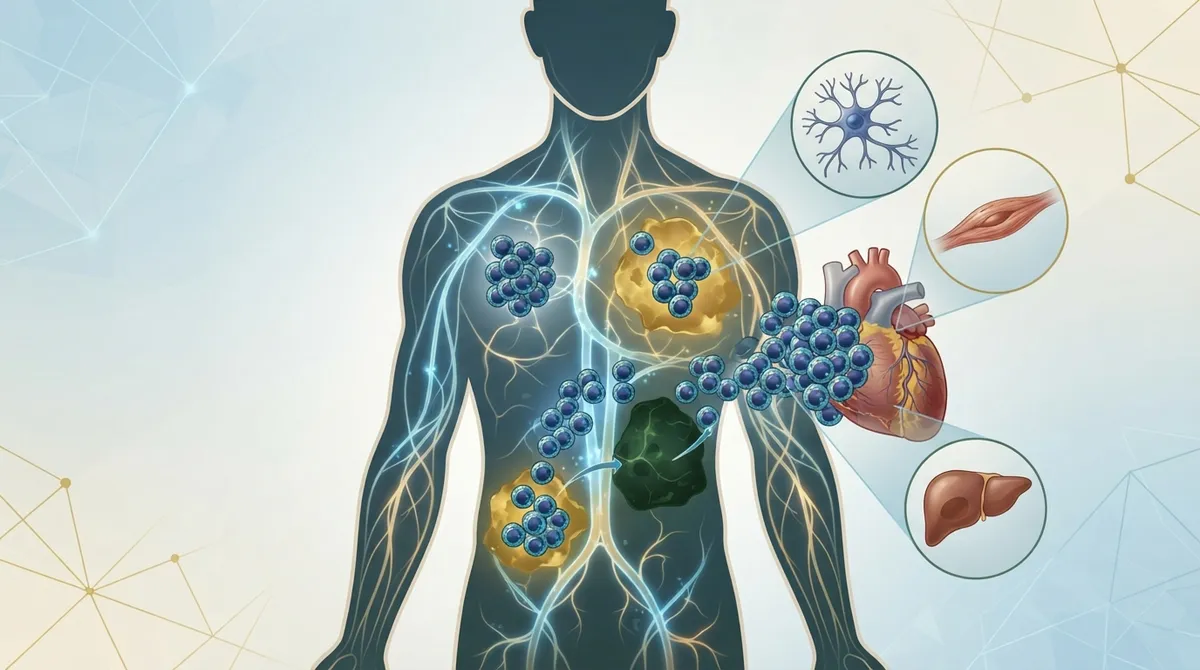
Muse stands for multilineage-differentiating stress-enduring cells. That is a mouthful, so let’s simplify it. These are rare adult stem cells first identified in 2010. Scientists found them living quietly inside tissues like skin, fat, and bone marrow.
What makes Muse cells special is their toughness. They can survive stressful conditions that would destroy most other cells. They were identified using specific markers, including SSEA-3, Nanog, Oct3/4, and Sox2. Researchers have shown these cells can turn into many different cell types representing all three layers of tissue found in a developing embryo: ectoderm, mesoderm, and endoderm.
In simple terms, Muse cells appear to have a wide range of repair potential. That is why researchers are excited about them for conditions like stroke recovery, heart damage, liver disease, and skin injuries.
Muse Cells vs. Peptide Therapy: The Core Difference
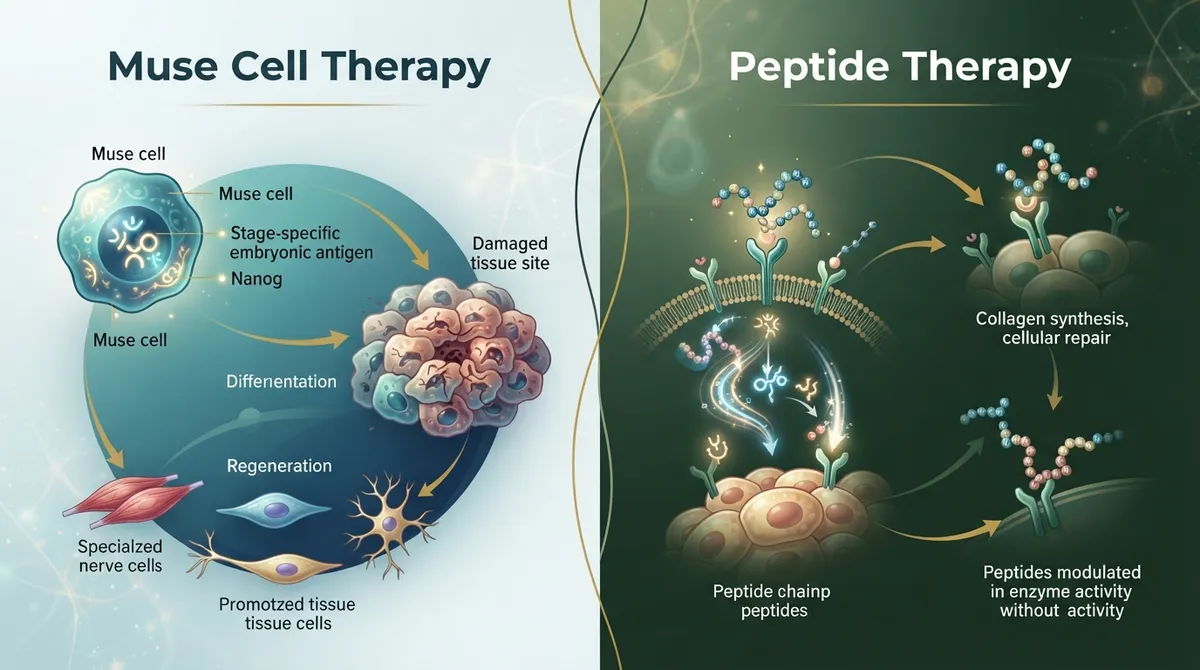
This is the part that trips people up. Muse cell therapy and peptide therapy are not the same thing, even though both fall under the “regenerative medicine” umbrella.
- Muse cell therapy uses living stem cells taken from human tissue.
- Peptide therapy uses short chains of amino acids, which act like messengers in your body.
- Muse cells are still mostly experimental and studied in labs or small clinical trials.
- Many peptides are already used in personalized wellness plans today, under medical supervision.
- Muse cell treatments often require specialized labs, cell processing, and strict handling.
- Peptide therapy can be prescribed, shipped, and self-administered at home with proper training.
Think of it this way: peptides are like sending a very specific text message to your cells, asking them to do a job they already know how to do. Muse cells, on the other hand, are like sending in a brand new worker who might be able to build several different things once it arrives at the injury site.
Why People Confuse the Two
Some clinics mention peptides and Muse cells in the same breath because both are marketed as “cutting edge” or “regenerative.” Peptides can influence inflammation, tissue repair, and cell signaling, so they sometimes come up in the same conversation as stem cell approaches. But there is currently no established, well-validated protocol proving that a peptide can replace, activate, or reliably boost Muse cell therapy. If you read a claim promising that combination works like magic, treat it as investigational, not proven.
How Muse Cells Are Thought to Work
Researchers believe Muse cells have a kind of built-in GPS. Preclinical studies suggest they can sense signals from damaged tissue and travel toward the injury. One proposed mechanism involves something called the S1P-S1PR2 signaling pathway, which may help guide the cells to where they are needed.
Once they arrive, Muse cells are thought to do a few things:
- Settle into the injured area and begin adapting to local signals.
- Release helpful proteins that calm inflammation.
- Support nearby cells and reduce further tissue damage.
- Potentially differentiate into needed cell types over time.
This process, called a paracrine effect, means the cells may help through the signals they release, not only through direct replacement of damaged tissue. It is a promising theory, but most of the strongest evidence still comes from animal studies rather than large human trials.
What Conditions Are Being Studied?
Muse cell research has expanded into a wide range of health conditions. Here is a quick look at where scientists are focusing their attention:
| Condition | Stage of Research | Notes |
|---|---|---|
| Stroke | Preclinical and early clinical | Some encouraging signals in animal models |
| Spinal cord injury | Early human trial | Single-dose trial showed tolerability, not proven efficacy |
| Heart attack (myocardial infarction) | Preclinical and small clinical | Systematic review found seven studies through mid-2025 |
| Liver disease and fibrosis | Preclinical | Animal models mostly |
| Skin ulcers | Preclinical | Early-stage research only |
| Kidney disease | Preclinical | Limited data available |
A systematic review focused on heart-related conditions found encouraging signs of cardiac repair, but the researchers were clear that larger, longer trials are still needed before anyone can call this an established treatment. That kind of honesty matters, and it is something we appreciate when reading through the research at Allura Longevity too.
Is Muse Cell Therapy Safe?
Safety is always the first question, and a fair one. Here is what current research tells us:
- Muse cells are often described as having lower tumor-forming risk compared to embryonic stem cells or induced pluripotent stem cells.
- One review reported no tumor formation in immunodeficient mice for up to six months after Muse cell implantation.
- A 2024 clinical trial gave a single intravenous dose of allogeneic Muse cells to patients with severe spinal cord injury. Two serious adverse events occurred but were judged unrelated to the treatment.
- Long-term human safety data is still limited, so caution is warranted.
Animal safety data is reassuring, but it does not automatically translate to guaranteed long-term safety in people. According to the National Library of Medicine, ongoing research is needed before broader conclusions can be drawn.
Regulatory Status: What You Need to Know
Here is something important to keep in mind. Muse cell therapy is not currently FDA-approved as a standard treatment. Most programs offering it internationally operate as observational studies or early clinical trials, not approved medical care.
A registered observational study looking at real-world Muse treatments for neurological conditions planned to enroll around 36 participants. That is a small study, and it reflects where the science currently stands: promising but early.
How to Spot a Legitimate Clinical Trial
- Check if the trial is registered on a public database like ClinicalTrials.gov.
- Look for informed consent documents that clearly explain risks.
- Ask whether the study has institutional review board oversight.
- Be wary of clinics promising guaranteed cures or organ regeneration.
- Confirm whether follow-up monitoring is part of the program.
Where Peptide Therapy Fits In Right Now
While Muse cell therapy remains largely experimental, peptide therapy already offers a well-established, medically supervised path for many wellness goals. Peptides are short chains of amino acids that act as precise signaling molecules in your body, as explained in this overview of what are peptides.
Peptide therapy is already helping people with:
- Boosting energy and mental clarity
- Supporting deeper, more restorative sleep
- Aiding muscle recovery after workouts or injury
- Encouraging healthy metabolism and weight management
- Supporting skin rejuvenation and collagen production
- Promoting immune system balance
If you want to understand the basics before diving deeper, this guide on what peptides are and how they work is a great starting point. And if you are curious about specific goals like recovery, the article on TB-500 peptide facts or BPC-157 peptide facts can help you learn more about tissue repair support that is already being used today.
Side-by-Side Comparison
| Feature | Muse Cell Therapy | Peptide Therapy |
|---|---|---|
| What it is | Living stem cells | Short amino-acid chains |
| Regulatory status | Mostly experimental | Some FDA-approved, others used off-label under supervision |
| Delivery method | IV infusion, specialized clinic | Often at-home injections after telehealth consult |
| Evidence base | Mostly preclinical, small trials | Growing clinical use with individualized monitoring |
| Accessibility | Limited, often international programs | Available via licensed telehealth providers |
How Allura Longevity Approaches Personalized Care
At Allura Longevity, we believe in transparency about what is proven and what is still emerging. Our team, led by board-certified Family Nurse Practitioner Ashley, focuses on evidence-informed peptide therapy rather than unproven combinations. Every client starts with a $50 virtual consultation and complete blood work through LabCorp, so your treatment plan is built around your actual biology, not guesswork.
From there, we design a personalized six-month plan, delivered right to your door, with ongoing monitoring and adjustments along the way. If you are curious how this process works step by step, take a look at our guide on how to start peptide therapy safely and see real results.
Popular Peptide Goals We Support
- Weight loss support through GLP-1 medications
- Injury recovery protocols involving peptides like BPC-157
- Testosterone replacement therapy for men
- Anti-aging and skin rejuvenation support
- Energy and metabolic optimization
You can explore options tailored specifically to your needs with our resources on peptides for women and peptides for men. If weight loss is your main focus, our article on which weight loss peptides actually work breaks down the current options in detail.
Questions to Ask Before Trying Any Regenerative Therapy
Whether you are considering Muse cells, peptides, or anything in between, here is a simple checklist to protect yourself:
- Is this treatment backed by published clinical research, not just testimonials?
- Does the provider explain both benefits and risks honestly?
- Is the clinic licensed in your state, and are providers board-certified?
- Will your treatment plan be based on your own lab work, not a one-size-fits-all approach?
- Is there ongoing monitoring built into the program?
These questions apply whether you are comparing local clinics or telehealth options. If you want a deeper dive into that decision, check out our comparison on local clinic versus telehealth peptide therapy.
The Bottom Line: Muse Cells or Peptides?
Right now, Muse cell therapy remains an exciting but early-stage area of regenerative medicine. It shows real promise for conditions like stroke and heart injury, but robust human trials, standardized manufacturing, and clear regulatory approval are still missing pieces. Peptide therapy, on the other hand, already offers a personalized, medically supervised path many people are using today to support energy, recovery, metabolism, and healthy aging.
If you are the type of person who likes to stay ahead of the curve while still making evidence-based choices, peptide therapy might be the smarter starting point while Muse cell research continues to develop. Allura Longevity is licensed in Florida, Georgia, Texas, Connecticut, Indiana, Maryland, New York, and California, and we would love to help you build a plan that fits your goals and your biology.
Ready to see what personalized peptide therapy could do for you? Request a consultation today and take the next step toward feeling like the best version of yourself. Spots are limited each month, so do not wait too long to reach out.
FAQs
Q: What are Muse cells and how are they different from mesenchymal stem cells?
A: Muse cells are a rare, stress-tolerant subset of adult stem cells found within mesenchymal tissue, like skin, fat, and bone marrow. Unlike typical mesenchymal stem cells, Muse cells can turn into cell types from all three embryonic germ layers, giving them a wider range of potential uses.
Q: Is Muse cell therapy a peptide therapy or a stem-cell treatment?
A: Great question, and an easy mix-up! Muse cell therapy uses living stem cells, while peptide therapy uses short amino-acid chains that act as signaling molecules. They work through completely different mechanisms, even though both fall under the regenerative medicine umbrella.
Q: Can peptides activate or improve Muse cell function?
A: There is no well-established, validated protocol proving peptides can activate or enhance Muse cell therapy right now. Some peptides do influence inflammation and tissue repair, but combining them with Muse cells should be considered investigational until more research comes out.
Q: Is Muse cell therapy FDA-approved?
A: Not yet. Muse cell therapy remains largely experimental, with most current evidence coming from animal studies and small early-stage human trials. If you come across a clinic claiming full approval, that is a red flag worth questioning.
Q: How much does Muse cell therapy cost, and how can patients identify a legitimate clinical trial?
A: Costs vary widely and are often out-of-pocket since this is not a standard approved treatment. To find a legitimate trial, look for registration on public databases, clear informed consent, and institutional oversight, rather than clinics promising guaranteed results.





